
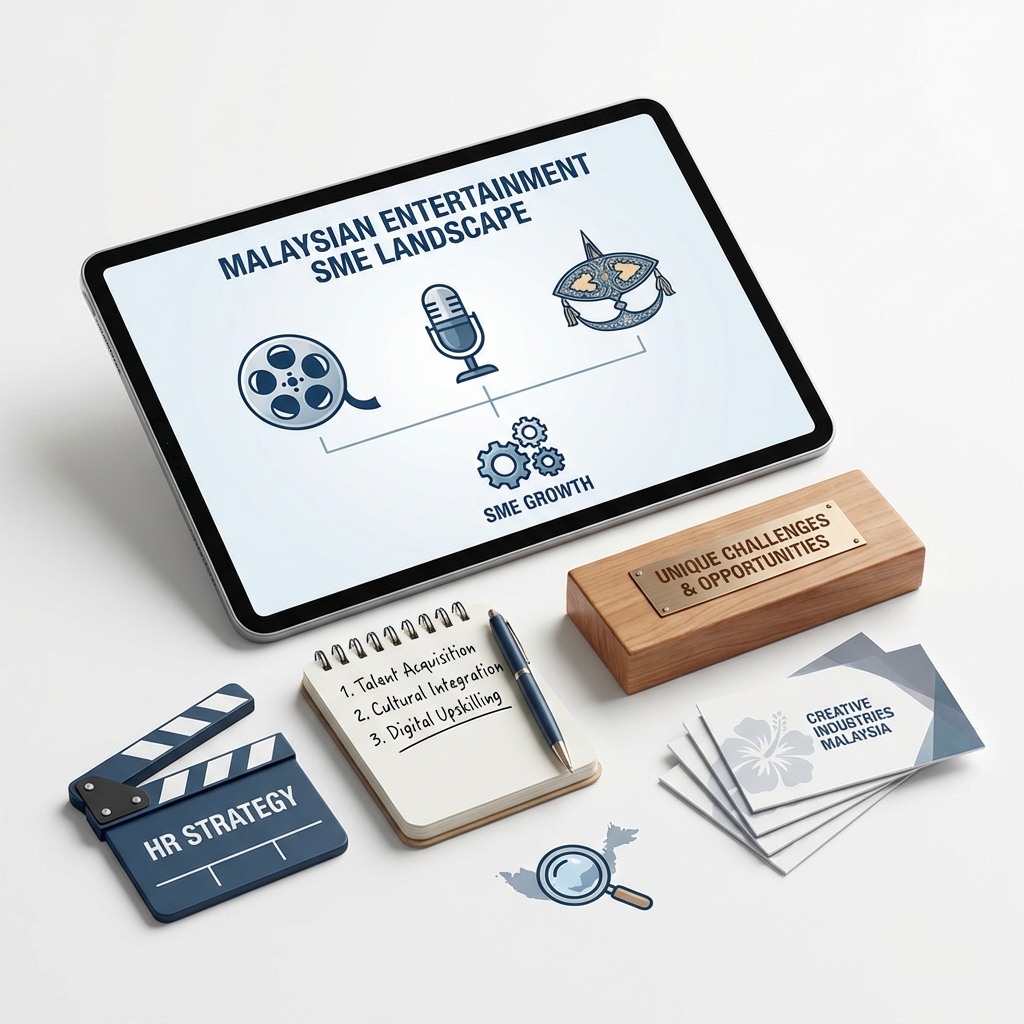
- Understanding the Unique Landscape of Malaysian Entertainment SMEs
- 1. Market Trends and Talent Demands in Malaysia’s Entertainment Industry
- 2. Common Salary Budgeting Pitfalls for SMEs
- 3. Impact of Local Regulations on Compensation Structures
- Core Components of an Optimized Salary Structure
- 1. Benchmarking: Competitive Salaries and Benefits in the Malaysian Market
- 2. Base Pay, Performance Incentives, and Bonus Structures
- 3. Non-Monetary Benefits for Employee Engagement and Retention
- Strategic Budgeting and Allocation for Talent Acquisition & Retention
- 1. Forecasting Talent Needs and Budgetary Requirements
- 2. Balancing Permanent Staff vs. Project-Based Freelancer Costs
- 3. Implementing Performance-Based Pay Systems Effectively
- Leveraging Technology and Data for Smart Salary Decisions
- 1. Utilizing HRIS and Payroll Software for Efficiency
- 2. Data-Driven Insights for Compensation Reviews and Adjustments
- 3. Ensuring Compliance with Malaysian Labour Laws and Tax Implications
- Future-Proofing Your Salary Budget for 2026 and Beyond
- 1. Anticipating Industry Shifts and Economic Fluctuations
- 2. Developing Flexible Compensation Models for Evolving Roles
- 3. Continuous Review and Adaptation of Salary Strategies
- Partner with Shelby Global
- References
Understanding the Unique Landscape of Malaysian Entertainment SMEs
Malaysia’s entertainment sector, vibrant and rapidly evolving, presents a unique set of challenges and opportunities for Small and Medium-sized Enterprises (SMEs), particularly concerning salary management. The dynamic nature of the industry, coupled with its reliance on creative talent, necessitates a strategic approach to compensation. For SMEs in this space, developing Optimized Salary Budget Structures for SMEs in Entertainment field in Malaysia is not just about cost control, but about attracting, retaining, and motivating the best talent in a competitive market.
1. Market Trends and Talent Demands in Malaysia’s Entertainment Industry
The Malaysian entertainment landscape is characterized by its diversity, encompassing film, television, music, digital content creation, event management, and increasingly, esports. This broad spectrum dictates varied Malaysian entertainment sector salaries and compensation expectations. A significant trend is the surge in demand for digital content creators, animators, video editors, and social media strategists, driven by the proliferation of streaming platforms and online consumption. SMEs often grapple with how to structure competitive SME compensation strategies Malaysia that align with market rates while remaining financially viable. Talent, particularly those with specialized skills in animation, visual effects, and sound engineering, are highly sought after, leading to upward pressure on film industry wages Malaysia and music industry compensation Malaysia. Benchmarking salaries against larger production houses or international firms can be daunting for smaller players, making salary benchmarking Malaysian creative industry a crucial exercise to prevent skill drain. Effective talent retention entertainment Malaysia strategies, beyond just salary, become paramount, often involving benefits, growth opportunities, and a vibrant work culture to attract top performers.
2. Common Salary Budgeting Pitfalls for SMEs
SMEs in the entertainment sector frequently encounter several pitfalls in their salary budgeting. One common mistake is underestimating the true cost of employment, including benefits, statutory contributions, and training. Another significant challenge is the seasonal or project-based nature of many entertainment gigs. This fluctuating workflow makes consistent budgeting for creative talent Malaysia incredibly difficult, often leading to overspending during peak periods or financial strain during lull phases. Many SMEs struggle with the balance between hiring permanent staff and relying on freelancers, where freelance vs permanent staff costs Malaysia need careful evaluation. While freelancers offer flexibility, long-term talent development and loyalty can be compromised. Furthermore, a lack of clear salary bands or performance-based incentives can lead to internal pay disparities and demotivation. Without well-defined performance-based pay entertainment SMEs structures, rewarding high-achievers fairly becomes challenging, impacting productivity and morale. Efficient payroll management entertainment SMEs is also vital to avoid administrative errors and ensure timely payments, which can be particularly complex with varying project lengths and contract types.
3. Impact of Local Regulations on Compensation Structures
Navigating Malaysia’s legal and regulatory framework is essential for designing compliant and effective compensation structures. The Employment Act 1955 (and its recent amendments), the Employees Provident Fund Act 1991, and the Employees’ Social Security Act 1969 impose mandatory contributions and minimum wage requirements. SMEs must ensure full regulatory compliance salaries Malaysia to avoid penalties and foster a fair working environment. The recent increase in the minimum wage, for example, directly impacts cost-effective salary solutions for SMEs, requiring businesses to re-evaluate their entire compensation model. Additionally, understanding tax implications for various types of employment (full-time, part-time, contract, freelance) is crucial for accurate financial planning. The Department of Labour and other related agencies frequently update guidelines, making continuous monitoring of policy changes a necessary component of HR challenges entertainment SMEs Malaysia. For instance, the growing gig economy also brings forth new considerations for compensating digital content creator salaries Malaysia and event-specific personnel. Staying abreast of these changes helps SMEs not only comply with the law but also build a reputation as responsible employers, which in turn aids in attracting and retaining talent. Malaysia’s creative industry is indeed set to grow further, making it even more important for SMEs to master these complex salary management issues to thrive.
Core Components of an Optimized Salary Structure
Crafting an Optimized Salary Budget Structures for SMEs in Entertainment field in Malaysia is more than just allocating funds; it’s about building a strategic framework that attracts, motivates, and retains top talent while ensuring financial sustainability. For Small and Medium-sized Enterprises (SMEs) operating within Malaysia’s vibrant yet competitive entertainment sector, navigating salary expectations, industry nuances, and talent acquisition challenges is paramount. A well-designed salary structure ensures fair pay, effective cost management, and robust employee engagement, which are crucial for long-term success. This section delves into the fundamental elements required to build a competitive and sustainable salary framework, ensuring fair pay while managing costs effectively for SMEs in the dynamic entertainment landscape.
1. Benchmarking: Competitive Salaries and Benefits in the Malaysian Market
The foundation of any robust salary structure lies in thorough benchmarking. For SMEs in the Malaysian entertainment field, understanding competitive compensation Malaysia involves more than just looking at direct competitors. It requires a broader perspective, examining average salaries for similar roles across industries, particularly those demanding comparable skill sets (e.g., creative, technical, project management). This process helps establish an SME salary framework that is both attractive to potential hires and justifiable within the company’s financial capacity. Reliable salary benchmarking tools include industry surveys, reputable HR consulting reports, and government statistical data. For instance, referring to authoritative sources like the Wages and Salaries Survey Report Malaysia from the Department of Statistics, Malaysia, can provide crucial insights into general market trends, although specific entertainment industry pay scales might require more specialized data. Beyond base salaries, benchmarking extends to benefits, ensuring that your overall compensation and benefits Malaysia package remains competitive and appealing to talent acquisition Malaysia efforts. This strategic approach helps manage costs effectively while positioning the SME as an employer of choice.
2. Base Pay, Performance Incentives, and Bonus Structures
An optimized salary structure typically comprises several layers, each designed to serve a specific purpose. Base pay forms the core, reflecting the intrinsic value of the role, required skills, and market rates. It should be fair, transparent, and consistent across similar positions. However, merely offering a competitive base salary is often insufficient for motivation and high performance. This is where performance incentives become vital. Implementing a clear performance-based pay Malaysia system, tied to individual and team Key Performance Indicators (KPIs), encourages employees to exceed expectations. For the project-driven entertainment industry, incentives can be linked to project completion milestones, audience engagement metrics, or critical acclaim. Furthermore, bonus structures provide additional motivation and reward exceptional contributions. These can take various forms: annual bonuses based on company profitability, project-specific bonuses for outstanding work on a major production, or even profit-sharing schemes that align employee success with the company’s overall financial health. Integrating these elements carefully allows for payroll optimization, ensuring that every ringgit spent contributes to productivity and aligns with fair pay practices, preventing issues of salary transparency while supporting the company’s financial goals.
3. Non-Monetary Benefits for Employee Engagement and Retention
While monetary compensation is critical, the true art of an optimized salary budget structure, especially for SMEs, lies in strategically incorporating non-monetary benefits for employee engagement and retention. These benefits often hold significant weight in an employee’s overall job satisfaction and loyalty, particularly in creative fields like entertainment where passion plays a big role. Examples of impactful non-monetary perks include opportunities for professional development and skill enhancement, such as workshops on new software, creative masterclasses, or industry conferences. Flexible working arrangements, an increasingly valued benefit, can significantly improve work-life balance for those in demanding production schedules. Recognition programs, a positive work environment, clear career progression paths, and access to mentorship are also powerful retention tools. For SMEs with potentially tighter budgets for entertainment industry pay scales, these non-monetary incentives can be incredibly cost-effective HR best practices entertainment to attract and keep top talent. By investing in an employee’s growth, well-being, and sense of belonging, SMEs can cultivate a highly engaged workforce, reduce turnover, and strengthen their employer brand, ultimately contributing to a sustainable and thriving business.
Strategic Budgeting and Allocation for Talent Acquisition & Retention
Learn how to strategically allocate your salary budget to attract top talent and retain key employees within the dynamic entertainment industry in Malaysia. For Small and Medium-sized Enterprises (SMEs) in this sector, mastering Optimized Salary Budget Structures for SMEs in the Entertainment field in Malaysia is not just about cost-cutting; it’s about competitive advantage and sustainable growth. This guide delves into actionable strategies to ensure your compensation strategies are both appealing to prospective hires and effective in fostering employee loyalty.
1. Forecasting Talent Needs and Budgetary Requirements
Effective talent acquisition and retention begin with foresight. For SMEs in the Malaysian entertainment industry, accurately forecasting talent needs means understanding upcoming project pipelines, market trends, and potential skill gaps. This requires robust HR analytics and close collaboration between HR and project management teams. Start by conducting a thorough market analysis to benchmark salaries for key roles, such as animators, sound engineers, content creators, and marketing specialists. This exercise helps identify competitive salaries and the budget required to attract and retain top performers. Consider the long-term impact of talent gaps versus the immediate cost of hiring. A proactive approach to talent management, including succession planning and skill development, can significantly reduce future recruitment costs. Budgetary requirements must encompass not only base salaries but also benefits, bonuses, training, and potential relocation costs for highly specialized talent, especially when operating in a competitive global landscape. Understanding the true cost of an employee helps in allocating resources more effectively and ensures that the salary budget is sustainable.

2. Balancing Permanent Staff vs. Project-Based Freelancer Costs
The entertainment industry, by its very nature, often fluctuates with project cycles, making the balance between permanent staff and project-based freelancer costs a critical budgeting decision. Permanent staff offer stability, institutional knowledge, and foster a strong company culture, which are vital for long-term employee engagement and retention. However, they also come with fixed costs, including benefits, provident funds, and potential idle time between projects. Freelancers, conversely, provide flexibility, specialized skills for specific projects, and often a more immediate cost-per-project expenditure. For Malaysian SMEs, a hybrid model is often the most cost-efficient and agile solution. Strategically identify core roles that require consistent expertise and invest in full-time employees for these positions. For episodic or highly specialized tasks, leverage the vast pool of skilled freelancers available. This approach optimizes your salary budget by aligning expenditure directly with project revenue and ensuring you have the right talent for the right duration, minimizing overheads while maximizing output. Understanding local labor laws and regulations concerning contract workers is crucial to ensure compliance and avoid potential disputes.
3. Implementing Performance-Based Pay Systems Effectively
To truly optimize salary budget structures and foster a high-performance culture, SMEs in the entertainment sector should consider implementing performance-based pay systems. These systems directly link employee compensation to their individual and team contributions, incentivizing excellence and productivity. When designed effectively, performance-based pay can significantly boost motivation, improve employee engagement, and enhance retention by rewarding top performers. However, success hinges on clear, measurable, and transparent metrics. In the creative and often subjective entertainment industry, defining these metrics can be challenging. Focus on outcomes such as project completion rates, quality of work (peer reviews, critical acclaim), client satisfaction, revenue generated from specific projects, or even the successful acquisition of new intellectual property. Regularly review and communicate performance expectations and results. Ensure that the system is perceived as fair and equitable to maintain trust and morale. For further insights into effective compensation strategies, you might refer to resources from reputable HR bodies like the Society for Human Resource Management (SHRM). By rewarding those who consistently deliver exceptional value, SMEs can ensure their salary budget is not just an expense, but an investment in driving talent acquisition and sustainable success in the competitive Malaysian entertainment landscape.
Leveraging Technology and Data for Smart Salary Decisions
Discover how data analytics and HR software can streamline salary administration, improve decision-making, and ensure compliance.
In today’s dynamic business environment, particularly for Small and Medium-sized Enterprises (SMEs) operating within Malaysia’s vibrant entertainment sector, achieving Optimized Salary Budget Structures for SMEs in Entertainment field in malaysia is paramount for sustainable growth and talent retention. The traditional, manual approaches to salary management are increasingly inefficient and prone to errors. This section delves into how embracing advanced HR technology and data analytics can revolutionize salary administration, transforming it from a reactive task into a strategic lever for competitive advantage, driving better decision-making, and ensuring comprehensive compliance.
1. Utilizing HRIS and Payroll Software for Efficiency
The foundation of smart salary decisions begins with robust HR technology adoption. For Malaysian entertainment SMEs, implementing integrated HRIS (Human Resources Information Systems) and payroll management solutions is no longer a luxury but a necessity. These systems automate tedious tasks, from employee onboarding and attendance tracking to leave management and intricate payroll processing, significantly reducing the administrative burden. By centralizing employee data, an HRIS minimizes human error, ensures data accuracy, and frees up HR personnel to focus on more strategic initiatives. This digital HR transformation leads to substantial time and cost-effective salary administration, allowing resources to be reallocated towards creative or core business activities. Furthermore, dedicated HR software for SMEs Malaysia offers tailored features that cater to the specific needs of smaller businesses, providing enterprise-grade functionalities without the prohibitive costs, ultimately enhancing operational efficiency and improving the overall employee experience through accurate and timely payments.
2. Data-Driven Insights for Compensation Reviews and Adjustments
Beyond mere automation, the true power of technology lies in its ability to generate data-driven insights for compensation reviews and adjustments. Leveraging data analytics for compensation allows entertainment SMEs to move beyond guesswork, making informed decisions rooted in empirical evidence. Modern HR systems can collect and analyze vast amounts of data, including industry benchmarks, performance metrics, and internal salary equity. This enables companies to utilize salary benchmarking tools to compare their compensation packages against market rates, ensuring competitiveness within the entertainment industry specific salaries landscape. Implementing performance-based pay models directly links an employee’s contribution to their remuneration, fostering a culture of meritocracy and motivation. Predictive analytics in HR can even forecast future salary trends and budget requirements, allowing proactive planning. By understanding the direct correlation between employee engagement and compensation, businesses can tailor their strategies to attract and retain top talent, bolstering talent retention strategies Malaysia and creating a highly motivated workforce.
3. Ensuring Compliance with Malaysian Labour Laws and Tax Implications
One of the most critical aspects of salary administration, especially in Malaysia, is ensuring strict compliance with local regulations. Malaysian labor law compliance is complex, encompassing the Employment Act 1955, minimum wage orders, and social security contributions like EPF, SOCSO, and EIS. Furthermore, understanding the various Malaysian tax implications for employees is essential to avoid penalties and legal issues. Advanced payroll software is specifically designed to incorporate these dynamic legal and tax frameworks, automatically calculating deductions, contributions, and ensuring timely remittances. This capability is invaluable for entertainment SMEs, as it helps maintain fair wage practices Malaysia, preventing potential disputes and protecting the company’s reputation. By integrating compliance features directly into the HR and payroll system, businesses can confidently navigate the regulatory landscape, ensuring all compensation practices are legally sound and transparent, thereby safeguarding their operations from non-compliance risks and fostering employee trust.
In conclusion, the strategic adoption of HR technology and a data-centric approach to salary management is indispensable for SMEs in Malaysia’s entertainment industry. It empowers businesses to create transparent, equitable, and compliant salary structures, ensuring not just efficiency but also a competitive edge in attracting and retaining the best talent. By moving towards technologically advanced salary administration, these SMEs can solidify their foundation for future success and growth.
Future-Proofing Your Salary Budget for 2026 and Beyond
Preparing your SME for future challenges and growth demands adaptable and forward-thinking salary budgeting practices. For small and medium-sized enterprises (SMEs) in the vibrant Optimized Salary Budget Structures for SMEs in Entertainment field in Malaysia, anticipating market shifts and talent demands is not merely a foresight exercise—it’s a strategic imperative. The goal is to cultivate an agile compensation framework that not only attracts and retains top talent in the competitive Malaysian market but also ensures the sustainable growth of your business.
The entertainment industry, characterized by rapid technological advancements, evolving consumer behaviors, and increasing globalization, presents unique challenges and opportunities for salary planners. From digital content creation to event management and media production, Malaysian entertainment industry trends necessitate a proactive approach to remuneration. Future-proofing your salary budget means more than just adjusting for inflation; it involves deep dives into economic forecasts, talent acquisition strategies, and the integration of flexible compensation models to create a resilient financial backbone for your enterprise.

1. Anticipating Industry Shifts and Economic Fluctuations
The entertainment landscape in Malaysia is continuously evolving, driven by digital transformation, the rise of streaming platforms, and the increasing influence of AI in content creation. For SMEs, this means roles and skill sets are in constant flux. A static salary budget can quickly become obsolete, hindering your ability to secure the specialized talent required for innovation. To counter this, businesses must engage in robust workforce planning entertainment and scenario mapping.
Furthermore, global and local economic volatility, including inflation rates and talent wars, directly impacts salary expectations and purchasing power. SMEs need to monitor economic forecasts Malaysia closely, understanding how these broader trends will influence talent attraction and retention. This requires moving beyond annual reviews to continuous monitoring and forecasting, allowing for agile adjustments. Implementing data-driven insights to predict shifts in demand for certain skills, and understanding the cost of living variations across regions, becomes paramount. By having a pulse on both industry-specific and macroeconomic indicators, companies can make informed decisions to optimize payroll costs and maintain competitiveness.
Moreover, the advent of the gig economy and the increasing preference for project-based work among creatives demand new approaches to compensation. Staying informed about the future of work entertainment and how these shifts impact traditional employment models is crucial for maintaining an attractive employer brand. Understanding these dynamics is essential for any SME aiming for resilience amidst global economic fluctuations.
2. Developing Flexible Compensation Models for Evolving Roles
Traditional fixed salary structures often fall short in the dynamic entertainment industry. SME compensation strategies must pivot towards more flexible remuneration models that align with project-based work, performance outcomes, and the evolving nature of creative roles. This includes exploring options such as performance-based incentives, profit-sharing schemes, and project-based contracts that can provide both security and motivation for employees.
For roles in digital content creation budgets, for instance, a blend of a retainer fee and a bonus tied to viewership or engagement metrics might be more effective than a flat monthly salary. Similarly, offering equity or long-term incentive plans can be powerful talent retention strategies, particularly for key creative directors or technical leads who contribute significantly to the company’s long-term success. The focus should be on total rewards, which encompass not just monetary compensation but also comprehensive employee benefits for creatives, flexible work arrangements, and opportunities for professional development.
This adaptability is not just about attracting new talent but also about retaining existing high-performers. Tailoring compensation packages to individual roles and contributions ensures fairness and perceived value, crucial for fostering loyalty in a sector where talent mobility is high. Considering the rise of remote and hybrid work models, these flexible approaches become even more critical, allowing SMEs to tap into a wider talent pool beyond geographical constraints.
3. Continuous Review and Adaptation of Salary Strategies
Salary budgeting is not a set-it-and-forget-it task; it’s a continuous, iterative process. To ensure sustainable growth SMEs Malaysia, regular review and adaptation of salary strategies are indispensable. This involves consistent salary benchmarking Malaysia against industry peers and market data to ensure your compensation packages remain competitive. Tools and platforms for HR tech for SMEs can greatly streamline this process, providing real-time data and analytics.
Furthermore, internal pay equity assessments are crucial for maintaining employee morale and avoiding potential disputes. Transparent communication about compensation philosophy and regular feedback loops with employees can help identify and address any perceived unfairness. Agile budgeting practices allow SMEs to make timely adjustments based on performance, market changes, or unexpected economic shifts, rather than being locked into rigid annual plans.
By leveraging data analytics for compensation, SMEs can gain deeper insights into the effectiveness of their salary strategies, identify areas for improvement, and forecast future expenditure with greater accuracy. This proactive approach to continuous review and adaptation ensures that your salary budget remains a strategic asset, empowering your SME to thrive amidst the challenges and opportunities of the entertainment sector in 2026 and beyond.
Partner with Shelby Global
You are looking for reliable HR Sevice Suppliers? Contact Shelby Global Now! To connect with verified talents and upgrade your orginization.
—————————————
References
– Malaysia’s creative industry is indeed set to grow further: https://www.thestar.com.my/business/business-news/2023/12/28/malaysia-creative-industry-set-to-grow-further
– Wages and Salaries Survey Report Malaysia: https://www.dosm.gov.my/portal-main/release-content/wages-salaries-survey-report-malaysia-2023
– Society for Human Resource Management (SHRM): https://www.shrm.org/resources-and-tools/pages/performance-based-pay.aspx
– Malaysian tax implications for employees: https://www.hasil.gov.my/en/taxpayer/individual/tax-deductions-and-rebates/
– World Bank East Asia and Pacific Economic Update: https://www.worldbank.org/en/region/eap/publication/east-asia-and-pacific-economic-update-october-2023-reshaping-growth-in-a-changing-world