Introduction & Report Methodology
This comprehensive salary range report of jobs in finance field in Vietnam provides invaluable insights into the dynamic compensation landscape for finance professionals across the nation. As Vietnam continues its impressive economic ascent, driven by robust foreign investment and a burgeoning domestic market, the demand for skilled talent within its financial sector has never been higher. This report aims to set the stage for understanding current salary trends and, crucially, to offer expert 2026 projections. By detailing our rigorous data collection and analysis methodology, we empower financial professionals, HR leaders, and recruitment specialists with the strategic intelligence needed to make informed decisions in a competitive talent market.

-
Why This Finance Salary Report for Vietnam Matters
Vietnam’s economic transformation has positioned it as a vibrant hub in Southeast Asia, with its financial sector experiencing significant growth and diversification. From bustling Ho Chi Minh City to the strategic capital of Hanoi, financial institutions, multinational corporations, and local enterprises are constantly seeking top-tier talent in areas like corporate finance, investment banking, risk management, and fintech. Understanding the precise salary range report of jobs in finance field in Vietnam is not merely a matter of curiosity; it’s a strategic imperative. For individuals, it provides clarity on career progression, negotiation power, and optimal specialization paths. For employers, it’s essential for crafting competitive compensation packages that attract and retain the best professionals, reducing turnover and enhancing organizational performance. This report serves as a critical compass in navigating this evolving landscape, offering a deep dive into the factors shaping remuneration and helping stakeholders anticipate future trends, which are crucial for long-term planning and investment in human capital. For more detailed insights on the market, explore our comprehensive analysis.
-
Our Data Collection & Analysis Approach (2026 Projections)
The integrity and reliability of our salary range report of jobs in finance field in Vietnam hinge on a meticulously designed data collection and analysis methodology. To ensure comprehensive coverage and accuracy for our 2026 projections, we employed a multi-faceted approach. Our data sources included direct submissions from a diverse network of companies operating across Vietnam’s financial sector, extensive analysis of public and proprietary job board postings, and in-depth interviews with HR directors, compensation specialists, and senior finance executives. We cross-referenced this primary data with macroeconomic indicators such as Vietnam’s GDP growth, inflation rates, foreign direct investment inflows, and labor market reports from authoritative bodies.
Our analytical framework utilized advanced statistical modeling to identify key correlations between salary levels and variables such as experience, qualifications (e.g., CFA, ACCA), specific industry segments, company size, and geographical location. Predictive analytics were then applied to forecast salary trends through 2026, considering anticipated economic shifts and industry developments. This rigorous process, backed by Shelby Global’s extensive expertise in the Vietnamese job market, ensures that our projections are not merely extrapolations but well-founded estimates reflecting future market realities. For further context on Vietnam’s economic trajectory influencing these figures, refer to recent World Bank reports on Vietnam.
-
Key Factors Influencing Vietnamese Finance Salaries
Understanding the multitude of factors that collectively determine the salary range report of jobs in finance field in Vietnam is crucial for both job seekers and employers. Several elements significantly impact compensation levels:
- Experience and Seniority: Naturally, salaries scale upwards with years of experience. Entry-level analysts will command significantly less than seasoned CFOs or heads of investment banking.
- Qualifications and Certifications: Specialized qualifications like CFA (Chartered Financial Analyst), ACCA (Association of Chartered Certified Accountants), or an MBA from a reputable institution are highly valued and often translate into higher earning potential.
- Specialization: Niche areas within finance, such as quantitative analysis, fintech development, or complex M&A advisory, typically attract premium salaries due to specialized skill requirements and lower talent pools. General accounting or basic treasury roles might see more standardized compensation.
- Company Type and Size: Multinational corporations (MNCs) and large, established local banks or financial services groups generally offer more competitive packages and benefits compared to smaller local enterprises or startups, though the latter may offer equity or faster career progression.
- Geographical Location: Major economic hubs like Ho Chi Minh City and Hanoi consistently offer higher average salaries than other provinces, reflecting the concentration of financial institutions and higher cost of living.
- Economic Climate and Foreign Investment: A robust economy and sustained foreign direct investment fuel demand for finance professionals, pushing salaries upwards. Conversely, economic slowdowns can temper growth.
- Technological Proficiency: With the rapid digitalization of finance, professionals adept in financial technology, data analytics, and automation tools are increasingly in demand and well-compensated.
These interconnected factors create a complex salary mosaic, which this report aims to demystify, providing clarity and actionable insights for all stakeholders.
Overview of Vietnam’s Finance Job Market
Vietnam’s finance industry is currently experiencing a period of unprecedented growth and transformation, mirroring the nation’s robust economic expansion. Propelled by a burgeoning middle class, increasing foreign direct investment, and a government keen on digitalizing its economy, the financial job market in Vietnam is dynamic and rapidly evolving. For professionals seeking opportunities, understanding the current landscape, key growth sectors, emerging job roles, and significant skill demands is crucial. This overview explores key growth sectors, emerging roles, and skill demands, alongside regional salary differences, offering insights valuable for job seekers and employers.
1. Growth Sectors within Vietnam’s Finance Industry
The financial sector in Vietnam is diversifying rapidly, moving beyond traditional banking to embrace innovative areas. Fintech stands out as a primary growth driver. Fueled by high smartphone penetration and a young, tech-savvy population, digital payment solutions, peer-to-peer lending platforms, and online investment tools are booming. This sector attracts significant investment and is a hotbed for new job creation. Traditional banking, both retail and corporate, remains a cornerstone, but it is undergoing massive digital transformation, with banks heavily investing in mobile banking, AI-driven customer service, and data analytics capabilities to improve efficiency and customer experience.
Furthermore, the investment management and securities sectors are expanding, driven by a maturing stock market and increasing interest from both domestic and international investors. Private equity and venture capital funds are actively seeking opportunities in Vietnam’s promising startups and established enterprises. The insurance market is also witnessing steady growth, as increasing disposable incomes lead to higher demand for life and health insurance products. Real estate finance, while subject to market fluctuations, continues to be a significant component of the financial landscape, particularly in major urban centers like Ho Chi Minh City and Hanoi. This multi-faceted growth underscores a dynamic environment for finance professionals.
2. Emerging Roles and In-Demand Skill Sets
The transformation within Vietnam’s finance industry is giving rise to a new generation of job roles while also redefining existing ones. Highly sought-after positions now frequently combine financial acumen with technological prowess. Data Scientists and Business Intelligence Analysts are critical for extracting insights from vast datasets, informing strategic decisions, and optimizing financial products. With the pervasive digitalization, Cybersecurity Specialists and IT Audit Professionals are in high demand to protect sensitive financial information and ensure compliance. In the burgeoning fintech space, roles such as Fintech Product Managers, UX/UI Designers for financial applications, and Blockchain Developers are rapidly emerging.
Beyond these tech-centric roles, traditional finance positions like Investment Analysts, Risk Managers, and Compliance Officers are evolving. They now require a stronger grasp of regulatory technology (RegTech), environmental, social, and governance (ESG) factors, and sophisticated analytical tools. Key skill demands across the board include advanced data analysis (SQL, Python, R), digital literacy, project management, and a deep understanding of financial regulations. Soft skills such as critical thinking, problem-solving, adaptability, and interpersonal communication remain paramount for navigating the complex and fast-paced financial ecosystem. Professionals must continuously upskill in these areas, as evidenced by a specific salary range report of jobs in finance field in vietnam, which details compensation for specialized skills.
3. Regional Salary Disparities (e.g., Hanoi vs. Ho Chi Minh City)
While Vietnam’s finance job market is thriving nationwide, notable regional disparities exist, particularly concerning compensation and the concentration of specific financial activities. Ho Chi Minh City (HCMC), as the economic engine and commercial hub of Vietnam, generally offers a broader array of opportunities in investment banking, private equity, retail banking, and advanced fintech. The presence of numerous multinational corporations, foreign banks, and a more developed capital market often translates into slightly higher average salaries for experienced professionals in these high-value sectors, reflecting both demand and the higher cost of living.
Hanoi, the capital city, is characterized by a strong presence of state-owned enterprises, government financial institutions, and a growing number of local and international banks. Opportunities here may lean more towards corporate finance, public sector roles, and regulatory compliance. While salaries in Hanoi are competitive, they might, in some specific roles, be marginally lower than those in HCMC, or the growth trajectory could differ based on the industry focus. However, Hanoi is rapidly developing its private sector and fintech ecosystem, narrowing this gap. Other major cities like Da Nang are also emerging, offering regional opportunities, albeit on a smaller scale. These regional differences underscore the importance of consulting a comprehensive salary range report of jobs in finance field in vietnam for nuanced compensation insights.
In conclusion, Vietnam’s finance job market is a vibrant and dynamic landscape, offering significant opportunities for skilled professionals. The emphasis on digitalization, coupled with sustained economic growth, is continuously reshaping the industry, creating new roles and demanding evolving skill sets. While regional nuances exist, a clear trend towards innovation and specialization defines the sector. Aspiring and current finance professionals in Vietnam must remain agile, continuously develop their technical and soft skills, and stay informed about market trends, including detailed insights from a comprehensive salary range report of jobs in finance field in vietnam, to successfully navigate this exciting environment.
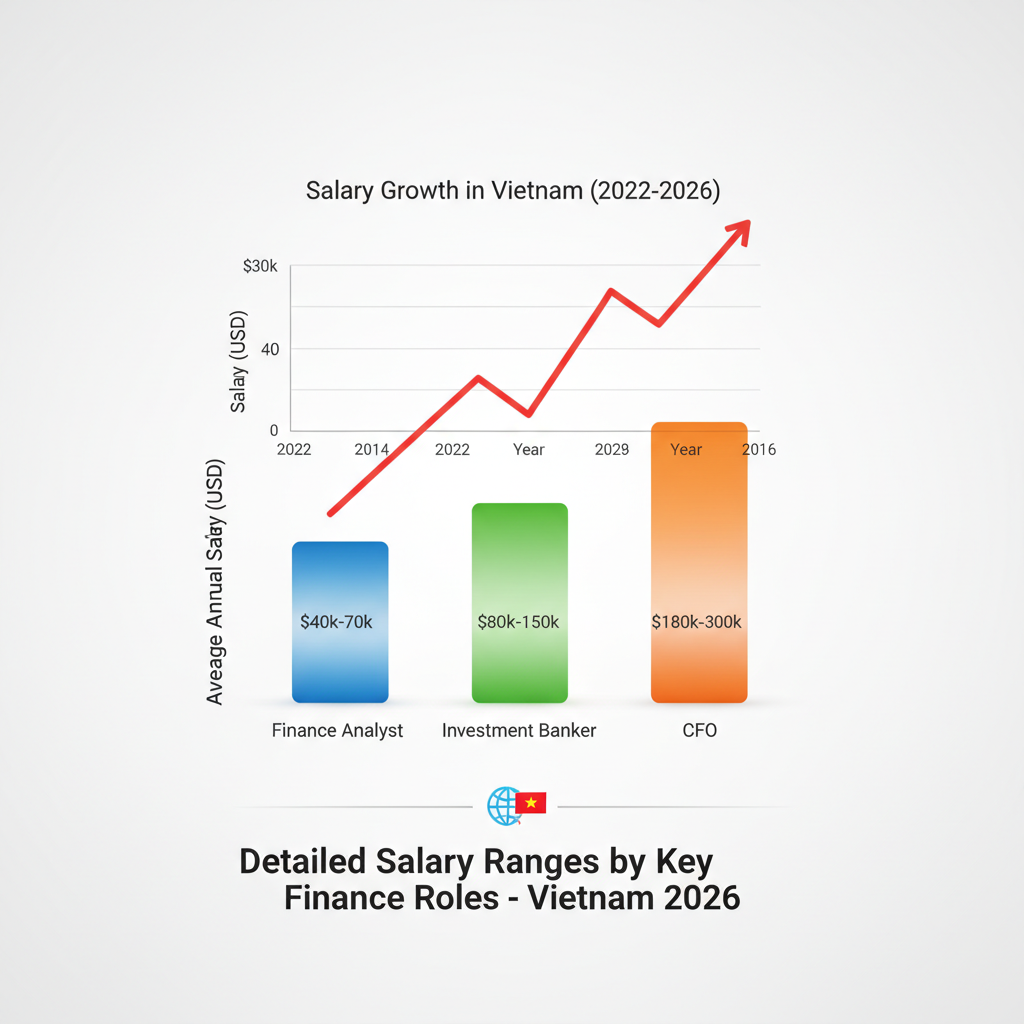
Detailed Salary Ranges by Key Finance Roles
Understanding the intricate landscape of compensation within Vietnam’s dynamic finance sector is crucial for both aspiring professionals and employers. This section provides a comprehensive salary range report of jobs in finance field in Vietnam, breaking down compensation expectations for various common and specialized positions. Our analysis offers specific ranges for different job functions, considering factors like experience, company size, and the specific demands of the Vietnamese market.
The finance industry in Vietnam continues to experience robust growth, driven by foreign investment, a burgeoning middle class, and rapid digitalization. This expansion creates high demand for skilled professionals across investment banking, corporate finance, accounting, auditing, FinTech, risk management, and compliance. As a result, compensation packages are becoming increasingly competitive, reflecting the value these roles bring to the economy.
-
Investment Banking & Corporate Finance Compensation
Investment Banking and Corporate Finance roles are typically among the most lucrative within the finance sector, reflecting the high-stakes, demanding nature of the work involved. In Vietnam, entry-level Analysts can expect annual salaries ranging from VND 250 million to VND 450 million. Associates with 3-5 years of experience often command VND 500 million to VND 900 million, while Vice Presidents and Directors, possessing substantial deal experience and leadership capabilities, can earn upwards of VND 1.2 billion to VND 3 billion, or even more, depending on the firm’s prestige and deal flow. Key roles include M&A Analysts, Corporate Finance Managers, Private Equity Associates, and Investment Managers. The compensation structure often includes a significant bonus component tied to individual and firm performance, making the total remuneration package highly variable but potentially very rewarding. This segment of the market is heavily influenced by the volume and size of M&A transactions, IPOs, and fundraising activities within the region.
-
Accounting & Auditing Salary Trends in Vietnam
The Accounting and Auditing sectors form the backbone of financial integrity and reporting. Salaries in these fields in Vietnam are generally stable and grow steadily with experience and professional qualifications (e.g., ACCA, CPA Vietnam). Junior Accountants or Auditors typically start at VND 120 million to VND 200 million per annum. Mid-level roles, such as Senior Accountants, Audit Seniors, or Financial Analysts, can expect VND 250 million to VND 450 million. For experienced professionals in leadership positions like Finance Managers, Chief Accountants, or Audit Managers, salaries can range from VND 500 million to VND 900 million. Directors and Heads of Finance in large corporations or Big Four accounting firms may earn VND 1 billion to VND 2 billion annually. These figures also vary based on the type of company—multinational corporations (MNCs) often offer more competitive packages than local firms. For a broader perspective on regional trends, refer to authoritative sources such as Michael Page’s Vietnam Salary Guide, which provides in-depth data across various industries, including finance.
-
FinTech, Risk Management, and Compliance Pay Scales
The rapid emergence of FinTech in Vietnam has created a new wave of highly specialized and well-compensated roles. Professionals in FinTech, particularly those with strong technical skills in areas like blockchain, AI, data science, and cybersecurity, can command premium salaries. FinTech Developers and Data Scientists might earn VND 350 million to VND 700 million, while FinTech Product Managers could see VND 600 million to VND 1.2 billion. Risk Management and Compliance roles have also seen increased importance and compensation due to evolving regulatory frameworks and the need for robust governance. Junior Risk Analysts or Compliance Officers typically earn VND 180 million to VND 300 million. Mid-career professionals such as Senior Risk Managers or Compliance Managers can expect VND 400 million to VND 800 million. Heads of Risk or Chief Compliance Officers in larger financial institutions often receive VND 1 billion to VND 2.5 billion, reflecting the critical nature of their function in safeguarding institutional integrity and navigating complex legal landscapes. These roles are essential for maintaining stability and trust within Vietnam’s expanding financial ecosystem, and compensation reflects the specialized knowledge and regulatory expertise required.
In conclusion, the salary range report of jobs in finance field in Vietnam illustrates a vibrant and growing sector with diverse compensation structures. While experience, qualifications, and company size are primary determinants, the increasing complexity and specialization within finance continue to drive up remuneration for top talent across all sub-sectors.
Factors Impacting Finance Professional Salaries
Understanding the intricacies of compensation is paramount for any professional navigating the dynamic Vietnamese finance sector. While a general salary range report of jobs in finance field in vietnam can offer a baseline, an individual’s earning potential is profoundly influenced by a complex interplay of factors. From career longevity to educational background and the very nature of their employer, these critical elements directly shape remuneration. Aspiring and current finance professionals alike benefit immensely from recognizing these drivers, as it enables strategic career planning and negotiation. Let’s delve into the key components that determine an individual’s financial trajectory in this vibrant market.
1. Impact of Experience Level and Seniority
Experience remains one of the most significant determinants of salary in the finance industry, not just in Vietnam but globally. Entry-level positions, typically held by recent graduates, command salaries appropriate for foundational learning and skill development. As professionals accumulate 3-5 years of experience, moving into mid-level roles, their salaries see a noticeable jump, reflecting increased responsibility, demonstrated competence, and a growing network. At this stage, they are often expected to manage projects, lead smaller teams, or specialize in specific financial instruments or services.
The true premium, however, is reserved for senior-level professionals with 8-15+ years of experience. These individuals, often in managerial, directorial, or C-suite positions (e.g., CFO, Head of Investment), are compensated for their extensive expertise, strategic insights, leadership capabilities, and proven track record of driving significant business outcomes. Their salaries reflect not just their technical skills but also their ability to mentor, innovate, and navigate complex market challenges. Specialized experience, particularly in niche areas like mergers & acquisitions, private equity, or advanced financial modeling, can further accelerate salary growth, making seasoned experts highly sought after in the competitive Vietnamese market. For detailed insights, professionals often consult a salary range report of jobs in finance field in vietnam that breaks down earnings by seniority.
2. Influence of Education and Professional Certifications (CFA, ACCA)
While practical experience is invaluable, a strong educational foundation and relevant professional certifications provide a crucial competitive edge. A bachelor’s degree in finance, economics, accounting, or a related field is typically the minimum entry requirement. However, postgraduate degrees, such as an MBA (Master of Business Administration) with a finance specialization or a Master’s in Finance, often translate into higher starting salaries and faster career progression, especially for roles in investment banking, portfolio management, or corporate finance.
Beyond academic degrees, professional certifications are game-changers. The Chartered Financial Analyst (CFA) designation is globally recognized as the gold standard for investment professionals. Holding a CFA charter signals a deep understanding of investment tools, asset valuation, portfolio management, and wealth planning, often leading to substantially higher compensation and access to elite roles in asset management, equity research, and hedge funds. Similarly, the Association of Chartered Certified Accountants (ACCA) qualification is highly valued for professionals in accounting, auditing, and financial management roles. It demonstrates expertise in international accounting standards, taxation, and corporate governance. Other certifications like the Certified Public Accountant (CPA) or Financial Risk Manager (FRM) also significantly boost earning potential by validating specialized knowledge and commitment to professional excellence, making certified individuals highly attractive to employers.
3. Company Size, Type (Local vs. MNC), and Industry Segment
The nature of the employer plays a colossal role in determining a finance professional’s salary. Generally, larger companies, particularly multinational corporations (MNCs), offer more competitive remuneration packages than local Vietnamese firms or small and medium-sized enterprises (SMEs). MNCs often operate on global pay scales, offering higher base salaries, robust benefits (health insurance, pensions, stock options), and performance-based bonuses, reflecting their greater revenue streams, complex operations, and demand for internationally benchmarked expertise. Local companies, while offering valuable experience, may have more constrained budgets, though many are rapidly professionalizing their compensation structures to attract top talent.
Furthermore, the specific industry segment within finance significantly impacts salary levels. Investment banking, private equity, and venture capital typically offer the highest compensation due to the high-stakes, high-reward nature of their work and the specialized skills required. Asset management, fintech, and corporate finance roles within large conglomerates also command premium salaries. In contrast, roles in traditional retail banking, commercial banking, or audit firms might have different, often more structured, salary ranges. However, even within these segments, specialized functions (e.g., risk management in banking, forensic accounting in audit) can attract higher pay. Professionals looking for benchmarks can refer to global salary trends for deeper insights into these variations, understanding that these factors collectively define the diverse salary landscape in Vietnamese finance.
In conclusion, a finance professional’s salary in Vietnam is a multifaceted outcome of their experience, education, professional accreditation, and the strategic choices they make regarding their employer and industry segment. Recognizing and strategically leveraging these factors is key to maximizing earning potential and achieving long-term career success in Vietnam’s evolving financial market. For a comprehensive overview, consulting a specific salary range report of jobs in finance field in vietnam tailored to these nuances is highly recommended.
Future Outlook & Career Advancement Strategies
Vietnam’s financial sector is a vibrant and rapidly evolving landscape, presenting immense opportunities for professionals to advance their careers and maximize earning potential. As the nation continues its impressive economic ascent, driven by foreign direct investment and digital transformation, the demand for highly skilled finance professionals is set to intensify. This section offers a comprehensive look into future salary trends and provides actionable strategies for professionals to navigate this dynamic environment, enhance their career trajectory, and secure a more prosperous future.
Staying informed about market trends, understanding the value of specialized skills, and mastering negotiation are critical for anyone aiming for leadership roles or significantly boosting their income. The insights below are designed to equip finance professionals in Vietnam with the knowledge and tools necessary to not just participate but to thrive in the coming years.

1. Projected Salary Growth in Vietnamese Finance (2026 Onwards)
The outlook for salary growth in the Vietnamese finance sector from 2026 onwards is overwhelmingly positive, underpinned by several key drivers. Economic expansion, particularly in high-growth sectors, is creating significant demand for sophisticated financial services. Digital transformation continues to reshape the industry, with FinTech innovations, blockchain, AI, and data analytics becoming integral to operations, thereby increasing the value of professionals adept in these areas. We anticipate a steady annual increase in base salaries, likely in the mid-to-high single-digit percentages across most financial roles, with specialized and in-demand positions potentially seeing double-digit growth.
Specific areas projected to experience accelerated salary increases include roles in FinTech, cybersecurity in finance, ESG (Environmental, Social, and Governance) investing, risk management, and data science within banking and investment. Professionals with expertise in regulatory compliance and international finance will also command premium salaries due to Vietnam’s increasing integration into global financial markets. For a deeper understanding of current remuneration benchmarks and to forecast your potential earnings, consult a comprehensive salary range report of jobs in finance field in Vietnam.
2. Top In-Demand Skills for Higher Earning Potential
To maximize earning potential in Vietnam’s evolving financial landscape, professionals must strategically invest in acquiring and honing specific, critically sought-after skills. The following are paramount:
- Digital Fluency & FinTech Expertise: Proficiency in emerging technologies like AI, machine learning, blockchain, and advanced data analytics is no longer a luxury but a necessity for impacting financial products and processes.
- ESG & Sustainable Finance: Expertise in green finance, impact investing, and ESG reporting is increasingly valuable, commanding higher compensation as companies align with global sustainability standards.
- Advanced Data Science & Analytics: The ability to collect, analyze, and interpret complex financial data to drive strategic decisions and build predictive models is crucial.
- Risk Management & Regulatory Compliance: Professionals skilled in identifying, assessing, and mitigating financial risks, along with ensuring compliance with local and international standards, are in high demand.
- Strategic Leadership & Soft Skills: Beyond technical expertise, strong leadership, critical thinking, problem-solving, and communication are vital for career progression and earning power.
As Vietnam’s economy continues its robust growth trajectory and its financial markets mature, the demand for professionals equipped with these forward-looking capabilities will grow, directly impacting their salary prospects. Continuous learning and professional development are essential for staying competitive.
3. Effective Salary Negotiation Tips for Finance Professionals
Mastering salary negotiation is a fundamental skill that directly impacts your career earnings. For finance professionals in Vietnam, approaching this conversation strategically can significantly enhance your compensation package. Here are key tips:
- Do Your Research: Before any negotiation, thoroughly research market rates for your role, experience, and location within Vietnam. Utilize industry reports and current job listings to empower your position.
- Articulate Your Value: Clearly demonstrate how your skills, experience, and achievements translate into tangible benefits for the employer. Quantify past successes (e.g., “saved X amount,” “increased revenue by Y%”).
- Timing and Preparation: Choose the right moment for negotiation—typically after a job offer or during a performance review. Prepare your talking points and anticipate counterarguments.
- Consider the Total Compensation Package: Look beyond just the base salary. Evaluate the entire package, which may include performance bonuses, stock options, health insurance, retirement plans, professional development, and flexible work arrangements.
- Maintain Professionalism and Confidence: Approach negotiations as a collaborative discussion. Be confident in your worth, polite but firm in your requests, and open to finding a mutually beneficial agreement.
By implementing these strategies, finance professionals can confidently advocate for their worth, ensuring their compensation reflects their true market value and contributions to their organization.
In conclusion, the future for finance professionals in Vietnam is bright, characterized by significant growth potential and evolving demands. By proactively acquiring in-demand skills, staying informed about market trends, and mastering effective negotiation, professionals can strategically position themselves for enhanced career trajectories and substantial increases in earning potential.
Partner with Shelby Global
You are looking for reliable HR Sevice Suppliers? Contact Shelby Global Now! To connect with verified talents and upgrade your orginization.
—————————————
References
– World Bank reports on Vietnam: https://www.worldbank.org/en/country/vietnam/overview
– Fintech Market in Vietnam: https://www.statista.com/outlook/fmo/fintech/vietnam
– Michael Page Vietnam Salary Guide: https://www.michaelpage.com.vn/salary-report
– Robert Walters Vietnam Salary Survey: https://www.robertwalters.com.vn/salary-survey.html
– Vietnam’s economy continues its robust growth trajectory: https://www.adb.org/countries/viet-nam/economy