Introduction & Overview of Vietnam’s Medical Job Market
Vietnam’s rapid economic development over the past few decades has fueled significant growth across various sectors, with healthcare emerging as a particularly vital and expanding industry. As the nation’s population grows, ages, and becomes increasingly health-conscious, the demand for high-quality medical services and skilled healthcare professionals continues to surge. This dynamic environment makes understanding the nuances of the medical job market, particularly salary trends, indispensable for both aspiring practitioners and experienced professionals.
For individuals embarking on a career in medicine or considering a move within the sector, comprehensive insights into potential earnings are crucial for informed decision-making and career planning. Similarly, healthcare institutions and policy makers benefit immensely from a clear picture of market compensation to attract and retain top talent, ensure fair practices, and foster a sustainable healthcare ecosystem. This section sets the stage for a detailed exploration, offering an introduction to the current landscape and highlighting the significance of a salary range report of jobs in medicine field in vietnam.
1. Importance of Salary Transparency in Healthcare
Salary transparency, particularly within a critical sector like healthcare, plays a pivotal role in ensuring fairness, equity, and efficiency. For medical professionals, having access to reliable salary data empowers them to negotiate fair compensation commensurate with their skills, experience, and specialization. It helps them set realistic career goals, evaluate job offers effectively, and understand their market value, thereby reducing potential wage gaps and fostering a sense of professional fairness.
Beyond individual benefits, transparent salary information contributes to a healthier overall job market. It allows healthcare employers to benchmark their compensation packages against industry standards, ensuring they remain competitive in the fierce battle for talent. In an era where skilled doctors, nurses, and allied health professionals are in high demand, offering competitive salaries is paramount for attracting and retaining the best workforce. Moreover, it aids in strategic workforce planning, helping institutions allocate resources effectively and identify areas where investment in human capital is most needed. This report aims to shed light on these critical aspects by providing a comprehensive salary range report of jobs in medicine field in vietnam, offering clarity that benefits all stakeholders.
2. Current State of Vietnam’s Healthcare Sector: Growth & Demand
Vietnam’s healthcare sector is experiencing an unprecedented period of expansion, driven by several key factors. Robust economic growth has led to increased disposable incomes, allowing more citizens to access private healthcare services and better quality treatments. An aging population, coupled with a rising prevalence of non-communicable diseases, further amplifies the need for diverse medical expertise. The government’s continued investment in healthcare infrastructure, alongside an increasing focus on public health initiatives and medical tourism, further stimulates this demand.
According to recent reports, Vietnam is committed to strengthening its healthcare system to respond to new challenges, including boosting public and private investment. This commitment translates into a burgeoning market for doctors, specialists, nurses, pharmacists, medical technicians, and administrators across both public and private institutions. The need for specialized care, particularly in fields like oncology, cardiology, and geriatrics, is growing exponentially, creating lucrative opportunities for highly qualified professionals. This vibrant growth underscores the urgency for up-to-date salary information to guide both new entrants and seasoned veterans through this evolving landscape. To illustrate the robust nature of this sector’s expansion, consider the continuous development and modernization efforts nationwide.

The continuous development and modernization efforts, exemplified by government initiatives and private sector investments, highlight a robust and promising future for healthcare professionals in Vietnam. This sustained growth ensures that the demand for skilled medical personnel will remain high for the foreseeable future, making salary insights more valuable than ever.
3. Purpose and Scope of This Salary Report
The primary purpose of this salary report is to furnish a detailed and current overview of compensation expectations within Vietnam’s diverse medical field. Recognizing the complexity and breadth of healthcare professions, this report delves into various roles, from general practitioners and specialists to nurses, allied health professionals, and administrative staff. Our goal is to provide a reliable benchmark for salaries, factoring in variables such as experience level, geographic location, type of institution (public vs. private), and specific medical specialization.
This comprehensive salary range report of jobs in medicine field in vietnam is meticulously compiled using data from a variety of reputable sources, including industry surveys, job postings, and insights from recruitment professionals specializing in the healthcare sector. It aims to serve as an invaluable resource for job seekers navigating their career paths, employers looking to design competitive compensation strategies, and educational institutions advising future medical professionals. By offering granular data and clear analysis, we empower all stakeholders with the knowledge needed to make informed decisions in Vietnam’s dynamic and essential medical job market. Subsequent sections will provide specific salary ranges, detailed breakdowns by specialty, and insights into factors influencing earning potential.
Key Factors Influencing Medical Salaries in Vietnam
Understanding the salary range report of jobs in medicine field in vietnam requires a deep dive into a multifaceted landscape. While the demand for skilled medical professionals remains consistently high across the nation, their earning potential is far from uniform. A combination of individual qualifications, employment choices, and geographic considerations significantly shapes a doctor’s income, creating a dynamic remuneration structure that reflects both local economic realities and global healthcare trends. Exploring these diverse elements provides a clearer picture of what medical professionals can expect to earn in Vietnam’s evolving healthcare sector.
-
Specialization, Experience, and Educational Qualifications
At the forefront of salary determination are a medical professional’s specialization, accumulated experience, and educational background. Highly specialized fields, such as neurosurgery, oncology, interventional cardiology, or advanced diagnostic imaging, consistently command higher salaries. These disciplines require extensive, often international, training, carry significant responsibility, and address critical health needs, leading to fewer qualified practitioners and thus premium compensation. In contrast, general practitioners, while foundational to the healthcare system, typically observe a lower salary range report of jobs in medicine field in vietnam, though their demand is widespread.
Experience is another powerful determinant. A fresh medical graduate’s starting salary will be notably modest compared to that of a seasoned consultant with a decade or more of practice. Seniority brings not only a deeper clinical understanding but also a professional reputation, a network of referrals, and proven patient outcomes, all of which enhance earning potential. Physicians with a strong track record, especially those involved in complex procedures or renowned for specific expertise, naturally attract better remuneration packages.
Furthermore, educational qualifications play a pivotal role. Holding advanced degrees (Master’s, Ph.D.), specialist certifications, or having completed international fellowships significantly boosts a doctor’s market value. These credentials signify a higher level of expertise and commitment to the profession. Continuous professional development, participation in medical research, and academic appointments (e.g., teaching in medical schools) also contribute positively to a doctor’s overall compensation and career progression.
-
Public vs. Private Sector Employment & Hospital Tiers
The choice between public and private sector employment represents a critical fork in the road for medical professionals regarding salary. Vietnam’s public healthcare system, forming the backbone of national health services, offers salaries structured by government pay scales. While these positions often come with benefits like job security, pensions, and opportunities for research or teaching, base salaries are generally lower compared to the private sector. Historically, supplementary income through unofficial ‘envelope’ payments or private clinics after public hospital hours was common, though government efforts are focused on formalizing and increasing official pay to mitigate this.
Conversely, the private healthcare sector, particularly international hospitals and high-end clinics catering to affluent local patients and expatriates, offers significantly higher base salaries, performance bonuses, and often superior working conditions and facilities. These institutions compete aggressively for top talent, providing attractive packages to lure experienced and specialized doctors. However, private sector roles might come with less job security compared to their public counterparts.
Within both sectors, the tier and reputation of the hospital are crucial. Central-level hospitals in major metropolitan areas (e.g., Bach Mai Hospital in Hanoi, Cho Ray Hospital in Ho Chi Minh City) handle the most complex cases and receive substantial funding, potentially offering better compensation or more opportunities for supplemental income generation. Provincial and district hospitals, while essential for local communities, generally operate on tighter budgets, leading to lower pay scales for their medical staff.
-
Geographic Location and Economic Zones
Where a medical professional chooses to practice is undeniably a major factor influencing their salary. Major urban centers like Hanoi and Ho Chi Minh City are economic powerhouses. They boast a higher concentration of both public and private hospitals, including prestigious international facilities, leading to intense demand for medical talent and consequently, the highest salaries in the country. The high cost of living in these cities is often offset by superior earning opportunities, access to advanced medical technology, and a diverse patient base. For a comprehensive salary range report of jobs in medicine field in vietnam, these urban hubs always feature at the top.
Tier 2 cities and provincial capitals such as Da Nang, Can Tho, and Hai Phong offer a middle ground. While salaries here are competitive, they typically fall below the rates found in the two mega-cities. The healthcare infrastructure might be less developed, and the private sector less extensive, leading to more reliance on public sector employment opportunities. Economic development in specific provincial industrial or tourism zones can create localized demand for medical services, potentially offering better pay for certain roles (e.g., occupational health physicians).
In stark contrast, rural and remote areas often present the lowest salaries, coupled with limited medical resources and heavier workloads due to doctor shortages. To address these disparities and attract doctors to underserved regions, the Vietnamese government occasionally implements incentive programs, such as housing allowances or additional stipends. However, these incentives may not fully bridge the substantial salary gap with urban centers. According to a report by Vietnam News, doctors’ salaries across the board, particularly in the public sector, have been a concern, emphasizing the impact of these geographic and sectoral differences.
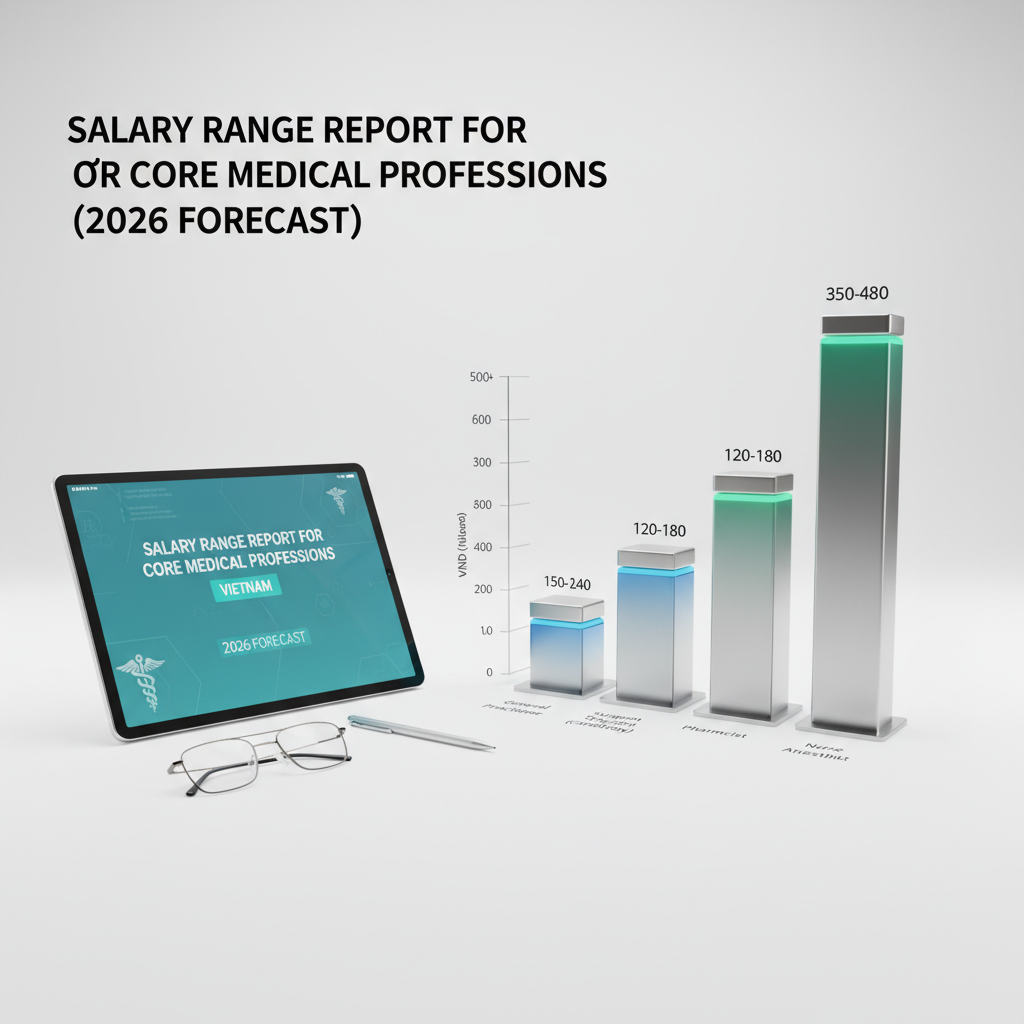
Salary Range Report for Core Medical Professions (2026 Forecast)
Dive into the projected salary ranges for foundational medical roles that form the backbone of Vietnam’s healthcare system, offering insights into their earning potential.
As Vietnam’s economy continues its robust growth trajectory and its population ages, the demand for quality healthcare services is rapidly escalating. This surge directly impacts the value and compensation of medical professionals. This salary range report of jobs in medicine field in Vietnam provides a forward-looking analysis, forecasting earning potential for core medical professions in 2026. We explore how factors like experience, specialization, public vs. private sector roles, and geographic location will shape the financial landscape for these vital healthcare providers.
1. General Practitioners (GPs) and Family Doctors
General Practitioners (GPs) and Family Doctors are the frontline of healthcare, providing essential primary care and preventative services. In Vietnam, their role is increasingly critical as the government emphasizes community-based healthcare and early disease detection. For 2026, demand for skilled GPs is expected to remain exceptionally high, particularly in urban centers and underserved rural areas, driven by an expanding middle class seeking accessible medical advice.
Projected Salary Range (2026): Entry-level GPs (1-3 years experience) in public hospitals might expect 10,000,000 – 18,000,000 VND per month. Mid-career GPs (3-7 years experience) could see ranges of 18,000,000 – 30,000,000 VND, while highly experienced practitioners (7+ years) or those in specialized private clinics could command upwards of 30,000,000 – 50,000,000 VND, or even higher for those managing their own practice. Factors like additional certifications, language proficiency for international clinics, and management responsibilities will significantly influence earning potential. The shift towards private healthcare provision and medical tourism also contributes to upward pressure on GP salaries within the Vietnamese healthcare system.
2. Registered Nurses and Allied Health Professionals
Registered Nurses (RNs) and Allied Health Professionals (AHPs) — including medical technologists, physiotherapists, and radiographers — are indispensable to daily hospital and clinic operations across Vietnam. Their importance cannot be overstated, performing diverse duties from patient care to diagnostic support. Projected growth in hospital infrastructure and specialized medical facilities will ensure sustained, robust demand for these professionals through 2026, highlighting their continued importance within the healthcare sector.
Projected Salary Range (2026): For Registered Nurses, entry-level positions (1-3 years experience) in public facilities might offer 8,000,000 – 15,000,000 VND per month. Mid-career nurses (3-7 years) with specialized skills (e.g., ICU, surgical) can anticipate 15,000,000 – 25,000,000 VND. Senior nurses, head nurses, or those in private international hospitals could earn 25,000,000 – 40,000,000 VND or more. Allied Health Professionals generally command similar or slightly higher rates depending on their discipline and demand. Experienced physiotherapists or medical imaging technicians might start around 12,000,000 – 20,000,000 VND and reach 25,000,000 – 45,000,000 VND with significant experience. Night shifts, overtime, and roles in private clinics or with foreign patients often lead to higher compensation. Continuous professional development and specialization are key drivers for maximizing the salary range within these critical healthcare roles.
3. Pharmacists and Medical Technicians
Pharmacists and Medical Technicians play a crucial supportive role, ensuring correct medication dispensing and accurate diagnostic testing. With the expansion of pharmaceutical companies, community pharmacies, and diagnostic laboratories in Vietnam, demand for these skilled professionals is set to grow steadily. Increased awareness about rational drug use and advanced diagnostic methods will further solidify their positions in the healthcare workforce.
Projected Salary Range (2026): Entry-level Pharmacists (1-3 years experience) in community pharmacies or hospital dispensaries may expect 10,000,000 – 18,000,000 VND per month. Those with more experience (3-7 years) or in roles within pharmaceutical manufacturing or research can project 18,000,000 – 30,000,000 VND. Senior Pharmacists, especially those in management, clinical roles, or with international pharmaceutical companies, could achieve 30,000,000 – 55,000,000 VND. Medical Technicians, vital for laboratory analysis and diagnostic services, typically start from 9,000,000 – 16,000,000 VND monthly. Experienced Medical Technicians specializing in areas like microbiology, pathology, or advanced imaging can see their salaries rise to 16,000,000 – 28,000,000 VND, with lead technicians or those in highly specialized labs potentially earning up to 35,000,000 VND. Certification in specific diagnostic technologies or laboratory management skills will be significant factors in boosting a technician’s earning potential.
The core medical professions in Vietnam are poised for continued growth in compensation through 2026, driven by a dynamic healthcare landscape and increasing investment. While these projections offer a general guide, individual earnings will always reflect expertise, dedication, and strategic career choices. Continuous professional development and adapting to new medical technologies will be paramount for maximizing earning potential in this vital sector.
Specialist Medical Salaries in High-Demand Fields (2026 Forecast)
As Vietnam’s economy continues its robust growth trajectory and its population ages, the demand for highly specialized medical professionals is escalating rapidly. This section delves into the anticipated salary range report of jobs in medicine field in Vietnam for niche and critical medical professions in 2026. The forecast reflects the advanced skills, extensive training, and immense responsibilities these roles entail, positioning them among the highest earners in the healthcare sector.
Factors influencing these projected salaries include the increasing prevalence of complex diseases, greater public access to advanced medical treatments, the expansion of private healthcare facilities, and a persistent shortage of highly trained specialists. Professionals in these fields are not just practitioners; they are pioneers in their respective domains, often bringing cutting-edge techniques and life-saving interventions to the forefront of Vietnamese healthcare.
1. Surgeons (e.g., General, Orthopedic, Neuro)
Surgeons, encompassing a wide array of sub-specialties from general and orthopedic to highly intricate neurosurgery, consistently command the highest salaries in the medical profession. Their roles demand years of rigorous training, precision, extensive practical experience, and the ability to make critical decisions under pressure. In Vietnam, the demand for skilled surgeons is particularly high, driven by an increasing number of road accidents requiring orthopedic and trauma surgery, as well as a growing awareness and capability for complex procedures like neurosurgery and cardiovascular operations. For 2026, the projected annual salary range for experienced surgeons in Vietnam is expected to be considerable, varying significantly based on sub-specialty, reputation, and whether they work in public hospitals or more lucrative private clinics and international hospitals. General surgeons might see annual salaries in the range of VND 800,000,000 – 1,500,000,000, while highly specialized fields like neurosurgery or complex cardiovascular surgery could command upwards of VND 1,800,000,000 – 3,000,000,000 or even higher, especially for those with international training and a proven track record. Surgical specialists are indispensable, making their expertise extremely valuable.
2. Anesthesiologists and Radiologists
Anesthesiologists and radiologists are vital to modern medicine, often working behind the scenes but delivering indispensable services. Anesthesiologists are critical for ensuring patient safety and comfort during surgical procedures, managing pain, and monitoring vital signs throughout operations and recovery. Their expertise requires a deep understanding of pharmacology, physiology, and emergency medicine. Radiologists, on the other hand, are diagnostic experts, utilizing advanced imaging technologies such as X-rays, CT scans, MRIs, and ultrasounds to diagnose diseases, injuries, and monitor treatment efficacy. With the increasing sophistication of medical technology, the demand for skilled radiologists capable of interpreting complex images and interventional radiology procedures is soaring. For 2026, the anticipated annual salary range for experienced anesthesiologists and radiologists in Vietnam is projected to be robust. Given their specialized skills and critical roles, these professionals can expect annual salaries ranging from VND 700,000,000 to 1,300,000,000. Professionals with advanced sub-specialization (e.g., interventional radiology, pediatric anesthesiology) and extensive experience, particularly within well-equipped private hospitals, may see their earnings push towards the upper end of this spectrum, reflecting the global trend for these high-demand medical specialties. The evolving landscape of healthcare in Southeast Asia continues to highlight the importance of these diagnostic and procedural specialists, as detailed in various healthcare market analyses.
3. Cardiologists, Oncologists, and Internal Medicine Specialists
The prevalence of non-communicable diseases, including cardiovascular conditions and cancer, is a significant public health challenge globally, and Vietnam is no exception. This drives an immense demand for cardiologists, oncologists, and highly skilled internal medicine specialists. Cardiologists diagnose and treat heart and blood vessel conditions, which are leading causes of mortality. Oncologists specialize in cancer diagnosis and treatment, navigating complex regimens of chemotherapy, radiation, and immunotherapy. Internal medicine specialists act as primary caregivers for adults, managing chronic conditions and providing comprehensive care, often coordinating with other specialists. Their roles are crucial for long-term patient management and preventative care. For 2026, the projected annual salaries for these specialists in Vietnam are expected to reflect their profound impact on patient outcomes and quality of life. Experienced cardiologists and oncologists are forecast to earn annual salaries between VND 750,000,000 and 1,400,000,000. Highly sought-after internal medicine specialists with broad expertise, especially those working in multidisciplinary teams or leading hospital departments, could also see salaries approaching the upper end of this range. The increasing investment in specialist healthcare facilities and medical tourism further boosts the value of these experts within the Vietnamese healthcare ecosystem.
In conclusion, the forecast for specialist medical salaries in high-demand fields in Vietnam for 2026 indicates a strong upward trend. Driven by advanced skills, critical patient needs, technological advancements, and a growing private healthcare sector, these professionals are set to be among the highest-paid individuals in the country. Their expertise is not just valued; it is essential for the nation’s health and well-being.
Career Growth, Future Trends & Maximizing Earning Potential
Vietnam’s healthcare sector is undergoing a rapid transformation, driven by economic development, increasing public health awareness, and technological advancements. For medical professionals, this dynamic environment presents both challenges and unparalleled opportunities for career advancement and significant growth in earning potential. Understanding the evolving landscape, embracing new skills, and strategic career planning are crucial steps for anyone aiming to thrive in the medical field here. This section delves into the key drivers shaping the future of medicine in Vietnam, offering actionable strategies to enhance your professional trajectory and maximize your financial rewards.
1. Impact of Medical Tourism and Digital Health Innovations
The rise of medical tourism is positioning Vietnam as a regional hub for specialized treatments, particularly in areas like aesthetic surgery, dental care, and traditional medicine. This trend creates a demand for highly skilled practitioners, state-of-the-art facilities, and international standard services. Simultaneously, digital health innovations are revolutionizing patient care, diagnostics, and medical education. Telemedicine platforms, AI-powered diagnostic tools, electronic health records (EHRs), and wearable health technologies are not just buzzwords but integral components of modern healthcare delivery.
For professionals, this translates into a need for proficiency in digital literacy, data analysis, and an understanding of remote patient management. New roles are emerging, such as telehealth specialists, medical informaticists, and AI integration experts. Adapting to these technological shifts and actively participating in their implementation can significantly enhance your marketability and open doors to higher-paying positions in both public and private sectors, including foreign-invested hospitals and clinics catering to international clientele.

2. Continuing Professional Development (CPD) and Advanced Certifications
In a rapidly evolving medical landscape, continuous learning is not merely a recommendation but a necessity. Continuing Professional Development (CPD) programs and advanced certifications are powerful tools for deepening expertise, staying abreast of the latest medical breakthroughs, and specializing in high-demand fields. Pursuing certifications in areas like interventional cardiology, robotic surgery, infectious disease management, or even healthcare management and administration can distinguish you from peers and command a higher salary.
Furthermore, with the increasing focus on evidence-based medicine, engaging in research, publishing papers, and presenting at international conferences can elevate your professional profile significantly. Many international organizations and universities offer specialized training programs that align with global standards, which are highly valued in Vietnam’s competitive market. According to the World Health Organization, investing in health workforce education and training is critical for achieving universal health coverage and improving health outcomes globally, underscoring the universal value of advanced education. Staying updated with global best practices through accredited courses ensures your skills remain relevant and in demand, directly impacting your earning potential and career progression into leadership roles.
3. Negotiating Your Salary and Long-Term Career Planning
Understanding the market value of your skills and experience is paramount when negotiating your salary. Researching the typical salary range report of jobs in medicine field in Vietnam is a crucial first step. Websites specializing in job market data, recruitment agencies, and professional networks can provide invaluable insights into compensation benchmarks for various specialties and experience levels. When negotiating, highlight your unique qualifications, advanced certifications, and any contributions that bring exceptional value to your employer, such as proficiency in new technologies or experience with international patient care.
Beyond immediate compensation, strategic long-term career planning is essential for sustained growth. This involves identifying your niche, whether it’s specializing in a rare disease, excelling in a high-demand surgical field, or transitioning into medical leadership or academia. Consider mentorship opportunities, networking with senior professionals, and taking on projects that expand your management or research portfolio. Proactive career planning, coupled with a commitment to continuous skill enhancement and informed salary negotiation, will pave the way for a highly rewarding and financially successful career in Vietnam’s dynamic medical sector.
Partner with Shelby Global
You are looking for reliable HR Sevice Suppliers? Contact Shelby Global Now! To connect with verified talents and upgrade your orginization.
—————————————
References
– Vietnam to strengthen healthcare system to respond to new challenges: https://vietnamnews.vn/society/1169601/viet-nam-to-strengthen-healthcare-system-to-respond-to-new-challenges.html
– Doctors’ salaries remain modest – Vietnam News: https://vietnamnews.vn/society/1169996/doctors-salaries-remain-modest.html
– Vietnam Economic Update, October 2023: Taking Stock, Tackling Challenges: https://www.worldbank.org/en/country/vietnam/publication/vietnam-economic-update-october-2023
– Statista Healthcare Market Vietnam Outlook: https://www.statista.com/outlook/dmo/healthcare/vietnam
– World Health Organization: https://www.who.int/news-room/fact-sheets/detail/health-workforce