Understanding the Singapore Transport Talent Landscape 2026
The intricate world of Singapore’s transportation sector is perpetually in motion, not just with goods and passengers, but also with evolving talent demands and economic shifts. For CEOs at the helm of transportation enterprises in this dynamic city-state, navigating the current economic climate, addressing specific challenges, and capitalizing on unique opportunities regarding talent acquisition and salary budget optimizing manners for the CEO of transportation field in singapore is paramount. The year 2026 promises a landscape of both significant growth potential and complex human capital hurdles, demanding a strategic and forward-thinking approach to ensure sustained success and competitiveness.

1. Singapore’s Transport Sector: Economic Outlook & Forecasted Growth
Singapore’s strategic geographical location, world-class infrastructure, and pro-business environment continue to anchor its position as a global logistics and transportation hub. The economic outlook for its transport sector remains robust, underpinned by strong government initiatives like the SG Transport Master Plan 2040 and ongoing investments in future-ready port and airport capabilities. Forecasted growth is not merely in volume but also in sophistication, driven by increasing e-commerce, regional trade agreements, and the burgeoning demand for sustainable and smart logistics solutions. This expansion, while creating vast opportunities for market penetration and innovation, simultaneously intensifies the demand for a highly skilled and adaptable workforce. CEOs must anticipate this growth to proactively plan their talent pipeline and remuneration strategies.
2. Key Challenges: Rising Operational Costs & Talent Scarcity
Despite the optimistic growth projections, transportation CEOs in Singapore face a confluence of pressing challenges. Rising operational costs, fueled by volatile energy prices, increasing land lease expenses, and the rapid adoption of expensive new technologies (e.g., autonomous vehicles, AI-driven logistics platforms), put considerable pressure on profit margins. Coupled with this is the critical issue of talent scarcity. The transport sector struggles with an aging workforce, a perception gap among younger generations regarding career attractiveness, and fierce competition for specialized skills. There’s a particular dearth of professionals proficient in data analytics, supply chain optimization, cybersecurity, and green logistics. Attracting and retaining these high-demand individuals, who are often courted by tech and finance sectors offering lucrative packages, presents a significant hurdle. This dual pressure of rising costs and a shrinking talent pool underscores the necessity of efficient resource allocation and judicious salary management.
3. Why Strategic Salary Budgeting is Crucial for CEO Success
In this challenging yet opportunity-rich environment, strategic salary budgeting transcends mere cost control; it becomes a cornerstone of CEO success. Effective salary budget optimizing manners for the CEO of transportation field in singapore involves a nuanced approach that balances competitive remuneration with sustainable financial health. It’s about understanding market benchmarks, identifying critical roles, and developing differentiated pay structures that reward performance, skills, and loyalty. A CEO who masters this can not only attract top-tier talent from a limited pool but also significantly boost employee retention, morale, and productivity. This strategic alignment of compensation with business objectives ensures that every dollar spent on salaries yields maximum return, fostering innovation, operational efficiency, and ultimately, a stronger competitive edge in the global transport arena. Neglecting this vital aspect can lead to a talent drain, inflated recruitment costs, and a significant impediment to achieving strategic business goals in the demanding Singaporean market.
Data-Driven Approaches to Compensation Optimization
In the dynamic and highly competitive transportation field in Singapore, a robust and adaptable compensation strategy is no longer a luxury but a necessity for attracting, retaining, and motivating top talent. For a CEO, understanding the most effective salary budget optimizing manners for the CEO of transportation field in Singapore is paramount to maintaining a competitive edge. This involves moving beyond traditional budgeting methods to embrace sophisticated HR analytics, rigorous market benchmarking, and forward-looking predictive modeling. By leveraging these data-driven approaches, organizations can refine their salary budgeting decisions, ensuring maximum impact, operational efficiency, and a powerful competitive advantage in a rapidly evolving market.
1. Benchmarking Compensation Against Local & Regional Competitors
Effective compensation optimization begins with a clear understanding of the external market. In Singapore’s transportation sector, where talent acquisition is fiercely competitive, benchmarking compensation and benefits is crucial. This involves systematically comparing your organization’s salary structures, bonus schemes, and benefits packages against those of direct local competitors and key regional players across Southeast Asia. Beyond base salaries, a comprehensive benchmark should include variable pay, long-term incentives, health and wellness benefits, and even non-monetary perks that contribute to total rewards. Data sources typically include reputable industry-specific salary surveys, compensation consulting firms, and anonymized peer data exchanges. For a transportation CEO, this data provides critical insights into market rates for roles ranging from logistics managers and supply chain analysts to specialized technical personnel and senior leadership. Understanding where your compensation stands relative to the market allows you to identify areas of overpayment or underpayment, adjust salary bands strategically, and ensure your offerings are attractive enough to secure and retain the skilled workforce essential for navigating Singapore’s complex logistics landscape. This proactive approach prevents talent drain and positions your company as an employer of choice.
2. Leveraging HR Analytics for Performance-Based Pay Structures
Once external competitiveness is established, the next step in optimizing your salary budget is to ensure internal equity and performance alignment through HR analytics. This involves using data to design and implement performance-based pay structures that directly link employee compensation to individual, team, and organizational performance metrics. For transportation companies, key performance indicators (KPIs) might include on-time delivery rates, operational efficiency, safety records, customer satisfaction scores, and successful project completion. HR analytics allows you to correlate compensation levels with performance data, identifying high performers who might be underpaid and low performers who may be overcompensated relative to their contribution. By analyzing data on employee productivity, retention rates of top talent, and the return on investment (ROI) of various incentive programs, organizations can refine their bonus structures, commission schemes, and merit increase policies. This data-driven approach ensures that your limited salary budget is allocated most effectively, rewarding those who deliver the greatest value and incentivizing desired behaviors. Furthermore, it helps to create a culture of accountability and high performance, ultimately enhancing overall business outcomes. This is a core component of salary budget optimizing manners for the CEO of transportation field in Singapore, ensuring every dollar spent contributes to strategic goals.
3. Predictive Workforce Planning & Future Talent Needs Assessment
Looking ahead, a crucial element of sophisticated compensation optimization is predictive workforce planning. The transportation sector is undergoing rapid transformation driven by automation, AI, data analytics, and sustainability initiatives. These trends will fundamentally alter future talent requirements. Predictive modeling uses historical data, economic forecasts, and industry trends to anticipate future talent gaps, skill shortages, and emerging roles (e.g., drone operators, logistics data scientists, autonomous vehicle engineers). By forecasting these needs, CEOs can proactively assess the compensation implications for these future roles. For instance, if data analytics skills are projected to be in high demand, understanding their market value today allows for budgeting and planning competitive compensation packages for tomorrow. This foresight enables organizations to allocate future salary budgets effectively, preventing reactive and potentially costly last-minute adjustments. It also informs talent development initiatives and strategic hiring plans, ensuring that the necessary skills are either cultivated internally or acquired externally well in advance. Predictive analytics helps in modeling different scenarios, such as the cost of attracting a specific number of AI specialists versus training existing staff, providing a clear financial roadmap for talent investment. This forward-thinking approach ensures that your compensation strategy remains agile and aligned with the long-term strategic goals of your transportation enterprise in Singapore, securing the talent pipeline for sustained growth and innovation.
Innovative Total Rewards & Non-Monetary Incentives
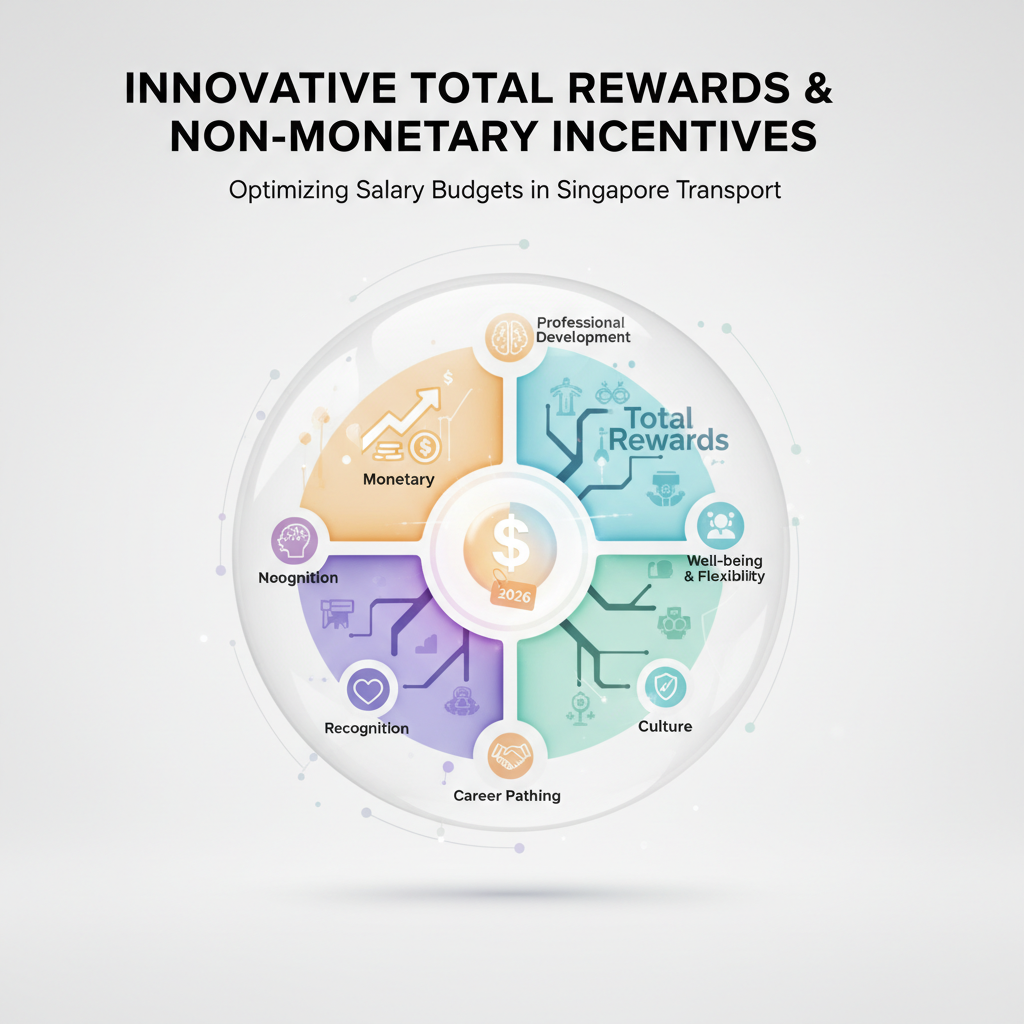
In today’s competitive talent landscape, particularly within the dynamic transportation sector in Singapore, attracting and retaining top talent requires more than just a competitive base salary. Forward-thinking leaders, especially those keen on salary budget optimizing manners for the CEO of transportation field in singapore, recognize the imperative of comprehensive total rewards packages. These strategies extend beyond monetary compensation to encompass employee well-being, continuous growth opportunities, and a supportive work environment. By focusing on holistic value propositions, organizations can significantly enhance talent retention, foster engagement, and build a resilient workforce ready to navigate future challenges.
1. Implementing Flexible Work Arrangements & Hybrid Models
The traditional 9-to-5, office-centric model is rapidly evolving. Flexible work arrangements, including hybrid models and fully remote options, have emerged as powerful non-monetary incentives. For transportation companies in Singapore, embracing these models can significantly boost employee satisfaction and work-life balance, critical factors for retention. Hybrid models, for instance, offer the best of both worlds – the collaborative benefits of in-office interaction coupled with the autonomy and reduced commute stress of remote work. Beyond enhanced employee morale, these arrangements can also lead to operational efficiencies, such as reduced real estate costs, indirectly contributing to salary budget optimization. By demonstrating trust and providing autonomy, companies foster a culture of empowerment that makes employees feel valued, encouraging them to commit long-term. This strategic shift not only widens the talent pool, allowing access to skilled professionals who may not be able to commit to daily office commutes but also reflects a modern approach to workforce management that prioritizes individual needs alongside business objectives.
2. Investing in Professional Development, Upskilling, and Reskilling Programs
Employees, especially in sectors undergoing rapid technological transformation like transportation, are increasingly seeking opportunities for continuous learning and career advancement. Investing in professional development, upskilling, and reskilling programs is a highly effective non-monetary incentive that addresses this need. These programs can range from sponsoring certifications and industry-specific training to offering mentorship initiatives, leadership development courses, and internal mobility pathways. By equipping employees with new skills and knowledge, organizations not only enhance individual career trajectories but also future-proof their workforce against evolving industry demands. This commitment to growth signals to employees that their long-term potential is valued, fostering loyalty and reducing attrition. Furthermore, a highly skilled workforce drives innovation and operational excellence, providing a significant return on investment that far outweighs the initial program costs. Tailored development plans ensure that employees feel supported in their professional journey, directly linking their personal growth with the company’s success.
3. Enhancing Employee Wellness, Benefits, and Recognition Schemes
A truly comprehensive total rewards strategy extends to the holistic well-being of employees. Enhancing employee wellness programs, beyond standard health insurance, now includes mental health support, stress management resources, and physical fitness initiatives. These proactive measures demonstrate a genuine care for employees’ overall health, contributing significantly to a positive work environment and reduced absenteeism. Additionally, competitive benefits packages that address diverse needs—such as extended parental leave, financial planning workshops, or specialized support for caregivers—can differentiate an employer in the market. Beyond wellness, robust recognition schemes are crucial. These can be formal, like annual awards and bonuses, or informal, such as peer-to-peer recognition platforms and shout-outs for daily contributions. Acknowledging and celebrating employee achievements and efforts not only boosts morale but also reinforces desired behaviors and fosters a culture of appreciation. According to a report by Gallup on employee engagement, organizations with highly engaged employees show 21% greater profitability, underscoring the tangible impact of these non-monetary initiatives on business outcomes. For companies navigating complex operational demands, such as those in Singapore’s transportation field, a healthy, appreciated workforce is an invaluable asset.
Operational Efficiencies for Salary Budget Optimization
In the dynamic and competitive landscape of Singapore’s transportation sector, a CEO’s ability to navigate financial complexities while ensuring operational excellence is paramount. One of the most critical areas for strategic management is the salary budget. Optimizing this significant expenditure requires more than just cost-cutting; it demands a holistic approach to operational efficiencies. By streamlining internal processes, strategically adopting technology, and refining staffing levels, a CEO can unlock substantial improvements in salary budget allocation and overall efficiency. These proactive salary budget optimizing manners for the CEO of transportation field in singapore are not merely about reducing expenditure but about maximizing the return on human capital investment, enhancing productivity, and fostering sustainable growth through smart financial stewardship and digital process streamlining.
1. Automating Repetitive Tasks Through Digital Transformation
Digital transformation stands as a cornerstone for modernizing operations and directly influencing salary budget efficiency. For transportation companies, a significant portion of daily tasks often involves manual, repetitive processes that consume valuable employee time and are prone to human error. Automating these tasks frees up staff from mundane activities, allowing them to focus on higher-value, strategic functions that drive innovation and customer satisfaction. This shift not only enhances productivity but can also lead to a more optimized workforce, potentially reducing the need for additional hires in administrative or operational support roles.
Consider the implementation of advanced fleet management systems that automate route planning, fuel tracking, and maintenance scheduling. Automated ticketing and billing systems minimize manual data entry and reconciliation, while digital HR platforms can streamline payroll processing, leave management, and employee onboarding. By investing in these technologies, the immediate benefit is often seen in reduced operational costs and improved accuracy. The long-term gain lies in creating a leaner, more agile workforce, where employees are engaged in more impactful work, thus making every salary dollar work harder. A report by Deloitte highlights how digital transformation drives significant efficiencies in supply chain and logistics, directly impacting labor utilization and cost structures, which is highly relevant for the transportation sector.
2. Optimizing Staffing Levels and Workforce Utilization
Effective strategic workforce planning is fundamental to ensuring that your organization has the right number of people, with the right skills, in the right roles, at the right time. For a transportation company, this involves a rigorous analysis of operational demands, peak periods, and off-peak times. Overstaffing leads to unnecessary salary expenditure, while understaffing can result in burnout, service quality degradation, and lost revenue opportunities. The goal is to strike a precise balance that maintains operational continuity and high service standards without overextending the salary budget.
This optimization strategy often involves several components: thorough workload analysis to understand actual staffing needs across different departments (drivers, logistics coordinators, maintenance, customer service); implementing flexible staffing models, such as part-time contracts or cross-training employees for multiple roles during fluctuating demand; and leveraging performance metrics to continuously assess productivity per employee. By systematically analyzing workforce utilization and implementing data-driven staffing decisions, a CEO can ensure that every employee contributes meaningfully to the company’s objectives. This proactive management of human resources directly translates into a more efficient salary budget, ensuring that capital is allocated where it generates the most value and avoids the pitfalls of redundant or underutilized personnel.
3. Cost-Benefit Analysis of Outsourcing vs. In-House Capabilities
A strategic decision for any CEO looking for salary budget optimizing manners for the CEO of transportation field in singapore involves a meticulous cost-benefit analysis of whether certain functions are better handled in-house or outsourced. While core operational functions like driving or primary logistics management are typically maintained internally, many support functions can be prime candidates for outsourcing, potentially offering significant cost savings and access to specialized expertise without the overhead of full-time salaries, benefits, and infrastructure.
Consider functions such as IT support, certain accounting processes, non-core maintenance, or even aspects of customer service (e.g., overflow call handling). Outsourcing these allows the company to leverage external vendors who achieve economies of scale and possess specialized skill sets that might be expensive or difficult to maintain internally. The cost-benefit analysis must go beyond direct salary comparison; it needs to factor in the full cost of an in-house employee (benefits, training, recruitment, office space, equipment) versus the contractual fees of an outsourcing partner. While outsourcing can offer flexibility and reduced fixed costs, it also requires careful vendor management and consideration of data security and quality control. A balanced approach, informed by a thorough understanding of both monetary and strategic implications, is crucial to making decisions that truly optimize the salary budget while enhancing overall operational effectiveness. To delve deeper into various strategies for managing and optimizing your compensation structures, explore how different salary budget optimizing manners for the CEO of transportation field in singapore can be tailored to specific business needs.
Future-Proofing Your Salary Budget & Talent Strategy
The transportation sector in Singapore is a dynamic crucible of innovation, demanding not just operational excellence but also strategic foresight in human capital management. For a CEO leading a transportation company in this vibrant economy, ensuring long-term financial health and maintaining a competitive edge hinges on adeptly navigating evolving industry trends and market shifts. This means adopting sophisticated salary budget optimizing manners for the CEO of transportation field in Singapore that go beyond mere cost-cutting, focusing instead on sustainable growth, adaptability, and the magnetic pull for top-tier talent. Amidst global economic uncertainties and the accelerating pace of technological change, the ability to attract, develop, and retain skilled professionals – particularly in critical areas like logistics technology, supply chain management, and sustainable transport solutions – is paramount. This section outlines key strategies to future-proof your organization’s most valuable asset: its people.
1. Agile Budgeting & Scenario Planning for Economic Volatility
In an industry susceptible to fuel price fluctuations, geopolitical tensions, and global supply chain disruptions, static annual salary budgets are a relic of the past. Adopting agile budgeting allows for frequent reviews and adjustments, ensuring that your financial resources for compensation remain responsive to both internal performance metrics and external market realities. For a CEO in Singapore’s transportation sector, this involves short budgeting cycles, continuous forecasting, and the flexibility to reallocate funds based on emerging opportunities or threats. Coupled with agile budgeting, robust scenario planning becomes indispensable. By modeling various economic “what-if” scenarios – from a sudden surge in demand for last-mile delivery to a significant downturn impacting freight volumes – you can proactively assess the impact on your salary budget and prepare contingency plans. This might include identifying non-essential roles for temporary freezes, defining triggers for performance-based bonuses, or earmarking funds for critical talent retention initiatives during challenging periods. Such foresight is a cornerstone of effective compensation trends Singapore logistics management, allowing for strategic rather than reactive decisions.
2. Building a Culture of Continuous Performance Management
Shifting from traditional annual performance reviews to a system of continuous feedback and performance management is vital for maximizing productivity and ensuring fair, performance-linked compensation. This approach fosters ongoing dialogue between managers and employees, setting clear expectations, providing regular constructive feedback, and recognizing achievements promptly. For transportation companies, where operational efficiency and safety are paramount, this means embedding performance metrics directly into compensation structures. By clearly linking individual and team contributions to company goals, employees understand how their efforts impact the bottom line, thereby enhancing engagement and motivation. This culture also supports proactive identification of skill gaps and development needs, allowing for targeted training investments that enhance employee capabilities and career progression within the company. Furthermore, a transparent and equitable system of continuous performance management contributes significantly to talent retention strategies Singapore transportation, as employees feel valued, understood, and fairly rewarded for their contributions.
3. Attracting & Retaining Future Generations of Talent (Gen Z & Millennials)
The demographics of the workforce are rapidly evolving, with Millennials and Gen Z now forming the largest segments. These generations have distinct expectations that extend beyond competitive salaries, placing high value on purpose-driven work, flexible arrangements, opportunities for continuous learning, and a supportive, inclusive workplace culture. For the transportation sector, which sometimes battles traditional perceptions, actively appealing to these desires is crucial. This involves investing in state-of-the-art technology, not only for operational efficiency but also to create appealing work environments (e.g., advanced logistics software, digital dispatch systems). Offering flexible work options where feasible, promoting diverse career paths – perhaps from driver to logistics manager through skill development – and fostering a culture of innovation can significantly enhance your employer brand. Moreover, robust professional development programs, mentorship opportunities, and clear pathways for career advancement are key motivators. Understanding these nuances and integrating them into your overall talent strategy and salary budget optimizing manners for the CEO of transportation field in Singapore is critical for securing the pipeline of skilled professionals needed for future success. To explore deeper insights into effective salary budget optimizing manners for the CEO of transportation field in Singapore, you can visit our detailed guide.
To stay competitive in the dynamic global market, particularly in Singapore, businesses must monitor the evolving labour market conditions and wage practices. The Ministry of Manpower (MOM) Singapore regularly publishes comprehensive Labour Market Reports that offer invaluable insights into employment trends, wage growth, and talent supply, which can inform your strategic salary and talent planning. By proactively addressing the unique needs of these future generations and aligning compensation strategies with their values, your transportation company can build a resilient, high-performing workforce ready to tackle tomorrow’s challenges.
Partner with Shelby Global
You are looking for reliable HR Sevice Suppliers? Contact Shelby Global Now! To connect with verified talents and upgrade your orginization.
—————————————
References
– SG Transport Master Plan 2040: https://www.mot.gov.sg/docs/default-source/default-document-library/sg-transport-master-plan-2040.pdf
– :
– Gallup on employee engagement: https://www.gallup.com/workplace/236087/employee-engagement-drives-growth.aspx
– Deloitte: Digital Transformation in Supply Chain and Logistics: https://www2.deloitte.com/us/en/pages/manufacturing/articles/digital-transformation-supply-chain-logistics.html
– Labour Market Reports – Ministry of Manpower Singapore: https://stats.mom.gov.sg/Pages/Labour-Market-Reports.aspx