Organizational Structure & Team Dynamics
In Vietnam’s dynamic IT landscape, the foundational aspects of HR—its organizational structure, team size, hierarchy, and specialization—present a stark contrast between agile Small and Medium-sized Enterprises (SMEs) and established corporate entities. Understanding these Differences between the SMEs’ HR Structure and the Corporates’ HR Structure in IT field in vietnam is crucial for talent attraction, retention, and strategic HR management. While SMEs prioritize speed and flexibility, often embodying agile HR practices Vietnam, larger corporations typically adopt more formalized and specialized approaches to handle their extensive workforce and complex operational requirements, aligning with established corporate HR models Vietnam.

1. Lean vs. Specialized HR Teams
The most immediate distinction lies in the sheer size and breadth of HR operations. Agile SMEs in Vietnam’s IT sector typically operate with lean HR departments. Often, this might involve a single HR manager or a small team of two to five individuals, reflecting a focus on efficiency and resource optimization. Their structure allows for quick adaptation to market changes and immediate responses to employee needs, a hallmark of effective agile HR practices in Vietnam. These teams are pragmatic, focusing on essential functions like recruitment, onboarding, and basic employee relations to support rapid growth.
Conversely, established corporate entities boast significantly larger and more specialized HR teams. Their HR department size IT companies often encompasses multiple sub-departments: talent acquisition, compensation and benefits, learning and development, HR business partnering, and HR operations. This specialization enables a deeper expertise in each functional area, providing comprehensive support to a diverse and large employee base. Such structures are designed for scalability and complexity, ensuring compliance, strategic foresight, and robust employee programs across multiple business units.
2. Reporting Lines and Decision-Making Authority
The hierarchical setup significantly impacts reporting lines and the velocity of decision-making. In SMEs, the HR function often reports directly to the CEO, founder, or a senior executive. This flat organizational structure fosters direct communication, rapid problem-solving, and positions HR as a core strategic partner. Decisions regarding talent acquisition Vietnam IT, policy changes, or employee relations can be made swiftly, reflecting the company’s entrepreneurial spirit and allowing for rapid pivots in talent strategy. This direct line of communication empowers HR generalist roles SMEs to influence top-level strategy effectively.
Corporate HR models Vietnam, however, are characterized by multi-layered reporting lines. HR professionals often report through department heads, regional HR leaders, and potentially a global HR function. This hierarchical structure, while ensuring standardization and governance, can sometimes lead to slower decision-making HR Vietnam processes. Approvals may require multiple stakeholders, extended timelines, and adherence to established protocols. While this ensures thoroughness and consistency, it can occasionally impede the agility required for immediate talent market responses. The emphasis here is on structured processes and alignment with broader organizational goals.
3. Generalist vs. Specialist HR Roles
The nature of HR roles within these two organizational types also presents a clear differentiation. In SMEs, HR professionals primarily operate as generalists. These generalists are adept at wearing multiple hats, handling everything from sourcing and interviewing candidates (talent acquisition Vietnam IT) to managing payroll, benefits administration, employee relations, and even aspects of performance management. This broad scope of responsibility demands versatility and a comprehensive understanding of all HR facets, making the HR generalist roles SMEs critical to the overall operational success and cultural development.
For large corporations, the trend is towards highly specialized HR roles. Here, you’ll find dedicated recruitment specialists, compensation and benefits analysts, learning and development managers, HR business partners (HRBPs) who align HR strategies with specific business units, and experts in HR technology adoption Vietnam. This high degree of HR specialization IT Vietnam allows for deeper expertise in specific domains, leading to more sophisticated programs and services. HRBPs, for instance, act as strategic consultants, helping business leaders navigate complex talent challenges. These HR strategic partnerships are key to contributing significantly to the organization’s strategic objectives and overall organizational design HR.
In conclusion, the Differences between the SMEs’ HR Structure and the Corporates’ HR Structure in IT field in vietnam are not merely superficial but deeply ingrained in their operational philosophies and strategic objectives. SMEs thrive on agility and broad skill sets, while corporations leverage specialization and structured processes. Both approaches are valid and effective within their respective contexts, continuously evolving to meet the unique demands of Vietnam’s vibrant IT sector.
Talent Acquisition & Employer Branding Strategies
The quest for top IT talent in Vietnam is a highly competitive arena, presenting unique challenges and opportunities for both Small and Medium-sized Enterprises (SMEs) and large Corporates. While both strive to attract, recruit, and onboard the best professionals, their strategies often diverge significantly dueately to differences in scale, resources, and operational structures. Understanding these distinctions is crucial for anyone navigating the vibrant Vietnamese IT job market, especially when considering the Differences between the SMEs’ HR Structure and the Corporates’ HR Structure in IT field in vietnam.
1. Budget & Resources for Recruitment
Resource allocation is arguably the most fundamental differentiator in talent acquisition. SMEs typically operate with leaner budgets, meaning their recruitment efforts often rely on in-house HR generalists, personal networks, and cost-effective digital channels. They may not have the luxury of dedicated talent acquisition teams, advanced Applicant Tracking Systems (ATS), or extensive recruitment marketing campaigns. Their focus is often on direct hiring, leveraging the personal touch and close-knit culture as selling points. This approach requires HR teams to be highly resourceful and adaptable, often managing the entire recruitment lifecycle from sourcing to onboarding with limited specialized tools.
In contrast, Corporates benefit from substantially larger budgets, enabling them to invest in robust recruitment infrastructures. This includes dedicated talent acquisition departments, specialized recruiters for different tech stacks, premium subscriptions to global job platforms, and partnerships with headhunting agencies. They can afford sophisticated HR technology suites, predictive analytics for workforce planning, and comprehensive recruitment marketing automation. The sheer scale allows for a more structured, process-driven approach, often aiming for high-volume recruitment while maintaining quality standards. This resource disparity impacts everything from the speed of hire to the overall quality and fit of the recruited talent.
2. Employer Branding and Candidate Experience
Employer branding is critical for attracting IT talent, yet SMEs and Corporates build their brands differently. SMEs often cultivate an authentic, agile, and community-focused employer brand. They highlight direct impact, opportunities for rapid growth, a collaborative work environment, and a flat hierarchy. Their brand messaging is often personal, showcasing individual team members and success stories through social media or direct testimonials. The candidate experience in an SME might involve more direct communication with hiring managers and founders, offering a more personalized and less bureaucratic journey, emphasizing transparency and the chance to be part of something foundational.
Corporates, on the other hand, employ sophisticated, multi-channel branding strategies. They leverage global recognition, structured career development paths, attractive compensation packages, comprehensive benefits, and access to cutting-edge technologies and large-scale projects. Their branding efforts involve professional campaigns across various digital platforms, career fairs, university partnerships, and corporate social responsibility (CSR) initiatives. The candidate experience is typically more standardized and structured, utilizing portals and automated communications, but often promises clear progression paths, extensive training, and a strong sense of stability and prestige. For insights into the global talent landscape and evolving recruitment challenges, authoritative reports often highlight these distinctions, underscoring the need for tailored strategies to secure top talent in dynamic markets like Vietnam.
3. Sourcing Channels & Tools Adoption
The channels and tools used for sourcing IT talent also reflect the scale and budget of the organization. SMEs frequently rely on cost-effective and community-driven sourcing methods. This includes leveraging professional networking platforms like LinkedIn (often free or basic accounts), local Vietnamese job boards (e.g., TopDev, VietnamWorks), employee referral programs, and participation in local tech meetups or hackathons. They might use basic spreadsheets or simple CRM tools to track candidates, relying heavily on manual processes and personal connections. The agility of SMEs allows them to quickly pivot their sourcing strategies based on immediate hiring needs and market feedback.
Corporates adopt a broader, more technologically advanced array of sourcing channels and tools. They invest in premium subscriptions to global talent platforms (e.g., LinkedIn Recruiter, Monster), specialized IT job boards, and often employ AI-powered sourcing tools that can scan vast databases for specific skill sets. Partnerships with recruitment agencies specializing in IT, robust Applicant Tracking Systems (ATS) for pipeline management, and sophisticated talent pools built from previous applicants are common. Furthermore, Corporates often have dedicated teams for social media recruitment, employer review sites, and campus recruitment programs. The adoption of advanced HR tech allows them to streamline high-volume recruitment, improve candidate matching, and enhance overall recruitment efficiency in the competitive IT talent market.
Compensation, Benefits & Performance Management
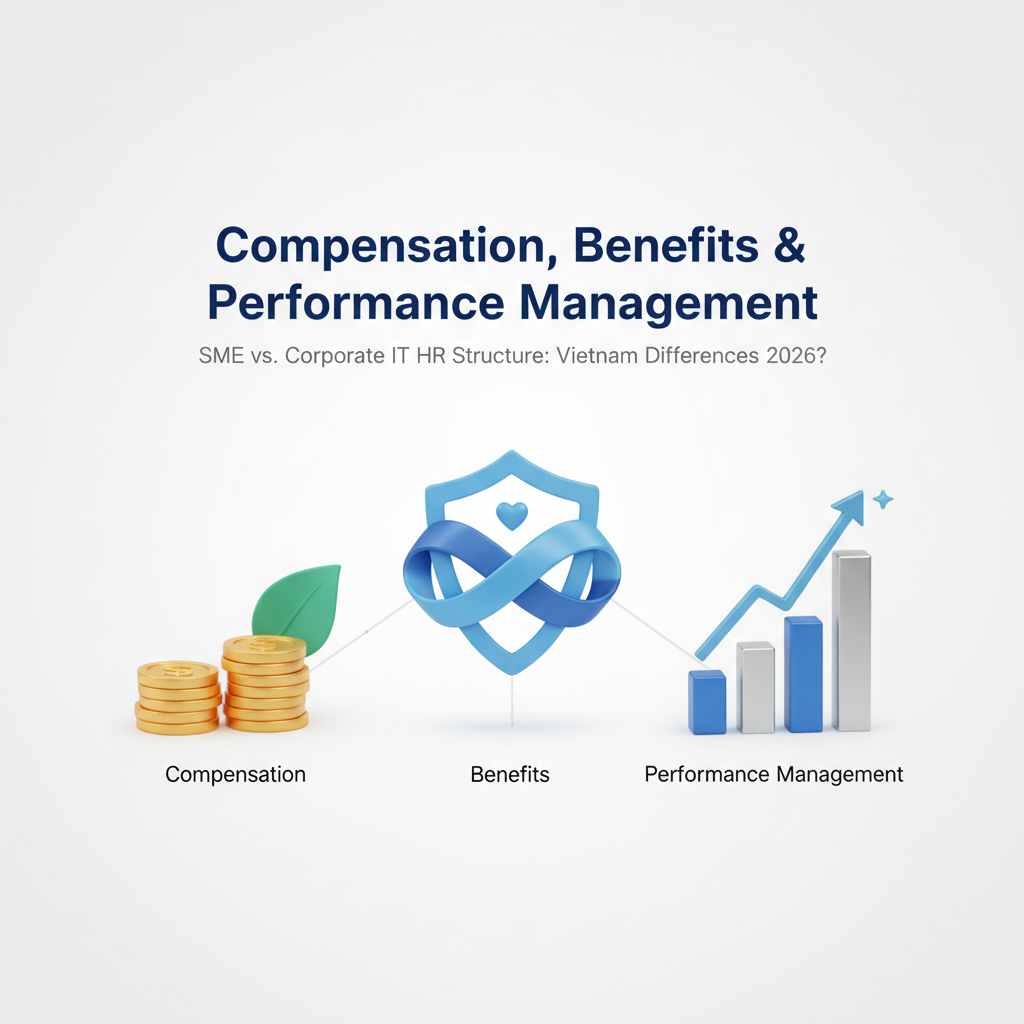
Retaining skilled IT professionals in Vietnam is a critical challenge for businesses across the spectrum. The landscape of HR strategies, particularly in compensation, benefits, and performance management, varies significantly when comparing Small and Medium-sized Enterprises (SMEs) to large corporations. These Differences between the SMEs’ HR Structure and the Corporates’ HR Structure in IT field in Vietnam profoundly influence talent attraction strategies and long-term IT professional retention Vietnam, shaping employee expectations and career development IT Vietnam pathways. Understanding these distinct approaches is vital for both employers aiming to optimize their HR practices and IT talent seeking the best fit for their professional aspirations.
-
Salary Structures & Benchmarking Practices
The fundamental disparity in how SMEs and large corporations approach IT salary structures Vietnam is often stark. SMEs frequently operate with more agile, less formalized salary frameworks. Their compensation philosophies are typically driven by immediate market rates for specific skills and the company’s financial capacity. This can mean greater flexibility in individual negotiations but potentially less transparency or standardization across roles. For IT professionals, this might translate to higher potential for personalized compensation packages, especially for niche skills, but also a greater reliance on direct negotiation and market awareness to ensure fair pay. The absence of extensive benchmarking practices can sometimes make it harder for SMEs to compete directly with the deep pockets of larger entities for top-tier tech talent market Vietnam.
Conversely, large corporations are characterized by highly structured, often globally benchmarked salary scales. Their systems typically involve job grading, detailed pay bands, and regular market surveys to ensure their IT compensation philosophies are competitive across regions. These corporations leverage extensive data and sophisticated tools to establish clear career progression IT Vietnam paths linked to specific pay raises. While potentially less flexible for individual negotiation, this approach offers greater transparency, predictability, and often, more competitive base salaries and bonuses. This robust structure helps them attract a steady stream of IT talent and manage the expectations of their workforce, ensuring their HR practices tech companies Vietnam align with global standards. The stability and clear growth trajectories inherent in these systems are often powerful draws for experienced IT professionals seeking long-term security and advancement.
-
Health, Wellness & Fringe Benefits
Beyond the base salary, the benefits packages offered by SMEs and large corporations present another significant divergence impacting employee benefits IT sector Vietnam. SMEs, with their more constrained resources, often provide essential health benefits and sometimes unique, personalized perks that reflect their workplace culture IT Vietnam. These might include flexible working hours, direct access to leadership, or contributions to professional development courses. While these can be highly valued, they often lack the breadth and depth of a corporate benefits program.
Large corporations, on the other hand, typically offer comprehensive and multi-layered health, wellness, and fringe benefits. These packages often include premium health insurance for employees and their families, extensive wellness programs (e.g., gym memberships, mental health support, ergonomic assessments), retirement plans, stock options, educational allowances, and generous leave policies. These robust offerings are not merely perks but strategic components of their talent attraction strategies Vietnam IT. They significantly enhance the overall employee value proposition, acting as powerful incentives for IT talent retention Vietnam and ensuring a higher quality of life and financial security for their workforce. The strategic thinking behind these benefits is outlined by thought leaders in HR, emphasizing their role in attracting and retaining top talent in a competitive market. (Mercer: Rethink Rewards)
-
Performance-Based Incentives & Rewards Systems
Performance management IT professionals and their associated incentive and rewards systems also vary considerably. In SMEs, performance evaluation can be more informal, often project-based, and directly linked to the company’s immediate success. Bonuses might be discretionary, tied to specific project milestones, or even a share of company profits. This direct connection to the business’s outcomes can be highly motivating for some IT professionals, fostering a sense of ownership and immediate impact. Reward systems are often less bureaucratic and can be implemented quickly, allowing for agile responses to individual and team achievements.
In contrast, large corporations employ sophisticated and structured performance management systems. These typically involve annual or semi-annual reviews, detailed Key Performance Indicators (KPIs) or Objectives and Key Results (OKRs), and multi-tiered bonus structures. These might include individual performance bonuses, team bonuses, company-wide profit sharing, and long-term incentive plans (LTIPs) such as stock options or restricted stock units, particularly for senior IT leadership. While these systems can sometimes be perceived as complex or bureaucratic, they offer clear metrics for career development IT Vietnam, defined pathways for advancement, and often significant financial rewards for sustained high performance. The transparency and formality of these systems provide a structured framework for performance-based incentives, helping these organizations maintain high standards and foster a culture of continuous improvement and excellence among their IT workforce. These comprehensive systems are vital components of corporate HR structure aimed at not just retaining but also developing high-performing IT talent.
HR Technology & Digital Transformation Adoption
The landscape of HR within Vietnam’s bustling IT sector is undergoing a profound transformation, driven largely by advancements in technology and the imperative for digital efficiency. This section delves into the critical differences between the SMEs’ HR structure and the Corporates’ HR structure in IT field in Vietnam, particularly concerning HR technology implementation, digital tools, and data analytics capabilities. While both entities strive for operational excellence and strategic talent management, their approaches to HR digital transformation Vietnam are often divergent, shaped by resources, scale, and strategic priorities. Understanding these disparities is crucial for stakeholders navigating the evolving HR tech landscape, from IT SME HR technology adoption to sophisticated corporate HR systems Vietnam.
-
HRIS/HRMS Implementation & Utilization
For IT SMEs in Vietnam, the implementation of Human Resources Information Systems (HRIS) or Human Resources Management Systems (HRMS) often begins with foundational, cost-effective solutions. These systems typically focus on core functionalities such as employee data management, payroll, leave tracking, and sometimes basic performance management. The choice of HRIS adoption Vietnam for SMEs is frequently driven by immediate operational needs and budget constraints, often opting for cloud-based, subscription-model software that requires minimal upfront investment and IT infrastructure. While utilization might be high for basic tasks, the integration with other business systems or advanced modules like talent acquisition or learning management might be limited. The focus remains on streamlining administrative burdens rather than extensive strategic HR planning.
In stark contrast, large Corporates in the Vietnamese IT sector typically deploy comprehensive, often customized, enterprise-grade HRIS/HRMS platforms. These systems, sometimes developed in-house or from global vendors like SAP SuccessFactors or Oracle HCM Cloud, offer end-to-end functionality across the entire employee lifecycle. From recruitment and onboarding to performance management, learning & development, compensation, benefits, and succession planning, these platforms provide a unified, integrated view. Corporate HR systems Vietnam prioritize robust data security, scalability, and seamless integration with existing ERPs and other business intelligence tools. Utilization extends far beyond transactional processes to empower strategic HR initiatives, providing rich data for analysis and supporting a more complex, multi-layered organizational structure.
-
Automation of Core HR Processes
Automation of core HR processes within IT SMEs in Vietnam is typically more selective and targeted. Tasks such as payroll processing, attendance tracking, and leave requests are prime candidates for HR automation IT SMEs, freeing up valuable time for HR personnel who often wear multiple hats. While effective in reducing manual errors and improving efficiency for these specific functions, the scope of automation might be narrower, with less complex workflows and fewer interdepartmental integrations. The emphasis is on tangible, immediate gains in operational efficiency rather than a holistic, enterprise-wide automation strategy. As these SMEs grow, scaling HR technology Vietnam becomes a key challenge, demanding careful consideration of integrated automation solutions.
Corporates, on the other hand, embrace a much broader and deeper level of HR process automation. Beyond core administrative tasks, automation extends to recruitment workflows (e.g., resume parsing, automated interview scheduling), onboarding sequences, performance review cycles, and even parts of the learning and development journey. Utilizing advanced tools like Robotic Process Automation (RPA) and AI-driven chatbots for routine queries, these organizations aim for a highly efficient, self-service HR model. This extensive automation not only reduces administrative overhead but also significantly enhances the employee experience platforms HR, allowing HR professionals to pivot towards strategic roles. The ability to automate complex, multi-stage processes across different departments is a distinguishing feature of corporate HR systems.
-
Data Analytics for HR Decision-Making
The approach to HR data analytics IT sector also presents a significant divergence. IT SMEs in Vietnam often rely on basic reporting functionalities embedded within their HRIS, primarily generating reports on headcount, turnover rates, and payroll costs. While valuable, these analytics tend to be descriptive, answering "what happened" rather than "why" or "what will happen." Data collection might be less standardized, and the human resources team may lack dedicated specialists or advanced tools for deep analytical insights. The HR tech budget comparison often highlights this area, with SMEs allocating fewer resources to sophisticated analytics capabilities.
Conversely, Corporates have invested heavily in robust HR data analytics capabilities, recognizing its strategic importance. They leverage sophisticated HR dashboards, predictive analytics, and even prescriptive analytics to inform critical business decisions. Beyond traditional metrics, they analyze employee engagement, talent management tech Vietnam effectiveness, recruitment source efficiency, flight risk, and the impact of HR initiatives on business performance. These organizations often have dedicated HR analytics teams or utilize advanced HR platforms with built-in AI/ML capabilities. The goal is to move beyond mere reporting to predictive modeling and data-driven strategic planning, helping leaders understand future workforce needs and proactively address potential challenges. This sophisticated use of data is vital for maintaining a competitive edge in attracting and retaining top talent, underscoring why digital transformation in HR is imperative for organizational success.
Strategic HR Partnership & Employee Development
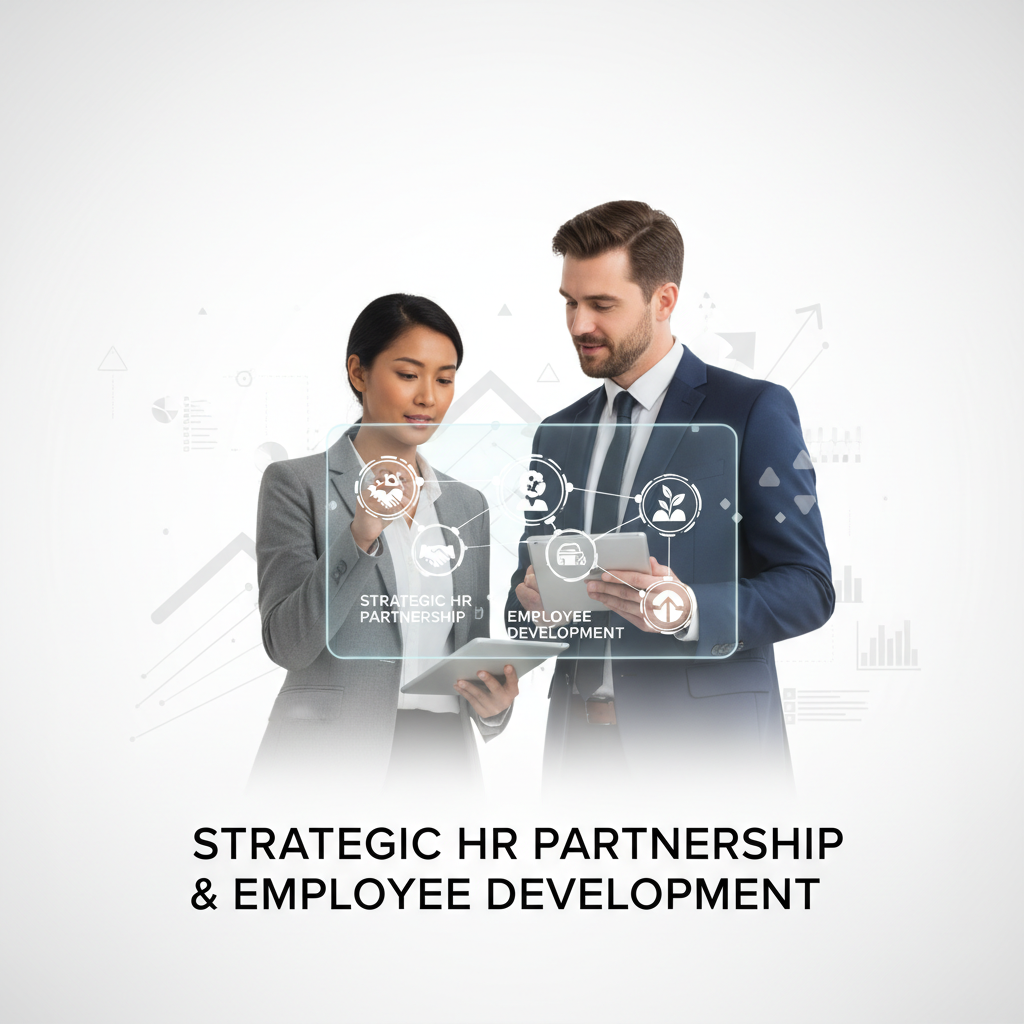
In the dynamic landscape of Vietnam’s IT sector, the role of Human Resources (HR) varies significantly between Small and Medium-sized Enterprises (SMEs) and larger corporate entities. While both are crucial for nurturing talent and fostering productivity, their operational approaches, strategic integration, and focus on differences between the SMEs’ HR structure and the corporates’ HR structure in IT field in Vietnam are markedly distinct. SMEs often see HR functions play a more hands-on, operational, and generalist role, directly managing day-to-day personnel matters. In contrast, corporate HR in the IT field is typically more strategically integrated with overarching business goals, focusing on long-term employee development, advanced talent management, and shaping organizational culture to support large-scale growth and innovation.
-
Role of HR in Strategic Business Planning
For IT SMEs in Vietnam, HR often functions as a support service, primarily handling administrative tasks such as payroll, compliance, and basic recruitment. The small team sizes mean HR professionals are generalists, directly involved in operational aspects like onboarding new hires, managing employee records, and addressing immediate workplace issues. Their involvement in strategic business planning is often reactive, focused on problem-solving rather than proactive policy formulation. With limited budgets and resources, HR’s capacity for in-depth strategic workforce planning or sophisticated talent acquisition initiatives is constrained, making them crucial for maintaining day-to-day functionality but less so for long-term growth strategies.
Conversely, HR in large IT corporations is a strategic partner embedded within the core business decision-making process. Specialized HR departments, such as Talent Acquisition, Compensation & Benefits, and HR Business Partners, work closely with senior leadership to align HR strategies with corporate objectives. They are instrumental in shaping IT talent acquisition strategies, identifying future skill needs, and developing sophisticated employee retention strategies to secure competitive advantage. This strategic integration means corporate HR not only manages personnel but actively influences business outcomes, drives organizational change, and contributes significantly to the company’s growth trajectory and market position in Vietnam’s highly competitive IT landscape.
-
Learning & Development (L&D) Initiatives
In IT SMEs, Learning & Development (L&D) is typically informal and opportunistic. Training often occurs through on-the-job coaching, peer mentorship, or ad-hoc workshops, primarily focused on immediate skill gaps necessary for project delivery. Budgetary constraints mean that extensive external training programs or dedicated L&D departments are rare. While valuable for practical skill transfer, this approach can limit employees’ broader career development and exposure to advanced technologies, potentially impacting long-term growth and the ability to retain high-potential IT talent. Performance management systems in SMEs also tend to be less formalized, often relying on direct feedback rather than structured frameworks.
Corporate IT environments, on the other hand, boast comprehensive and structured L&D programs. These organizations invest heavily in continuous learning, offering diverse training and development programs that include technical certifications, leadership training, soft skills enhancement, and clear career progression paths. Dedicated L&D teams often collaborate with external training providers, educational institutions, and internal subject matter experts to design tailored programs that align with both individual aspirations and business needs. The emphasis is on building a future-ready workforce, fostering a culture of continuous learning, and utilizing advanced HR technology adoption to track development, which is critical for maintaining an edge in the fast-evolving IT sector.
-
Employee Relations & Culture Shaping
Employee relations in IT SMEs are often characterized by a more familial and informal approach. Due to smaller team sizes, communication channels are direct, and HR issues are typically resolved through personal interactions with management. The organizational culture is often a direct reflection of the founder’s or leader’s personality and values, leading to a strong sense of camaraderie and shared purpose, but sometimes lacking formalized policies for conflict resolution or employee engagement surveys. While this can foster tight-knit teams, the absence of robust HR compliance frameworks might present challenges as the company grows, particularly concerning fair practices and workforce planning.
In large IT corporations, employee relations are managed through formalized policies, dedicated Employee Relations teams, and structured grievance procedures. HR plays a pivotal role in shaping a diverse and inclusive organizational culture, often through elaborate internal communication strategies, corporate social responsibility initiatives, and defined values statements. They focus on promoting employee well-being, implementing robust compensation & benefits packages, and fostering an environment that encourages innovation and collaboration across diverse teams. Regular employee engagement surveys, performance management systems, and well-defined HR budget allocation for cultural programs are common, ensuring a consistent and equitable experience for a large workforce while aligning with global best practices and local labor laws.
Partner with Shelby Global
You are looking for reliable HR Sevice Suppliers? Contact Shelby Global Now! To connect with verified talents and upgrade your orginization.
—————————————
References
– Deloitte’s Global Human Capital Trends Report: https://www2.deloitte.com/us/en/pages/human-capital/articles/human-capital-trends.html
– Deloitte Insights: Global Human Capital Trends: https://www2.deloitte.com/us/en/insights/topics/talent/global-human-capital-trends.html
– :
– The Future Is Now: Why Digital Transformation In HR Is Imperative: https://www.forbes.com/sites/forbeshumanresourcescouncil/2023/07/03/the-future-is-now-why-digital-transformation-in-hr-is-imperative/
– Human Resources in Vietnam: An Introduction: https://www.dezshira.com/library/vietnam/human-resources-vietnam-introduction