
Understanding the Singaporean HR Landscape for SMEs
For a fresh CEO stepping into Singapore’s vibrant entertainment sector, navigating the Human Resources (HR) landscape for Small and Medium-sized Enterprises (SMEs) presents a unique set of challenges and opportunities. Unlike larger corporations with dedicated departments and extensive resources, SMEs often require a more agile, hands-on approach to HR. This section lays the groundwork, offering a Step by Step to understand SMEs HR Structure for the fresh CEO in Entertainment field in singapore, emphasizing the critical legal frameworks, cultural nuances, and operational realities specific to this dynamic industry.

1. Key Singaporean Labour Laws for SMEs (e.g., Employment Act)
At the core of Singaporean HR compliance lies a robust legal framework designed to protect both employers and employees. For SMEs in the entertainment sector, understanding and adhering to these laws is not just a regulatory requirement but a fundamental step in building a sustainable and ethical workforce. The cornerstone is the Employment Act, which governs basic terms and conditions of employment for a majority of employees. This act covers essential areas such as contracts of service, payment of wages, hours of work, overtime, public holidays, annual leave, and sick leave. While certain provisions may not apply to managerial or executive staff earning above a certain threshold, its principles are broadly applicable.
Beyond the Employment Act, CEOs must also be aware of other critical legislation. The Central Provident Fund (CPF) Act mandates contributions to a national savings scheme for both local employees and their employers, crucial for retirement, housing, and healthcare. The Work Injury Compensation Act (WICA) provides a no-fault compensation scheme for employees who suffer injuries or contract occupational diseases at work, making it essential for employers to secure adequate insurance, especially given the diverse work environments in entertainment (e.g., event setups, film shoots). Furthermore, navigating foreign workforce policies, including Employment Passes (EP) and S Passes, becomes vital when sourcing international talent, which is common in the diverse entertainment industry. Compliance with these regulations ensures fair treatment, minimizes legal risks, and fosters a positive working environment.
2. Cultural Considerations & Workforce Diversity in Entertainment HR
Singapore’s strength lies in its multicultural tapestry, and the entertainment industry amplifies this diversity. For SMEs, HR strategies must acknowledge and leverage this unique cultural landscape. The workforce in entertainment often comprises a mix of local and international talent, full-time employees, freelancers, gig workers, and project-based staff. This necessitates flexible HR policies that respect varying cultural backgrounds, work ethics, and communication styles.
Cultural nuances can impact everything from negotiation styles and feedback delivery to holiday observances and team dynamics. A fresh CEO must cultivate an inclusive environment where diversity is celebrated, and individual differences are understood and accommodated where appropriate. This includes being sensitive to religious holidays, dietary restrictions, and communication preferences. For example, direct communication styles common in Western cultures might be perceived differently in more hierarchical Asian contexts. Moreover, the entertainment sector’s project-based nature means managing diverse teams for short durations, requiring rapid team integration and clear role definitions. Effective HR in this context means fostering strong interpersonal skills, promoting cross-cultural understanding, and developing conflict resolution mechanisms that are culturally sensitive.
3. Differences: HR in SMEs vs. Large Corporations & MNCs
The operational reality of HR within an SME in the entertainment sector differs significantly from that of a large corporation or multinational company (MNC). SMEs typically operate with leaner budgets and often lack a dedicated, specialized HR department. This means a CEO or a designated generalist HR personnel wears multiple hats, handling everything from recruitment and payroll to employee relations and compliance. This integrated role demands a comprehensive understanding of all HR functions.
Unlike the often rigid, standardized policies of MNCs, SME HR can be more agile and personalized. While this offers flexibility, it also requires careful documentation and consistency to avoid arbitrary decision-making. Recruitment in SMEs often relies on networks and word-of-mouth, contrasting with the structured talent acquisition teams of larger entities. Talent retention strategies must be creative, focusing on growth opportunities, unique company culture, and work-life balance rather than extensive benefit packages that large firms can offer. Understanding these distinctions is crucial for a fresh CEO to effectively build and manage an HR structure that aligns with the SME’s resources and strategic goals, ensuring a productive and compliant workforce without the overheads of larger organizations. This insight is key for those looking to develop a robust Step by Step to understand SMEs HR Structure for the fresh CEO in Entertainment field in singapore.
Decoding the Typical SME HR Structure & Roles
As a fresh CEO stepping into Singapore’s vibrant entertainment field, understanding your Small and Medium-sized Enterprise (SME) HR structure is paramount. Unlike large corporations with extensive HR departments, SMEs often operate with leaner, more agile teams. This guide offers a step-by-step approach to understanding SMEs HR structure for the fresh CEO in the entertainment field in Singapore, clarifying what you can expect and how responsibilities are typically allocated. Navigating human resources in a dynamic sector like entertainment requires not just compliance but also strategic talent management, making efficient HR support for small businesses crucial.
-
Common HR Roles in SMEs (e.g., HR Generalist, Admin Support)
In most SMEs, the HR landscape is characterized by its breadth rather than its depth. The cornerstone of your internal human resources team will likely be the HR Generalist. This pivotal role is the jack-of-all-trades, managing a wide spectrum of HR generalist responsibilities. Their duties typically span the entire employee lifecycle:
- Talent Acquisition SME: Handling recruitment from sourcing to onboarding, especially critical for securing unique talent in the entertainment industry.
- Compensation & Benefits: Overseeing payroll management SME, leave administration, and basic benefits.
- Employee Relations Singapore: Addressing workplace issues, mediating disputes, and fostering a positive work environment.
- Compliance: Ensuring adherence to local regulations, particularly those set by the Ministry of Manpower (MOM Singapore compliance) and Central Provident Fund (CPF) requirements.
- Training & Development: Identifying skill gaps and coordinating basic training initiatives.
- Performance Management: Assisting managers with appraisal processes and goal setting.
Alongside the HR Generalist, you might find HR Admin Support. This role focuses on the essential administrative tasks, including maintaining employee records, processing documentation, handling basic employee queries, and supporting HR projects. This setup allows the HR Generalist to focus on more strategic initiatives while ensuring the day-to-day HR administration runs smoothly, addressing common HR challenges SME leaders face.
-
Outsourced HR Services vs. In-house HR: Pros and Cons
For a fresh CEO, deciding between in-house HR and outsourced HR solutions is a critical strategic choice, especially when considering an effective HR strategy for small business growth. Each model presents distinct advantages and disadvantages:
In-house HR:
- Pros: Greater control over processes, deeper understanding of company culture and specific entertainment industry nuances, immediate availability for employee queries, and stronger integration with the company’s strategic goals. It fosters a more personalized employee experience.
- Cons: Higher overhead costs (salary, benefits, office space), potential for limited specialized expertise (e.g., complex legal issues, advanced talent analytics), and the time commitment required from internal staff.
Outsourced HR Services:
- Pros: Cost-effective for specific tasks (like payroll processing or compliance auditing), access to a broader range of specialized expertise (e.g., HR legal advice, sophisticated talent acquisition strategies, benefits administration), scalability to meet fluctuating demands, and allows your core team to focus on the entertainment business. Many small businesses find outsourcing HR makes sense for small businesses by leveraging external providers for best practices.
- Cons: Less direct control over processes, potential for slower response times, challenges in fully integrating with company culture, and data security concerns if not handled by reputable providers.
Many Singaporean SMEs adopt a hybrid model, keeping a lean in-house team for day-to-day employee relations Singapore and culture-building, while outsourcing specialized functions like payroll, legal compliance, or complex talent acquisition SME projects. This balances the benefits of in-house HR with the efficiency and expertise of external partners.
-
Reporting Structures and Key Internal/External HR Stakeholders
Understanding the HR reporting structure is essential for a fresh CEO. In an SME, the HR function often reports directly to the CEO or Managing Director, reflecting its strategic importance, even if it’s a small team. In some cases, it might report to the Finance Director, especially if HR’s initial focus is heavily on payroll and compliance. This direct line ensures that HR issues and strategies are closely aligned with overall business objectives and the unique demands of the entertainment industry.
Key Internal HR Stakeholders:
- CEO/MD: Ultimate responsibility for HR strategy, culture, and compliance.
- Department Heads: Collaborate closely with HR for talent acquisition SME needs, performance reviews, team development, and addressing employee relations within their departments.
- Finance Department: Crucial for payroll management SME, budgeting for HR initiatives, and benefits administration.
- Employees: The primary stakeholders, whose engagement, development, and well-being are at the core of HR’s mission.
Key External HR Stakeholders:
- Ministry of Manpower (MOM) Singapore: The primary regulatory body, dictating employment laws, work pass regulations, and fair employment practices. Adhering to MOM Singapore compliance is non-negotiable for all businesses.
- Central Provident Fund (CPF) Board: Manages the mandatory social security savings scheme for employees and employers.
- Payroll Service Providers: If outsourced, these ensure accurate and timely salary disbursements and statutory contributions.
- Recruitment Agencies: Often used to source specialized talent quickly, especially for project-based roles common in entertainment.
- Legal Counsel: Essential for navigating complex employment law issues, contract drafting, and dispute resolution.
By effectively managing these relationships, a fresh CEO can ensure robust HR best practices Singapore are in place, supporting the company’s growth and talent needs in the dynamic entertainment sector. This clear understanding of the HR roles SME Singapore can confidently build a resilient and compliant workforce.
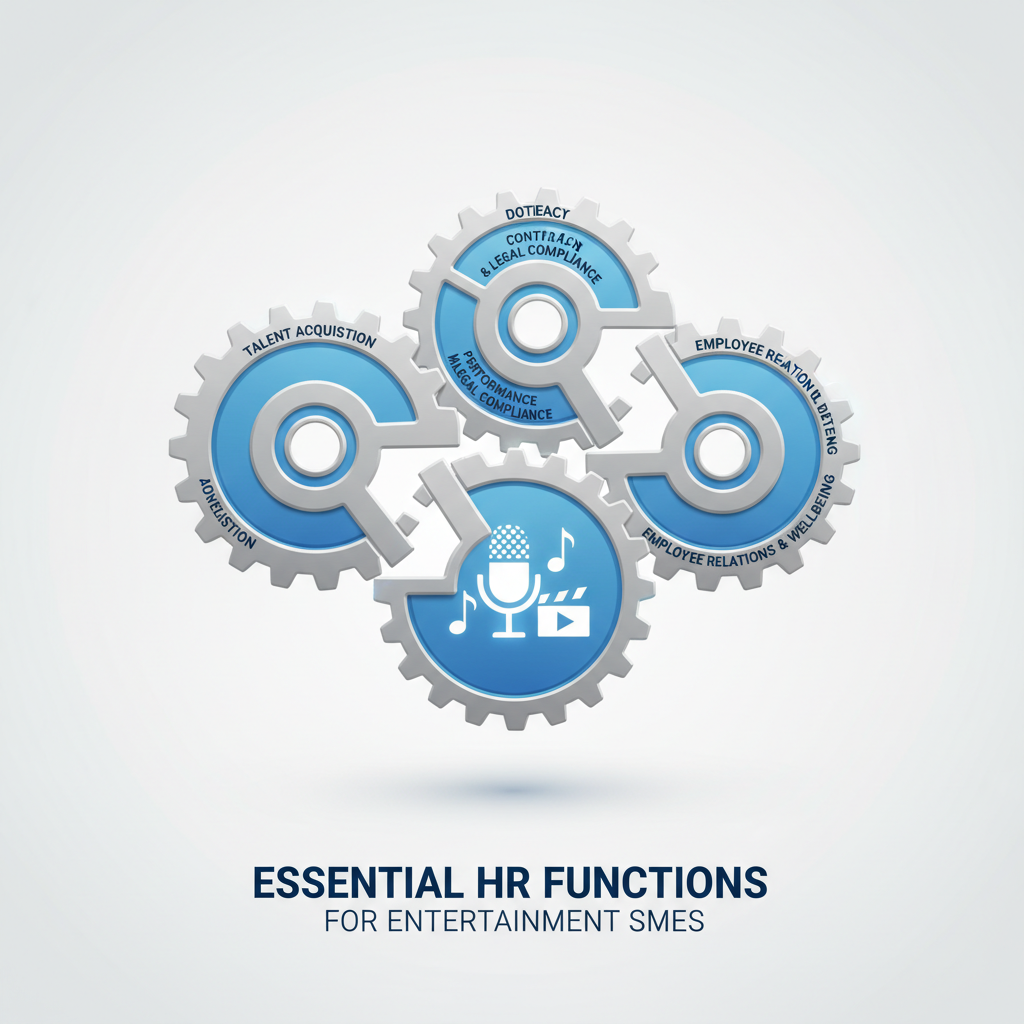
Essential HR Functions for Entertainment SMEs
For a fresh CEO navigating the dynamic landscape of the entertainment industry in Singapore, understanding and mastering core HR functions is paramount. Unlike traditional corporate environments, small to medium-sized enterprises (SMEs) in arts, media, and creative sectors face unique challenges, from project-based hiring to managing diverse artistic temperaments. Building a robust HR structure is not just about compliance; it’s about nurturing creativity, retaining talent, and driving sustainable growth. This section provides a strategic overview, offering a Step by Step to understand SMEs HR Structure for the fresh CEO in Entertainment field in singapore, ensuring your creative venture thrives.
1. Talent Acquisition & Onboarding in the Entertainment Industry
The lifeblood of any entertainment SME is its talent. From scriptwriters and graphic designers to production crews and performers, acquiring the right mix of skills and personalities is a nuanced art. Traditional recruitment methods often fall short in an industry driven by passion, portfolio, and project-specific needs. CEOs must adopt flexible strategies, tapping into industry networks, creative agencies, and specialized platforms. Consider the rise of gig economy workers and freelancers, which necessitate clear contractual agreements and intellectual property clauses.
Onboarding in this sector goes beyond paperwork. It’s about integrating new hires into a creative ecosystem, familiarizing them with project workflows, team dynamics, and the unique culture of your company. For creative roles, successful onboarding might include shadowing experienced professionals, understanding brand guidelines, or even participating in early-stage brainstorming sessions. A well-structured onboarding process ensures immediate productivity and fosters a sense of belonging, crucial for artists who often seek meaning beyond a paycheck. It also helps manage expectations around irregular hours, tight deadlines, and the sometimes iterative nature of creative work.
2. Performance Management & Employee Engagement Strategies
Evaluating performance in creative roles requires a departure from rigid KPIs. While deadlines and budgets are important, the subjective nature of artistic output demands a more holistic approach. Performance management should focus on qualitative feedback, peer reviews, project-based assessments, and growth opportunities. Regular check-ins, rather than annual reviews, can be more effective, allowing for agile adjustments and continuous improvement.
Employee engagement is critical for retention in an industry where talent is highly sought after and often burns out quickly. Foster a culture of collaboration, psychological safety, and open communication. Recognize and celebrate creative achievements, big or small. Implement programs that support mental well-being, such as flexible working arrangements, stress management resources, and opportunities for skill development that align with artistic aspirations. Empowering employees with creative autonomy and involvement in decision-making processes can significantly boost morale and productivity. For more insights on nurturing creative talent, refer to authoritative sources on HR strategies for the creative workforce.
3. Compensation & Benefits Specifics for Arts and Media Roles
Compensation structures in the entertainment industry are often complex, moving beyond fixed salaries. Many roles involve project-based fees, royalties, profit-sharing, or performance bonuses tied to box office success, viewership numbers, or intellectual property rights. CEOs must understand these nuances to craft competitive and fair packages. Transparent communication about variable pay components is essential to avoid misunderstandings.
Beyond monetary compensation, non-monetary benefits play a significant role. These might include access to cutting-edge equipment, opportunities to work on high-profile projects, networking events, professional development workshops, and even creative sabbaticals. Providing health and wellness benefits, intellectual property protection, and clear guidelines on usage rights are also crucial. Benchmarking against industry standards, both locally in Singapore and internationally, will help ensure your offerings attract and retain top-tier talent. Consider the unique value proposition your SME offers, whether it’s creative freedom, a supportive community, or the chance to innovate within a niche market.
Mastering these HR functions is not merely administrative; it’s a strategic imperative for any entertainment SME in Singapore. By focusing on tailored talent acquisition, empathetic performance management, and comprehensive compensation strategies, fresh CEOs can build resilient, inspired teams ready to create the next big hit.
Navigating HR Compliance & Risk in Singapore
For new CEOs stepping into Singapore’s dynamic entertainment sector, understanding the intricacies of HR compliance and risk management isn’t just good practice—it’s foundational to sustainable growth. This section provides a comprehensive look at the crucial aspects of HR compliance, legal obligations, and risk mitigation strategies essential to navigate the unique challenges of the Singaporean context and avoid costly pitfalls. A fresh CEO needs a strategic, step-by-step approach to grasp the SME HR structure, particularly in a creative and talent-driven industry like entertainment.
-
Key Compliance Areas (CPF, SDL, PDPA, MOM Regulations)
Navigating Singapore’s HR landscape begins with a solid understanding of its core statutory obligations. For any entertainment SME, failing to comply with these can lead to significant penalties and reputational damage.
- Central Provident Fund (CPF): A mandatory social security savings scheme, CPF requires employers to make monthly contributions for all Singaporean citizens and Permanent Residents. Contribution rates vary by age and salary, and it’s imperative to accurately calculate and remit these. Ensuring timely and correct CPF contributions is a fundamental aspect of employer responsibility.
- Skills Development Levy (SDL): A small, compulsory levy paid by employers for all employees (local and foreign), the SDL funds the national Skills Development Fund. This fund supports workforce upgrading and training initiatives, making it a crucial component for developing talent within your entertainment company.
- Personal Data Protection Act (PDPA): The PDPA governs the collection, use, and disclosure of personal data, including employee information. For the entertainment industry, which often handles sensitive personal details of artists, performers, and staff, strict adherence to PDPA principles – consent, purpose limitation, and protection – is paramount. Implementing robust data protection policies and training staff is non-negotiable.
- MOM Regulations (Ministry of Manpower): The Singapore Employment Act is the primary legislation governing general terms and conditions of employment. This includes requirements for employment contracts, working hours, leave entitlements (annual leave, sick leave, maternity/paternity leave), and notice periods for termination. Additionally, regulations regarding foreign manpower (Employment Pass, S Pass, Work Permit) are critical for companies employing international talent, requiring careful management of quotas, levies, and application processes. Staying updated with these dynamic regulations is a continuous task for any CEO.
-
Managing Employee Contracts, Freelancers & IP Rights
The entertainment industry frequently relies on a mix of permanent staff and project-based talent. Effective contract management and clear delineation of roles and intellectual property are vital for smooth operations and risk mitigation.
- Employee Contracts: Well-drafted employment contracts are the backbone of any HR structure. These should clearly define job scope, salary, benefits, working hours, confidentiality clauses, and termination procedures. A clear, legally sound contract prevents misunderstandings and provides a framework for managing employee relationships effectively. For a fresh CEO in entertainment, understanding how to structure these contracts is a step-by-step guide to understanding SME HR structure that cannot be overlooked.
- Freelancers & Independent Contractors: Many entertainment projects involve engaging freelancers (e.g., artists, musicians, technicians, scriptwriters). It’s crucial to distinguish these individuals from employees to avoid misclassification risks, which can lead to unexpected CPF contributions, leave entitlements, and other statutory obligations. Robust service agreements outlining deliverables, payment terms, and project timelines are essential.
- Intellectual Property (IP) Rights: In the creative realm of entertainment, IP is often the most valuable asset. Contracts with both employees and freelancers must explicitly state the ownership of IP created during the course of work. Typically, work-for-hire clauses ensure that the company retains rights to creations. Protecting copyrights, trademarks, and trade secrets through strong contractual agreements and internal policies is fundamental to safeguarding your company’s creative output and competitive edge.
-
Dispute Resolution, Grievance Procedures & Fair Treatment
Even with the best practices, workplace disputes can arise. Having clear, fair, and legally compliant mechanisms for resolution is critical to maintaining a healthy work environment and mitigating legal risks.
- Dispute Resolution: Implementing a structured internal dispute resolution process is the first line of defence. This typically involves informal discussions, formal mediation, and, if necessary, escalation. Singapore’s Tripartite Alliance for Dispute Management (TADM) offers mediation services for employment-related disputes, providing an impartial avenue for resolution before resorting to the courts. CEOs must be aware of these external resources and when to engage them.
- Grievance Procedures: A well-defined grievance procedure allows employees to raise concerns without fear of reprisal. This process should clearly outline steps for submitting a grievance, investigation protocols, timelines for resolution, and avenues for appeal. Transparent and fair grievance handling builds trust and demonstrates a commitment to employee welfare.
- Fair Treatment & Non-Discrimination: Singapore’s employment landscape emphasizes fair employment practices. The Tripartite Guidelines on Fair Employment Practices (TGFEP) promote merit-based hiring and treatment, discouraging discrimination based on age, race, gender, religion, marital status, or disability. CEOs must ensure that all HR policies – from recruitment and promotion to performance management and termination – adhere to these principles. Understanding the legal concept of ‘wrongful dismissal’ and ensuring all termination processes are procedurally and substantively fair is crucial to avoid costly claims and protect the company’s reputation.
By proactively addressing these key HR compliance and risk areas, a new CEO in the entertainment sector can build a resilient, compliant, and thriving business in Singapore.
Strategic HR for Growth: Building a High-Performing Entertainment Team
For a fresh CEO stepping into the vibrant, fast-paced world of entertainment SMEs in Singapore, understanding the nuances of human resources is not just about compliance; it’s about competitive advantage. Navigating the unique challenges of a creative industry, from talent retention to fostering innovation, demands a strategic outlook on HR. This guide offers a Step by Step to understand SMEs HR Structure for the fresh CEO in Entertainment field in singapore, emphasizing how leveraging HR strategically can build a high-performing team and drive sustainable growth.
1. Fostering a Positive & Innovative Workplace Culture
In the entertainment industry, creativity and passion are the bedrock of success. A positive and innovative workplace culture doesn’t just happen; it’s meticulously built and nurtured by strategic HR. For SMEs, this means consciously designing an environment where ideas are encouraged, mistakes are seen as learning opportunities, and collaboration thrives. HR plays a pivotal role in shaping this by implementing transparent communication channels, establishing fair and inclusive policies, and designing recognition programs that celebrate both individual and team achievements. A culture that values employee wellbeing, diversity, and psychological safety empowers creative professionals to perform at their best. Understanding the specific needs of a creative workforce—flexible working arrangements, project-based incentives, and opportunities for creative expression—is crucial. By focusing on these elements, HR transforms from an administrative function into a strategic partner, directly impacting engagement and innovation. SHRM’s insights on fostering employee engagement underscore how a deliberate approach to culture can significantly boost an organization’s performance and appeal to top talent.
2. Talent Development, Upskilling & Career Pathways in Entertainment
The entertainment landscape in Singapore is constantly evolving, driven by technological advancements, changing consumer tastes, and global trends. For a CEO of an entertainment SME, ensuring the team’s skills remain cutting-edge is paramount. Strategic HR is responsible for identifying future skill gaps and developing robust talent development programs. This includes not just formal training and workshops but also mentorship initiatives, cross-functional project opportunities, and encouraging self-directed learning. Creating clear career pathways is equally vital, especially in a sector often characterized by project-based work or less traditional structures. HR can work with managers to define progression routes, highlight upskilling opportunities for niche roles (e.g., VFX artists, digital marketers for specific platforms, content strategists for new media), and provide guidance on internal mobility. This proactive approach to talent management not only retains valuable employees by showing a commitment to their growth but also ensures the company possesses the adaptive capabilities required to pivot and innovate in a dynamic market. A fresh CEO should view investment in employee development as an investment in the company’s future resilience and creativity.
3. Aligning HR Strategies with Business Vision & Growth Objectives
Ultimately, strategic HR is about ensuring that every HR initiative directly contributes to the overarching business vision and growth objectives of the entertainment SME. For a fresh CEO, this means moving beyond a reactive HR model to one that proactively supports the company’s trajectory. HR should be integrated into strategic planning sessions, providing critical insights into workforce capabilities, potential talent gaps for new ventures, and the cultural implications of expansion or diversification. This includes developing HR metrics that track the impact of people strategies on key business indicators like project completion rates, audience engagement (indirectly through team performance), innovation output, and overall profitability. Whether it’s workforce planning for an upcoming major production, designing compensation structures that incentivize high performance and creativity, or implementing recruitment strategies to attract niche talent for new market segments, HR’s role is to be a strategic enabler. By understanding the intricate connections between human capital and business outcomes, HR becomes an indispensable partner, helping the CEO navigate the complexities of growth and ensure the entertainment company remains agile, competitive, and poised for long-term success in Singapore’s dynamic market. This step-by-step alignment is essential for any CEO looking to truly understand and leverage their HR structure.
Partner with Shelby Global
You are looking for reliable HR Sevice Suppliers? Contact Shelby Global Now! To connect with verified talents and upgrade your orginization.
—————————————
References
– Employment Act – Ministry of Manpower: https://www.mom.gov.sg/employment-practices/employment-act
– Why HR Outsourcing Makes Sense for Small Businesses: https://www.entrepreneur.com/growing-a-business/why-hr-outsourcing-makes-sense-for-small-businesses/280998
– HR strategies for the creative workforce: https://www.shrm.org/resources-and-tools/hr-topics/talent-management/pages/creative-workforce-challenge.aspx
– Singapore Employment Act: https://www.mom.gov.sg/employment-practices/employment-act
– SHRM’s insights on fostering employee engagement: https://www.shrm.org/resources-and-tools/hr-topics/employee-relations/pages/creating-a-culture-of-engagement.aspx



































































































