
Scope of Responsibilities and Influence
The dynamic and indispensable logistics sector in Singapore, a global trade hub, presents unique human resource challenges and opportunities. Within this vibrant industry, the roles of an HR Manager in a Small and Medium-sized Enterprise (SME) and an HR Director in a larger corporation, while both pivotal, diverge significantly in their breadth, depth, and impact. Understanding these differences between the SMEs’ HR Manager and the Corporates’ HR Director in logistics field in singapore is crucial for appreciating the strategic evolution of HR within organizations of varying scales.
While an SME HR Manager often juggles a multitude of hands-on, operational tasks, directly influencing daily staff welfare and productivity, their corporate counterpart, the HR Director, crafts long-term strategies, shapes organizational culture, and mitigates enterprise-level risks, thereby impacting the company’s regional or global footprint. This distinction is not merely about title but about the fundamental nature of their contributions to operational efficacy and strategic growth.

1. Operational vs. Strategic Focus in Logistics HR
In Singapore’s bustling logistics SMEs, the HR Manager typically embodies a hands-on, operational role. Their daily responsibilities are deeply rooted in the immediate needs of the workforce, which often includes a significant proportion of drivers, warehouse operators, and administrative staff. Tasks such as recruitment for urgent operational needs, processing payroll, managing leave requests, handling basic employee relations, and ensuring compliance with fundamental employment regulations fall squarely within their purview. Their operational impact is direct and immediate – ensuring adequate staffing for deliveries, managing shift schedules, and addressing on-the-ground HR issues that directly affect service delivery and efficiency. They are often the ‘go-to’ person for all staff, acting as a generalist across the entire HR spectrum, making them indispensable for maintaining the smooth flow of day-to-day logistics operations.
Conversely, the HR Director in a large logistics corporation operates with a predominantly strategic lens. Their focus extends beyond immediate operational demands to encompass long-term talent management, organizational development, and strategic workforce planning across multiple departments, regions, or even international branches. This includes developing robust succession planning frameworks for senior leadership, implementing advanced HR technology solutions (like integrated HRIS), designing comprehensive compensation and benefits structures, and fostering a strong corporate culture that supports global business objectives. Their influence is less about direct day-to-day operations and more about shaping the overarching talent strategy, ensuring the company has the right capabilities for future growth, and embedding HR as a strategic business partner at the executive level. They strategize on how to attract and retain specialized talent, such as supply chain analysts, logistics technologists, and international trade specialists, vital for navigating complex global logistics challenges.
2. Resource Allocation and Budget Management
For the HR Manager in an SME logistics firm, resource allocation and budget management are often characterized by constraints and a focus on cost-efficiency. Budgets are typically tighter, requiring innovative and often lean solutions for recruitment, training, and employee engagement. They might rely heavily on government grants for training programs, seek out cost-effective hiring channels, and negotiate directly with vendors for HR services. Every dollar spent on HR has a direct, visible impact on the bottom line, and decisions are often made with immediate financial implications in mind. Their influence stems from their ability to maximize value from limited resources, ensuring essential HR functions are maintained without overstretching the company’s financial capacity.
In larger corporations, the HR Director manages substantial budgets, overseeing significant investments in HR infrastructure, technology, and talent development initiatives. This includes funding large-scale talent acquisition campaigns, implementing sophisticated learning and development platforms, and investing in advanced HR analytics tools. Their role involves strategic financial planning, working closely with finance departments to forecast headcount needs, develop competitive compensation models, and allocate resources effectively across diverse business units. Their influence lies in their capacity to drive strategic investments that enhance organizational capability, foster innovation, and support the company’s long-term competitive advantage in the capital-intensive logistics market.
3. Legal Compliance, Risk Management, and Governance
The HR Manager in an SME logistics company focuses primarily on ensuring strict adherence to Singapore’s core employment laws. This includes meticulous compliance with the Employment Act – Ministry of Manpower Singapore, Central Provident Fund (CPF) regulations, foreign worker quotas, and basic workplace safety and health guidelines, which are particularly critical in the high-risk logistics environment. Their risk management largely involves avoiding immediate penalties and rectifying non-compliance swiftly. They are often the first point of contact for external audits or regulatory inquiries, making their understanding and application of legal requirements paramount to the company’s operational continuity and reputation within a smaller scale.
Conversely, the HR Director in a large logistics corporation navigates a far more complex landscape of legal compliance, risk management, and governance. This involves not only adherence to Singaporean laws but also international labor laws, data privacy regulations (such as PDPA), ethical sourcing guidelines, and robust anti-bribery policies across multiple jurisdictions. They are responsible for developing and implementing comprehensive HR policies that mitigate enterprise-level risks, manage large-scale industrial relations, and protect the company’s global reputation. Their influence extends to proactive governance, shaping ethical workplace practices, and developing resilient HR frameworks that can withstand complex legal challenges and evolving regulatory environments worldwide. This strategic oversight ensures the organization operates with integrity and sustainability, safeguarding against potentially catastrophic legal and reputational damage.
Team Structure and Authority Levels
The vibrant logistics sector in Singapore, a global trade hub, presents distinct operational landscapes for Human Resources professionals. The differences between the SMEs’ HR Manager and the Corporates’ HR Director in logistics field in Singapore are particularly pronounced when examining their team structures and levels of authority. While both roles are crucial for attracting, developing, and retaining talent, their operational scope, strategic influence, and interaction dynamics with leadership vary significantly, largely dictated by the scale and complexity of their respective organizations.
-
Direct Reports and HR Department Size
In a typical Singaporean logistics Small and Medium-sized Enterprise (SME), the HR Manager often operates as a generalist, frequently leading a compact HR department, sometimes consisting of just themselves or perhaps one to two HR assistants. This lean structure necessitates a hands-on approach, where the HR Manager is directly involved in a broad spectrum of functions—from recruitment and onboarding to payroll, employee relations, and basic training administration. Their direct reports, if any, are typically administrative or junior support staff, tasked with executing day-to-day HR operations under close supervision. The emphasis is on efficiency and agility, adapting quickly to the SME’s evolving needs with limited specialized resources.
Conversely, a Human Resources Director in a large corporate logistics firm in Singapore presides over a significantly more expansive and specialized HR department. This team is often structured hierarchically, comprising various functional leads or Business Partners specializing in areas such as Talent Acquisition, Compensation & Benefits, Learning & Development, and HR Operations. The HR Director’s direct reports might include several HR Managers or Senior Business Partners, each overseeing their respective domains or geographical regions. This specialized division of labor allows for deeper expertise and more sophisticated HR solutions, supporting a larger, more complex workforce across multiple departments or even international locations. The corporate HR department size reflects the strategic importance and intricate talent management demands of a large-scale operation.
-
Influence on Overall Business Strategy
The strategic influence wielded by HR professionals differs substantially between these two environments. In an SME logistics context, the HR Manager’s role is often more operational, focused on tactical support and immediate problem-solving. While they are crucial for ensuring compliance and meeting urgent staffing needs, their input into the overall business strategy might be informal or reactive. Strategic decisions regarding workforce planning, organizational design, or long-term talent development are typically driven by the business owner or CEO, with HR executing the operational aspects. Their primary contribution to strategy often lies in providing insights into employee morale, retention challenges, and talent availability within the local market.
In stark contrast, a Corporate HR Director in a logistics giant is intrinsically woven into the fabric of executive decision-making. They function as a strategic partner, actively participating in C-suite discussions and shaping the organization’s long-term objectives. Their influence extends to critical areas such as global workforce planning, designing organizational structures for new markets or digital transformations, driving talent acquisition strategies for niche roles (e.g., supply chain technologists), and fostering a culture that aligns with corporate values and growth ambitions. This strategic imperative is underpinned by their comprehensive understanding of human capital analytics and their ability to translate HR initiatives into tangible business outcomes, directly impacting profitability, market share, and operational efficiency.
-
Interaction with Senior Leadership and Stakeholders
The nature and frequency of interaction with senior leadership and other stakeholders also highlight the divergence between the roles. An HR Manager in an SME logistics company typically engages directly and frequently with the business owner, department heads, and line managers. These interactions are often informal and hands-on, addressing immediate operational concerns, employee grievances, or staffing requirements. Their primary stakeholders are internal, focusing on maintaining smooth daily operations and fostering a positive workplace culture. While they advise leadership on HR best practices, the ultimate decision-making power often rests with the business owner.
Conversely, the Corporate HR Director navigates a much broader and more complex stakeholder landscape. Beyond regular interactions with the CEO and other C-suite executives, they engage with the board of directors, regional and global HR leaders, union representatives (if applicable), and external consultants (e.g., for executive search or organizational development projects). Their interactions are highly formalized, requiring sophisticated communication, negotiation, and influencing skills. As a key advocate for talent strategies and organizational health, they are expected to present data-driven insights, challenge existing paradigms, and build consensus among diverse stakeholders to drive large-scale HR initiatives. This elevated level of engagement reflects their pivotal role in safeguarding human capital and ensuring the organization’s sustained competitive advantage in the dynamic Singaporean logistics market. A robust understanding of external market forces and the ability to influence cross-functional leadership are paramount for success in this strategic leadership position.
Distinct Challenges and Solutions in Logistics HR
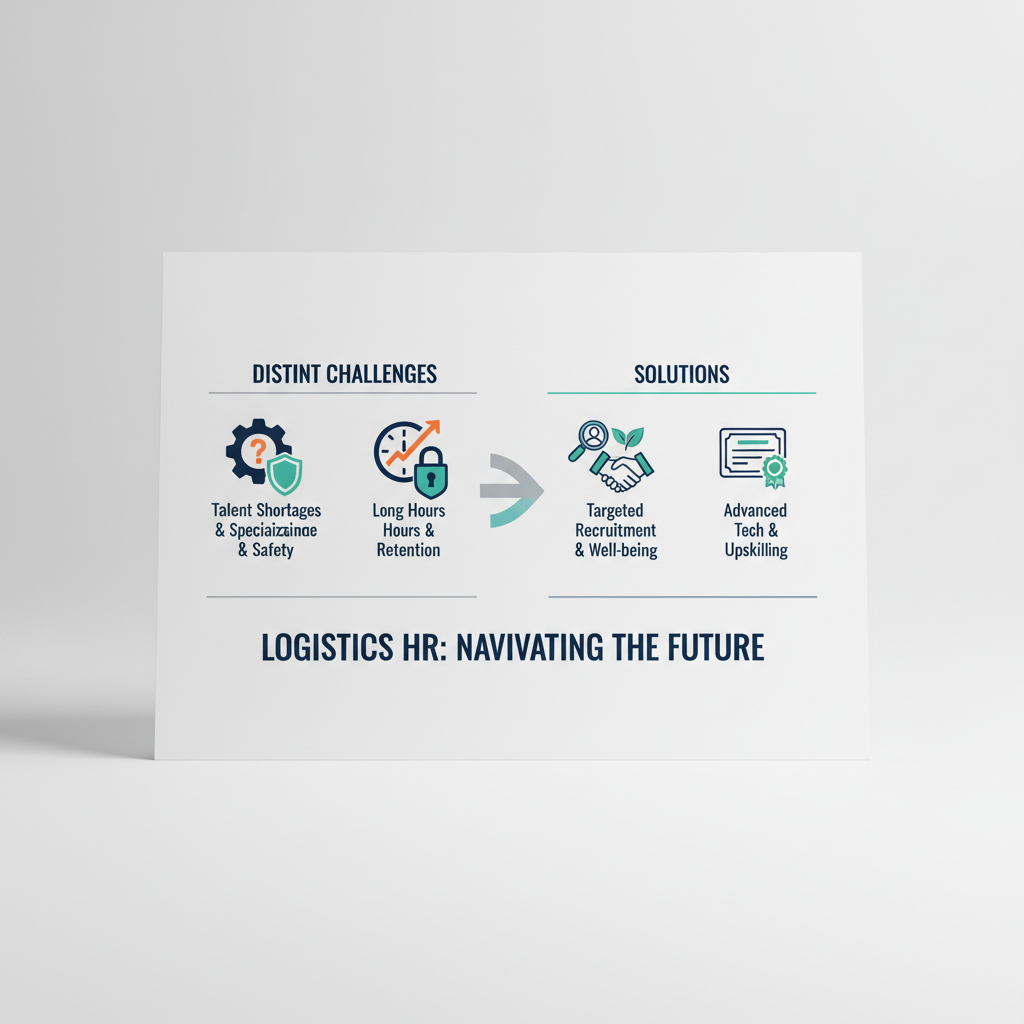
Singapore’s status as a global logistics hub demands a highly efficient and adaptable workforce. Within this dynamic environment, the roles of Human Resources professionals diverge significantly, presenting unique challenges and requiring distinct solution approaches. An HR Manager in a resource-constrained Small and Medium-sized Enterprise (SME) navigates a landscape vastly different from an HR Director at a large corporation, who must contend with intricate corporate policies and expansive global operations. Understanding these nuanced differences between the SMEs’ HR Manager and the Corporates’ HR Director in logistics field in Singapore is crucial for effective talent management and sustainable growth across the sector.
1. Talent Acquisition and Retention Strategies
For an SME HR Manager, attracting and retaining talent is often an uphill battle against larger competitors with deeper pockets. Resource limitations mean smaller advertising budgets, less competitive benefit packages, and a less established employer brand. The challenge lies in selling the company’s unique culture, agility, and the potential for greater impact and growth opportunities. Solutions often involve leveraging local networks, participating in industry partnerships, offering flexible working arrangements where possible, and investing in continuous learning and skill development to empower employees. Retention focuses on fostering a strong sense of community, recognizing individual contributions, and providing clear, albeit lean, career progression paths.
In contrast, a Corporate HR Director in Singapore’s logistics sector faces the complexity of managing a diverse, often global, talent pool. Their challenge is not just filling roles but sourcing highly specialized skills for niche areas like cold chain logistics, AI-driven automation, or international trade compliance, all while adhering to global mobility policies and complex compensation structures. Retention strategies involve sophisticated performance management systems, competitive compensation and benefits benchmarking, comprehensive leadership development programs, and robust internal career pathing to ensure employees feel valued and have avenues for growth within the expansive organization. Leveraging advanced recruitment technologies and a strong global employer brand are key.
2. Employee Relations, Engagement, and Culture Building
An SME HR Manager typically operates in a more informal environment. This can be both a strength and a weakness. While it allows for direct communication and a familial atmosphere, it can also lead to ambiguous employee relations situations if not managed carefully. Resource constraints limit elaborate engagement programs, pushing HR to be creative with team-building activities, open-door policies, and direct feedback mechanisms. Culture building often organically stems from the founder’s vision and daily interactions, requiring the HR Manager to act as a custodian of these values, ensuring they are consistently communicated and lived. Swift, fair resolution of grievances is paramount to maintaining morale in a close-knit team.
The Corporate HR Director, however, navigates a structured environment with layers of policies, legal compliance, and diverse employee demographics across multiple departments or even countries. The challenge here is maintaining a consistent, positive corporate culture while respecting local nuances and adhering to complex labor laws. Engagement requires formal strategies: regular employee surveys, comprehensive D&I (Diversity & Inclusion) initiatives, structured communication channels, and well-defined grievance procedures. Fair and progressive employment practices are critical, ensuring compliance and fostering a sense of equity and psychological safety across a large workforce. Building a cohesive culture across different regions or business units demands strategic planning, clear communication of company values, and leadership buy-in.
3. Technological Adoption and Digital HR Transformation
For the SME HR Manager, adopting technology is often dictated by budget. The challenge is finding cost-effective solutions that provide essential HR functionalities without overwhelming limited IT support or technical expertise within the team. They might lean towards integrated, cloud-based HRIS (Human Resources Information System) platforms that offer basic payroll, leave management, and employee data functionalities. Digital transformation in an SME is typically a gradual process, focusing on automating manual tasks to free up time for strategic initiatives, and ensuring ease of use for all employees with minimal training.
Conversely, a Corporate HR Director leads complex digital HR transformation initiatives. Their challenges involve integrating legacy systems, ensuring data security and compliance across vast datasets, managing large-scale change for thousands of employees, and leveraging advanced analytics, AI, and machine learning for predictive HR insights. This requires significant investment in robust HRIS/HCM (Human Capital Management) suites, strategic partnerships with technology providers, and often, dedicated transformation teams. The goal is to create a seamless digital employee experience, optimize HR processes for efficiency, and provide data-driven insights that inform strategic business decisions, ultimately enhancing the corporate competitive edge in the global logistics arena.
In conclusion, while both roles are vital to the success of Singapore’s logistics sector, their approaches to HR challenges are shaped by the scale and resources of their organizations. The SME HR Manager is a versatile problem-solver, often wearing multiple hats, while the Corporate HR Director is a strategic architect, building and refining systems that support vast, complex operations. Both are essential in ensuring a robust and resilient workforce for the industry’s future.
Essential Skill Sets and Required Expertise
The human resources landscape in Singapore presents a fascinating dichotomy between the demands placed on an HR Manager within a Small and Medium-sized Enterprise (SME) and an HR Director in a large corporate logistics setting. While both roles are pivotal to an organization’s success, the required skill sets, experience levels, and specific expertise diverge significantly, shaped by company size, industry complexity, and strategic objectives. Understanding these fundamental distinctions in HR roles is crucial for aspiring HR professionals and organizations seeking to optimize their talent management strategies.
1. Generalist vs. Specialist HR Capabilities
An HR Manager in an SME typically operates as a quintessential HR generalist. Their role demands a broad spectrum of responsibilities, encompassing the entire employee lifecycle from recruitment and onboarding to compensation, benefits, employee relations, performance management, and legal compliance. In a lean SME environment, they are frequently the sole HR professional or lead a very small team, requiring a hands-on approach and the ability to pivot between strategic advice and operational execution. Their expertise lies in adaptability and a comprehensive understanding of all HR facets, ensuring human capital needs are met efficiently with limited resources. They must be adept at juggling multiple priorities, often acting as an internal consultant and playing a critical role in shaping company culture and employee experience.
Conversely, an HR Director in a corporate logistics setting, particularly in a global hub like Singapore, navigates a far more specialized and segmented HR landscape. While possessing a strategic overview of all HR functions, their day-to-day involves leading and integrating specialist teams (e.g., Talent Acquisition, Learning & Development, Compensation & Benefits). Their focus shifts from operational execution to strategic oversight, policy formulation, and ensuring alignment of HR initiatives with complex global business objectives. This role demands a deep understanding of each HR specialty and the ability to leverage these teams to drive large-scale organizational goals, manage complex projects, and implement sophisticated HR technologies.
2. Business Acumen and Industry-Specific Knowledge
For an SME HR Manager, strong business acumen is vital for understanding how HR decisions directly impact the company’s immediate financial health and operational agility. They must possess a holistic view of the SME’s entire business model, its market position, and challenges, translating these into practical HR solutions. Knowledge of local Singapore labor laws and employment regulations is paramount, as non-compliance can have severe consequences for smaller entities. If the SME is in logistics, a foundational understanding of supply chain operations, warehousing, and transportation challenges (e.g., driver management) becomes increasingly important. They are often intimately involved in the company’s growth trajectory and must anticipate HR needs that support scaling operations.
An HR Director in corporate logistics, however, requires an exceptionally deep and nuanced understanding of the global logistics industry. This encompasses complex supply chain dynamics, international trade regulations, cross-border workforce management, the impact of automation and emerging technologies (e.g., AI, IoT), and navigating diverse global labor markets. Their business acumen extends to understanding global economic trends, geopolitical impacts, and competitive landscapes. In Singapore, a key logistics hub, this involves leveraging the city-state’s strategic location and talent pool while managing a workforce that might span multiple countries and cultures. The HR Director’s role is to strategically align human capital initiatives with global operational excellence, cost optimization, and innovation in a rapidly evolving sector.
3. Leadership, Mentorship, and Change Management Skills
The HR Manager in an SME typically demonstrates leadership by acting as a trusted advisor to the company owner or CEO and line managers, influencing decisions through strong relationships and practical advice. Mentorship might be informal, focusing on guiding individual employees through career development or addressing performance. Change management, while present, is usually on a smaller, more localized scale, reacting to immediate operational adjustments or modest growth. Their effectiveness hinges on their ability to build rapport, communicate clearly, and facilitate changes that resonate with a tight-knit workforce.
In contrast, an HR Director in a corporate logistics environment must exhibit sophisticated leadership at an executive level, influencing C-suite strategies and guiding a large, often multi-country, HR team. Their mentorship responsibilities might include developing succession plans, formalizing talent pipelines, and fostering a culture of continuous learning. Change management is a core, strategic competency, involving the design and execution of large-scale transformations such as digital adoption across global operations, mergers and acquisitions, or significant organizational restructurings. This demands exceptional communication, negotiation, and strategic execution skills to navigate complex stakeholder landscapes, mitigate resistance, and ensure successful organizational shifts that maintain business continuity and drive future growth.
Career Trajectories and Growth Opportunities
Navigating the complex landscape of Human Resources in Singapore offers diverse career trajectories, particularly when comparing the role of an HR Manager in a Small and Medium-sized Enterprise (SME) to that of an HR Director in a corporate logistics environment. These two roles, while fundamentally rooted in HR principles, diverge significantly in their scope, strategic impact, and growth potential. Understanding the differences between the SMEs’ HR Manager and the Corporates’ HR Director in logistics field in Singapore is crucial for any HR professional mapping their career journey, offering insights into varying opportunities for advancement and professional development.
1. Vertical vs. Horizontal Career Progression Paths
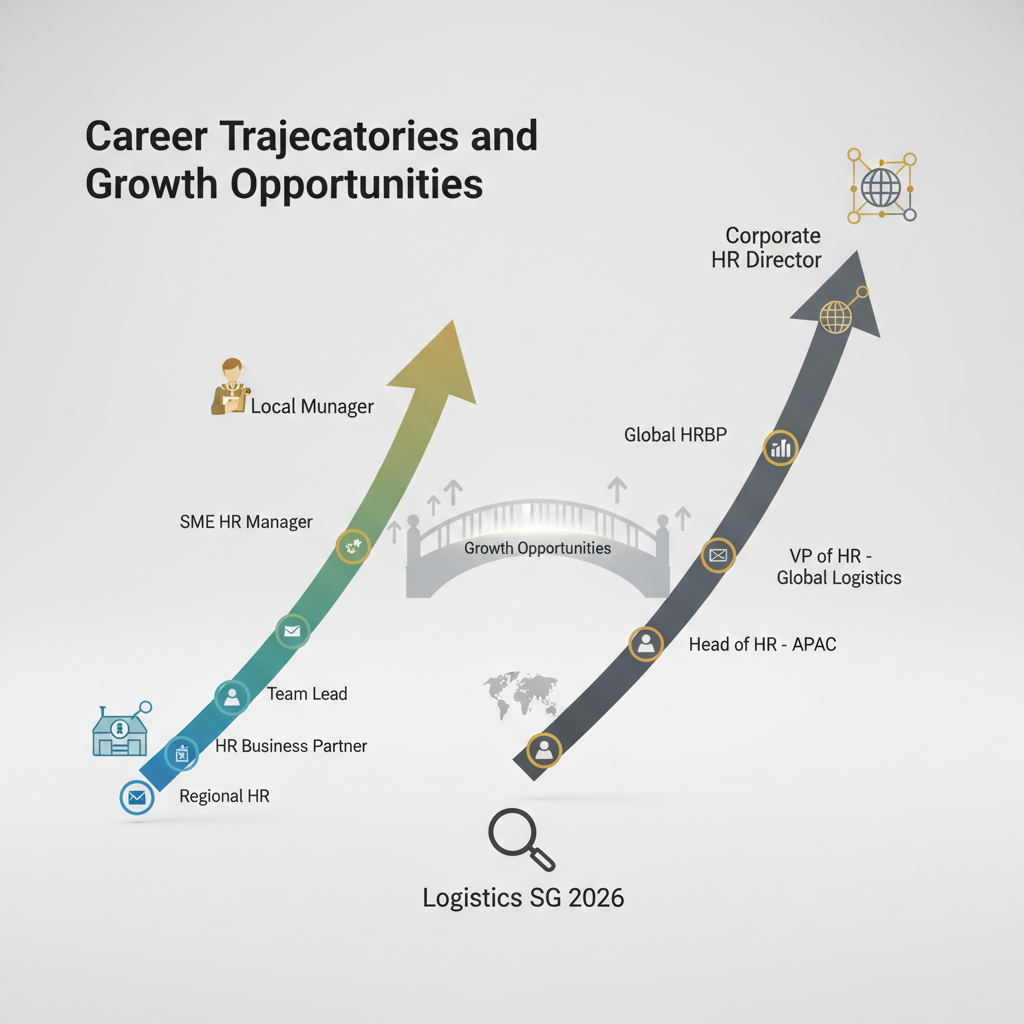
For an HR Manager in an SME, career progression often leans towards a horizontal expansion of responsibilities rather than a steep vertical climb. In smaller organizations, HR professionals are typically generalists, managing everything from recruitment and talent acquisition to payroll, employee relations, policy development, and sometimes even office administration. This breadth of experience provides invaluable hands-on expertise across the entire HR spectrum. Advancement might involve becoming a senior HR Manager, overseeing a small team, or transitioning to a broader HR leadership role if the SME scales significantly or establishes regional operations. The limited hierarchical structure often means fewer direct upward mobility opportunities within the same company, but the comprehensive skill set acquired makes them highly adaptable and sought after by other growing SMEs or mid-sized firms looking for well-rounded HR leaders.
Conversely, an HR Director in a corporate logistics environment typically experiences a more defined vertical career path. These roles are found within large, often multinational, organizations with established HR departments. Progression might involve moving from a country-level HR Director to a regional HR Director, or even a global HR leadership position focusing on specific HR functions like Talent & Culture, Organisational Development, or HR Business Partnering for a major business unit. Specialisation is common, allowing for deep expertise in areas critical to the logistics sector, such as workforce planning for a global supply chain, industrial relations in multiple jurisdictions, or talent management for critical logistics operations. This path often involves leading larger teams, managing substantial budgets, and influencing high-level strategic decisions that impact thousands of employees across diverse geographical locations.
2. Compensation, Benefits, and Professional Perks
The disparities in compensation, benefits, and professional perks are often stark between these two roles. An HR Manager in an SME typically receives a competitive salary commensurate with their generalist responsibilities, alongside standard benefits like health insurance and provident fund contributions. Perks might include flexible working arrangements, a close-knit company culture, and the satisfaction of directly impacting the business’s growth. However, executive bonuses, stock options, or extensive wellness programmes might be less common due to the SME’s size and financial structure.
In contrast, an HR Director in a corporate logistics setting commands a significantly higher remuneration package, reflecting the strategic importance, complexity, and scale of their role. Base salaries are substantially larger, complemented by performance-based bonuses, potential stock options or long-term incentives, and comprehensive benefits packages that often include premium health coverage, executive allowances, company cars, and robust retirement plans. Professional perks extend to access to top-tier executive training, exclusive industry events, and structured wellness and employee assistance programmes. According to insights from the Randstad Singapore Market Outlook and Salary Guide, director-level positions in large corporations often command significantly higher remuneration packages, aligning with global standards for senior leadership roles and the extensive responsibilities involved in managing human capital for complex logistics operations across international borders.
3. Networking and Professional Development Opportunities
Networking and professional development opportunities also vary considerably. An HR Manager in an SME often relies on local HR communities, industry association events, and self-initiated learning for professional growth. While budgets for external training might be limited, the hands-on nature of the role forces continuous learning and problem-solving. Networking is crucial for finding best practices and staying updated with local regulations, often through informal channels or smaller professional groups.
For an HR Director in corporate logistics, the landscape for professional development is typically more expansive and structured. They are often part of exclusive HR leadership forums, participate in major international HR and logistics conferences, and have access to significant corporate training budgets. This can facilitate enrolment in executive education programmes, advanced certifications (e.g., SHRM-SCP, HRCI-SPHR), and leadership development initiatives tailored for senior management. Networking extends globally, connecting them with peers and thought leaders across multinational corporations, allowing for the exchange of strategic insights and best practices in global talent management and logistics human capital strategies. These opportunities are vital for staying abreast of global trends, regulatory changes, and technological advancements impacting the logistics sector.
In conclusion, while both roles offer fulfilling careers in HR, the journey and rewards are distinctly different. The SME HR Manager cultivates a broad, adaptable skill set with a direct impact on a smaller scale, offering a horizontal career trajectory. The Corporate Logistics HR Director, on the other hand, navigates a specialized, vertical path with significant strategic influence, higher compensation, and extensive global development opportunities. The choice between these paths ultimately depends on an individual’s career aspirations, desired work environment, and long-term professional goals within Singapore’s vibrant economy.
Partner with Shelby Global
You are looking for reliable HR Sevice Suppliers? Contact Shelby Global Now! To connect with verified talents and upgrade your orginization.
—————————————
References
– Employment Act – Ministry of Manpower Singapore: https://www.mom.gov.sg/employment-practices/employment-act
– The Strategic Role of HR: https://www.shrm.org/resources-and-tools/hr-topics/human-resource-business-partners/pages/the-strategic-role-of-hr.aspx
– Fair and progressive employment practices by MOM Singapore: https://www.mom.gov.sg/employment-practices/fair-and-progressive-employment-practices
– Singapore Labor Laws and Employment Act: https://www.mom.gov.sg/employment-practices/employment-act
– Randstad Singapore Market Outlook and Salary Guide: https://www.randstad.com.sg/market-outlook-and-salary-guide/



































































































