The Current Landscape of Talent Acquisition in Vietnam
Vietnam has rapidly emerged as a dynamic hub for investment and economic growth, profoundly reshaping its talent landscape. Fuelled by a robust export-led economy and a burgeoning domestic market, understanding the nuances of talent acquisition in Vietnam is paramount for businesses. The nation’s youthful population, combined with government initiatives to foster a knowledge-based economy, presents both immense opportunities and unique challenges. This section provides an in-depth overview of the existing talent market, highlighting key industries driving demand, dissecting Vietnam’s demographic dividend, and offering a snapshot of the competitive talent pool across various sectors. Navigating this vibrant yet complex environment requires strategic foresight and a keen understanding of local dynamics for successful talent attraction.

1. Key Industries Driving Talent Demand
Vietnam’s economic transformation is largely propelled by several high-growth industries. The manufacturing sector, particularly in high-tech electronics, remains a cornerstone. Global giants expanding facilities drive demand for skilled engineers, quality assurance specialists, and supply chain managers. Beyond manufacturing, the Information Technology (IT) and software development sector is experiencing an explosive boom, positioning Vietnam as an attractive hub for software outsourcing, fintech, AI, and cybersecurity. This fuels fierce competition for developers, data scientists, and IT project managers.
Additionally, the e-commerce and digital services industry thrives, driven by widespread internet penetration and a growing middle class, demanding talent in digital marketing, logistics, and data analytics. The renewable energy sector is also gaining significant traction, creating new roles for environmental engineers and technical specialists. Finally, the healthcare and pharmaceutical sectors are expanding to meet evolving needs, requiring medical professionals and research scientists. Each industry presents unique talent acquisition challenges, often necessitating robust upskilling to bridge specific skill gaps.
2. Vietnam’s Demographic Dividend & Workforce Profile
At the heart of Vietnam’s economic success lies its remarkable demographic dividend. With a population exceeding 100 million, the country boasts a predominantly young and dynamic workforce (median age ~33 years). This youth bulge, coupled with a strong work ethic and high literacy rates (over 95%), provides a large, adaptable pool of potential employees. However, a significant skills gap exists. Employers often report difficulties finding candidates with adequate critical thinking, problem-solving, and advanced technical skills, particularly for high-tech and specialized IT roles.
English language proficiency, while improving in urban centers, also remains a barrier for many. The government and educational institutions are actively addressing these gaps through vocational training and private sector partnerships. The workforce is increasingly mobile, with rural-to-urban migration fueling growth in industrial zones and major cities. According to a recent report by the World Bank, Vietnam’s human capital index is steadily improving, reflecting vital investments in education and health. This trend highlights the potential for a highly capable workforce with targeted development.
3. Competitive Talent Pool Snapshot by Sector
Understanding Vietnam’s competitive talent landscape requires a sector-by-sector analysis. In the IT sector, while the talent pool is large, demand for highly specialized skills (AI, ML, blockchain, cybersecurity) often outstrips supply. Professionals in these areas command premium salaries and face fierce competition from local startups and multinational corporations. The average time-to-hire for such roles can be extended, emphasizing the need for robust and proactive Talent Acquisition Vietnam strategies.
For the manufacturing sector, especially high-tech production, skilled engineers, technicians, and operations managers with practical experience are in strong demand. While entry-level labor is abundant, finding mid-to-senior level professionals with international exposure is challenging, leading many companies to invest in internal upskilling. The finance and fintech industries are also highly competitive, particularly for roles in data analysis, risk management, and digital product development. Candidates with international certifications or foreign institution experience are highly valued. Across all sectors, competitive compensation, attractive work environments, and career development opportunities are crucial for employers to stand out and attract the best candidates in this dynamic market.
Emerging Trends Shaping Vietnam’s TA by 2026
Discussion of the key trends and shifts expected to redefine the Vietnamese talent market over the next few years, including work models and skill development.
Vietnam’s economic landscape is undergoing rapid transformation, fueled by robust foreign investment, technological adoption, and a dynamic young workforce. This evolution inevitably reshapes the ecosystem of Talent Acquisition Vietnam, pushing companies to adapt their strategies to attract, engage, and retain top talent. As we look towards 2026, several critical trends are emerging, poised to redefine how organizations approach recruitment and workforce development in this vibrant market.
1. Rise of Remote & Hybrid Work Models
The global pandemic undeniably accelerated the adoption of flexible work arrangements, and Vietnam is no exception. While traditional office-centric models remain prevalent in some sectors, a significant shift towards remote and hybrid work models is gaining momentum. Companies in Vietnam are increasingly recognizing the benefits of these arrangements, including access to a broader talent pool beyond geographical limitations and enhanced employee satisfaction duevering greater work-life balance. For Talent Acquisition Vietnam professionals, this trend means a reevaluation of recruitment processes, requiring advanced digital tools for remote interviews, onboarding, and collaboration. It also necessitates a clear policy framework for remote work to ensure productivity, data security, and maintaining a cohesive company culture, regardless of physical location. Organizations that can seamlessly integrate these flexible work models will hold a significant competitive edge in attracting modern professionals seeking autonomy and flexibility.
2. Focus on Upskilling & Reskilling Initiatives
The pace of technological advancement, particularly in areas like AI, automation, and data analytics, is creating new job roles while simultaneously making some existing skills obsolete. This rapid evolution underscores the critical importance of continuous upskilling and reskilling initiatives for the Vietnamese workforce. Employers are no longer solely seeking candidates with a fixed set of skills; instead, they prioritize adaptability, a growth mindset, and a willingness to learn new competencies. For Talent Acquisition Vietnam, this translates into a need to identify candidates with strong foundational skills, high learnability, and the potential to evolve with future demands. Companies are also investing more in internal training programs, strategic partnerships with educational institutions, and online learning platforms to bridge skill gaps within their existing teams. This proactive approach to skill development is not just about staying competitive; it’s about building a future-proof workforce capable of navigating an ever-changing professional landscape. According to the World Economic Forum’s Future of Jobs Report, half of all workers globally will need reskilling by 2025 as adoption of new technologies increases, a trend that profoundly impacts Vietnam’s rapidly developing economy.
3. Growing Importance of Employer Branding & EVP
In a highly competitive talent market, attracting top candidates goes beyond offering an attractive salary. Modern professionals, especially the younger generations, are increasingly selective, prioritizing workplace culture, career development opportunities, social responsibility, and a strong sense of purpose. This shift elevates the significance of employer branding and a compelling Employee Value Proposition (EVP). An effective employer brand articulates what makes an organization a unique and desirable place to work, while the EVP encapsulates the holistic rewards and benefits an employee receives in exchange for their performance. For Talent Acquisition Vietnam teams, this means strategically communicating their company’s values, culture, growth paths, and impact through various channels, from social media and career websites to employee testimonials and industry events. Investing in a robust employer brand not only attracts passive candidates but also significantly improves retention rates and reduces time-to-hire. Companies that can authentically showcase their unique value proposition will be better positioned to win the war for talent by 2026.
The confluence of these trends demands a more strategic, agile, and human-centric approach to Talent Acquisition Vietnam. Organizations that proactively embrace flexible work models, invest in continuous skill development, and cultivate a strong employer brand will be best equipped to thrive in Vietnam’s evolving talent landscape over the next few years.
Navigating Key Challenges in Vietnamese Talent Acquisition
Vietnam’s rapid economic growth and burgeoning digital landscape present both immense opportunities and unique complexities for companies seeking to recruit and retain top talent. While the country boasts a large, young, and increasingly educated workforce, businesses engaged in Talent Acquisition Vietnam often encounter significant hurdles. Understanding and proactively addressing these common challenges is crucial for building a resilient and high-performing team in this dynamic environment.
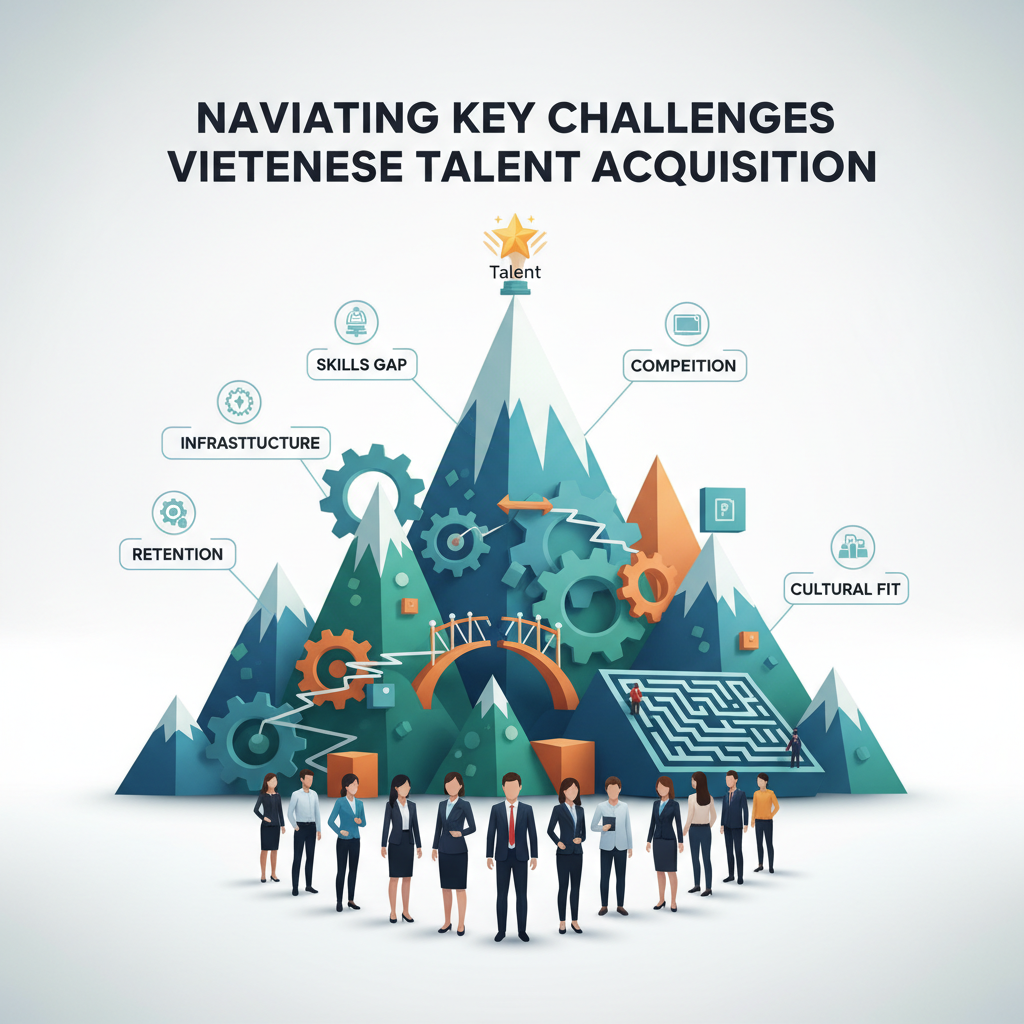
1. Talent Shortages in Specialized Fields (IT, Tech, High-Tech Mfg)
One of the most pressing challenges in Vietnamese talent acquisition is the persistent shortage of skilled professionals in high-demand sectors. Despite a large pool of university graduates, there’s a significant gap between academic output and industry requirements, particularly in rapidly evolving fields like Information Technology (IT), advanced manufacturing, and high-tech industries. Companies often struggle to find candidates with niche technical skills, proficiency in emerging technologies (e.g., AI, blockchain, data science), or relevant international experience.
This scarcity leads to intense competition among employers, driving up recruitment costs and extending hiring timelines. Furthermore, the quality of readily available talent may not always meet the rigorous demands of global standards, necessitating substantial investment in training and upskilling programs. Businesses must strategize not only for acquisition but also for developing internal capabilities and potentially looking at alternative sourcing models, such as remote talent or partnerships with vocational institutions.
2. Bridging Compensation Expectations vs. Market Reality
Another critical hurdle is the disconnect between candidate compensation expectations and the prevailing market rates in Vietnam. As the economy grows and exposure to international companies increases, Vietnamese professionals, especially those with specialized skills or international experience, often have higher salary demands. This can create a significant challenge for companies, particularly SMEs or those new to the market, trying to establish competitive compensation packages that align with local budgets while still attracting top-tier talent.
The issue is compounded by a lack of transparent, reliable market data for specific roles and industries, making it difficult for HR and recruitment teams to benchmark effectively. Businesses need to conduct thorough market research, possibly utilizing external consulting services, to understand local salary trends, benefits, and non-monetary perks that are valued by Vietnamese employees. Crafting a holistic compensation strategy that includes competitive base salaries, performance bonuses, comprehensive benefits, and clear career progression paths is vital to manage these expectations and ensure fair, attractive offers. A recent report highlights the increasing competitiveness of the Vietnamese labor market, pushing salary expectations upwards, especially for roles requiring digital proficiency.
3. Cultural Integration & Long-Term Retention Issues
Beyond immediate hiring, retaining talent in Vietnam presents its own set of challenges, often rooted in cultural nuances and career progression expectations. While many Vietnamese professionals are eager for growth and development, they may also be highly responsive to new opportunities, leading to relatively high turnover rates, particularly in fast-growing sectors.
Cultural differences can also impact workplace dynamics. For multinational corporations, integrating Vietnamese employees into a global corporate culture while respecting local customs requires a delicate balance. Issues such as communication styles (direct vs. indirect), feedback mechanisms, and hierarchical structures need careful management. A strong focus on employee engagement, career development, and fostering a positive, inclusive work environment is paramount.
To combat retention challenges, companies should invest in robust onboarding programs that ease new hires into the company culture, provide clear pathways for professional growth, and offer continuous learning opportunities. Mentorship programs, regular performance feedback, and recognition initiatives can significantly enhance job satisfaction and loyalty. Understanding the motivations and aspirations of the Vietnamese workforce—which often include stability, skill development, and a sense of belonging—is key to crafting effective retention strategies.
Navigating these complexities requires a strategic, long-term approach to Talent Acquisition Vietnam. By understanding the unique landscape, addressing talent shortages with targeted development, managing compensation expectations with data-driven insights, and fostering a culturally sensitive environment, companies can build strong, stable teams poised for success in Vietnam’s exciting market.
Strategic Approaches for Successful Talent Acquisition in Vietnam
Vietnam’s dynamic economic growth and young, tech-savvy population present both immense opportunities and unique challenges for companies seeking to build high-performing teams. The market for skilled professionals is increasingly competitive, demanding sophisticated and localized Talent Acquisition Vietnam strategies. To effectively attract, engage, and retain top talent, organizations must go beyond traditional methods and embrace a multi-faceted approach that resonates with the local workforce’s aspirations and cultural nuances.
1. Leveraging Local Recruitment Agencies & Headhunters
Navigating the intricacies of the Vietnamese job market can be complex, making local recruitment agencies and headhunters indispensable partners. These firms possess invaluable market intelligence, a deep understanding of local employment laws, salary benchmarks, and cultural expectations. They maintain extensive networks of passive and active candidates, often reaching talent pools inaccessible through conventional advertising. A specialized agency can significantly accelerate the hiring process, reduce time-to-hire, and improve the quality of candidates by pre-screening and vetting applicants according to specific requirements.
When selecting a partner, look for agencies with a proven track record in your industry sector and a strong reputation for ethical practices. A good agency will offer more than just candidate sourcing; they will act as strategic advisors, providing insights into market trends, candidate expectations, and effective negotiation strategies. Their ability to bridge cultural and communication gaps between foreign companies and local talent is crucial, ensuring smoother integration and higher retention rates. This strategic partnership allows your internal HR teams to focus on broader talent management initiatives while experts handle the detailed and often time-consuming process of candidate identification and engagement.
2. Building a Strong, Authentic Employee Value Proposition (EVP)
In a talent-short market, a compelling Employee Value Proposition (EVP) is paramount. An EVP is the unique set of benefits an employee receives in return for the skills, capabilities, and experience they bring to a company. For Vietnam, an effective EVP must go beyond competitive salaries, encompassing career development opportunities, a positive work-life balance, a supportive company culture, and meaningful work. Vietnamese professionals, particularly younger generations, highly value continuous learning, clear career pathways, and a sense of belonging within their organization.
To craft an authentic EVP, companies must first understand what their current employees value most through surveys, focus groups, and exit interviews. This internal data should then be cross-referenced with external market research to identify key differentiators that appeal to the target talent pool. Authenticity is key; the EVP must accurately reflect the actual employee experience. Communicate your EVP clearly and consistently across all touchpoints, from job descriptions and career pages to social media and employee testimonials. A strong EVP not only attracts top talent but also enhances employee engagement and reduces turnover. For further insights on structuring an effective EVP, consider resources like Gartner’s guidance on the Employee Value Proposition.
3. Optimizing Digital Recruitment Channels & Social Media Sourcing
Vietnam boasts a highly connected and digitally native population, making digital channels indispensable for talent acquisition. Companies must develop a robust online presence that showcases their employer brand and reaches candidates where they spend their time. Leading local job boards like VietnamWorks and TopCV are essential, but the power of social media cannot be underestimated.
Platforms such as LinkedIn, Facebook, and Zalo are widely used for professional networking and job searching. Develop targeted social media campaigns that highlight company culture, employee success stories, and career growth opportunities. Utilize professional groups and communities on these platforms to identify and engage with passive candidates. Beyond direct advertising, employer branding initiatives, such as sharing company news, employee spotlights, and CSR activities, can significantly enhance your attractiveness as an employer. Ensure all digital assets, including your career website, are mobile-optimized, as a significant portion of job searches occur on smartphones. Employing analytics to track the effectiveness of various channels allows for continuous optimization, ensuring resources are allocated to the most fruitful avenues for attracting top Vietnamese talent.
The Impact of Technology & Data on Vietnam TA 2026
Exploring how technological advancements, AI, and data analytics are transforming recruitment processes and decision-making in Vietnam.
As Vietnam continues its rapid ascent as a global economic player, the landscape of its labor market is evolving at an unprecedented pace. By 2026, technology and data will not merely be tools but fundamental drivers transforming Talent Acquisition Vietnam. The traditional recruitment model, often reliant on manual processes and subjective decisions, is giving way to sophisticated, tech-driven strategies. This paradigm shift is crucial for businesses aiming to secure top talent in a competitive and dynamic environment, leveraging advancements in artificial intelligence (AI), automation, and robust data analytics to redefine efficiency, accuracy, and candidate experience.
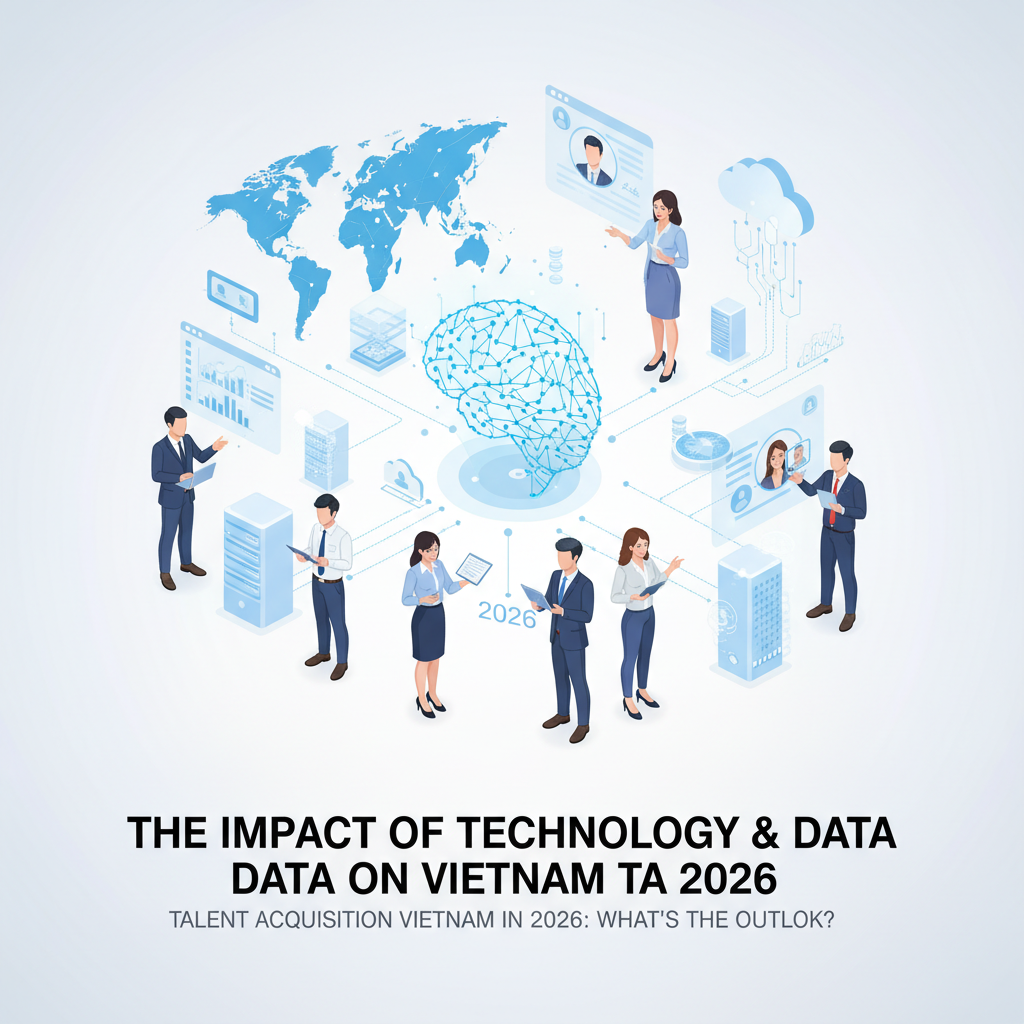
1. AI & Automation in Candidate Sourcing & Screening
The sheer volume of applications for desirable roles in Vietnam can be overwhelming. AI and automation are stepping in to streamline the initial stages of the recruitment funnel, significantly reducing time-to-hire and improving the quality of shortlisted candidates. AI-powered tools, utilizing natural language processing (NLP) and machine learning algorithms, can quickly parse through thousands of resumes, identifying keywords, skills, and experiences that align with job requirements. This not only speeds up the process but also minimizes human bias, ensuring a more objective evaluation of candidates.
Beyond basic screening, automation extends to candidate sourcing through intelligent platforms that proactively identify passive candidates on professional networks and databases. Chatbots, driven by AI, can engage with applicants 24/7, answering frequently asked questions, providing updates on application status, and even conducting preliminary screening interviews based on pre-defined criteria. This level of automation frees up recruiters to focus on more strategic tasks, such as building relationships with promising candidates and fostering a strong employer brand. For a deeper dive into this transformative area, consider insights from industry leaders on how AI is reshaping recruitment practices globally: PwC on AI in Talent Acquisition.
2. Data-Driven Decision Making in Talent Analytics
In the past, recruitment decisions were often based on intuition or limited data. Today, data analytics is empowering TA professionals in Vietnam with actionable insights that drive more effective and strategic hiring. Metrics such as time-to-hire, cost-per-hire, source-of-hire effectiveness, and candidate conversion rates are no longer just performance indicators; they are critical data points used to optimize every stage of the recruitment process.
Talent analytics platforms aggregate data from various sources – applicant tracking systems (ATS), HR information systems (HRIS), and employee performance data – to provide a holistic view. This allows organizations to identify which sourcing channels yield the highest quality hires, predict future hiring needs based on business growth forecasts, and even anticipate potential attrition. By understanding the common traits of successful employees within their organization, companies can refine their candidate profiles and interview processes, leading to better long-term retention and improved productivity. This strategic approach to Talent Acquisition Vietnam is essential for building a resilient and high-performing workforce.
3. Utilizing HR Tech Platforms for Enhanced Candidate Experience
In a candidate-driven market, providing an exceptional candidate experience is paramount. Integrated HR Tech platforms are central to achieving this, offering seamless and personalized interactions throughout the entire recruitment journey. Modern Applicant Tracking Systems (ATS) and Candidate Relationship Management (CRM) tools go beyond simply managing applications; they act as comprehensive ecosystems designed to engage, nurture, and onboard talent effectively.
From mobile-friendly application processes and personalized communication via email or SMS, to interactive career pages and virtual onboarding modules, these platforms create a cohesive and positive experience. They ensure transparency, provide timely feedback, and simplify administrative tasks for candidates, making the application process less daunting and more inviting. A positive candidate experience not only enhances an organization’s employer brand but also significantly increases the likelihood of top candidates accepting job offers and becoming enthusiastic brand advocates. Investing in advanced HR Tech platforms is therefore not just about operational efficiency; it’s about competitive advantage in attracting and retaining the best talent Vietnam has to offer.
The journey towards fully leveraging technology and data in Talent Acquisition Vietnam by 2026 is an ongoing evolution. Companies that embrace these advancements will not only overcome recruitment challenges but also strategically position themselves for sustained growth and innovation in the dynamic Vietnamese market.
Partner with Shelby Global
You are looking for reliable HR Sevice Suppliers? Contact Shelby Global Now! To connect with verified talents and upgrade your orginization.
—————————————
References
– World Bank Group – Vietnam Overview: https://www.worldbank.org/en/country/vietnam/overview
– :
– Robert Walters Vietnam Salary Survey 2024: https://www.robertwalters.com.vn/en/salary-survey.html
– :
– PwC on AI in Talent Acquisition: https://www.pwc.com/us/en/services/consulting/human-capital/ai-talent-acquisition.html