Overview of Vietnam’s Tech Landscape in 2026
By 2026, Vietnam has firmly cemented its position as one of Southeast Asia’s most dynamic technology hubs. The nation’s digital economy has undergone a rapid transformation, moving from a low-cost outsourcing destination to a sophisticated center for innovation, software development, and artificial intelligence integration. This evolution is fundamentally reshaping the labor market, significantly influencing the salary range report of jobs in technology field in vietnam as employers compete for top-tier expertise in a tightening market.

The convergence of government initiatives, a tech-savvy youth demographic, and increasing global interest has created a robust ecosystem. As companies aim to scale their digital operations, understanding the nuances of compensation benchmarking has become essential for both local firms and international enterprises entering the market. To make informed decisions, organizations are frequently consulting a comprehensive salary range report of jobs in technology field in vietnam to align their offers with market realities.
1. Growth of the IT Sector
The IT sector in Vietnam has experienced exponential growth, evolving well beyond traditional software outsourcing. By 2026, the focus has shifted toward high-value activities such as R&D, specialized engineering in semiconductors, and deep-tech applications. This maturation is a direct result of the country’s strategic efforts to digitalize its economy and modernize its industrial base. As noted by the World Economic Forum, the structural transformation toward technology-driven industries is a key engine of economic resilience, a trend clearly visible in Vietnam’s industrial and services sectors.
As firms move up the value chain, the requirement for highly skilled professionals has surged. Software developers, data scientists, and cloud architects are no longer just maintenance staff; they are central to strategic business transformations. This shift has placed significant upward pressure on salaries, particularly for senior and lead roles that can bridge the gap between technical execution and business strategy.
2. Foreign Investment Impact
Foreign Direct Investment (FDI) remains the lifeblood of Vietnam’s tech acceleration. In 2026, the country has successfully attracted major global players looking to diversify their manufacturing and R&D footprints away from traditional hubs. This influx of capital does more than just bring job opportunities; it introduces international operational standards, management practices, and competitive compensation structures that elevate the entire market.
When international firms enter the market, they often set a new baseline for compensation, forcing domestic firms to adjust their salary benchmarks to remain attractive to top talent. This competitive environment has made it increasingly complex for recruiters to forecast labor costs without access to up-to-date data. Consequently, executives are heavily relying on the latest data sets, including the specific salary range report of jobs in technology field in vietnam, to structure packages that can attract and retain high-caliber professionals in a hyper-competitive hiring landscape.
3. Demand vs Supply of Talent
Despite the rapid expansion of technology education and vocational training programs in Vietnam, the demand for highly specialized talent continues to outpace the supply. The gap is most acute at the mid-to-senior levels, where experience in leading complex cloud migrations, securing enterprise systems, and architecting AI-driven solutions is highly coveted. The scarcity of such specialized skill sets results in aggressive poaching strategies and bidding wars, which directly inflate wage growth across the industry.
For organizations operating in this environment, understanding the delicate balance between supply and demand is crucial. Simply offering a competitive base salary is often insufficient; employers are increasingly adopting comprehensive reward packages that include equity, flexible working arrangements, and professional development opportunities to secure the loyalty of their workforce. The ongoing monitoring of the salary range report of jobs in technology field in vietnam serves as a critical diagnostic tool, enabling companies to proactively adjust their talent acquisition strategies to navigate this challenging, supply-constrained market effectively.
Software Engineering & Development Salaries
In the rapidly evolving digital landscape of Southeast Asia, Vietnam has emerged as a premier hub for technical talent. As companies worldwide look to scale their operations, understanding the current compensation landscape is essential for both employers and job seekers. A comprehensive salary range report of jobs in technology field in vietnam indicates that technical proficiency, seniority, and language skills are the primary drivers of wage growth. According to data from TopCV, the local market continues to see double-digit annual increases for specialized roles due to the high demand for digital transformation experts.
1. Front-End and Back-End Developers
The foundation of any digital product rests on the shoulders of specialized developers. Front-end engineers, tasked with creating responsive, user-centric interfaces using React, Vue, or Angular, generally command competitive entry-level salaries. In Vietnam, a junior front-end developer can expect to earn between $600 and $1,200 per month, while seniors can reach upwards of $2,500 to $4,000 depending on their mastery of modern frameworks and state management libraries.
Conversely, back-end developers who focus on server-side logic, database management, and API architecture often see higher compensation brackets due to the complexity of distributed systems. Proficient developers using Java, Python, or Go are highly sought after. In the current market, backend specialists with 3-5 years of experience often find themselves in the $2,000 – $3,500 monthly range. The premium on backend talent stems from the critical need for security, scalability, and robust cloud infrastructure.
2. Full-Stack Engineering Roles
Full-stack developers remain the Swiss Army knives of the tech industry, and their versatility is well-compensated in Vietnam. These professionals must manage the complete stack, from database queries and server management to sophisticated front-end interactivity. Because these individuals reduce the need for larger, siloed teams, startups and medium-sized enterprises are willing to pay a premium for their holistic skill set.
Salaries for mid-level full-stack engineers in major tech hubs like Ho Chi Minh City and Hanoi typically range from $1,500 to $3,000. Senior architects capable of leading a product from concept to deployment can easily command salaries exceeding $4,500 per month. The growth of this role is heavily tied to the rise of cloud-native development, where full-stack engineers are expected to have a working knowledge of CI/CD pipelines, Docker, and Kubernetes alongside their core coding languages.
3. Mobile App Development
Mobile-first consumption habits in Vietnam have solidified the importance of skilled mobile app developers. Whether building native applications (Swift for iOS or Kotlin for Android) or utilizing cross-platform frameworks like Flutter and React Native, mobile developers occupy a stable niche in the job market.
Cross-platform developers are particularly popular for businesses looking to optimize their development cycles. Compensation in this segment is robust, with junior developers starting at $800 to $1,500, and senior specialists often plateauing between $3,000 and $4,500. As the mobile ecosystem continues to integrate advanced features such as augmented reality, machine learning on-device, and high-performance gaming, those who specialize in niche mobile technologies continue to see the fastest salary growth in the region.
In summary, while geography plays a role, individual expertise, certification, and the ability to work in English-speaking environments significantly influence the total compensation package. For those navigating this market, staying updated with the latest trends is key to career progression.
Data Science and AI Professional Pay Rates
The landscape of the digital economy in Southeast Asia is undergoing a radical transformation, with Vietnam emerging as a pivotal hub for technological innovation. As businesses increasingly integrate automation and advanced analytics into their operational frameworks, the demand for specialized talent has skyrocketed. Professionals navigating this competitive terrain must stay informed about the current salary range report of jobs in technology field in vietnam to ensure their compensation aligns with market benchmarks and the escalating value of their skill sets.
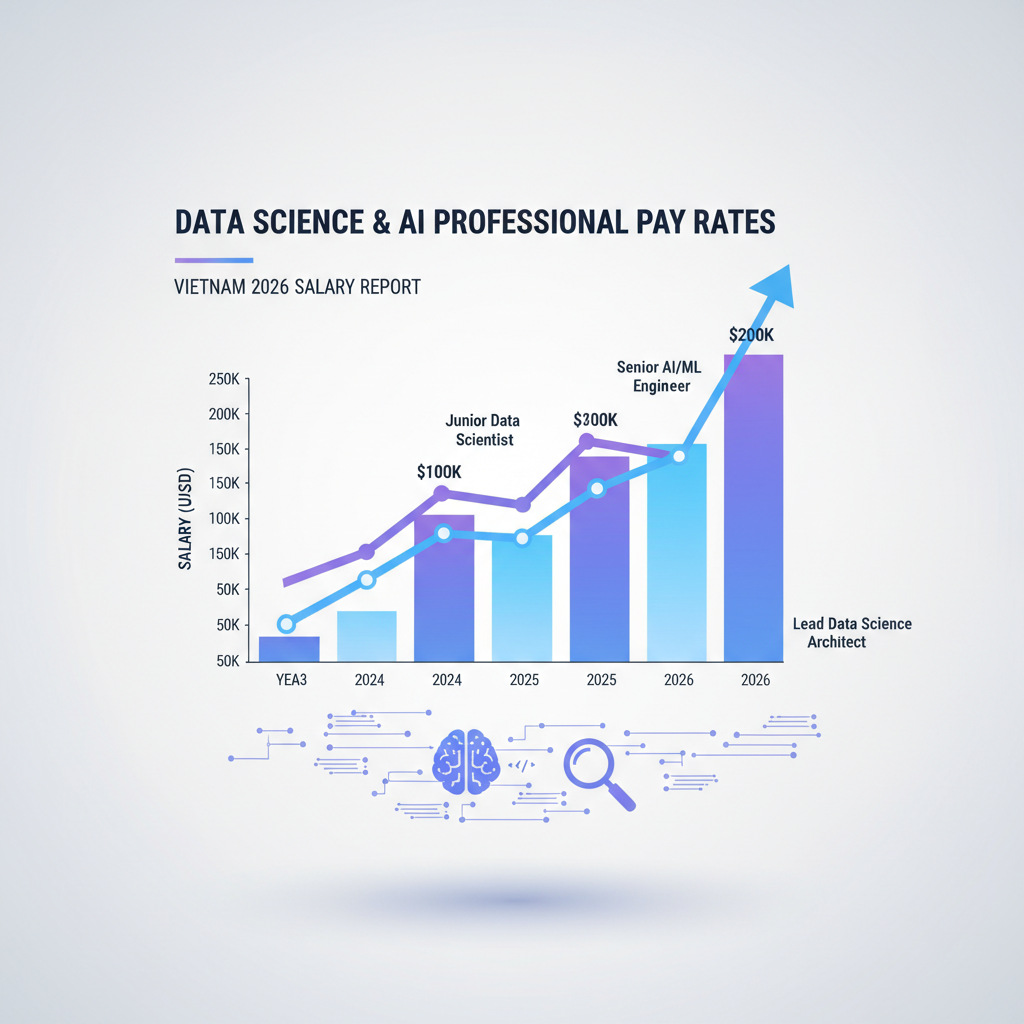
Understanding the nuances of these remuneration packages requires a deep dive into role-specific requirements and experience levels. While base salaries are competitive, the total compensation package—often including equity, performance bonuses, and upskilling allowances—reflects the strategic importance these roles play in a company’s growth. For a more comprehensive look at these metrics, you can refer to our detailed salary range report of jobs in technology field in vietnam.
1. Data Analysts and Scientists
Data science remains the backbone of modern business intelligence. Companies are aggressively hiring professionals who can transform raw, unstructured data into actionable insights. In Vietnam, entry-level Data Analysts typically command a competitive starting salary. However, as one progresses to Senior Data Scientist roles, the compensation packages often see significant jumps, frequently influenced by the professional’s proficiency in programming languages like Python or R and their mastery of data visualization tools. According to industry data, the global market trends for data science compensation continue to reflect a steady upward trajectory, which is mirrored in the localized demand within Vietnam’s burgeoning tech scene. Bonuses are common, particularly in sectors like Fintech and E-commerce, where data-driven decision-making directly impacts the bottom line.
2. Machine Learning Engineers
Machine Learning (ML) Engineers occupy one of the most lucrative niches in the current job market. These professionals are responsible for designing and deploying complex algorithms that power predictive models and automated systems. Because the skill gap for experienced ML engineers remains wide, employers in Vietnam are willing to offer premium rates to secure top-tier talent. Compensation for these roles often includes substantial base salaries supplemented by long-term incentives. Engineers who demonstrate expertise in cloud computing platforms (AWS, Azure, or GCP) and neural network architectures generally find themselves at the higher end of the local salary spectrum, often seeing their earnings increase at a faster rate than those in traditional software development roles.
3. AI Research Specialists
At the pinnacle of the technical hierarchy, AI Research Specialists are at the forefront of innovation. Their work often involves pushing the boundaries of Natural Language Processing (NLP), Computer Vision, and Generative AI. Given the scarcity of highly skilled researchers, remuneration in this field is highly specialized. Many companies treat these positions as R&D investments, providing extensive resources and compensation packages that compete on a regional basis. In Vietnam, the salary for AI researchers is not strictly tied to years of experience but is heavily weighted toward academic output, published research, and the ability to solve unprecedented technical challenges. As the country positions itself as an AI-ready nation, these roles are expected to command the highest salary premiums for the foreseeable future.
Cybersecurity and Cloud Computing Incomes
In the rapidly evolving digital landscape of Southeast Asia, Vietnam has emerged as a premier hub for high-tech talent. As businesses accelerate their digital transformation, the demand for specialized skills in cybersecurity and cloud computing has skyrocketed. Understanding the current salary range report of jobs in technology field in vietnam is essential for both aspiring professionals and companies looking to attract top-tier talent in an increasingly competitive market.
The following breakdown highlights the earning potential of key technical roles that form the backbone of modern digital infrastructure.
1. Information Security Analysts
As cyber threats become more sophisticated, the role of an Information Security Analyst has become critical to corporate survival. These professionals are responsible for monitoring networks, installing protective software, and conducting vulnerability assessments to safeguard sensitive data. In Vietnam, security analysts command competitive salaries due to the high risk associated with data breaches and the global emphasis on regulatory compliance. According to industry benchmarks, skilled professionals in this field can expect significant compensation increases based on their certifications—such as CISSP or CEH—and years of practical experience in incident response.
2. Cloud Architects and Admins
Cloud computing has revolutionized how organizations store, manage, and process data. Cloud Architects are tasked with designing complex cloud environments, while Cloud Administrators handle the day-to-day operations and maintenance of these systems. With the widespread adoption of AWS, Azure, and Google Cloud, the earning potential for these roles is among the highest in the tech sector. Enterprises are willing to pay a premium for architects who can design cost-effective, scalable, and resilient systems. As detailed in the latest salary range report of jobs in technology field in vietnam, senior-level Cloud Architects often find themselves in the top income tier, reflecting their strategic value to business continuity and innovation.
3. DevOps Engineers
DevOps Engineers serve as the bridge between software development and IT operations. By implementing CI/CD pipelines, automating infrastructure deployment, and fostering a culture of collaboration, they ensure that applications are delivered with speed and reliability. In Vietnam’s vibrant startup and outsourcing scene, DevOps expertise is a hot commodity. Because these engineers must possess a deep understanding of both development coding languages and infrastructure management, their compensation packages are exceptionally robust. Employers recognize that a proficient DevOps team directly correlates with a reduction in operational downtime and a faster time-to-market for new features, leading to competitive salary benchmarks that continue to trend upward as businesses scale their cloud-native operations.
Ultimately, the technological maturity of the Vietnamese market ensures that those who specialize in cloud management and cybersecurity will continue to see strong career growth. As organizations move further into hybrid and multi-cloud environments, the synergy between robust security protocols and automated DevOps processes will only increase the demand—and the subsequent salary potential—for these specialized professionals.
Key Factors Influencing Tech Pay in Vietnam
Understanding the compensation landscape within the Vietnamese technology sector requires a granular analysis of various professional and regional dynamics. As the nation solidifies its position as a burgeoning regional digital hub, employers and candidates alike are closely monitoring the salary range report of jobs in technology field in vietnam to align expectations with market realities. Various elements, ranging from tenure to specific technical competencies, dictate the earning potential of professionals in this competitive ecosystem.
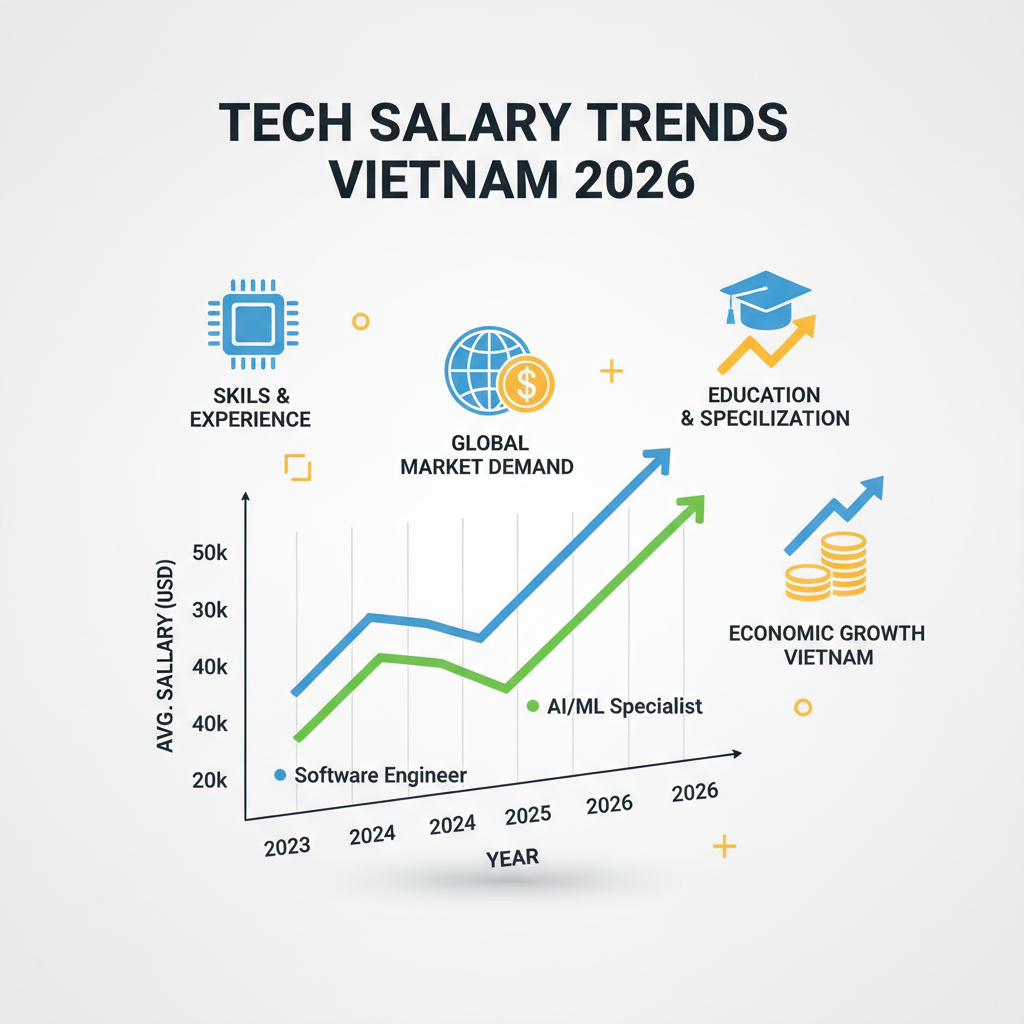
For a comprehensive view, we must break down the key drivers of remuneration.
1. Experience and Seniority Levels
Experience remains the most significant predictor of compensation in the Vietnamese tech labor market. Junior developers typically enter the workforce with a foundational understanding, but their salary growth is often tied to the acquisition of practical, project-based skills. In contrast, senior-level professionals, particularly those with over eight years of experience, command premium rates due to their ability to architect complex systems, lead cross-functional teams, and mentor junior staff.
According to data from the World Bank’s insights into Vietnam’s digital economy, the shift toward higher-value services has exacerbated the demand for senior talent. This scarcity allows experienced engineers to negotiate significantly higher packages, often including equity or performance-based bonuses, which are rarely offered to entry-level hires.
2. Geographic Location Variations
Geography plays a pivotal role in shaping salary structures. Ho Chi Minh City and Hanoi remain the primary powerhouses of the tech industry, hosting the vast majority of multinational corporations and high-growth startups. Consequently, these metropolitan areas offer the highest average salaries in the country to account for the higher cost of living and the intense competition for local talent.
While remote work has begun to bridge the gap in some sectors, the concentration of physical offices and research centers in these two hubs ensures that companies located there remain the top payers. Professionals working for offshore development centers (ODCs) or multinational firms based in these primary cities often see higher base salaries compared to those working in regional or secondary markets, where the focus may be on smaller, local enterprises.
3. Valuable Certifications and Skills
Beyond traditional experience, specific technical competencies act as multipliers for salary potential. Skills in high demand, such as Artificial Intelligence (AI), Machine Learning, Cloud Computing, and Cybersecurity, often command a premium across the board. In a rapidly evolving market, a professional’s ability to demonstrate expertise in these areas is crucial.
Furthermore, internationally recognized certifications—such as AWS Certified Solutions Architect, Google Cloud Professional, or CISSP—serve as formal validation of a candidate’s high-level capability. Companies are increasingly prioritizing candidates who possess a combination of niche technical skills and soft skills, such as English proficiency and project management methodologies (e.g., Agile or Scrum). As organizations modernize their tech stacks, those who invest in continuous learning and obtain relevant certifications are frequently placed in the top percentile of compensation brackets compared to peers with generalized knowledge.
By analyzing these three key factors, stakeholders can better navigate the complexities of the Vietnamese tech market, ensuring that compensation strategies remain competitive, sustainable, and reflective of the current industry trends.
Partner with Shelby Global
You are looking for reliable HR Sevice Suppliers? Contact Shelby Global Now! To connect with verified talents and upgrade your orginization.
—————————————
References
– World Economic Forum – The Future of Growth Report: https://www.weforum.org/reports/the-future-of-growth-report-2024/
– TopCV Vietnam: https://www.topcv.vn/
– Global market trends for data science compensation: https://www.salaryexpert.com/salary/job/vietnam/data-scientist
– Information Security Analyst Salary in Vietnam: https://www.salaryexpert.com/salary/job/information-security-analyst/vietnam
– World Bank’s insights into Vietnam’s digital economy: https://www.worldbank.org/en/country/vietnam