Overview of Vietnam’s Dynamic Tech Landscape
Vietnam’s technology sector has emerged as a beacon of innovation and economic dynamism in Southeast Asia, undergoing a remarkable transformation over the past decade. Far from being merely a manufacturing hub, the nation is rapidly cementing its position as a digital powerhouse, attracting significant foreign direct investment and fostering a thriving ecosystem of startups and tech giants alike. This rapid evolution is not just a testament to its vibrant entrepreneurial spirit but also a critical component of its broader economic growth strategy. Analyzing the market demand trend report of technology field in vietnam reveals a landscape ripe with opportunities, driven by robust domestic consumption, increasing digitalization across all sectors, and a strong push towards becoming a knowledge-based economy. The country’s tech advancements are contributing substantially to its GDP, creating high-value jobs, and enhancing its global competitiveness, making it a pivotal player in the regional and international tech arena.
1. Recent Growth Drivers and Economic Impact
The impressive ascent of Vietnam’s technology sector is propelled by a confluence of powerful drivers. A young, educated, and increasingly skilled workforce, coupled with competitive labor costs, has made Vietnam an attractive destination for R&D centers and tech companies seeking to expand their operations. Foreign Direct Investment (FDI) has poured into the sector, with global tech giants establishing significant presences, further stimulating innovation and technology transfer. The rapid adoption of digital technologies by its population, particularly in e-commerce, fintech, and digital entertainment, has created a robust domestic market. E-commerce, for instance, has seen double-digit growth year-on-year, fundamentally changing consumer behavior and driving demand for advanced digital infrastructure and services. The technology and telecommunications sector’s contribution to Vietnam’s GDP has consistently grown, underscoring its pivotal role in the nation’s economic fabric. In fact, the digital economy is projected to contribute significantly to the national GDP, reflecting a trajectory of sustained and impactful growth. According to a report by Google, Temasek, and Bain & Company, Vietnam’s digital economy is one of the fastest growing in Southeast Asia, projected to reach substantial value by 2025, driven largely by e-commerce and ride-hailing services. This momentum positions Vietnam as a key player in the regional digital landscape, showcasing its capacity for rapid economic transformation through technology.

2. Government Initiatives and Digital Transformation Agendas
Crucial to Vietnam’s technological rise is the steadfast support and visionary planning from its government. Recognizing the transformative power of technology, the Vietnamese government has implemented ambitious national strategies aimed at fostering a digital economy and society. Key initiatives include the “Make in Vietnam” strategy, encouraging local innovation and manufacturing of high-tech products, and the National Digital Transformation Program, which targets comprehensive digitalization across government, businesses, and society by 2025. These agendas focus on developing digital infrastructure, promoting e-government services, nurturing a skilled digital workforce, and creating a favorable legal framework for tech companies. Investments in smart city projects, particularly in Hanoi, Ho Chi Minh City, and Da Nang, are further examples of this commitment, integrating IoT, AI, and big data to enhance urban living and operational efficiency. The government’s proactive stance in creating an ecosystem conducive to technological advancement is a significant factor attracting both domestic and international investors. These strategic policies not only streamline administrative processes but also actively stimulate demand for advanced technological solutions across various sectors, influencing future market demand trend report of technology field in vietnam.
3. Demographic Profile and Tech Adoption Rates
Vietnam’s demographic structure provides a fertile ground for technological innovation and adoption. With a population exceeding 100 million, a significant proportion of which is young, digitally native, and highly adaptable to new technologies, the country boasts an impressive tech adoption rate. Smartphone penetration is high, and internet usage is widespread, creating a massive user base for digital services. This demographic dividend is evident in the booming e-commerce sector, the rapid growth of ride-hailing and food delivery apps, and the increasing adoption of fintech solutions. Young Vietnamese consumers are quick to embrace online platforms for communication, entertainment, education, and commerce, driving demand for innovative digital products and services. This eagerness to adopt new technologies extends beyond consumer applications to businesses, where SMEs are increasingly integrating digital tools for operations, marketing, and sales. The vibrant youth culture, combined with a strong educational focus on STEM fields, ensures a continuous supply of talent and a receptive market, reinforcing Vietnam’s position as a dynamic and evolving tech hub. This robust interplay of government support, economic drivers, and a tech-savvy populace collectively fuels the ongoing expansion and evolution of Vietnam’s technology sector, promising continued growth and innovation for years to come.
Key Emerging Market Demand Trends by Sector
Vietnam’s technology landscape is a vibrant and rapidly evolving ecosystem, consistently demonstrating robust growth fueled by a young, digitally native population, supportive government policies, and increasing foreign investment. This section details the hottest sectors within Vietnam’s technology field experiencing significant demand, outlining specific growth areas and innovations that are shaping the nation’s digital future. A market demand trend report of technology field in vietnam consistently highlights the country’s potential as a regional tech hub.
1. Digital Transformation & Enterprise Software Solutions
The imperative for digital transformation is not merely a buzzword in Vietnam but a strategic cornerstone for businesses aiming to enhance competitiveness and operational efficiency. From large conglomerates to SMEs, organizations across all industries are increasingly investing in enterprise software solutions to streamline processes, improve data management, and boost productivity. Cloud computing adoption is soaring, with companies migrating their infrastructure and applications to scalable, flexible cloud platforms, driving demand for Infrastructure-as-a-Service (IaaS), Platform-as-a-Service (PaaS), and Software-as-a-Service (SaaS) offerings. This includes robust Enterprise Resource Planning (ERP) systems, Customer Relationship Management (CRM) platforms, and supply chain management software tailored to local market nuances.
Growth areas are particularly pronounced in automation tools, including Robotic Process Automation (RPA), which helps automate repetitive tasks, and advanced analytics tools that provide actionable insights. Cybersecurity solutions are also experiencing unprecedented demand as businesses recognize the critical need to protect their digital assets against evolving threats. The manufacturing sector, in particular, is embracing Industry 4.0 initiatives, integrating smart factory solutions, IoT-enabled production lines, and predictive maintenance software to optimize operations and drive innovation. This push for modernization solidifies Vietnam’s position in the global digital economy.
2. Fintech, E-commerce, and Digital Payments Evolution
Vietnam’s digital economy is witnessing an explosive growth trajectory, largely driven by the rapid expansion of Fintech, e-commerce, and digital payments. A significant portion of the population is young, tech-savvy, and possesses high smartphone penetration, creating fertile ground for cashless transactions and online shopping. The e-commerce sector continues to break records, with major local and international players vying for market share. This surge in online retail naturally propels the demand for efficient and secure digital payment gateways, mobile wallets, and integrated financial services. Providers like MoMo, ZaloPay, and VNPay dominate the mobile payment landscape, offering convenience and fostering a progressively cashless society.
Fintech innovations extend beyond payments, encompassing areas like peer-to-peer (P2P) lending, Insurtech, wealth management platforms, and blockchain-based solutions. The government’s supportive regulatory framework, aimed at fostering a digital economy while ensuring financial stability, further accelerates this evolution. The increasing adoption of Buy Now Pay Later (BNPL) services, micro-lending, and digital banking services highlights a significant shift in consumer financial behavior. This vibrant ecosystem underlines the immense potential for further innovation and investment, making it a pivotal component of any digital economy report for Southeast Asia focusing on consumer-facing digital services.
3. AI, IoT, and Data Analytics Adoption Across Industries
Artificial Intelligence (AI), the Internet of Things (IoT), and advanced data analytics are no longer futuristic concepts in Vietnam but are actively being integrated across various sectors to drive efficiency, enhance decision-making, and create new service models. The government has prioritized AI development, viewing it as a critical engine for national growth and competitiveness, leading to investments in research and development, as well as fostering a skilled workforce.
In manufacturing, IoT sensors are enabling smart factories, predictive maintenance, and real-time inventory management. The retail and e-commerce sectors leverage AI for personalized recommendations, chatbots for customer service, and data analytics for demand forecasting and inventory optimization. Smart city initiatives are deploying IoT for traffic management, public safety, and environmental monitoring. Healthcare is adopting AI for diagnostics, drug discovery, and personalized treatment plans, while agriculture benefits from IoT-enabled smart farming solutions for crop monitoring and yield optimization.
The proliferation of data generated by these connected devices and digital platforms fuels the demand for sophisticated data analytics tools and expertise. Businesses are keen to harness big data to gain competitive insights, optimize marketing strategies, and understand consumer behavior more deeply. This widespread adoption of AI, IoT, and data analytics underscores Vietnam’s ambition to become a leading digital nation, making these technologies crucial focus points for any comprehensive market demand trend report of technology field in vietnam.
Factors Influencing Vietnam’s Tech Market Demand
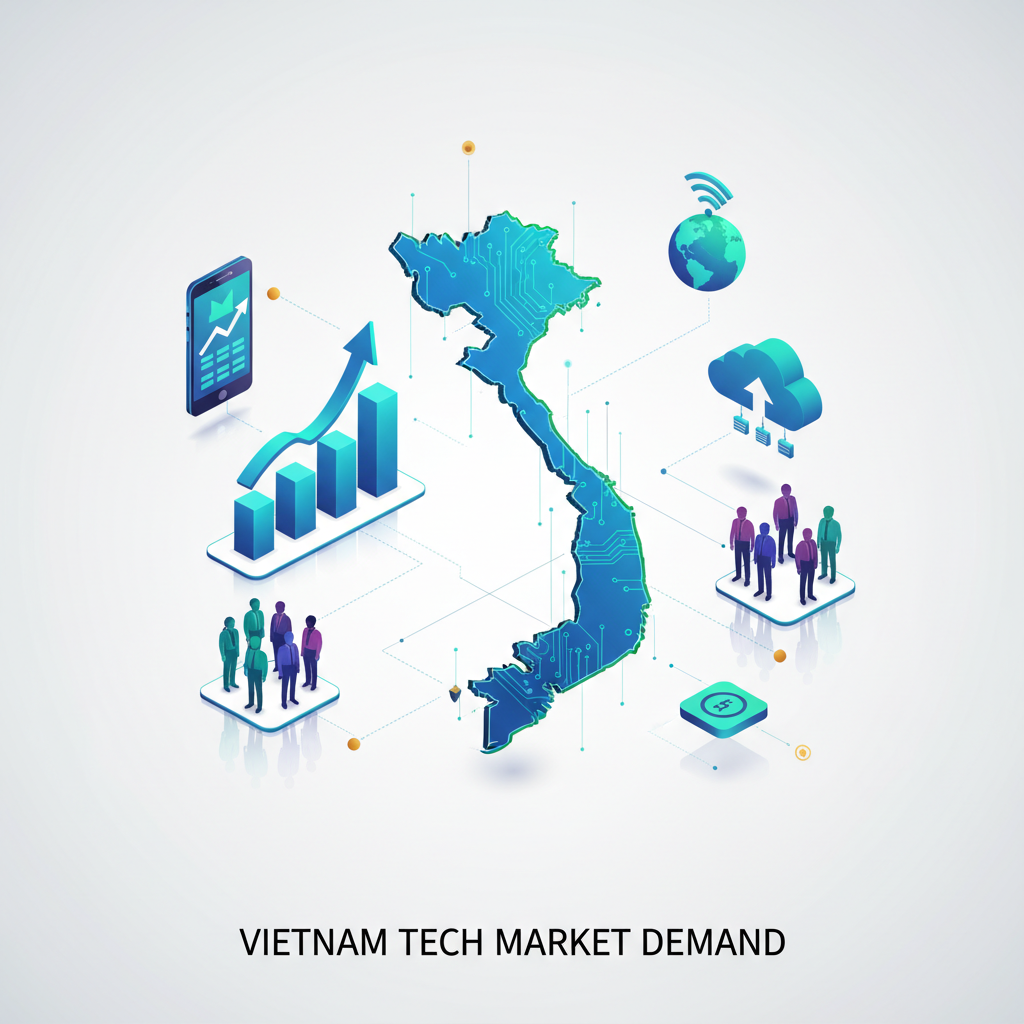
Vietnam’s technology market is experiencing a period of dynamic growth, shaped by a confluence of powerful internal and external forces. Understanding these elements is crucial for anyone seeking to navigate or invest in this vibrant landscape. This section explores the key drivers behind the escalating demand for technology solutions in Vietnam, from profound economic shifts and evolving consumer behaviors to significant global influences, offering insights vital for a comprehensive market demand trend report of technology field in vietnam.
1.
Economic Growth, Urbanization, and Consumer Spending Power
Vietnam’s sustained robust economic growth, often among the highest in Southeast Asia, forms the bedrock of its expanding tech demand. A burgeoning middle class, coupled with rapid urbanization, particularly in major cities like Hanoi and Ho Chi Minh City, fuels increased consumer spending power. This affluence translates directly into a greater appetite for advanced technology products and services, from smartphones and smart home devices to e-commerce platforms and digital entertainment. Businesses, responding to this evolving consumer base, are also investing heavily in digital transformation to enhance efficiency, reach new markets, and deliver superior customer experiences. The drive for modernization across sectors – manufacturing, finance, retail, and healthcare – necessitates the adoption of enterprise software, cloud computing, AI, and IoT solutions, significantly contributing to the overall technology market expansion.
2.
Increasing Digital Literacy and Internet Penetration
The widespread adoption of the internet and mobile technologies has been a game-changer for Vietnam. With a high percentage of the population having access to the internet, and smartphone penetration reaching saturation levels, digital literacy is no longer a niche skill but a societal norm. This pervasive connectivity empowers both individuals and businesses to engage with digital services more readily. Online banking, e-wallets, ride-hailing apps, and social media are deeply integrated into daily life. This high level of digital engagement creates a fertile ground for new tech solutions and innovations. Furthermore, government initiatives to promote digital transformation across public services and education further reinforce this trend, driving demand for robust digital infrastructure, cybersecurity measures, and educational technology tools. As more people become comfortable and reliant on digital interactions, the demand for sophisticated, user-friendly, and secure technology solutions continues to surge.
3.
Global Supply Chain Realignments and Geopolitical Factors
Global economic and geopolitical shifts are profoundly impacting Vietnam’s technology market, particularly in the realm of manufacturing and industrial technology. The ongoing realignment of global supply chains, often referred to as the “China Plus One” strategy, has seen numerous multinational corporations diversify their manufacturing bases, with Vietnam emerging as a preferred destination. This influx of foreign direct investment (FDI) into high-tech manufacturing, especially in electronics, semiconductors, and precision engineering, directly boosts the demand for industrial automation, smart factory solutions, and advanced IT infrastructure. Furthermore, geopolitical considerations, including trade tensions and the desire for resilient supply networks, encourage investment in local research and development, and the adoption of cutting-edge technologies to enhance competitiveness and self-sufficiency. This positions Vietnam not just as a consumer but also as a significant producer of technology, creating a dual demand for both operational and innovative tech solutions. According to the World Bank’s overview of Vietnam, the country’s strategic position and economic reforms continue to attract substantial foreign investment, which is a major catalyst for its tech sector growth.
In conclusion, the dynamic interplay of Vietnam’s strong economic fundamentals, rapid digital adoption, and its increasingly strategic role in the global economy collectively drives an unprecedented demand for technology. These factors paint a clear picture of a market ripe with opportunities for innovation and growth, underscoring why a detailed market demand trend report of technology field in vietnam is essential for understanding its future trajectory.
Investment Opportunities and Navigating Challenges
Vietnam’s technology sector stands out as a beacon of growth and innovation in Southeast Asia, presenting a compelling landscape for both domestic and international investors. Driven by a young, digitally-savvy population, strong government support for digital transformation, and increasing integration into global supply chains, the nation is rapidly evolving into a prominent tech hub. Understanding the dynamic interplay of promising ventures and potential hurdles is crucial for any entity looking to enter or expand within this vibrant market. This section delves into the strategic areas for investment, the burgeoning innovation ecosystem, and the key regulatory and operational challenges that define the technology field in Vietnam. For investors seeking comprehensive insights into the evolving landscape, a detailed market demand trend report of technology field in vietnam offers invaluable strategic guidance.
-
Attracting Foreign Direct Investment (FDI) in Tech
Vietnam has consistently proven itself a magnet for Foreign Direct Investment (FDI), and its technology sector is increasingly becoming a primary recipient. The government’s proactive stance on digital economy development, coupled with its stable political environment and attractive incentives, positions Vietnam as a preferred destination for tech giants and startups alike. Major global players are drawn by the nation’s competitive labor costs, a rapidly expanding consumer market, and a growing pool of skilled engineers. Sectors experiencing significant FDI inflow include software development, IT services, e-commerce, fintech, and advanced manufacturing driven by IoT and AI. Companies are establishing R&D centers, manufacturing facilities, and regional operational hubs, recognizing Vietnam’s strategic location and its pivotal role in the global tech supply chain. The government has implemented various policies to streamline investment processes and offer tax holidays or preferential rates for high-tech projects, further sweetening the deal. This robust attraction of capital underscores the confidence international investors place in Vietnam’s long-term technological trajectory, viewing it as a critical component in their Asia strategies. According to Nikkei Asia highlights, Vietnam continues to solidify its position as a top destination for foreign capital, particularly in high-tech manufacturing and digital services, a trend observed by international financial institutions and economic observers.
-
Thriving Startup Ecosystem and Innovation Hubs
Beyond FDI, Vietnam boasts a remarkably dynamic and rapidly maturing startup ecosystem, fostering innovation from within. Cities like Ho Chi Minh City, Hanoi, and Da Nang have emerged as vibrant innovation hubs, hosting a burgeoning number of tech startups across diverse fields such as e-commerce, edtech, healthtech, and agri-tech. This ecosystem is powered by a youthful, highly adaptable, and entrepreneurial population, eager to leverage technology to solve local and regional challenges. Government initiatives, such as the National Innovation Center (NIC), alongside numerous private accelerators, incubators, and venture capital funds, actively support these startups from ideation to scaling. Collaborative spaces, hackathons, and mentorship programs are commonplace, creating a fertile ground for new ideas to flourish. The success stories of Vietnamese unicorns and rapidly growing enterprises not only attract further investment but also inspire a new generation of entrepreneurs. This vibrant domestic innovation scene complements the FDI influx, creating a robust and self-sustaining tech economy. The synergy between homegrown talent and international capital is driving significant advancements and establishing Vietnam as a key player in Asia’s tech landscape, contributing to a diversified and resilient market.
-
Regulatory Environment and Market Entry Barriers
While opportunities abound, investors must also navigate the inherent complexities of Vietnam’s regulatory environment and potential market entry barriers. The legal framework, though progressively modernizing, can sometimes be intricate and subject to change, particularly concerning data privacy, cybersecurity, and foreign ownership limitations in certain sensitive sectors. Understanding and complying with local business laws, licensing requirements, and intellectual property (IP) regulations is paramount. Challenges can include bureaucratic processes, varying interpretations of regulations across different provincial authorities, and the need for robust local partnerships to effectively maneuver the market. Intellectual property protection, while improving, still requires careful consideration and strategic planning. Furthermore, infrastructure, while rapidly developing in major urban centers, may still pose limitations in more rural areas, impacting the scalability of certain tech solutions. Intense competition, both from established domestic players and international entrants, also demands a well-articulated market entry strategy. Prospective investors are strongly advised to conduct thorough due diligence, engage with local legal and consulting experts, and build strong relationships with governmental bodies. Proactive engagement with regulatory updates and an understanding of cultural business practices are vital for sustainable success in this dynamic market.
Future Outlook and Strategic Recommendations for 2026
Vietnam’s technology landscape is rapidly evolving, positioning the nation as a vibrant hub for innovation and digital transformation in Southeast Asia. As we look towards 2026, understanding the trajectory of this growth is crucial for businesses, investors, and policymakers alike. This section provides a forward-looking projection for the next few years, offering actionable advice to effectively leverage future growth opportunities within this dynamic sector. A comprehensive market demand trend report of technology field in Vietnam reveals significant potential, underscored by an expanding digital economy and a youthful, tech-savvy population.
1. Projected Growth Trajectories and Market Size by 2026
The Vietnamese technology sector is anticipated to sustain its impressive growth momentum, fueled by robust government support for digital transformation, increasing foreign direct investment, and a burgeoning startup ecosystem. By 2026, key segments are expected to witness substantial expansion. Digital economy revenue, encompassing e-commerce, online services, and digital products, is projected to surge, potentially reaching over $50 billion annually, according to various industry analyses. Artificial Intelligence (AI), Internet of Things (IoT), and blockchain technologies will move beyond nascent stages to become integral components of industrial and consumer applications. The demand for cloud computing services, cybersecurity solutions, and advanced data analytics will continue its upward trend as businesses prioritize digital resilience and efficiency. Furthermore, FinTech and EdTech sectors are poised for significant innovation and adoption, driven by a young, mobile-first population and evolving regulatory frameworks. This growth will be underpinned by a steady increase in venture capital funding and strategic partnerships, solidifying Vietnam’s position as a regional tech leader.

According to the e-Conomy SEA 2023 report by Google, Temasek, and Bain & Company, Vietnam’s digital economy is on track to reach a gross merchandise value (GMV) of $45 billion by 2025, and continued growth beyond this point will likely push it past the $50 billion mark by 2026, demonstrating the profound shifts in consumer and business behavior. This upward trajectory is a clear indicator of the strong market demand trend report of technology field in Vietnam, pointing towards sustained expansion across various tech verticals.
2. Strategic Imperatives for Tech Companies and Startups
To capitalize on the anticipated growth, tech companies and startups in Vietnam must adopt proactive and innovative strategies. Firstly, talent development and retention are paramount. Investing in upskilling existing employees and attracting top-tier talent, particularly in specialized areas like AI engineering, data science, and cybersecurity, will be critical. Companies should foster a culture of continuous learning and innovation. Secondly, niche specialization and vertical integration can provide a competitive edge. Instead of broadly competing, focusing on specific industry challenges (e.g., AI for agriculture, IoT for smart cities, blockchain for supply chain management) allows for deeper market penetration and expertise. Thirdly, strategic partnerships and collaborations with local enterprises, international tech giants, and research institutions can accelerate product development and market access. Leveraging the strong market demand trend report of technology field in Vietnam requires agility in product development, ensuring offerings are not only innovative but also align with local preferences and infrastructure limitations. Finally, adopting robust cybersecurity measures is no longer optional but a fundamental requirement, given the increasing sophistication of cyber threats and the growing emphasis on data privacy regulations. Companies that prioritize ethical AI development and data governance will build greater trust and long-term sustainability.
3. Policy Recommendations for Sustainable Tech Development
For policymakers, fostering a sustainable and inclusive tech ecosystem requires a multi-pronged approach. Firstly, continued investment in digital infrastructure is vital, particularly in expanding high-speed internet access to rural areas and enhancing cloud computing capabilities. This ensures equitable access to digital opportunities across the nation. Secondly, creating a supportive regulatory framework that encourages innovation while safeguarding consumer interests is essential. This includes streamlined processes for startup registration, intellectual property protection, and clear guidelines for emerging technologies like AI and blockchain. Encouraging foreign investment through attractive incentives and transparent policies will further boost the sector. Thirdly, strengthening the education system to produce a future-ready workforce is paramount. This involves integrating coding and digital literacy into school curricula, establishing specialized tech universities and vocational training centers, and promoting STEM fields among young people. Collaborations between academia and industry can ensure that educational programs align with the evolving needs identified in the market demand trend report of technology field in Vietnam. Finally, promoting responsible innovation and establishing ethical guidelines for AI and data usage will ensure that technological advancements contribute positively to society, mitigating potential risks and building public confidence in Vietnam’s digital future.
Partner with Shelby Global
You are looking for reliable HR Sevice Suppliers? Contact Shelby Global Now! To connect with verified talents and upgrade your orginization.
—————————————
References
– SEA Digital Economy Report 2023 | Google Asia Pacific: https://blog.google/around-the-globe/asia-pacific/sea-digital-economy-report-2023/
– digital economy report for Southeast Asia: https://economysea.withgoogle.com/report/2023/
– World Bank’s overview of Vietnam: https://www.worldbank.org/en/country/vietnam/overview
– Vietnam speeds digital shift with investment in local tech firms: https://asia.nikkei.com/Economy/Vietnam-speeds-digital-shift-with-investment-in-local-tech-firms
– e-Conomy SEA 2023 report by Google, Temasek, and Bain & Company: https://www.bain.com/insights/e-conomy-sea-2023-report-reinforcing-foundations-advancing-with-ai/