Introduction: Setting the Stage for Beauty HR in Malaysia
Malaysia’s beauty industry is a dynamic and rapidly expanding sector, characterized by a diverse ecosystem of businesses ranging from small, agile startups to large, established corporations. Within this vibrant landscape, the efficacy of human resources (HR) management plays a pivotal role in determining success, ensuring compliance, and fostering sustainable growth. Understanding the differences between the SMEs’ HR structure and the Corporates’ HR structure in the beauty field in Malaysia is not merely an academic exercise; it is a critical strategic imperative for business owners, HR professionals, and aspiring talent alike. This section sets the foundation by defining what constitutes Small and Medium-sized Enterprises (SMEs) and Corporates within Malaysia’s unique beauty sector, highlighting why their distinct HR frameworks are fundamental to navigating challenges and capitalizing on opportunities.

-
Defining SMEs vs. Corporates in Malaysia’s Beauty Sector
In Malaysia, the distinction between SMEs and Corporates is primarily based on criteria set by SME Corp. Malaysia, typically involving annual sales turnover and number of full-time employees. For the beauty sector, an SME might range from a boutique salon with a handful of employees to a regional distributor with up to 75 employees and an annual turnover not exceeding RM50 million. These businesses often include independent spas, beauty product retailers, and smaller manufacturing units. Their SME definition impacts their operational and HR capabilities. Conversely, Corporates encompass larger entities like national or international beauty chains, major cosmetic manufacturers, or large-scale distributors with extensive operations, numerous branches, and hundreds, if not thousands, of employees. These organizations typically exceed the SME thresholds in terms of revenue and workforce size, operating with significant market presence. This fundamental difference in scale profoundly influences their approach to Malaysian beauty sector HR, talent management beauty industry practices, and overall organizational structure beauty companies.
-
Why HR Structure Matters for Growth and Compliance
The HR structure is the backbone of any organization, dictating how talent is acquired, developed, and retained. For SMEs in the beauty sector, a lean HR structure often means owners or managers handle HR functions alongside their primary duties, leading to potential HR challenges beauty SMEs such as inconsistent employee retention beauty SMEs strategies or inadequate training and development beauty industry programs. While this approach offers agility and cost-efficiency, it can also expose the business to compliance risks related to labour laws beauty Malaysia if not managed carefully. For larger beauty corporations, a dedicated HR department is essential for managing complex recruitment beauty sector Malaysia processes, implementing comprehensive HR policies beauty corporations, and handling payroll management beauty industry complexities. These corporations benefit from specialized expertise in areas like workforce planning Malaysia beauty, succession planning, and advanced HR best practices beauty corporates. A well-defined HR structure, regardless of business size, ensures not only operational efficiency but also strict adherence to legal requirements, mitigating risks, and fostering a positive work environment conducive to growth. Neglecting HR compliance Malaysia beauty can result in significant penalties and reputational damage for any beauty business.
-
Overview of the Malaysian Beauty Industry Landscape
Malaysia’s beauty industry is characterized by its diversity, encompassing a wide array of services and products from traditional Malay beauty remedies to international luxury brands, and a booming Halal beauty market. This growth is fueled by a rising middle class, increasing disposable incomes, and a strong digital adoption rate that has spurred e-commerce for beauty products. The industry provides varied career paths, from skilled beauticians and therapists to marketing specialists, product developers, and supply chain managers. Both SME beauty business HR and corporate beauty HR strategies must adapt to the evolving demands of this market, which is influenced by global trends, local cultural preferences, and stringent regulatory standards from agencies like the National Pharmaceutical Regulatory Agency (NPRA). The demand for skilled professionals means effective talent management and competitive compensation are crucial for employee attraction and retention. Understanding the unique operational nuances and HR complexities within this landscape is key for any entity aiming to thrive, whether they are navigating the nimble operations of an SME or the expansive requirements of a corporate entity.
Core HR Functions: A Comparative Look at Management & Resources
Examines how fundamental HR operations, from attracting talent to managing payroll and benefits, are approached differently in small-to-medium enterprises versus large corporate beauty companies.
The Malaysian beauty industry, a vibrant sector, presents diverse HR challenges. Understanding the differences between the SMEs’ HR structure and the corporates’ HR structure in the beauty field in Malaysia is essential for effective human resource management. Both strive for a productive workforce, but their approaches to core HR functions, from talent acquisition to benefits, diverge significantly. These variations are driven by resources, scale, and strategic objectives, impacting overall HR management beauty Malaysia.
1. Talent Acquisition Beauty Malaysia: Approaches and Resources
Talent acquisition in the beauty sector is a cornerstone HR function. For small beauty businesses HR, often independent salons or niche providers, recruitment relies on informal networks, local job boards, and word-of-mouth. Limited budgets mean less emphasis on extensive campaigns, focusing instead on candidates with genuine passion and strong customer service skills. The owner or general manager typically handles hiring. This hands-on approach allows close team understanding but can limit attracting diverse candidates, posing a common beauty industry HR challenge. Some SMEs may consider HR outsourcing beauty SMEs for talent recruitment beauty Malaysia.
Conversely, large corporate beauty companies in Malaysia deploy sophisticated corporate beauty HR strategies. These firms feature dedicated recruitment teams, leveraging professional HR platforms, partnering with specialized agencies, and investing heavily in employer branding. Their campaigns target a broader pool of candidates, including experienced aestheticians, product formulators, marketing specialists, and corporate staff. Beyond technical skills, emphasis is placed on cultural fit and leadership potential, aligning with global brand values. Such organizations fund structured internship programs and participate in career fairs, setting a high standard for attracting top talent. Strategic HR beauty corporates prioritize long-term workforce planning and succession. Global HR resources often guide these comprehensive strategies.
2. Payroll Management Beauty Industry and Compensation Strategies
Payroll management beauty industry and compensation strategies also reveal significant differences between the SMEs’ HR structure and the corporates’ HR structure in the beauty field in Malaysia. SMEs typically manage payroll manually or through basic accounting software. Compensation often involves a base salary supplemented by commission structures, directly linking pay to sales or service delivery. While straightforward for incentivizing sales, this model might lack complexity for diverse career paths. HR compliance beauty Malaysia, pertaining to statutory contributions like EPF, SOCSO, and EIS, is handled, though often by general administrative staff.
Large corporate beauty companies, however, operate with advanced HR technology beauty industry systems, often integrated HRIS platforms. These systems automate payroll, manage complex tax deductions, and facilitate diverse compensation strategies. These typically include structured salary bands, performance-based bonuses, and sometimes long-term incentive plans. Dedicated payroll specialists ensure meticulous accuracy and strict adherence to Malaysian labor laws, mitigating compliance risks. These organizations conduct market benchmarking to ensure their compensation beauty sector offerings remain highly competitive, attracting and retaining top-tier talent. Performance management beauty is closely linked to compensation, ensuring rewards align with company objectives.
3. Employee Benefits Beauty Sector Malaysia vs. Standard Offerings
The scope of employee benefits is another area where the differences between the SMEs’ HR structure and the corporates’ HR structure in the beauty field in Malaysia are distinct. Small beauty businesses generally provide only statutory benefits mandated by Malaysian law, such as EPF, SOCSO, and EIS. Beyond these, perks might include product discounts, flexible working hours, or simple team incentives. The capacity to offer extensive health insurance or robust retirement plans is often limited by budget, prompting SMEs to prioritize a positive work environment and strong team cohesion to boost employee engagement beauty.
Conversely, large corporate beauty companies offer comprehensive employee benefits in the beauty sector in Malaysia that extend far beyond statutory requirements. These often include extensive medical and dental insurance, life insurance, wellness programs, generous leave policies, and professional development funds. Many also provide enhanced maternity/paternity leave and employee assistance programs. These extensive benefits packages serve as powerful tools for attracting and retaining talent, complementing competitive compensation strategies. They represent a strategic investment in workforce planning beauty and employee well-being, fostering a motivated, healthy, and loyal workforce. Training and development beauty programs are also formalized with dedicated budgets, offering clear advantages over basic standard offerings. This holistic approach ensures their benefits for beauty professionals are competitive globally.
Strategic HR vs. Administrative Focus: Impact of Scale
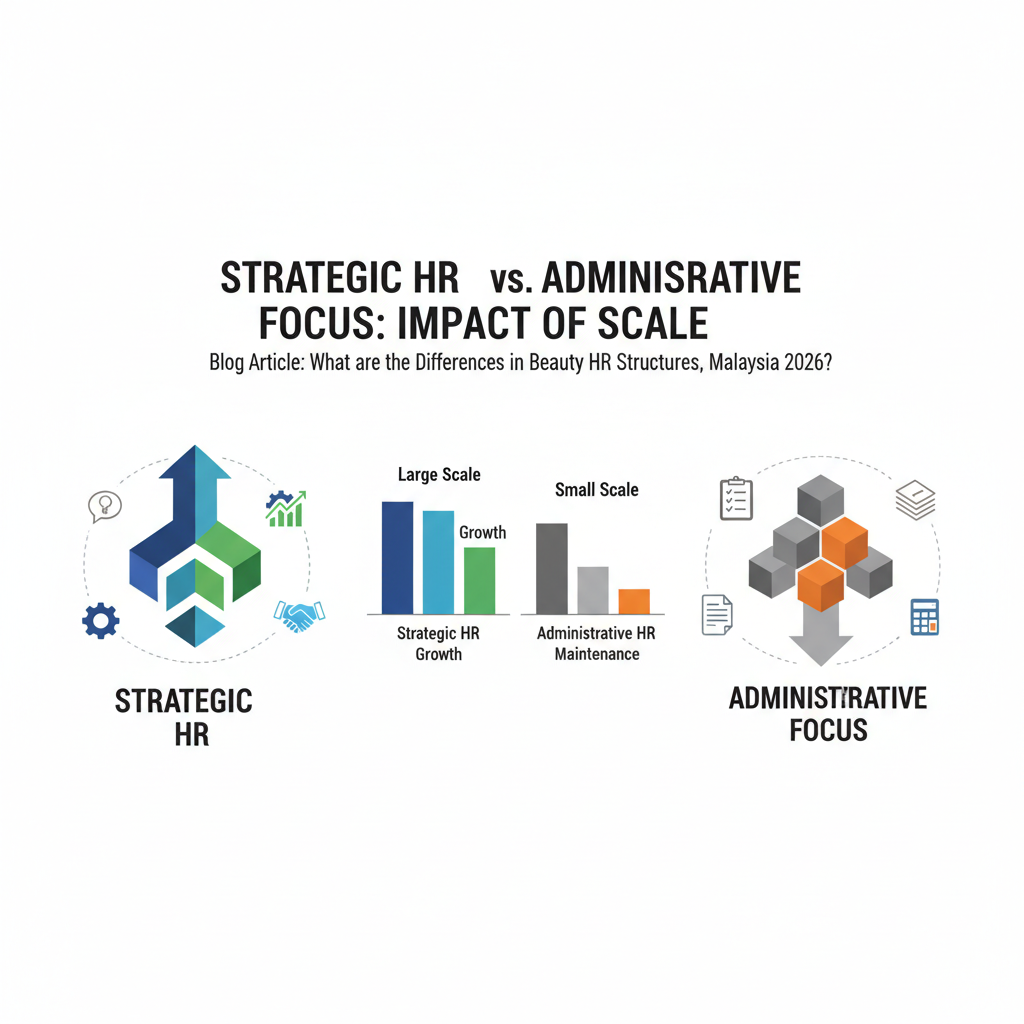
The landscape of Human Resources (HR) dramatically transforms with the scale of an organization, a reality acutely felt within Malaysia’s vibrant beauty sector. From bustling small and medium-sized enterprises (SMEs) pioneering niche products to multinational corporations dominating the market, the HR function evolves from a multi-hatted administrative role to a strategic business partnership. This shift is primarily driven by resource availability, budget allocation, and the complexity of workforce management, fundamentally shaping the differences between the SMEs’ HR Structure and the Corporates’ HR Structure in beauty field in malaysia.
-
Strategic HR Beauty Malaysia: Business Partnership in Corporates
In large beauty corporations across Malaysia, HR is far beyond mere payroll and compliance; it’s a strategic force deeply embedded in business planning. These organizations leverage corporate HR strategies Malaysia to drive growth, innovation, and market leadership. HR professionals function as true business partners, focusing on long-term initiatives such as talent management beauty Malaysia, succession planning, and organizational development beauty. Their responsibilities include crafting comprehensive workforce planning Malaysia strategies, developing robust leadership programs, and ensuring employee engagement Malaysia beauty aligns with corporate values and objectives. Specialized departments within these HR structures handle distinct functions like talent acquisition, compensation & benefits, and HR analytics. This strategic involvement allows corporate HR to proactively shape the company's future, ensuring human capital aligns perfectly with market demands and global trends in the beauty industry.
-
SME HR Challenges Malaysia Beauty: Balancing Core Tasks
Conversely, SME HR challenges Malaysia beauty are characterized by a pronounced administrative focus. In smaller beauty businesses, the HR function is often consolidated, with owners, office managers, or a single HR generalist wearing multiple hats. Their primary mandate revolves around day-to-day operational necessities. This includes essential tasks like payroll administration Malaysia, basic recruitment beauty Malaysia for immediate openings, managing employee records, and ensuring fundamental HR compliance Malaysia beauty. The proactive, strategic initiatives common in larger firms often take a backseat due to limited personnel and resources. This reactive approach means less emphasis on long-term workforce planning Malaysia or sophisticated talent development. According to a report by a prominent HR insights platform, a significant portion of HR professionals in SMEs spend over half their time on administrative tasks, underscoring the challenge of moving beyond an operational role. While essential, this administrative burden can hinder an SME’s ability to innovate with its people strategy, directly impacting its competitive edge in the Malaysian beauty industry HR.
-
HR Budget Allocation Beauty Malaysia: Disparities and Priorities
The starkest contrast between SME and corporate HR structures in the Malaysian beauty field often lies in HR budget allocation beauty Malaysia. Large corporations can afford substantial investments in advanced HR technology Malaysia, specialized training programs, external HR outsourcing Malaysia consultants, and comprehensive employee benefits packages. Their budgets allow for strategic investments in areas like AI-driven recruitment platforms, sophisticated performance management systems, and extensive leadership development. SMEs, on the other hand, operate with significantly tighter financial constraints. Their HR budgets are typically allocated to cover essential operational costs, often leaving little room for strategic enhancements. They might opt for free or low-cost HR software, rely on in-house basic training, and prioritize immediate needs over long-term strategic HR initiatives. This disparity directly influences the capacity for strategic HR involvement versus a necessary administrative focus, dictating the depth and breadth of HR’s contribution to the business in both contexts.
Technology, Training & Development: Bridging the Gap
Malaysia’s vibrant beauty industry, characterized by its rapid growth and diverse offerings, presents a fascinating study in human resource management. From agile startups to established multinational corporations, the approaches to leveraging technology for HR functions and investing in employee development vary significantly. This section delves into the critical Differences between the SMEs’ HR Structure and the Corporates’ HR Structure in beauty field in malaysia, particularly concerning the adoption of HR technology and the strategic investment in training and development programs. Understanding these disparities is crucial for comprehending their respective competitive advantages and challenges in attracting, retaining, and developing top talent within this dynamic sector.
1. HR Technology Beauty SMEs vs Corporates: Automation and Systems
The landscape of HR technology adoption within Malaysia’s beauty industry reveals a stark contrast between small and medium-sized enterprises (SMEs) and larger corporate entities. Most beauty SMEs often rely on basic tools for their HR functions. Manual processes, spreadsheet-based record-keeping, and simple communication apps are common, limiting their ability to implement sophisticated HR technology adoption. Budget constraints and a perceived lack of immediate need for complex systems often delay their digital transformation. This can lead to inefficiencies in payroll, leave management, and recruitment, diverting valuable time from core business operations and potentially impacting employee engagement.
In contrast, corporate players in the Malaysian beauty market typically boast robust, integrated Human Resource Information Systems (HRIS). These systems facilitate extensive automation in HR, from applicant tracking and onboarding to performance management and comprehensive benefits administration. Large corporations invest in sophisticated performance management systems, talent analytics, and cloud-based solutions, enabling data-driven decision-making and strategic talent management. This advanced infrastructure allows for greater efficiency, compliance, and a more strategic approach to human capital, providing a significant edge in the competitive landscape.
2. Training and Development Beauty Malaysia: Investment and Impact
Investment in employee training programs and skill development also highlights significant differences. For many beauty SMEs, learning and development (L&D) is often informal and reactive. Training primarily occurs on-the-job, focusing on product knowledge supplied by vendors or essential customer service skills. While effective for immediate needs, this approach can sometimes overlook broader career development or advanced technical skills, potentially hindering long-term employee growth and retention. Limited budgets for external courses or dedicated L&D personnel contribute to these SME HR challenges.
Corporates, on the other hand, view training and development as a strategic imperative. They establish dedicated L&D departments, offer structured onboarding, continuous upskilling/reskilling initiatives, and comprehensive leadership programs. Access to e-learning platforms, internal academies, and partnerships with external training providers ensure that employees receive continuous professional development. This proactive investment not only enhances individual skill sets but also fosters a culture of innovation and excellence, directly contributing to higher service quality and stronger brand loyalty in a sector driven by consumer experience. This proactive approach is a key differentiator in corporate HR advantages.
3. Workforce Planning Beauty Industry Approaches
The strategic approach to workforce planning strategies is another area where SMEs and corporates diverge. Many beauty SMEs, operating with leaner teams, tend to adopt a more reactive or short-term view of staffing. Decisions regarding hiring and capacity are often based on immediate operational needs or owner intuition, rather than long-term projections. While agile, this informal approach can lead to challenges in scaling operations, managing sudden increases in demand, or addressing potential talent gaps effectively. It makes anticipating future industry trends more difficult, impacting overall business resilience.
Conversely, large corporations in the beauty industry in Malaysia employ sophisticated workforce planning models. They leverage HR data, market analysis, and business growth forecasts to develop comprehensive long-term staffing strategies, including succession planning and talent pipeline development. This allows them to proactively identify future skill requirements, mitigate potential talent shortages, and align their human resources with strategic business objectives. According to a report by Deloitte’s Global Human Capital Trends, organizations that prioritize strategic workforce planning are better equipped to navigate evolving market demands and sustain competitive advantage. This foresight ensures stable growth and adaptability in the dynamic beauty sector.
Compliance, Culture & Future Outlook: Navigating the Landscape
The vibrant Malaysian beauty industry demands adaptable Human Resources (HR) strategies, whether for agile Small and Medium-sized Enterprises (SMEs) or structured corporate entities. Effectively managing regulatory adherence, cultivating a supportive organizational culture, and embracing future trends are critical for success. This section explores how these elements distinctly shape HR structures and practices, highlighting the key Differences between the SMEs’ HR Structure and the Corporates’ HR Structure in beauty field in malaysia.
-
HR Compliance Malaysia Beauty: Navigating Regulations
Navigating Malaysian labour laws, including the Employment Act 1955, Minimum Wages Order, EPF, SOCSO, and EIS, is a fundamental HR responsibility. The way businesses manage this regulatory compliance starkly illustrates the differences between the SMEs’ HR structure and the corporates’ HR structure in beauty field in Malaysia.
SMEs often manage HR compliance through owner-managers or a single HR generalist, leading to a more reactive approach due to limited resources. Understanding complex labour laws can be challenging, with reliance on external consultants or basic online resources. While agile, this lean structure demands constant vigilance to avoid pitfalls in areas like compensation and benefits or fair termination practices.
Conversely, corporate beauty businesses boast dedicated HR departments with specialists in HR compliance, talent acquisition, and employee relations. They leverage established protocols, legal counsel, and robust HR information systems (HRIS) for meticulous adherence to all statutory requirements. This proactive stance not only mitigates legal risks but also strengthens employer branding and fosters trust. For authoritative guidance on employment laws, businesses can consult the Malaysia Ministry of Human Resources.
-
Company Culture and its Impact on HR Practices
Organizational culture profoundly influences HR practices, from talent acquisition to employee retention. In Malaysian beauty, cultural nuances between SMEs and corporate entities are distinct.
SMEs often cultivate an intimate, family-like culture. HR practices are typically less formalized, prioritizing direct communication and personal relationships. Work-life balance initiatives might be more flexible and ad-hoc, and training and development more experiential. While fostering strong employee engagement, this informal approach can present challenges in standardizing HR policies or ensuring consistent fairness without clear guidelines.
Corporate beauty businesses generally feature more formalized cultures, guided by defined corporate values and extensive policy manuals. Their HR practices are structured with clear career paths, standardized performance management systems, and comprehensive diversity and inclusion programs. This provides clarity, consistency, and a structured environment for growth. Talent management programs, including leadership development and succession planning, are more prevalent, focusing on building a professional workforce aligned with global standards.
-
Future Trends Shaping Beauty HR Structures in Malaysia
The future of HR in Malaysian beauty is being reshaped by technological advancements, evolving workforce expectations, and sustainability concerns. These trends will continue to influence the differences between the SMEs’ HR structure and the corporates’ HR structure in beauty field in Malaysia.
Digitalization is a key trend. Both SMEs and corporates are adopting HR technology, from Applicant Tracking Systems (ATS) for talent acquisition to cloud-based HRIS. SMEs can leverage affordable SaaS solutions to streamline operations, allowing HR generalists to focus on strategic initiatives. Corporates, with larger budgets, invest in advanced analytics and AI-driven recruitment to enhance HR efficiency and employee experience.
Employee well-being and a purpose-driven environment are also paramount. HR strategies are shifting to prioritize mental health support, flexible working arrangements, and initiatives promoting sustainability and ethical sourcing. The intensifying competition for skilled talent demands proactive HR strategy and robust employer branding from both business types. To gain further insights into the evolving nature of HR structures and strategies in this dynamic market, particularly the Differences between the SMEs’ HR Structure and the Corporates’ HR Structure in beauty field in malaysia, exploring contemporary analyses of the region’s employment landscape is beneficial.
In summary, while Malaysian beauty SMEs leverage agility and personal connection, corporates excel in structured compliance and comprehensive talent development. Both must embrace digitalization, foster positive cultures, and navigate regulatory complexities to thrive in an evolving market. Their success hinges on adapting HR structures and practices to effectively meet new demands.
Partner with Shelby Global
You are looking for reliable HR Sevice Suppliers? Contact Shelby Global Now! To connect with verified talents and upgrade your orginization.
—————————————
References
– SME Definition – SME Corp. Malaysia: https://smecorp.gov.my/index.php/en/about-us/sme-definition
– :
– The Unique HR Challenges of Small Businesses – SHRM: https://www.shrm.org/resources-and-tools/hr-topics/small-business-hr/pages/unique-hr-challenges-small-businesses.aspx
– Deloitte’s Global Human Capital Trends: https://www2.deloitte.com/content/dam/Deloitte/lu/Documents/human-capital/lu-gx-hc-global-human-capital-trends-2023-executive-summary.pdf
– Malaysia Ministry of Human Resources: https://www.mohr.gov.my/