
Decoding Singapore’s F&B Market & Salary Trends
This section provides an overview of the current F&B landscape in Singapore, highlighting economic factors and market dynamics that influence salary structures across various job titles.
Singapore’s vibrant F&B industry Singapore stands as a cornerstone of its economy and cultural identity. From hawker centres to Michelin-starred restaurants, the food and beverage sector is dynamic, competitive, and constantly evolving. Understanding the intricacies of the Singapore F&B market trends is crucial for businesses aiming to attract and retain top talent, and for individuals seeking rewarding careers. This analysis delves into the economic climate, talent supply and demand, and emerging niches that collectively shape the F&B salary trends Singapore, providing a holistic view of the Salary Defining Strategy for all job titles in Food & Beverage field in singapore.

1. Current Economic Climate & Its Impact on F&B Salaries
The global economic climate inevitably casts a long shadow over local industries, and Singapore’s F&B sector is no exception. Inflationary pressures, rising cost of living, and global supply chain disruptions have directly influenced operational costs for restaurants, cafes, and bars. These factors, in turn, impact the ability of businesses to offer competitive wages. However, Singapore’s robust economic policies and government support schemes often cushion some of these blows. Despite challenges, the F&B sector continues to be a significant employer, offering diverse restaurant jobs Singapore salary packages ranging from entry-level positions to executive roles. Data from the Ministry of Manpower consistently tracks average monthly earnings, providing vital insights into hospitality salaries Singapore and the wider F&B landscape. Businesses must strategically adapt their Salary Defining Strategy for all job titles in Food & Beverage field in singapore to remain attractive, often balancing affordability with the need to retain skilled staff. The focus on productivity and technology adoption is increasingly seen as a way to mitigate rising costs without compromising on fair food service wages Singapore.
2. Supply & Demand of F&B Talent in Singapore
The F&B industry Singapore frequently grapples with talent shortages, a significant factor dictating salary trends. While demand for quality dining experiences remains high, attracting and retaining local talent has been a persistent challenge. This creates a competitive environment for employers, driving up wages for highly sought-after roles. Specialised positions, such as experienced chef salary Singapore levels, particularly those with expertise in specific cuisines or fine dining, command premium compensation. Similarly, skilled baristas or mixologists often see better barista salary Singapore offerings due to their craft. Conversely, roles like a waiter salary Singapore, while essential, may experience less upward pressure if the supply of suitable candidates is ample. The government’s push for local employment and limitations on foreign worker quotas exacerbate the F&B talent shortage Singapore, prompting businesses to innovate their remuneration packages beyond basic salaries, including benefits, training, and career progression opportunities. This comprehensive approach is part of an effective Salary Defining Strategy for all job titles in Food & Beverage field in singapore.
3. Key Growth Areas and Emerging Niches
The F&B landscape in Singapore is not static; it’s continuously evolving with new trends and consumer preferences. Certain growth areas are becoming significant drivers of specific F&B salary trends Singapore. The surge in food delivery market Singapore has created new job roles and increased demand for delivery riders, kitchen staff focused on takeaway, and operational managers for cloud kitchens. Similarly, the emphasis on sustainability and healthy eating has spurred demand for chefs and menu developers skilled in plant-based cuisines or sustainable sourcing, commanding higher food service wages Singapore. The increasing digitalization in F&B Singapore, from online ordering systems to data analytics for menu optimisation, also requires tech-savvy professionals, adding another dimension to the future of F&B employment Singapore. As consumers become more discerning, niche segments like artisanal bakeries, specialty coffee shops, and experiential dining concepts are thriving. Businesses in these areas often offer more competitive packages to attract staff who embody their brand’s unique value proposition. Adapting a Salary Defining Strategy for all job titles in Food & Beverage field in singapore that recognises these growth areas is vital for attracting and retaining talent in a dynamic market.
In conclusion, Singapore’s F&B market is a complex ecosystem where economic pressures, talent dynamics, and evolving consumer trends intersect to shape salary structures. A well-informed Salary Defining Strategy for all job titles in Food & Beverage field in singapore is not merely about competitive pay; it encompasses understanding the broader market, identifying growth opportunities, and investing in talent development. As the industry continues to innovate, employers and employees alike must stay abreast of these trends to ensure mutual growth and success.
Core Factors Shaping F&B Compensation
Understanding the intricate elements that determine salaries across the diverse Food & Beverage field in Singapore is crucial for both employers crafting competitive offers and employees navigating their career paths. A robust salary defining strategy for all job titles in Food & Beverage field in Singapore involves more than just market rates; it encompasses a blend of individual capabilities, operational demands, and economic realities. This section delves into the specific elements that contribute to salary determination for different roles, from entry-level to senior management, ensuring a comprehensive understanding for employers and employees engaged in salary defining strategy for all job titles in Food & Beverage field in Singapore.
1. Experience Level and Skill Specialization
One of the most significant determinants of F&B compensation is the employee’s experience level and the uniqueness of their skill set. For entry-level positions like Commis Chefs, Service Crew, or Barbacks, salaries typically reflect basic hourly wages or minimum monthly pay, with a focus on foundational tasks and learning opportunities. As individuals progress, their accumulated experience in the F&B industry in Singapore becomes a valuable asset, leading to higher compensation for roles such as Chef de Partie, Restaurant Supervisor, or Assistant Manager. These mid-level positions require greater responsibility, decision-making, and often supervisory skills.
Specialization further enhances earning potential. A sommelier with deep wine knowledge, a master mixologist crafting innovative cocktails, or a pastry chef renowned for intricate confections will command higher salaries than a generalist. Highly sought-after culinary expertise in specific cuisines (e.g., French, Japanese, modern Singaporean) or certifications (e.g., WSET for wine, advanced culinary diplomas) significantly impact a candidate’s value. Leadership skills are paramount for senior management roles like Executive Chef, F&B Director, or General Manager, where responsibilities include menu development, team management, financial oversight, and strategic planning. The demand for these specialized skills directly influences the salary defining strategy for all job titles in Food & Beverage field in Singapore, pushing compensation upwards for highly skilled professionals. Employers looking at talent acquisition must consider the investment in skill development and its impact on employee retention and overall operational efficiency.
2. Type of Establishment (Fine Dining, Casual, QSR)
The operational model and prestige of an F&B establishment profoundly influence its compensation models. Each category—Fine Dining, Casual Dining, and Quick Service Restaurants (QSR)—has distinct expectations regarding service quality, culinary complexity, and operational demands, directly impacting labor costs and remuneration strategies.
- Fine Dining: Establishments focusing on exquisite culinary experiences and impeccable service generally offer the highest salaries. This is due to the demand for highly skilled chefs, attentive front-of-house staff, and specialized roles. The pressure for perfection, longer working hours, and the need for continuous skill development contribute to a premium wage. While base salaries are higher, performance metrics often include customer satisfaction and peer recognition.
- Casual Dining: This segment typically offers mid-range compensation. The focus here is on consistent quality, efficient service, and a pleasant dining atmosphere. Roles require solid foundational skills in cooking and service, with less emphasis on avant-garde techniques or highly specialized presentations. Compensation reflects a balance between skill and volume, often supplemented by tips and service charge components.
- Quick Service Restaurants (QSR): QSRs usually have lower base salaries, especially for entry-level positions. The model prioritizes speed, standardization, and high volume. While initial pay might be modest, QSRs often provide structured career progression and opportunities for rapid advancement into supervisory roles for those demonstrating strong work ethic and leadership potential. The emphasis is on operational efficiency and managing labor costs effectively.
Understanding these distinct compensation models is vital for developing an effective salary defining strategy for all job titles in Food & Beverage field in Singapore across the spectrum of dining experiences.
3. Location within Singapore & Operational Scale
While Singapore is a compact nation, subtle geographical differences and, more significantly, the operational scale of an F&B business can sway compensation levels. Establishments located in prime areas such as the Central Business District (CBD), Marina Bay, or Orchard Road might offer slightly more competitive wages due to higher operational costs, increased customer footfall, and expectations for premium service. These locations often attract a more affluent clientele, leading to higher revenue potential, which can translate into better compensation for staff.
More impactful is the operational scale. A large F&B department within a luxury hotel chain, operating multiple restaurants, bars, and catering services, will likely have a more structured and comprehensive compensation package, including benefits, bonuses, and clear career progression paths. These larger organizations often benchmark against industry standards, invest in skill development, and offer robust talent acquisition programs to maintain their workforce. In contrast, a small independent café or a standalone hawker stall might operate with a more flexible, less formalized pay structure, often relying on a closer-knit team and direct performance-based incentives. The complexity of operations, the size of the team, and the overall revenue generated are critical factors. Large-scale operations often face significant labor costs, requiring a sophisticated salary defining strategy for all job titles in Food & Beverage field in Singapore to ensure both competitiveness and financial viability, balancing employee satisfaction with overall business performance and market trends.
Strategic Approaches to Salary Definition & Benchmarking
Focusing on practical strategies, this section outlines how businesses can effectively define competitive salary ranges and how individuals can benchmark their worth in the dynamic F&B sector.
In Singapore’s vibrant and highly competitive Food & Beverage (F&B) sector, a well-defined salary defining strategy for all job titles in Food & Beverage field in Singapore is not just about compliance; it’s a critical driver for attracting, retaining, and motivating top talent. For businesses, mastering salary definition and benchmarking ensures they remain competitive, control costs, and foster a fair work environment. For individuals, understanding market worth is crucial for career progression and fair compensation. This section delves into practical, data-driven approaches for navigating the complexities of F&B compensation.
-
Leveraging Industry Salary Surveys & Data
The foundation of any robust salary defining strategy for all job titles in Food & Beverage field in Singapore lies in accurate and timely data. Businesses and individuals must actively seek out and interpret industry-specific salary surveys and compensation reports. These resources provide invaluable insights into market rates for various F&B roles, from entry-level service staff and line cooks to executive chefs, restaurant managers, and marketing directors. Sources can include specialized HR consulting firms, industry associations, and government bodies. For instance, reviewing comprehensive reports like the Singapore Ministry of Manpower’s Labour Market Report offers official statistics and broader economic trends impacting wages across sectors. When leveraging this data, it’s essential to filter by key criteria: geographical location (Singapore), establishment type (e.g., fine dining vs. casual, hotel vs. standalone), company size, and specific job responsibilities. This granular approach helps in defining competitive salary bands that reflect the true market value for roles, ensuring that compensation packages are attractive enough to draw skilled professionals while also being sustainable for the business.
-
Internal Equity vs. External Competitiveness
A successful salary strategy requires a delicate balance between internal equity and external competitiveness. Internal equity refers to ensuring that employees performing similar roles or possessing comparable skills and experience within the same organization are compensated fairly relative to each other. This fosters a sense of fairness, boosts morale, and reduces turnover. Achieving internal equity involves clear job grading, consistent performance appraisal systems, and transparent salary structures. Conversely, external competitiveness dictates that an organization’s compensation packages are appealing when compared to those offered by competitors in the broader F&B market. Ignoring external rates can lead to difficulties in attracting new talent and retaining existing high performers who may seek better opportunities elsewhere. The challenge lies in harmonizing these two aspects. Businesses should establish salary bands that have a defined range for each role, allowing for progression based on experience and performance (internal equity) while ensuring the mid-point of these bands aligns with market averages (external competitiveness). Regular reviews of these bands against evolving market data are crucial for maintaining this balance in Singapore’s dynamic F&B landscape.

-
Structuring Performance-Based Incentives & Benefits
Beyond base salary, the total compensation package plays a pivotal role in talent acquisition and retention. Structuring performance-based incentives and comprehensive benefits packages significantly enhances a company’s attractiveness. For F&B roles, incentives can take many forms: sales commissions for event managers, service charge distribution for front-of-house staff, performance bonuses for chefs tied to food cost control or menu innovation, and profit-sharing schemes for senior management. These incentives motivate employees to achieve specific business goals and directly reward their contributions. Furthermore, non-monetary benefits contribute substantially to an employee’s overall well-being and loyalty. Examples include comprehensive health and dental insurance, subsidized meals, transportation allowances, professional development and training opportunities, and clear career progression pathways. A well-rounded benefits package demonstrates an employer’s commitment to its staff, fostering a positive work environment and reducing the likelihood of employees seeking opportunities elsewhere. Developing a holistic salary defining strategy for all job titles in Food & Beverage field in Singapore means carefully considering how these components integrate to create an overall compelling employee value proposition.
Ultimately, a strategic approach to salary definition and benchmarking in the Singapore F&B sector is a continuous process. It requires diligence in data collection, thoughtful consideration of both internal fairness and external market forces, and creativity in structuring total compensation. By adopting these strategies, businesses can not only attract and retain the best talent but also establish themselves as preferred employers, driving success in an ever-evolving industry. For individuals, these insights empower them to negotiate confidently and align their careers with fair and competitive remuneration.
Role-Specific Salary Insights Across F&B Titles
Singapore’s dynamic food and beverage (F&B) sector is a cornerstone of its vibrant economy, constantly evolving with new culinary trends and service innovations. For both employers and job seekers, understanding the intricacies of compensation across various F&B roles is crucial for attracting top talent and ensuring fair remuneration. This section offers detailed insights into salary expectations and compensation strategies for a range of F&B job titles, from chefs and managers to service staff and specialized roles, providing a comprehensive guide to the Salary Defining Strategy for all job titles in Food & Beverage field in singapore.
1. Culinary Roles: Chefs, Cooks, Pastry Artists
The backbone of any F&B establishment lies in its kitchen. Salaries for culinary roles in Singapore vary significantly based on experience, establishment reputation, cuisine type, and specific skills. Entry-level cooks might start from S$1,800 to S$2,500 per month. A Sous Chef can expect to earn between S$3,000 and S$4,500, while a Head Chef or Executive Chef in a reputable restaurant or hotel could command salaries ranging from S$5,000 to S$9,000, or even higher for fine-dining establishments. Specialised roles like Pastry Artists often see similar progression.
Factors influencing culinary compensation include proficiency in diverse cooking techniques, management skills, and creativity in menu development. Given Singapore’s status as a culinary hub, there’s a constant demand for skilled chefs, pushing salaries upwards for those with a proven track record. Continuous professional development, certifications, and international experience can also significantly boost earning potential within this demanding field.
2. Front-of-House: Servers, Bartenders, Baristas
Front-of-house staff are the public face of an F&B outlet, directly impacting customer experience. Their compensation typically comprises a base salary, service charge, and sometimes tips. Servers generally earn between S$1,800 and S$2,800 monthly, depending on the establishment’s prestige and duties. Bartenders, especially those with mixology expertise, can command S$2,200 to S$3,500, with top-tier establishments paying more for creative and experienced mixologists. Baristas, a rapidly growing segment, typically earn S$1,800 to S$2,600, with those possessing latte art skills or specialty coffee knowledge earning at the higher end.
Beyond base pay, the 10% service charge commonly added to bills in Singapore is distributed among staff, significantly boosting their overall income. Performance bonuses and opportunities for upskilling in customer service or beverage knowledge also contribute to the overall compensation package. The ability to speak multiple languages, especially for tourist-heavy areas, can also be an advantage, making these roles attractive for individuals seeking a dynamic work environment.
3. Management & Executive Positions: Managers, Directors, GMs
At the helm of F&B operations are the management and executive teams, responsible for strategic planning, operational efficiency, and overall profitability. These roles come with significantly higher salary expectations, reflecting immense responsibility. A Restaurant Manager in Singapore can expect to earn S$3,500 to S$6,000 per month, while an F&B Manager overseeing multiple outlets or a large hotel operation might command S$5,000 to S$9,000. General Managers (GMs) of standalone restaurants or hotel F&B departments, with responsibilities spanning budgeting, marketing, human resources, and operational excellence, typically earn S$8,000 to S$15,000 or more, especially in luxury segments.
Compensation packages for management and executive positions often include performance-based bonuses, annual incentives linked to revenue targets, and comprehensive benefits like health insurance and transport allowances. These roles demand a blend of culinary knowledge, operational acumen, leadership skills, and financial management expertise. Staying abreast of comprehensive industry reports on compensation is vital for both employers and aspiring managers to ensure competitive remuneration in Singapore’s highly competitive F&B landscape. Strategic thinking and a proven track record of driving business growth are key determinants of salary in these high-stakes positions.
In conclusion, the F&B salary landscape in Singapore is multifaceted, influenced by a blend of experience, skill specialization, establishment prestige, and market demand. While entry-level positions offer foundational wages, the potential for growth and higher earnings is substantial for dedicated professionals. Employers who adopt a robust Salary Defining Strategy for all job titles in Food & Beverage field in singapore will undoubtedly thrive in attracting and retaining the best talent.
Future-Proofing F&B Salaries & Talent Retention
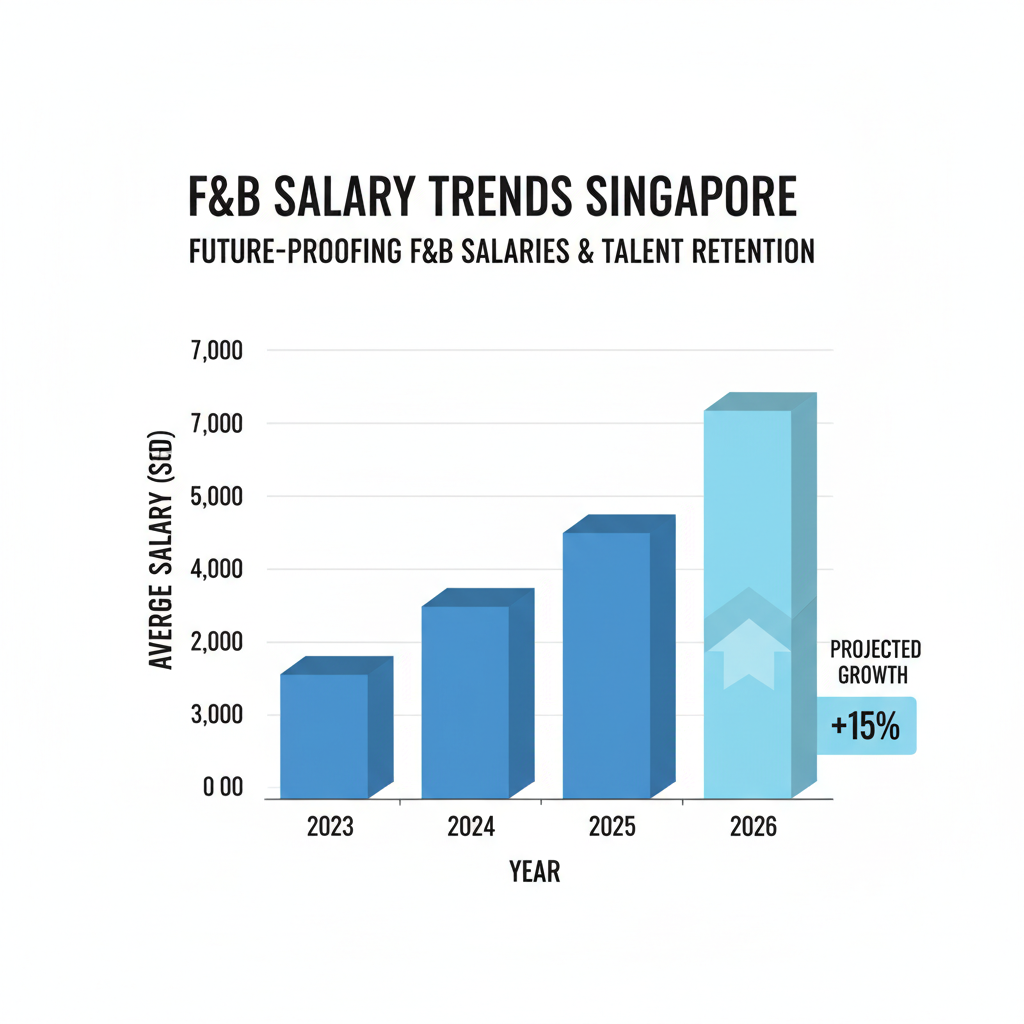
Looking towards 2026 and beyond, the Food & Beverage (F&B) sector in Singapore faces a dynamic landscape shaped by technological advancements, evolving consumer expectations, and a competitive global talent pool. To attract and retain top F&B talent in Singapore, businesses must move beyond traditional compensation models and embrace forward-thinking strategies. This section delves into proactive approaches for cultivating a resilient and attractive workforce, addressing critical industry challenges and unlocking new opportunities for growth and innovation. A robust Salary Defining Strategy for all job titles in Food & Beverage field in singapore is not merely about competitive pay; it encompasses a holistic view of employee value, development, and well-being, crucial for long-term success and sustainability in the rapidly evolving hospitality industry.
1. Impact of Technology and Automation on F&B Roles
The integration of technology and automation is reshaping F&B operations, from AI-powered inventory management and robotic kitchen assistants to self-ordering kiosks and data analytics for customer personalization. This digital transformation in F&B necessitates a re-evaluation of job roles and, consequently, their compensation structures. While some routine tasks may be automated, new roles requiring digital literacy, data interpretation, and advanced customer service skills are emerging. Businesses must conduct a thorough skill gap analysis F&B to identify future needs and invest in upskilling F&B staff to handle these advanced tools. A future-ready Salary Defining Strategy for all job titles in Food & Beverage field in singapore should reflect the premium placed on these specialized skills. For instance, roles involving sophisticated culinary technology or advanced customer relationship management systems should command higher compensation, driving talent attraction F&B for these critical functions. This proactive approach helps in preparing the future F&B workforce and ensures that the sector remains competitive. The Ministry of Manpower Singapore frequently highlights the importance of skills upgrading for future jobs, reinforcing the need for continuous adaptation in industries like F&B.
2. Non-Monetary Benefits and Employee Well-being
While competitive F&B salaries remain paramount, non-monetary benefits and a strong focus on employee well-being are increasingly vital for F&B talent retention Singapore. The modern workforce, particularly younger generations, values work-life balance hospitality, mental health support, and a positive company culture as much as, if not more than, their paychecks. Strategies should include flexible working arrangements where feasible, comprehensive health and wellness programs, opportunities for volunteering, and creating an inclusive, supportive environment. Implementing employee recognition programs that celebrate achievements, foster camaraderie, and provide constructive feedback can significantly boost morale and loyalty. These initiatives contribute to a holistic employee value proposition, differentiating employers in a tight labor market. Innovative compensation models can also include equity options or performance-based pay F&B linked to broader company success, aligning individual effort with collective goals. Focusing on these aspects helps reduce turnover and builds a resilient team.
3. Continuous Learning & Career Development Opportunities
In a fast-evolving industry, providing robust continuous learning and career development opportunities is critical for retaining ambitious F&B professionals and addressing the skill gap. This includes offering structured training programs, workshops on emerging trends (e.g., sustainable cuisine, digital marketing for F&B, advanced mixology), and pathways for internal promotion. Mentorship programs, cross-functional training, and opportunities for international exposure can also significantly enhance an employee’s professional growth. Creating clear career paths hospitality, from entry-level positions to management and specialized roles, instills a sense of purpose and commitment. Investing in professional development not only enhances individual capabilities but also strengthens the overall organizational capacity. Businesses should partner with educational institutions or industry experts to provide accredited courses, ensuring that employees gain valuable, recognized qualifications. This commitment to growth is a powerful retention tool, signaling to employees that their long-term potential is valued. It’s an integral part of an effective Salary Defining Strategy for all job titles in Food & Beverage field in singapore, making a workplace not just a job, but a career destination. For further insights on how global trends influence local workforce development, you can refer to reports such as PwC’s Future of Work and Skills Report, which underscores the imperative for continuous learning in all sectors. This investment in human capital ensures succession planning F&B is robust and the business remains agile.
Partner with Shelby Global
You are looking for reliable HR Sevice Suppliers? Contact Shelby Global Now! To connect with verified talents and upgrade your orginization.
—————————————
References
– Average Monthly Earnings by Industry – Ministry of Manpower: https://stats.mom.gov.sg/Pages/Income-Wages-Average-Monthly-Earnings-by-Industry.aspx
– Michael Page Singapore Salary Guide: https://www.michaelpage.com.sg/advice/salary-and-recruitment-trends/salary-guide
– Singapore Ministry of Manpower’s Labour Market Report: https://www.mom.gov.sg/labour-market-outlook/labour-market-report
– comprehensive industry reports on compensation: https://www.hays.com.sg/salary-guide
– PwC’s Future of Work and Skills Report: https://www.pwc.com/gx/en/services/people-organisation/future-of-work/future-of-work-skills-report.html



































































































