
Introduction to the Sales Job Market in Vietnam
Vietnam’s dynamic economy has positioned it as one of Southeast Asia’s fastest-growing markets, leading to an exceptionally vibrant and competitive sales job market. This bustling landscape offers a plethora of opportunities for skilled sales professionals across various sectors. As businesses expand, both domestically and internationally, the demand for individuals capable of driving revenue and fostering client relationships continues to surge. Understanding the nuanced salary range report of jobs in sale field in vietnam is crucial for both job seekers and employers navigating this promising terrain. This section will delve into the current sales landscape, highlighting key growth areas and the factors influencing the demand for talented sales professionals across the country.

1. Overview of Vietnam’s Economic Growth and its Impact on Sales
Vietnam’s impressive economic trajectory has been a primary catalyst for the burgeoning sales sector. With consistent GDP growth rates, driven by robust exports, foreign direct investment (FDI), and increasing domestic consumption, the nation has transformed into a manufacturing and trading hub. This economic vitality directly translates into a soaring demand for sales professionals. As new businesses emerge and existing ones expand their market reach, there’s a constant need for teams to connect products and services with consumers and other businesses. The growing middle class, with enhanced purchasing power, fuels consumer spending, particularly in urban areas, creating a fertile ground for retail and direct sales. This sustained growth underpins the increasing number of sales career opportunities throughout the country, making the Vietnam sales landscape particularly attractive.
2. Key Industries Driving Sales Demand (e.g., Tech, FMCG, Real Estate)
Several industries stand out as significant drivers of sales demand in Vietnam. The **Technology sector** is experiencing exponential growth, fueled by digital transformation initiatives, a burgeoning e-commerce market, and increased adoption of SaaS solutions. This creates high demand for tech sales Vietnam specialists, including software sales executives, IT solution consultants, and digital advertising sales roles. The **Fast-Moving Consumer Goods (FMCG) industry** continues to be a powerhouse, driven by a young, brand-conscious population and expanding distribution networks. Companies seek skilled sales professionals Vietnam to manage key accounts, develop new territories, and navigate complex retail landscapes. Furthermore, the **Real Estate sector** remains robust, propelled by rapid urbanization and infrastructure development, leading to strong demand for property sales agents and consultants for both residential and commercial projects. Other emerging areas like healthcare, finance, and education also contribute significantly to the diverse sales opportunities available, underscoring the dynamic nature of sales professionals in Vietnam’s market. Understanding the specifics of these sectors is crucial for any aspiring sales professional or business looking to succeed in this competitive environment, particularly as Vietnam’s robust economic performance continues to attract global investment.
3. Understanding Regional Differences in Sales Opportunities (Hanoi vs. Ho Chi Minh City)
While the overall sales market in Vietnam is thriving, significant regional differences exist, primarily between the two major economic powerhouses: Ho Chi Minh City (HCMC) and Hanoi. **Ho Chi Minh City**, often considered the commercial heart of Vietnam, boasts a highly dynamic and competitive sales environment. It’s a hub for international businesses, tech startups, and finance, leading to a strong demand for Ho Chi Minh City sales jobs, particularly in high-tech, digital services, and B2B sectors. Sales roles here often come with higher expectations and potentially higher commission structures due to the aggressive market. In contrast, **Hanoi**, the capital, presents a more structured and often government-influenced market. While also growing rapidly, its sales landscape might lean more towards traditional industries, state-owned enterprises, and a steadily expanding service sector. Hanoi sales jobs might emphasize long-term relationship building and navigating local regulations. Understanding these regional nuances is vital when considering a sales career in Vietnam, as they influence not only the types of opportunities available but also the average salary range report of jobs in sale field in vietnam, competition levels, and career progression paths. Sales professionals should tailor their job search to align with the specific market characteristics of each city.
In conclusion, the sales job market in Vietnam is characterized by rapid growth, diverse industry demands, and regional variations. For those looking to embark on or advance a sales career, Vietnam offers an exciting landscape filled with potential. Keeping abreast of industry trends, economic shifts, and regional specifics, alongside regularly consulting a comprehensive salary range report of jobs in sale field in Vietnam, will be key to unlocking success in this vibrant market.
Detailed Salary Breakdown by Key Sales Roles
This section offers a comprehensive salary range report of jobs in sale field in vietnam, providing a deep dive into specific sales positions. We outline typical salary ranges for various experience levels and specialties within the dynamic Vietnamese market. Understanding current vietnam sales salaries is crucial for both job seekers and employers navigating the competitive landscape. This report delves into sales jobs Vietnam compensation across different seniority levels, from initial entry-points to strategic leadership. We examine sales executive pay Vietnam, explore the typical sales manager salary Vietnam, and shed light on business development manager Vietnam earnings. Furthermore, we provide insights into the key account manager salary Vietnam and the significant sales director Vietnam income potential, aiming to be a valuable resource for career planning and talent acquisition in the Vietnamese sales sector.
1. Entry-Level Sales Executive Salary Ranges in Vietnam
For individuals embarking on their sales career in Vietnam, the Entry-Level Sales Executive position serves as a foundational stepping stone. These roles typically attract fresh graduates or professionals with up to two years of experience, eager to learn the ropes of the industry. Responsibilities commonly include lead generation, cold calling, product demonstrations, and managing initial client interactions. The sales executive pay Vietnam for these positions largely depends on several factors, including the industry sector (e.g., FMCG, IT, Financial Services), the size and type of company (local SMEs versus multinational corporations), and the location, with Ho Chi Minh City and Hanoi generally offering higher compensation than other provinces.
A typical base salary for an Entry-Level Sales Executive in Vietnam can range from VND 7,000,000 to VND 15,000,000 per month. This base is almost always augmented by a commission structure, which forms a significant portion of their total earning potential. Commissions can be based on individual sales targets, team performance, or a combination thereof, often adding an additional 10-30% (or even more for high performers) to their monthly income. Perks like phone allowances, transportation support, and basic health insurance are also common. While the base salary might seem modest, the opportunity for rapid career progression and substantial commission earnings makes these roles attractive for ambitious individuals looking to build a career in sales jobs Vietnam compensation.
2. Mid-Career Sales Manager & Business Development Manager Compensation
As sales professionals gain experience and hone their skills, opportunities for mid-career roles like Sales Manager and Business Development Manager become available, offering a substantial increase in vietnam sales salaries. These roles typically demand 3-7 years of relevant experience, coupled with a proven track record of achieving targets and, for Sales Managers, the ability to lead and motivate a team. Sales Managers are responsible for overseeing a sales team, developing sales strategies, and ensuring targets are met, while Business Development Managers (BDMs) focus intensely on identifying new markets, forging strategic partnerships, and acquiring high-value clients. Their strategic importance directly translates into higher compensation packages.
For a sales manager salary Vietnam, a base compensation generally falls within the range of VND 20,000,000 to VND 40,000,000 per month. Business development manager Vietnam earnings tend to be slightly higher, reflecting their focus on new revenue streams, often ranging from VND 25,000,000 to VND 50,000,000 per month. Beyond the base salary, performance-based bonuses are a critical component, frequently amounting to an additional 2-4 months of salary annually, or even more for exceeding targets. Company cars or allowances, comprehensive health insurance, and professional development opportunities are standard benefits at this level. The total compensation package for these roles reflects the blend of leadership, strategic thinking, and revenue generation responsibilities.
3. Senior Sales Roles: Key Account Manager & Sales Director Earning Potential
At the pinnacle of the sales career ladder in Vietnam lie senior roles such as Key Account Manager and Sales Director, representing the highest salary range report of jobs in sale field in vietnam. These positions are reserved for seasoned professionals with 7+ years of extensive experience, demonstrating exceptional leadership, strategic acumen, and a consistent track record of driving significant revenue growth. Key Account Managers are entrusted with nurturing and expanding relationships with an organization’s most valuable clients, requiring a deep understanding of client needs and long-term strategic planning. Sales Directors, on the other hand, hold broader responsibilities, often overseeing national or regional sales operations, setting overall sales strategy, managing large teams, and contributing to the company’s P&L.
The key account manager salary Vietnam typically starts from VND 40,000,000 and can reach VND 80,000,000 per month, depending on the portfolio size and industry. For a sales director Vietnam income, the figures are substantially higher, ranging from VND 70,000,000 to VND 150,000,000 per month, and sometimes even more for top-tier multinational corporations or highly specialized industries. Variable compensation, including substantial annual bonuses tied to company and individual performance, can often add an extra 3-6 months’ worth of salary or more. Executive-level benefits such as premium health insurance, car allowances or company cars, stock options, and international travel opportunities are standard. These roles demand not just sales prowess but also strong leadership, strategic vision, and significant contributions to the overall business success, justifying their premium earning potential in the competitive Vietnamese market.
Factors Influencing Sales Salaries in Vietnam
Understanding the intricacies of sales compensation in Vietnam goes far beyond simply looking at job titles. While a “Sales Manager” might sound straightforward, the actual salary range report of jobs in sale field in vietnam can vary dramatically. Several critical factors converge to shape an individual’s earning potential, from the economic landscape of Vietnam itself to highly specific personal attributes and market demands. For sales professionals, recognizing these elements is crucial for career planning, negotiation, and maximizing their income. This section delves into the multifaceted aspects that contribute to salary variations, providing a clearer picture of what influences pay scales in this dynamic market.
1. Impact of Industry Sector and Company Size on Pay Scales
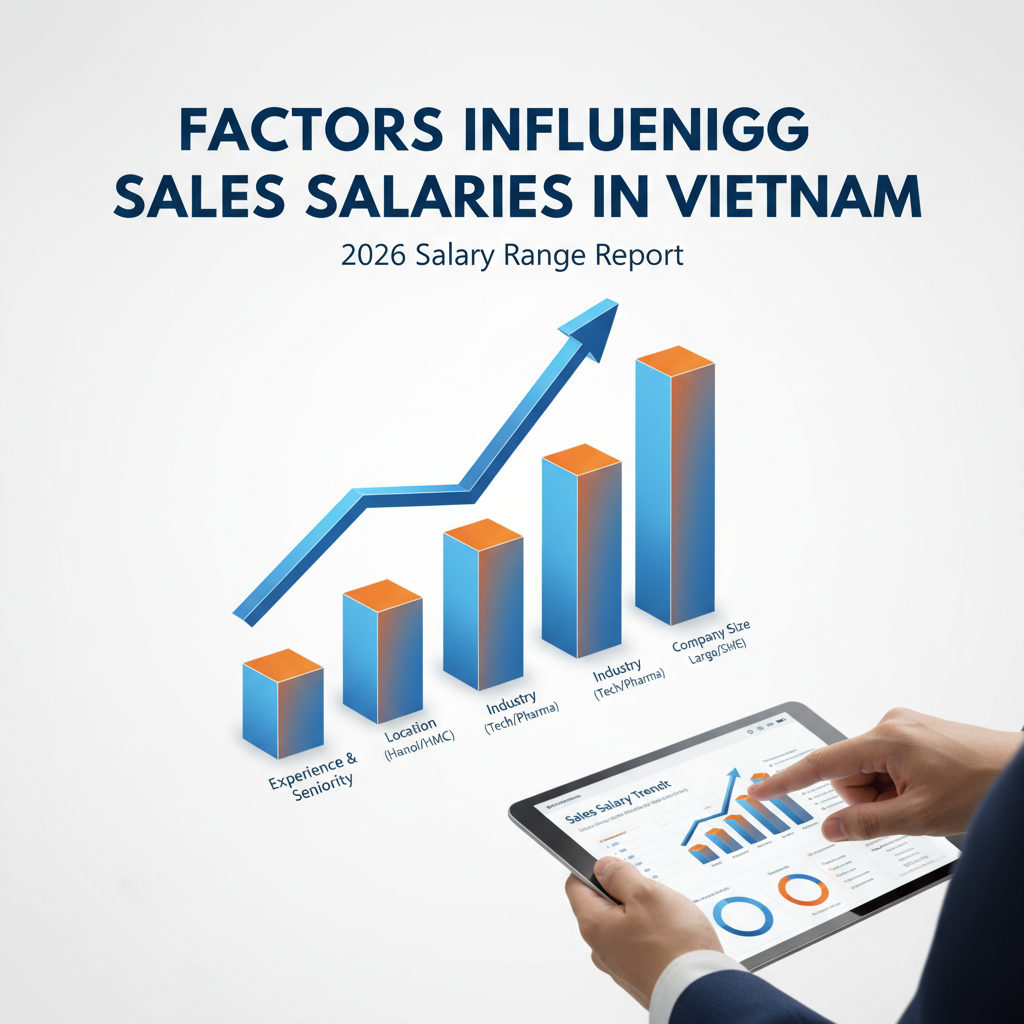
The industry sector plays a pivotal role in dictating sales salaries. High-growth and high-value sectors such as technology, pharmaceuticals, financial services, and e-commerce typically offer more lucrative compensation packages. Sales roles in these industries often involve selling complex products or services with higher profit margins, leading to more substantial base salaries and commission structures. For instance, a sales professional in enterprise software might command a significantly higher salary than one in traditional retail or manufacturing, even with similar experience. The inherent value and growth potential of the industry directly correlate with the earning potential for sales roles.
Company size and type are equally significant. Multinational Corporations (MNCs) and large domestic conglomerates generally lead the market in terms of sales compensation. They often have robust salary structures, comprehensive benefit packages, and greater resources to invest in top talent. These companies also tend to offer more structured career progression and professional development opportunities. In contrast, Small and Medium-sized Enterprises (SMEs), while offering valuable experience, might have more constrained budgets, leading to lower base salaries but potentially higher commission percentages in some cases to incentivize performance. The stability and established market presence of larger firms often translate into more attractive overall compensation, including bonuses and other perks.
2. The Role of Experience, Education, and Language Skills
Experience remains a cornerstone of sales compensation. Entry-level sales representatives will naturally earn less than mid-career professionals with a proven track record, and senior sales leaders or directors command the highest salaries due to their extensive experience, strategic capabilities, and demonstrated ability to drive significant revenue. A compelling sales portfolio showcasing consistent achievement of targets, successful client acquisition, and strong relationship management skills is invaluable. Each year of relevant, results-driven sales experience typically translates into a higher earning potential.
While a university degree isn’t always a prerequisite for success in sales, higher education can significantly impact access to certain roles and salary levels. For strategic, B2B, or complex solution sales, a degree in business, marketing, or a related field can be a strong advantage. An MBA, in particular, can fast-track sales professionals into senior management or leadership positions within larger corporations, where salaries are substantially higher. Education signals a candidate’s analytical skills, structured thinking, and commitment to learning.
Perhaps one of the most significant differentiators in the Vietnamese market is proficiency in foreign languages, particularly English. For sales roles dealing with international clients, within MNCs, or in export-oriented industries, strong English communication skills (both verbal and written) are almost mandatory and command a considerable salary premium. Other languages like Chinese, Korean, or Japanese can also be highly valued depending on the specific industry and target markets. This skill not only broadens career opportunities but directly impacts earning potential due to the strategic advantage it provides in a globalized economy. According to a Statista report on average monthly salaries in Vietnam by skill, language proficiency often correlates with higher pay, especially for roles interacting with foreign entities.
3. Negotiating Your Sales Salary: Tips for the Vietnamese Market
Successful salary negotiation in Vietnam requires preparation, market knowledge, and cultural sensitivity. Firstly, thorough research into the typical salary range report of jobs in sale field in vietnam for your specific role, industry, and experience level is paramount. Utilize salary surveys, professional networks, and recruitment agency insights to establish a realistic expectation. Don’t be afraid to ask for what you’re worth, but always be prepared to justify your request with data on your past performance, unique skills, and market value.
Highlighting your specific achievements and quantifiable results is key. Instead of just stating you’re a “good salesperson,” provide metrics: “I consistently exceeded my quarterly sales targets by 15-20%,” or “I grew my client portfolio by 30% in one year.” Emphasize any unique selling propositions you bring, such as a strong network in a particular niche, expertise in a high-demand product, or proven ability to penetrate new markets. Remember that total compensation often includes more than just base salary; consider commissions, bonuses, health insurance, provident funds, travel allowances, and professional development opportunities. A holistic view of the package can reveal more value than just the monthly pay slip.
Culturally, while direct negotiation is accepted, maintaining a respectful and professional demeanor is crucial. Avoid overly aggressive tactics. Present your case confidently but politely, focusing on the mutual benefits of a fair compensation package. Demonstrate your enthusiasm for the role and the company, reinforcing that your salary expectations are aligned with the value you are confident you can deliver. Being prepared to articulate your value proposition clearly and concisely will significantly strengthen your negotiation position and ultimately impact your earning potential in the competitive Vietnamese sales landscape.
Commission Structures and Benefits in Sales
In Vietnam’s dynamic and rapidly evolving market, attracting and retaining top sales talent hinges significantly on a compelling compensation package. Beyond just the base salary, a robust sales compensation structure combines various variable components, performance incentives, and non-monetary benefits to motivate sales professionals and align their efforts with business objectives. Understanding these elements is crucial for both employers designing attractive packages and candidates evaluating opportunities within the diverse salary range report of jobs in sale field in vietnam.
1. Common Sales Commission Models (Fixed vs. Variable)
Sales compensation in Vietnam, much like globally, often involves a blend of fixed and variable components. The fixed component, typically a base salary, provides financial security and covers basic living expenses, making the role more appealing and reducing immediate pressure on new hires or during long sales cycles. This is particularly important for nurturing long-term client relationships and complex solution selling where deal closure takes time.
The variable component, primarily commission, directly ties earnings to sales performance, acting as a powerful motivator. Several common commission models are prevalent:
- Base Salary + Commission: This is the most widespread model. Salespeople receive a predetermined base salary plus a percentage of their sales revenue or gross profit. This model offers a balance of security and incentive, ideal for a competitive market like Vietnam where high performance needs to be generously rewarded while providing a safety net.
- Straight Commission: Less common in Vietnam, this model pays salespeople solely based on their sales. While highly motivating for high performers, it carries significant financial risk for the employee and is often reserved for highly experienced, independent sales agents in specific industries.
- Tiered Commission (Accelerators): This model rewards higher performance with increasingly higher commission rates. For example, a salesperson might earn 5% on sales up to X amount, then 7% on sales beyond X. This powerfully incentivizes over-performance and exceeding quotas, driving exponential growth. Conversely, some models may include decelerators for underperformance, though this is less common in recruitment discussions.
- Draw Against Commission: A salesperson receives an advance on future commissions (the ‘draw’). If commissions earned exceed the draw, the salesperson keeps the difference. If commissions fall short, the difference might be recouped from future earnings (recoverable draw) or forgiven (non-recoverable draw). This is often used for new hires or during periods of market uncertainty.
Choosing the right model depends on the industry, product complexity, sales cycle length, and the desired sales behavior. Effective sales compensation strategies are critical for driving desired outcomes.
2. Performance Bonuses and Incentive Programs
Beyond standard sales commissions, a comprehensive sales compensation package in Vietnam often includes various performance bonuses and incentive programs designed to motivate specific behaviors, foster team collaboration, or reward exceptional achievements. Unlike ongoing commissions, bonuses are typically awarded for hitting predefined targets over a specific period, such as quarterly or annually.
Key types of performance bonuses and incentive programs include:
- Quarterly/Annual Performance Bonuses: These are often tied to overarching revenue targets, profit margins, or market share goals. They provide a significant lump sum reward for sustained high performance throughout a period.
- New Customer Acquisition Bonuses: To encourage expansion, companies might offer bonuses specifically for bringing in new clients, distinct from the commission earned on the sale itself.
- Product-Specific Incentives (SPIFFs): Short-term incentives, often called SPIFFs (Sales Performance Incentive Funds), are used to promote specific products, clear inventory, or boost sales during a particular campaign. These are typically smaller, immediate rewards.
- Team Bonuses: For sales teams working collaboratively on large accounts or regional targets, a portion of the bonus pool might be allocated based on overall team performance, encouraging synergy and shared responsibility.
- Management by Objectives (MBO) Bonuses: For sales leaders or those in more strategic sales roles, bonuses might be tied to achieving specific strategic objectives beyond pure sales numbers, such as improving sales process efficiency, developing new sales channels, or enhancing customer satisfaction scores.
These incentive programs are vital for aligning individual sales efforts with broader company strategy and maintaining high morale within sales teams in Vietnam.
3. Non-Monetary Benefits: Health, Training, and Career Progression
While monetary compensation is a primary driver, non-monetary benefits play an increasingly crucial role in attracting, engaging, and retaining top sales talent in Vietnam. These benefits contribute significantly to overall job satisfaction, employee well-being, and long-term career growth.
- Health and Wellness: Beyond mandatory social insurance, many companies offer private health insurance for employees and sometimes their families. This can include premium medical check-ups, dental care, and wellness programs. Given the growing awareness of health in Vietnam, these benefits are highly valued.
- Professional Development and Training: Continuous learning is a strong draw. Companies invest in sales methodology training (e.g., Challenger Sale, SPIN Selling), product knowledge workshops, soft skills development (negotiation, presentation), and leadership training. These programs enhance current capabilities and prepare sales professionals for future roles, making them more competitive within their sales jobs Vietnam.
- Career Progression Opportunities: A clear and transparent career path is a major motivator. This includes opportunities for promotion from Sales Executive to Senior Sales Executive, Key Account Manager, Sales Manager, and eventually to Regional or National Sales Director roles. Mentorship programs, internal mobility options, and exposure to different market segments further enhance career prospects.
- Other Perks: Depending on the role and industry, other non-monetary benefits can include company cars or allowances (especially for field sales), phone and laptop allowances, flexible working arrangements, additional paid leave, social events, and recognition programs. These perks contribute to a positive work-life balance and a strong company culture.
A holistic approach to sales compensation, combining competitive base salaries, motivating commission structures, strategic performance bonuses, and valuable non-monetary benefits, is essential for any company aiming to succeed in the vibrant and competitive Vietnamese sales landscape.
Future Outlook and Trends for Sales Salaries in Vietnam
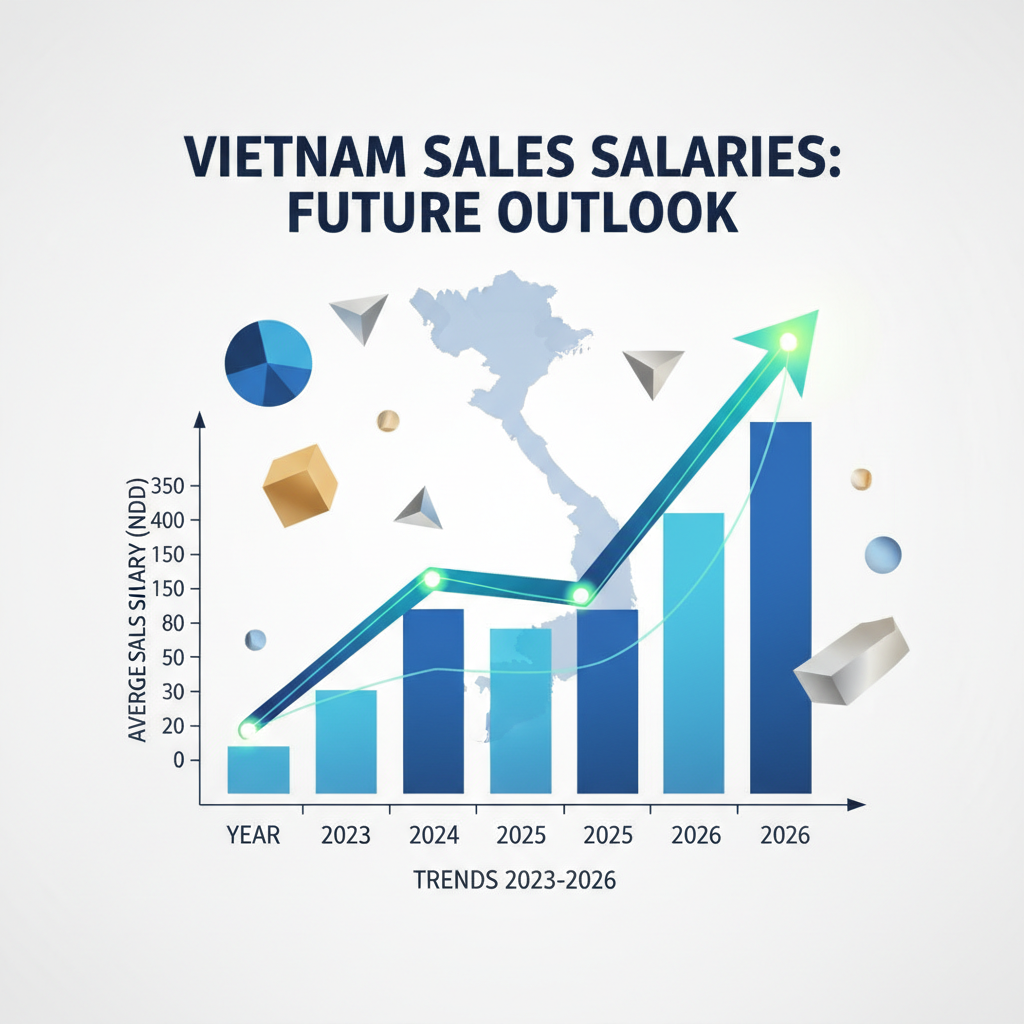
Vietnam’s dynamic economy, characterized by robust GDP growth and increasing foreign direct investment, is poised for significant shifts that will directly influence the landscape of sales salaries. As the nation embraces digital transformation and integrates more deeply into the global marketplace, the demand for skilled sales professionals is evolving, leading to new compensation structures and higher earning potentials. Understanding the current and future trends is crucial for both employers seeking top talent and professionals aiming to maximize their careers. This future outlook delves into projected salary growth, the profound impact of digital sales, and the rise of specialized roles that will redefine the salary range report of jobs in sale field in vietnam over the next few years.
-
Expected Salary Growth for Sales Professionals Towards 2026
Vietnam’s economic resilience, projected to maintain a strong GDP growth trajectory, creates a fertile ground for sales sector expansion. This growth, fueled by sectors like manufacturing, technology, and consumer goods, directly translates into a heightened demand for competent sales professionals. As competition for talent intensifies, particularly for those with specialized skills and proven track records, we anticipate a steady upward trend in sales compensation. Employers will increasingly offer more attractive remuneration packages, including higher base salaries and performance-based incentives, to attract and retain top performers. Factors such as inflation and the rising cost of living will also play a role, pushing salaries upward across various industries. Professionals who demonstrate strong negotiation skills, market insight, and a commitment to continuous learning will be best positioned to command premium salaries, further solidifying the evolving sales compensation landscape within the country.
-
Impact of Digital Sales and E-commerce on Compensation
The rapid acceleration of digital transformation and the burgeoning e-commerce market in Vietnam are fundamentally reshaping the sales landscape and, consequently, sales salaries. As consumers increasingly shift towards online purchasing channels, sales roles are evolving from traditional field sales to encompass digital marketing, online customer engagement, and data analytics. Professionals skilled in e-commerce platforms, CRM software, social selling, and digital advertising are becoming invaluable. This demand for digitally savvy sales talent is leading to higher compensation packages for those who can drive online revenue, manage digital sales funnels, and leverage data for strategic decision-making. The shift also impacts commission structures, with a greater emphasis on online conversion rates and customer lifetime value. According to Statista’s market forecast on e-commerce revenue in Vietnam, the market is set for significant expansion, underpinning the value of digital sales expertise.
-
Emerging Sales Roles and Their Future Salary Potential
Beyond traditional sales executives, several new and specialized roles are emerging that offer significant future salary potential. These roles are often driven by technological advancements and a more customer-centric business approach. Positions like Sales Operations Manager, responsible for optimizing sales processes and technology; Customer Success Manager, focused on client retention and growth post-sale; and Digital Sales Specialist, proficient in online lead generation and conversion, are gaining prominence. Furthermore, roles leveraging AI and data analytics to predict customer behavior and personalize outreach are also emerging. Due to the specialized skill sets required for these positions – often a blend of technical expertise, strategic thinking, and strong interpersonal skills – they command higher salaries than conventional sales roles. Companies are willing to invest more in professionals who can not only close deals but also drive efficiency, enhance customer loyalty, and contribute to long-term strategic growth, making these emerging roles key drivers for future sales salary increases in Vietnam.
Partner with Shelby Global
You are looking for reliable HR Sevice Suppliers? Contact Shelby Global Now! To connect with verified talents and upgrade your orginization.
—————————————
References
– World Bank Overview of Vietnam: https://www.worldbank.org/en/country/vietnam/overview
– Michael Page Vietnam Salary Benchmark: https://www.michaelpage.com.vn/salary-benchmark
– Statista report on average monthly salaries in Vietnam by skill: https://www.statista.com/statistics/1269037/vietnam-average-monthly-salary-by-skill/
– :
– :