Understanding the Unique HR Challenges for F&B SMEs in Malaysia
Malaysian Food & Beverage (F&B) Small and Medium Enterprises (SMEs) are the vibrant heartbeat of the nation’s culinary scene. However, beneath their bustling facades, these businesses often grapple with a unique set of Human Resources (HR) challenges that can significantly impact their growth and sustainability. For a CEO in the Food & Beverage field in Malaysia, understanding and addressing these hurdles is paramount to building effective HR structures for SMEs the CEO in Food & Beverage field in malaysia. This section outlines the specific operational, talent, and regulatory hurdles Malaysian F&B SMEs face when building effective HR functions, demanding strategic foresight and adaptable solutions.

1. Navigating Malaysian Labor Laws & Regulations
One of the most daunting challenges for F&B SMEs in Malaysia is the intricate web of labor laws and regulations. The Employment Act 1955, along with its significant amendments, dictates crucial aspects like minimum wage, working hours, overtime calculations, leave entitlements (maternity, paternity, annual, sick leave), and termination procedures. Beyond this, SMEs must also comply with statutory contributions such as the Employees Provident Fund (EPF), Social Security Organization (SOCSO), Employment Insurance System (EIS), and potentially the Human Resources Development Fund (HRDF) depending on employee count and industry. The complexity often leaves SME owners, who wear multiple hats, struggling to keep pace with legislative changes and ensuring full compliance. Non-compliance can lead to hefty fines, legal disputes, and reputational damage, making it critical for businesses to stay informed and implement robust internal policies. Staying updated on these changes, such as the key changes to the Employment Act 1955, is a continuous and essential task for any F&B SME operating in Malaysia.
2. High Staff Turnover & Talent Retention Strategies
The F&B sector is notoriously prone to high staff turnover, and Malaysian SMEs are no exception. The demanding nature of the work—long hours, shift work, often physical tasks, and high-pressure environments—coupled with a perception of limited career progression and relatively lower pay, contributes significantly to employees seeking opportunities elsewhere. This constant churn impacts F&B SMEs profoundly, leading to perpetual recruitment costs, increased training expenditure for new hires, inconsistent service quality, and a demotivated remaining team. Effective HR structures for SMEs in the Food & Beverage field in Malaysia must therefore prioritize strategic talent retention. This goes beyond just competitive salaries; it involves fostering a positive work culture, providing clear career paths even within a smaller setup, offering skills development and training opportunities, implementing fair scheduling practices, and recognizing employee contributions. Building a strong employer brand and creating an environment where employees feel valued and see potential for growth is crucial to mitigate the effects of high staff turnover and retain key talent.
3. Balancing Cost Efficiency with HR Effectiveness
Unlike larger corporations with dedicated HR departments and substantial budgets, F&B SMEs often operate on thin margins, making the investment in comprehensive HR functions seem like a luxury. The challenge lies in establishing effective HR structures for SMEs without incurring prohibitive costs. This means CEOs must be innovative in how they manage HR. Investing in expensive HR software, hiring a full-time HR manager, or running extensive training programs might not be financially viable. Instead, SMEs can explore more cost-efficient yet impactful solutions. This includes leveraging affordable HR management systems (HRMS) or payroll software, outsourcing specific HR functions like payroll processing or recruitment for specialized roles, or empowering existing managers with basic HR knowledge and tools. Focusing on high-impact, low-cost initiatives such as developing clear onboarding processes, implementing structured performance feedback, and fostering open communication can yield significant returns on investment. The goal is to create a robust HR framework that supports employees and ensures compliance, all while maintaining financial prudence crucial for SME survival and growth in the competitive Malaysian F&B landscape.
Essential HR Structures for Lean F&B Operations
For the astute CEO navigating the dynamic Food & Beverage (F&B) landscape in Malaysia, establishing effective HR structures for SMEs is not merely administrative overhead; it’s a strategic imperative for sustained growth and profitability. In a sector renowned for high turnover and intense competition, optimizing human capital directly impacts operational efficiency and customer satisfaction. This section delves into practical, scalable HR models, comparing in-house versus outsourced solutions, and identifying key roles to empower your small to medium-sized F&B business.
The challenge for many Malaysian F&B SMEs lies in balancing the need for robust HR functions with limited resources. Traditional, fully in-house HR departments can be a significant cost for smaller operations, yet neglecting HR leads to higher attrition, compliance risks, and an inability to attract top talent. This often forces CEOs to wear multiple hats, including that of an HR manager, diverting focus from core business strategy. Understanding these pain points is the first step towards implementing lean F&B HR strategies that support your unique business needs, ensuring compliance, fostering employee engagement, and driving performance in a competitive market. By adopting the right HR structures, F&B businesses can build resilient teams and secure long-term success, prioritizing workforce planning F&B and employee retention strategies F&B.
1. Hybrid Models: Combining Internal & Outsourced HR
For many Malaysian F&B SMEs, a hybrid HR model offers the best of both worlds: maintaining control over critical day-to-day employee relations while leveraging external expertise for specialized or routine tasks. This approach allows businesses to access professional HR services without the full cost of an in-house department, proving to be a highly scalable HR solution. Typically, a hybrid model involves an internal point person – often a manager or dedicated HR coordinator – who handles immediate employee queries, onboarding logistics, and performance management discussions. This internal presence ensures that the company culture is maintained and employees have a familiar face for support.
Simultaneously, outsourced HR Malaysia providers can manage more complex or time-consuming functions. This includes payroll processing, benefits administration, legal compliance (staying updated on Malaysian labour laws), specialized recruitment for hard-to-fill positions, and developing comprehensive training programs. By offloading these responsibilities, F&B CEOs can focus on strategic growth initiatives, knowing their HR foundations are professionally managed. This blending of in-house HR benefits with HR models for F&B allows for flexibility, cost-efficiency, and access to a broader range of HR expertise, making it an ideal choice for businesses aiming for agility and growth.
2. Key HR Roles & Responsibilities for Small Teams
Even in the leanest F&B operations, certain HR responsibilities are non-negotiable. Initially, these tasks often fall on the CEO or a senior manager. However, as the business grows, delegating or assigning specific HR roles becomes crucial. For a small F&B team, a dedicated HR Administrator or HR Coordinator can be a game-changer. This individual might be part-time or take on HR duties alongside other administrative roles.
Their core responsibilities would include managing the full employee lifecycle: from initial talent management F&B efforts like drafting job descriptions and assisting with interviews, to seamless onboarding processes that integrate new hires into the team effectively. They would also coordinate basic training programs (e.g., food safety, customer service), manage leave requests, maintain employee records, and serve as the first point of contact for employee queries. Furthermore, they would play a vital role in ensuring HR compliance for restaurants, keeping abreast of local regulations regarding working hours, wages, and safety standards. Proactive management of these areas is essential for creating a positive work environment and mitigating legal risks. As noted by industry experts, prioritizing HR from the outset can significantly improve an organisation’s ability to attract and retain talent, a critical factor for success in the F&B industry. For further insights into the broad importance of HR for smaller businesses, consider resources like Forbes’ guide on the significance of HR for small businesses, which underscores these points.
3. Leveraging Technology for Basic HR Automation (HRIS)
In today’s digital age, even small F&B businesses can significantly streamline HR processes through technology. A Human Resources Information System (HRIS) is not just for large corporations; scaled-down, user-friendly versions are increasingly available and affordable for SMEs. Implementing an HRIS can automate many routine and time-consuming HR tasks, allowing your team to focus on more strategic initiatives and provide better support to employees. This is a crucial aspect of modern HR best practices SMEs Malaysia.
Key HR functions that can be automated via an HRIS include payroll management F&B, time and attendance tracking (essential for shift-based F&B operations), leave management, and employee self-service portals. With an HRIS, employees can view their payslips, request leave, and update personal information directly, reducing administrative burden. The system can also generate reports, providing valuable data on staffing costs, turnover rates, and other metrics vital for informed decision-making and HR technology for small business development. Investing in a suitable HRIS system is a smart move for any F&B CEO looking to optimize their HR structures for SMEs the CEO in Food & Beverage field in malaysia, ensuring accuracy, efficiency, and compliance while supporting a lean operational model. It transforms manual, error-prone tasks into automated, precise processes, empowering your business to grow.
Strategic Talent Management & Development in F&B
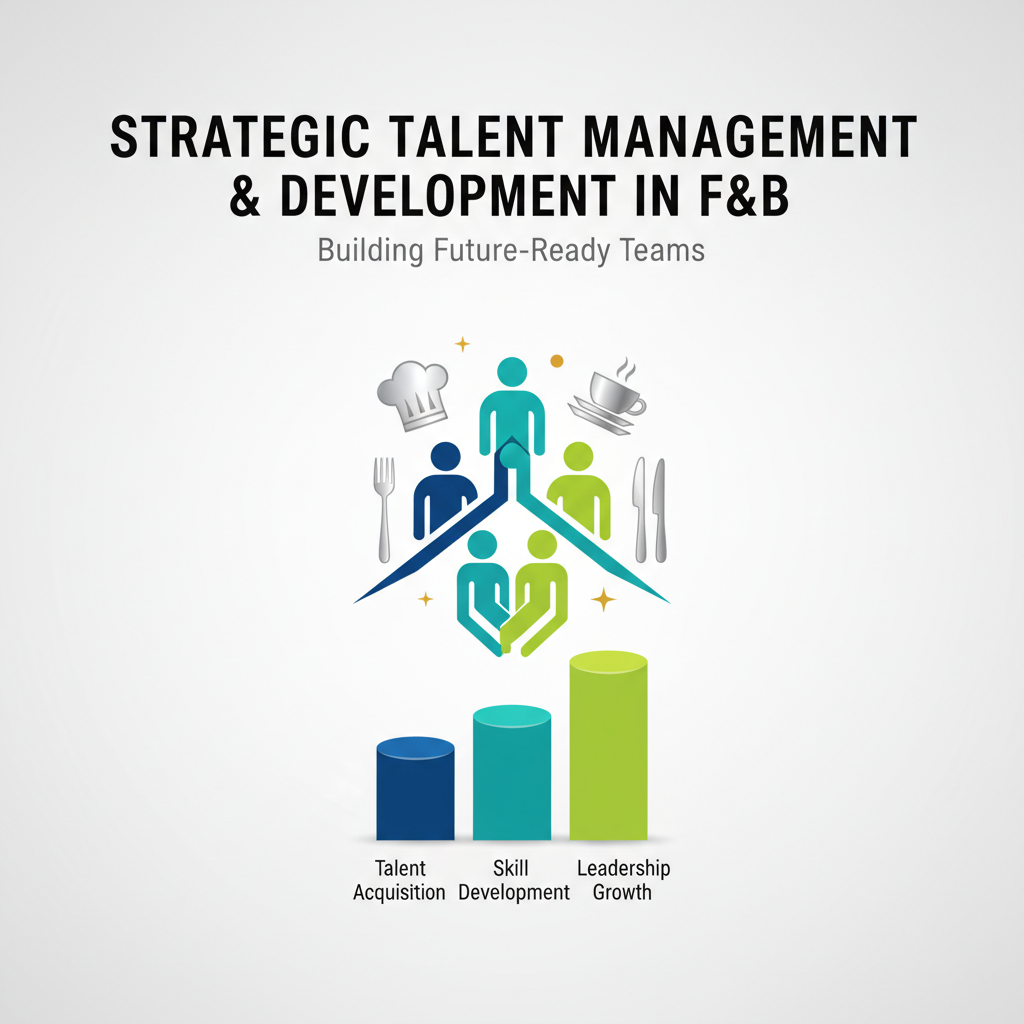
Discover effective strategies for attracting, developing, and retaining skilled employees crucial for success in the competitive F&B sector. The bustling food and beverage (F&B) industry in Malaysia, particularly for Small and Medium-sized Enterprises (SMEs), faces unique challenges in talent acquisition and retention. A robust approach to strategic talent management is not just an HR function; it’s a core business imperative for CEOs aiming for sustainable growth and service excellence. From managing staff turnover to upskilling employees to meet evolving customer demands, the right HR strategies are paramount for an F&B business to thrive.
-
Recruitment Strategies for F&B Talent Acquisition
Attracting the right talent is the first critical step. In Malaysia’s dynamic F&B landscape, SMEs often compete with larger chains for skilled chefs, experienced service staff, and efficient operational managers. Effective recruitment strategies must be multi-faceted. Leveraging online job portals, social media campaigns, and partnerships with local culinary schools and hospitality training institutions can broaden reach. Implementing an employee referral program, where existing loyal staff recommend potential hires, can yield high-quality candidates who are a good cultural fit and understand the demands of the F&B environment. Moreover, emphasizing employer branding through transparent communication about company culture, career development opportunities, and competitive compensation packages can significantly enhance attractiveness. For roles requiring specific expertise, such as a head chef or a sommelier, targeted headhunting or collaborating with specialized recruitment agencies can be highly effective. Understanding the local market dynamics and offering a compelling value proposition are key to successful F&B talent acquisition.
-
Performance Management & Employee Engagement
Once talent is acquired, effective performance management and consistent employee engagement are crucial for retention and productivity. In the fast-paced F&B sector, continuous feedback mechanisms are more effective than annual reviews. Establishing clear Key Performance Indicators (KPIs) tailored to specific roles, such as customer satisfaction ratings for front-of-house staff, plate consistency for kitchen staff, or speed of service, provides tangible benchmarks for improvement. Regular check-ins and one-on-one sessions foster a culture of open communication and identify areas for growth or support. Beyond performance metrics, fostering a positive work environment through robust employee engagement initiatives is vital. This includes regular team-building activities, recognition programs for outstanding service, fair scheduling practices, and opportunities for input in operational decisions. Addressing the common F&B challenge of work-life balance through flexible shifts where possible can also significantly boost morale. High engagement translates directly into reduced turnover, improved service quality, and a more dedicated workforce. Recognizing individual contributions and creating a supportive atmosphere ensures staff feel valued, contributing to their loyalty and commitment to the business.
-
Training & Upskilling for Service Excellence
The F&B industry is constantly evolving, making continuous training and upskilling indispensable for service excellence. For Malaysian F&B SMEs, investing in staff development ensures employees remain competent, confident, and adaptable to new trends and technologies. Training programs should cover a wide range of areas: enhancing core culinary skills, mastering advanced beverage preparation (e.g., barista or mixology techniques), improving customer service and communication etiquette, and adhering to stringent hygiene and food safety standards. With the rise of digital tools in hospitality, training in new Point-of-Sale (POS) systems, online ordering platforms, and digital marketing for F&B can also be crucial. Furthermore, leadership development programs for supervisors and managers prepare them to effectively lead teams, manage conflicts, and contribute to strategic planning. Upskilling not only improves operational efficiency and customer satisfaction but also signals to employees that their career growth is valued, fostering greater loyalty and reducing the likelihood of them seeking opportunities elsewhere. Addressing talent shortages in the hospitality industry, particularly for specialized roles, often starts with robust internal development, transforming existing staff into high-value assets. This commitment to ongoing learning is a cornerstone of a competitive F&B enterprise.
In conclusion, for F&B businesses, especially HR structures for SMEs the CEO in Food & Beverage field in malaysia, a holistic and integrated approach to talent management is not merely an option but a strategic necessity. By focusing on targeted recruitment, proactive performance management, genuine employee engagement, and continuous upskilling, F&B SMEs can build a resilient, skilled, and motivated workforce capable of delivering exceptional customer experiences and navigating the industry’s competitive challenges.
Ensuring HR Compliance & Risk Mitigation in Malaysia
For HR structures for SMEs the CEO in Food & Beverage field in Malaysia, navigating the intricate landscape of legal compliance and risk mitigation is paramount. The dynamic nature of the F&B industry, coupled with Malaysia’s specific labor laws, demands a proactive and informed approach. Effective HR management goes beyond mere payroll and recruitment; it involves safeguarding the business from potential legal pitfalls, maintaining a positive work environment, and ensuring sustainable growth. This section delves into critical aspects of Malaysian HR compliance, offering best practices to minimize HR-related risks specific to the F&B sector.
Understanding and adhering to the relevant legislation is not just a legal obligation but a strategic imperative for F&B SMEs. Non-compliance can lead to hefty fines, reputational damage, and costly legal disputes. By establishing robust HR frameworks, CEOs can ensure operational continuity, enhance employee morale, and protect their business’s bottom line in a competitive market. Key areas of focus include statutory contributions, workplace safety, and fair grievance handling, all tailored to the unique challenges faced by F&B businesses.
1. Adhering to Employment Act 1955 & Statutory Contributions
The foundation of Malaysian HR compliance for F&B businesses is the Employment Act 1955 (amended 2022). This crucial piece of legislation governs fundamental aspects of employment, including contracts, working hours, leave entitlements, and termination procedures. F&B employers must meticulously adhere to regulations concerning maximum working hours, overtime pay, rest days, public holidays, annual leave, sick leave, and the latest provisions for maternity and paternity leave. Misinterpretations or negligence in these areas can quickly lead to labor disputes and penalties, directly impacting a restaurant or cafe’s operational costs and legal standing.
Beyond the Employment Act, employers are mandated to ensure timely and accurate statutory contributions. This includes the Employees Provident Fund (EPF), Social Security Organization (SOCSO), and Employment Insurance System (EIS). EPF provides retirement savings, SOCSO offers social protection against employment injury and invalidity, and EIS provides temporary financial assistance to retrenched workers and helps them find new employment. For F&B SMEs, managing payroll accurately to reflect these deductions and contributions is vital. Implementing robust payroll management systems and understanding the specific contribution rates and deadlines are essential components of responsible HR practices, minimizing risks associated with non-compliance.
2. Workplace Safety & Health (OSHA) in F&B Environments
The F&B industry presents unique workplace safety challenges. Kitchens are prone to slips, burns, cuts, and machinery-related injuries, while service areas carry risks of spills and heavy lifting. The Occupational Safety and Health Act 1994 (OSHA) mandates employers to provide a safe working environment and adequate facilities for their employees. For F&B SMEs, this translates into specific obligations such as conducting regular risk assessments, implementing safety protocols for food handling and machinery operation, providing appropriate Personal Protective Equipment (PPE) like anti-slip shoes and cut-resistant gloves, and ensuring proper ventilation and fire safety measures.
Effective workplace safety and health (OSH) management is crucial for HR risk mitigation. This includes regular safety training for all staff, from kitchen crew to front-of-house, on topics like first aid, emergency procedures, and chemical handling. Implementing clear procedures for reporting accidents and near-misses, investigating incidents thoroughly, and taking corrective actions are vital. A proactive approach to OSHA compliance not only protects employees but also shields the business from potential legal liabilities, high insurance premiums, and productivity losses stemming from workplace accidents, making it a cornerstone of sound HR risk mitigation for F&B SMEs.
3. Handling Disciplinary Actions & Grievances Fairly
Managing employee misconduct or performance issues and addressing grievances are delicate yet critical HR functions in the F&B sector. Common disciplinary issues include absenteeism, insubordination, theft, or poor customer service. Employers must adhere to principles of natural justice and due process when taking disciplinary action to avoid claims of unfair dismissal. This typically involves a thorough investigation, issuing a show-cause letter, conducting a domestic inquiry (where applicable), and imposing a proportionate penalty ranging from a warning to termination. Clear disciplinary policies, communicated effectively to all staff, are essential.
Equally important is establishing a fair and accessible grievance handling mechanism. Employees in F&B may have grievances regarding working conditions, harassment, unfair treatment, or remuneration. A structured grievance procedure allows employees to voice their concerns without fear of reprisal, fostering a positive work environment and preventing minor issues from escalating into major disputes or even legal action. Proper documentation of all disciplinary and grievance procedures is paramount for legal protection. By ensuring transparency, fairness, and consistency, F&B CEOs can mitigate the risks of labor disputes, maintain employee trust, and build a resilient workforce crucial for business success.
Future-Proofing Your HR Structure for Growth in 2026 & Beyond
As a CEO in the vibrant Food & Beverage (F&B) sector in Malaysia, navigating the complexities of human resources is paramount for sustainable growth. This section discusses forward-looking strategies, including embracing digitalization, fostering a strong company culture, and adapting HR to evolving market trends, all crucial for optimizing your HR structures for SMEs.

The Malaysian Food & Beverage industry is characterized by rapid innovation, intense competition, and a dynamic workforce. For SMEs, particularly, robust and adaptable HR structures for SMEs the CEO in Food & Beverage field in Malaysia are not just administrative overheads but strategic assets that drive efficiency, attract top talent, and ensure compliance. Looking towards 2026 and beyond, the traditional HR playbook is no longer sufficient. Forward-thinking F&B CEOs must anticipate shifts in technology, workforce expectations, and market demands to build resilient and future-proof HR frameworks. This involves a proactive approach to talent management, workforce planning, and creating an environment where employees thrive amidst change.
-
Embracing Digital HR Transformation & Analytics
The digital revolution is reshaping every aspect of business, and HR is no exception. For F&B SMEs in Malaysia, digital HR transformation is no longer an option but a necessity. Implementing modern HR technology solutions, such as cloud-based HRIS (Human Resources Information Systems) and applicant tracking systems (ATS), can significantly streamline processes from recruitment and onboarding to payroll and performance management. This automation frees up HR teams from tedious administrative tasks, allowing them to focus on strategic initiatives. Beyond mere automation, the true power lies in HR analytics. By leveraging data derived from these systems, CEOs can gain invaluable insights into employee turnover rates, productivity trends, training effectiveness, and employee engagement levels. Imagine knowing precisely which training programs yield the highest return on investment or identifying patterns that predict potential staff departures. This data-driven approach enables more informed decision-making, optimizing your HR structures for SMEs the CEO in Food & Beverage field in Malaysia to be more agile and responsive. Furthermore, digital tools can enhance the employee experience through self-service portals, making HR interactions seamless and efficient. This focus on data not only improves operational efficiency but also provides a competitive edge in attracting and retaining talent. A deeper dive into how analytics can drive business success can be found through resources like the Society for Human Resource Management (SHRM).
-
Building a Resilient Company Culture & Employer Brand
In a competitive talent landscape, a strong company culture is your most powerful differentiator. For F&B SMEs, where staff retention can be a challenge, fostering a positive and inclusive environment is critical. This goes beyond attractive salaries; it’s about creating a workplace where employees feel valued, heard, and have opportunities for growth. A resilient culture supports employees through industry fluctuations, promotes teamwork, and encourages innovation – all essential traits for success in the dynamic Malaysian F&B sector. Simultaneously, building a compelling employer brand is crucial for attracting and retaining top talent. This involves actively communicating your company’s values, mission, and unique employee value proposition to potential candidates. Showcase what makes your F&B business a great place to work, whether it’s through employee testimonials, social media presence, or community involvement. Regular feedback mechanisms, transparent communication, and investments in training & development are cornerstones of a strong culture. Employees, especially in front-line F&B roles, are often the face of your brand. Empowering them and ensuring their well-being directly impacts customer satisfaction and business reputation. A robust culture also plays a significant role in compliance with labor laws and ethical practices, reducing risks and fostering trust.
-
Adapting HR to Gig Economy & Flexible Workforces
The traditional full-time employment model is rapidly evolving, giving way to a more diverse and flexible workforce. The gig economy and the increasing demand for flexible work arrangements present both opportunities and challenges for F&B SMEs. Adapting your HR structures for SMEs the CEO in Food & Beverage field in Malaysia means understanding how to effectively integrate part-time staff, freelancers, and contract workers into your operations while maintaining quality and consistency. This requires flexible staffing models, clear contractual agreements, and robust onboarding processes for non-traditional employees. HR must develop policies that support various work arrangements, from remote work (where applicable) to flexible shifts, ensuring fair treatment and clear performance expectations for all. The benefits can be immense: access to specialized skills, increased agility to scale up or down based on demand, and potentially reduced overheads. However, it also necessitates careful consideration of legal obligations, benefits administration, and fostering a sense of belonging among a disparate workforce. Developing hybrid models that combine full-time employees with project-based talent can offer the best of both worlds. For more specific insights into optimizing your HR approaches, particularly concerning diverse workforce models and comprehensive HR structures for SMEs the CEO in Food & Beverage field in Malaysia, you might find valuable information. This adaptation ensures your F&B business remains competitive and attractive to the broadest pool of talent.
Partner with Shelby Global
You are looking for reliable HR Sevice Suppliers? Contact Shelby Global Now! To connect with verified talents and upgrade your orginization.
—————————————
References
– key changes to the Employment Act 1955: https://www.mondaq.com/employment-and-workforce-management/1239634/malaysia-key-changes-to-the-employment-act-1955-effective-1-january-2023
– Forbes’ guide on the significance of HR for small businesses: https://www.forbes.com/advisor/business/why-hr-is-important-for-small-business/
– Addressing Talent Shortages and Retention in the Hospitality Industry: https://hospitalitynet.org/opinion/4113115.html
– Employment Act 1955 (Amendment) 2022 – Department of Labour Peninsular Malaysia: https://jtk.mohr.gov.my/en/akta-ordinan/akta-pekerjaan-1955
– :