
Core Responsibilities & Scope of Influence
The dynamic and rapidly evolving Fast-Moving Consumer Goods (FMCG) sector in Vietnam presents a unique landscape for Human Resources professionals. Navigating this environment, the Differences between the SMEs’ HR Manager and the Corporates’ HR Director in FMCG companies in Vietnam are profound, shaping their core responsibilities and the breadth of their influence. While both roles are vital for organizational success, their day-to-day duties, strategic input, and impact on business objectives diverge significantly, reflecting the scale and maturity of their respective companies. Understanding these distinctions is crucial for aspiring HR professionals and business leaders alike in the vibrant FMCG HR Vietnam landscape, particularly concerning areas like talent acquisition FMCG, workforce planning, and HR compliance Vietnam.

1. Operational vs. Strategic Focus
The fundamental divergence between an SME’s HR Manager and a Corporate’s HR Director in Vietnam’s FMCG industry lies in their primary focus. An SME HR Manager typically operates with a strong operational emphasis. Their daily tasks are hands-on, encompassing essential functions such as recruitment, payroll processing, benefits administration, and ensuring basic HR compliance Vietnam. They are often the sole HR representative, directly involved in resolving immediate employee relations Vietnam issues and managing the full employee lifecycle from onboarding to offboarding. Their role is largely reactive, addressing day-to-day employee needs and ensuring smooth HR processes with limited resources. While they contribute to the business, their contribution is often through maintaining stability and efficiency in core HR services.
In stark contrast, a Corporate HR Director in a large FMCG firm adopts a decidedly strategic outlook. Their work involves shaping the overall HR strategy Vietnam, aligning it with the corporation’s long-term business goals and market position within the broader FMCG sector in Vietnam. They focus on proactive workforce planning, succession management, and designing impactful talent programs. Instead of executing day-to-day HR tasks, they oversee teams of specialists, set policies, develop frameworks for organizational development, and drive initiatives like leadership development FMCG. Their role is about foresight, innovation, and positioning the organization for future growth, utilizing advanced analytics and HR insights.
2. Breadth of HR Functions Managed
The scope of HR functions managed also highlights significant Differences between the SMEs’ HR Manager and the Corporates’ HR Director in FMCG companies in Vietnam. For an SME HR Manager, the role is inherently generalist. They are responsible for a wide array of HR functions, including sourcing and screening for talent acquisition FMCG, administering compensation & benefits Vietnam, handling internal communications, and even rudimentary training and development. This breadth often means they are proficient in many areas but may lack deep specialization in any single function due to resource limitations and the need to cover all bases.
A Corporate HR Director, conversely, presides over a more specialized and departmentalized HR structure. They manage a portfolio of HR functions, each typically led by a specialist or a team – for instance, dedicated departments for talent acquisition FMCG, learning & development, compensation & benefits Vietnam, employee relations Vietnam, and HR technology adoption. The HR Director’s role is to integrate these specialized functions, ensuring they work cohesively towards the overarching HR strategy Vietnam. They focus on governance, policy-making, and fostering innovation across these distinct HR domains, often leveraging sophisticated HR technology adoption to enhance efficiency and data-driven decision-making.
3. Impact on Business Objectives & Growth
The impact on business objectives and growth varies considerably between these two roles. An SME HR Manager‘s impact is immediate and foundational. By ensuring efficient payroll, effective basic recruitment for FMCG HR Vietnam roles, and adherence to HR compliance Vietnam, they directly contribute to operational stability and mitigate risks. Their efforts prevent disruptions, maintain employee morale, and support the immediate growth needs of the SME by ensuring a functional and compliant workforce. They are crucial for maintaining the day-to-day health of the organization and directly influencing individual employee experience.
The Corporate HR Director‘s influence, while less direct on daily operations, is profound on the company’s long-term competitive advantage and substantial growth. Through strategic workforce planning, fostering a high-performance culture via organizational development, and developing robust leadership development FMCG programs, they enable the corporation to attract, retain, and develop top-tier talent essential for market expansion, innovation, and sustained profitability in the competitive FMCG sector in Vietnam. Their decisions on HR strategy Vietnam, large-scale compensation & benefits Vietnam frameworks, and strategic HR technology adoption initiatives directly impact the company’s ability to achieve its strategic objectives, drive market share, and adapt to future challenges. Their role is about shaping the organization’s human capital for sustained future success, marking a key difference in their contribution to the overarching business trajectory.
Organizational Context & Resource Allocation
The Fast-Moving Consumer Goods (FMCG) sector in Vietnam presents a unique landscape for HR professionals, where organizational size, structure, and available resources profoundly shape daily work and long-term planning. A stark contrast emerges when comparing an HR Manager in a Small and Medium-sized Enterprise (SME) to an HR Director in a large corporation. Understanding these Differences between the SMEs’ HR Manager and the Corporates’ HR Director in FMCG companies in vietnam is crucial for appreciating the diverse HR roles and responsibilities across this dynamic industry.
1. Team Size and Support Structure
A primary difference lies in HR team sizes. In an FMCG SME, the HR Manager often operates as a generalist, heading a lean team or even acting solo. They are responsible for the entire HR gamut: talent acquisition Vietnam, payroll, employee relations, and basic training. This lack of specialized support means the HR Manager juggles numerous operational tasks, heavily weighted towards day-to-day compliance rather than proactive HR strategy Vietnam. Conversely, a Corporate HR Director in a large FMCG entity leads a significantly larger, specialized department. This allows for dedicated teams in talent acquisition, compensation & benefits, and learning & development. The Director’s role shifts from hands-on execution to strategic leadership, overseeing a cohesive HR strategy Vietnam that aligns with broader business objectives. They focus on high-level initiatives like strategic workforce planning and fostering a strong employee experience, delegating operational tasks to their specialized teams. This robust structure enables tackling complex issues, such as developing sophisticated employee retention strategies, with greater depth and expertise.
2. Budgetary Constraints and Allocation
Financial resources significantly differentiate HR functions in Vietnamese FMCG companies. SMEs operate under stringent HR budgeting FMCG constraints, necessitating a pragmatic approach to HR initiatives. Investments in advanced HR technology, extensive training, or competitive benefits are often curtailed. HR Managers prioritize spending, relying on cost-effective solutions like in-house training or basic online resources. Compensation and benefits FMCG structures might be simpler, with less room for sophisticated incentive programs. The challenge is maximizing impact with minimal expenditure, ensuring core functions while fostering some human capital development. In contrast, Corporate HR Directors benefit from larger budgets, enabling strategic, long-term investments. These resources facilitate cutting-edge HR technology adoption in Vietnam, comprehensive talent development programs, and highly competitive compensation packages to attract top talent. Corporates invest heavily in employer branding, leadership academies, and advanced analytics. This flexibility empowers the HR Director to proactively shape organizational structure HR, implement innovative employee retention strategies, and invest in robust well-being programs, contributing significantly to long-term growth and market competitiveness.
3. Access to Technology & Data Analytics
Access to technology and data analytics is a third crucial distinction, impacting HR effectiveness and decision-making. For HR Managers in FMCG SMEs, technology adoption is often basic, relying on manual processes or entry-level HRIS for payroll and attendance. This limited infrastructure hinders comprehensive data collection and strategic reporting. Decision-making might be more intuitive, based on anecdotal evidence, making it difficult to track complex HR KPIs or perform predictive analytics. Overcoming these FMCG HR challenges often involves seeking affordable cloud-based solutions, but digital transformation remains a hurdle. Conversely, Corporate HR Directors leverage sophisticated HR technology solutions including integrated HRIS platforms, advanced talent management suites, and powerful data analytics tools. This robust infrastructure enables data-driven decision-making, offering deep insights into workforce trends, talent gaps, and HR initiative effectiveness. They conduct predictive analytics for workforce planning, optimize talent acquisition Vietnam strategies, and measure ROI for human capital development based on solid data. This advanced capability allows for a proactive, highly strategic approach to human capital, significantly impacting overall performance in the evolving HR landscape in Vietnam.
Strategic Involvement & Decision-Making Authority
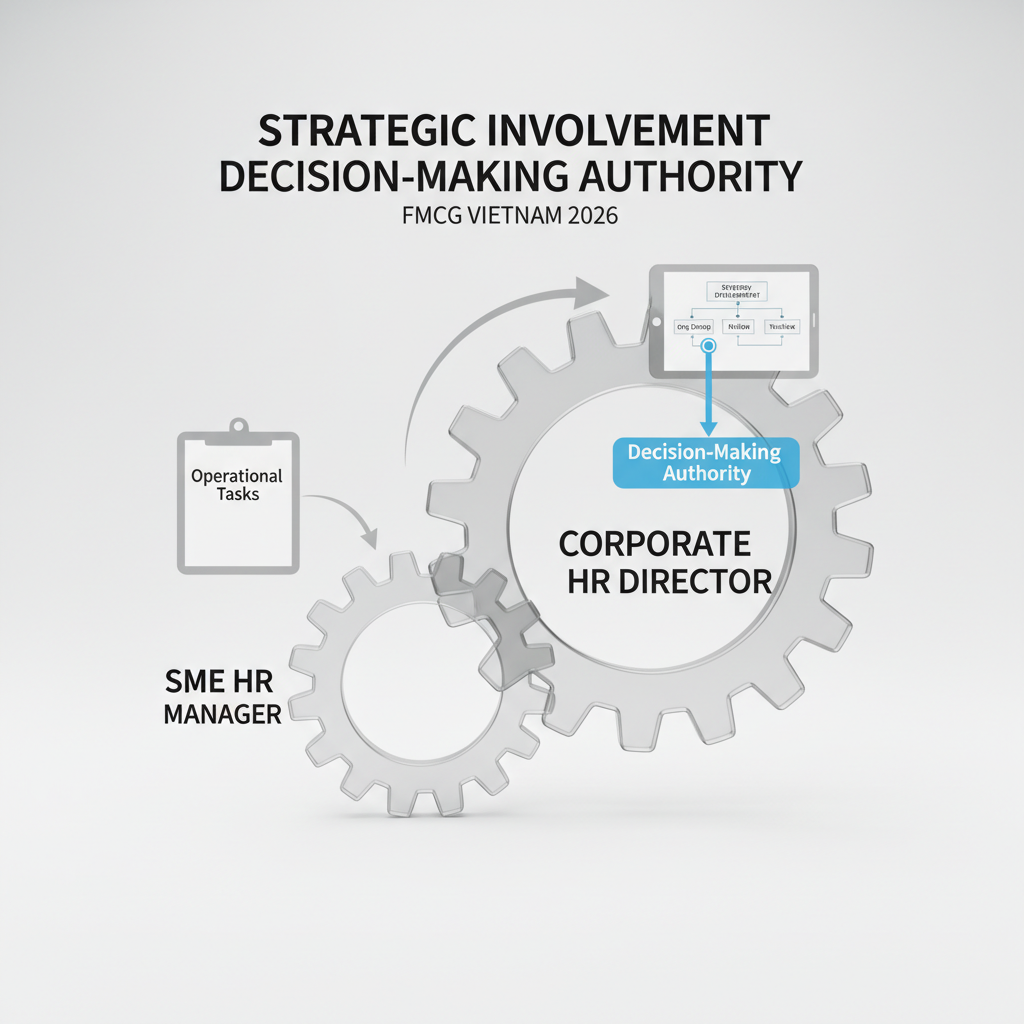
In the dynamic and competitive landscape of FMCG companies in Vietnam, the roles of human resources professionals are pivotal yet vastly different. This section delves into the contrasting levels of strategic input and autonomy held by an HR Manager in a Small and Medium-sized Enterprise (SME) compared to an HR Director in a large Corporate FMCG entity. Understanding these key differences in HR leadership is crucial for aspiring HR professionals and business leaders alike. While both roles are dedicated to human capital management, their influence on overall business direction and their engagement in high-level strategic planning diverge significantly due to organizational scale, resource availability, and governance structures. This comparison highlights how strategic HR functions evolve with company size, impacting talent acquisition, organizational development, and long-term workforce planning in Vietnam’s fast-moving consumer goods sector.
1. Influence on C-Suite Decisions & Policy
The extent to which an HR professional influences C-suite decisions and shapes company policy is perhaps the most significant differentiator between the two roles. An SME HR Manager in FMCG Vietnam often operates with limited direct influence on overarching business strategy. Their involvement typically focuses on operational HR matters – recruitment, payroll, basic compliance, and employee relations – rather than strategic human capital decisions. While they might provide input on specific HR policies, these are usually reactive to immediate business needs or regulatory changes. Their interaction with the C-suite (often the owner or a small management team) tends to be functional, presenting data on HR metrics or addressing pressing personnel issues. The strategic direction for talent management or organizational development is frequently set by the business owner, with HR tasked with execution.
Conversely, a Corporate HR Director in a large FMCG enterprise possesses substantial strategic decision-making authority. They are typically members of the executive leadership team, actively participating in C-suite meetings and contributing directly to business strategy formulation. Their role extends beyond traditional HR functions to encompass strategic workforce planning, talent acquisition strategies aligned with market expansion, and organizational design for efficiency and growth. They are instrumental in shaping enterprise-wide HR policies that reflect the company’s long-term vision, risk management appetite, and global best practices. Their recommendations on compensation structures, leadership development programs, and change management initiatives directly impact the company’s competitive advantage and overall market position. This proactive involvement ensures that human capital considerations are embedded into every major business decision, from market entry to product launch, reflecting their critical role in the company’s success.
2. Long-term Workforce Planning & Development
Long-term workforce planning and development illustrate another stark contrast. For an SME HR Manager, workforce planning is often short-term and reactive. It primarily involves filling immediate vacancies and addressing urgent training needs. Succession planning, if it exists, is informal and relies heavily on the owner’s personal network or intuition. Development initiatives are usually budget-constrained, focusing on basic skills training or compliance-driven courses. The emphasis is on keeping the business operational, rather than proactively building a talent pipeline for future growth. Resource limitations mean that sophisticated HR analytics or predictive modeling for talent needs are rarely employed, making strategic forecasting challenging. Employee engagement and retention strategies are often less structured, relying on direct manager-employee relationships rather than comprehensive programs.
In contrast, the Corporate HR Director is deeply engaged in sophisticated, long-term workforce planning, often spanning 3-5 years or more. This involves meticulous talent acquisition strategies, robust succession planning for critical roles, and comprehensive leadership development programs. They leverage advanced HR analytics to forecast talent gaps, identify high-potential employees, and design tailored development pathways. Their focus is on building a sustainable competitive advantage through human capital. This includes implementing structured performance management systems, fostering a strong organizational culture, and developing global mobility programs to cultivate future leaders. The Corporate HR Director drives initiatives for upskilling and reskilling the workforce to meet evolving market demands and technological advancements, ensuring the organization has the capabilities required for sustained growth in the FMCG sector. They lead initiatives for strategic human capital management.
3. Risk Management & Compliance Differences
The approach to risk management and compliance also varies significantly. An SME HR Manager primarily focuses on day-to-day compliance with local labor laws and regulations in Vietnam. Their efforts are typically geared towards avoiding immediate legal penalties, ensuring basic safety standards, and managing employee grievances to prevent disputes. Risk mitigation is often reactive, addressing issues as they arise rather than through proactive systemic controls. The understanding of broader HR-related risks, such as reputational damage from poor employee practices or long-term legal exposure, might be limited due to the scope of their role and lack of specialized resources. They often rely on general legal counsel for advice when specific issues escalate.
Conversely, a Corporate HR Director in a large FMCG entity manages a far broader and more complex spectrum of HR risks. This includes not only local compliance but also international labor laws (if operating globally), data privacy regulations (like GDPR if applicable), and ethical sourcing practices for human labor within the supply chain. Their role involves establishing robust internal control frameworks, developing comprehensive HR policies that anticipate future regulatory changes, and implementing proactive risk mitigation strategies. They work closely with legal, finance, and ethics departments to manage risks associated with large-scale restructuring, mergers and acquisitions, and potential employment litigation. The Corporate HR Director leads the charge in fostering a culture of compliance and ethical conduct, using strategic HR initiatives to protect the company’s reputation and long-term viability. They often commission detailed risk assessments and implement sophisticated compliance training programs, understanding that effective human capital strategy is integral to overall business resilience, particularly in dynamic markets like Vietnam.
Key Challenges & Problem-Solving Approaches
The competitive landscape of the FMCG sector in Vietnam presents a fascinating dichotomy in Human Resources management. This section highlights the unique obstacles and common issues faced by HR Managers in Small and Medium-sized Enterprises (SMEs) versus HR Directors in large corporations. Understanding the profound differences between the SMEs’ HR Manager and the Corporates’ HR Director in FMCG companies in Vietnam is crucial for effective talent management and organizational success. The intricate tapestry of HR challenges in Vietnamese FMCG demands distinct problem-solving approaches tailored to each organizational scale.
1. Talent Acquisition & Retention Hurdles
For SMEs, the HR Manager often operates as a versatile generalist, managing everything from recruitment and onboarding to training and employee relations, frequently with limited budgets and a lean, or non-existent, dedicated HR team. A primary challenge lies in overcoming the recruitment hurdles SMEs Vietnam face, particularly when competing with larger players for skilled professionals in areas like marketing, sales, or supply chain. They often rely on personal networks and cost-effective online platforms, making it difficult to offer highly competitive salaries or extensive professional development programs. Retention is equally demanding, as employees may seek more structured career paths or better compensation elsewhere. The SME HR Manager must therefore cultivate a strong, appealing company culture and provide diverse learning opportunities to keep staff engaged, embodying diverse SME HR responsibilities.
Conversely, the Corporate HR Director in large FMCG companies in Vietnam operates with a specialized team, including dedicated recruiters, compensation & benefits specialists, and learning & development professionals. Their focus shifts to strategic talent pipelines, robust employer branding, and succession planning. The challenge isn’t merely attracting talent but sourcing individuals who align with complex corporate structures and global standards. They leverage sophisticated Applicant Tracking Systems (ATS), conduct extensive market mapping, and manage large-scale university partnerships. Retention strategies involve developing comprehensive career frameworks, leadership development programs, and fostering a compelling corporate HR strategy FMCG Vietnam. However, they must also navigate internal bureaucracy and align global HR directives with local market realities.
2. Compensation & Benefits Complexity
For SMEs, compensation structures FMCG are typically straightforward, often dictated by market rates for smaller enterprises and constrained by revenue. The HR Manager’s role often involves creatively packaging non-monetary benefits such as flexible hours, a close-knit work environment, opportunities for direct impact, and a strong sense of ownership. They must be resourceful in offering attractive packages within tight HR budgeting FMCG constraints, often supplementing statutory benefits with minimal additions. Benchmarking is usually informal, relying on industry connections rather than extensive data analytics, making these HR roles in large corporations Vietnam distinctly different in approach.
Large corporations, on the other hand, grapple with significant compensation & benefits complexity. HR Directors must manage multi-tiered salary scales, intricate performance-based bonuses, and comprehensive health and wellness programs. They need to ensure strict compliance with local labor laws while also aligning with international pay equity standards. Extensive market research, professional compensation surveys, and advanced analytics are integral to designing competitive and sustainable packages. This involves sophisticated strategic HR planning FMCG to balance cost-effectiveness with talent attraction and retention, often navigating internal equity issues across different departments and regions. According to a Deloitte report on Human Capital Trends in Vietnam, attracting and retaining skilled talent remains a top priority across all sectors, highlighting the importance of competitive C&B strategies.
3. Navigating Corporate Politics vs. Entrepreneurial Agility
In an SME, the HR Manager often collaborates directly with the founder or CEO, benefiting from significant entrepreneurial agility. Decisions can be made swiftly, and HR initiatives can be implemented with minimal red tape. The main challenge often lies in influencing a busy founder who might prioritize immediate sales over long-term HR investments, and ensuring compliance without a dedicated legal team. Their role demands high adaptability, acting as an all-rounder, and directly shaping company culture and employee morale. They frequently serve as a crucial bridge between employees and management in a flatter organizational hierarchy.
The Corporate HR Director operates within a highly structured environment, typically reporting to regional or global HR leads and dealing with multiple layers of management. Navigating HR complexities often involves overcoming corporate politics, securing buy-in from various stakeholders (department heads, country managers, global HR), and adhering to rigid global policies and procedures. While they possess resources to implement large-scale programs, the pace of change can be slower due to extensive approval processes. Their success hinges on exceptional influencing skills, strategic communication, and the ability to align HR initiatives with overarching business objectives and global strategies. Balancing local nuances with adherence to global mandates is a constant and intricate act.
Career Path & Future Outlook in Vietnam’s FMCG
Vietnam’s Fast-Moving Consumer Goods (FMCG) sector is a vibrant and rapidly expanding landscape, offering exciting and challenging career opportunities for Human Resources professionals. The roles of HR Manager and HR Director are pivotal in shaping organizational success, talent acquisition, and employee engagement within this dynamic market. Understanding the Differences between the SMEs’ HR Manager and the Corporates’ HR Director in FMCG companies in vietnam is crucial for aspiring professionals navigating their career trajectories and maximizing their impact.
While both roles share the core objective of optimizing human capital, their scope, strategic involvement, and daily responsibilities can vary significantly based on the organization’s size and structure. An HR Manager in an SME (Small to Medium Enterprise) often wears multiple hats, deeply involved in operational HR tasks while also contributing to strategic initiatives. In contrast, a Corporate HR Director, typically found in larger, multinational FMCG giants, operates at a higher strategic level, influencing broader organizational development and global talent management strategies.
1. Required Skill Sets & Competencies
The evolving nature of the FMCG HR Vietnam landscape demands a diverse skill set from its HR leaders. For an SME HR Manager, proficiency in all facets of operational HR is paramount. This includes hands-on experience in talent acquisition (recruitment and onboarding), compensation & benefits Vietnam management, employee relations, and thorough knowledge of labor law compliance Vietnam. They often act as a generalist, responsible for implementing HR policies from the ground up and fostering a positive company culture with limited resources. Agility, problem-solving, and a pragmatic approach to HR challenges are key.
Conversely, a Corporate HR Director requires highly developed strategic HR leadership competencies. Their focus shifts from operational execution to driving organizational development, change management, succession planning, and overseeing complex global or regional HR initiatives. They must excel in executive coaching, workforce planning, and developing sophisticated talent management strategies that align with global business objectives. Analytical skills, strategic foresight, and the ability to influence at an executive level are indispensable for this role.
2. Professional Development Opportunities
The journey to becoming a successful HR leader in Vietnam’s FMCG sector is marked by continuous learning and strategic development. For HR Managers in SMEs, opportunities often involve expanding their breadth of experience by taking on new HR projects, implementing nascent HR systems, and developing a deep understanding of local market nuances. Pursuing certifications in specific HR domains, such as C&B or recruitment, can significantly enhance their expertise and career prospects. Networking with local HR communities and participating in industry-specific workshops are also valuable.
For HR Directors in corporate environments, professional development often involves leadership training programs, international assignments that expose them to diverse HR practices, and advanced certifications from global bodies like SHRM or CIPD. Executive education focused on business strategy, digital transformation, and cross-cultural leadership is highly beneficial. Engaging in mentorship programs, both as a mentor and mentee, can foster critical leadership skills and broaden their strategic perspective. Staying abreast of global HR technology adoption and emerging HR trends is vital for both roles to maintain a competitive edge in this dynamic market challenges.
3. Transitioning Between Roles & Organizations
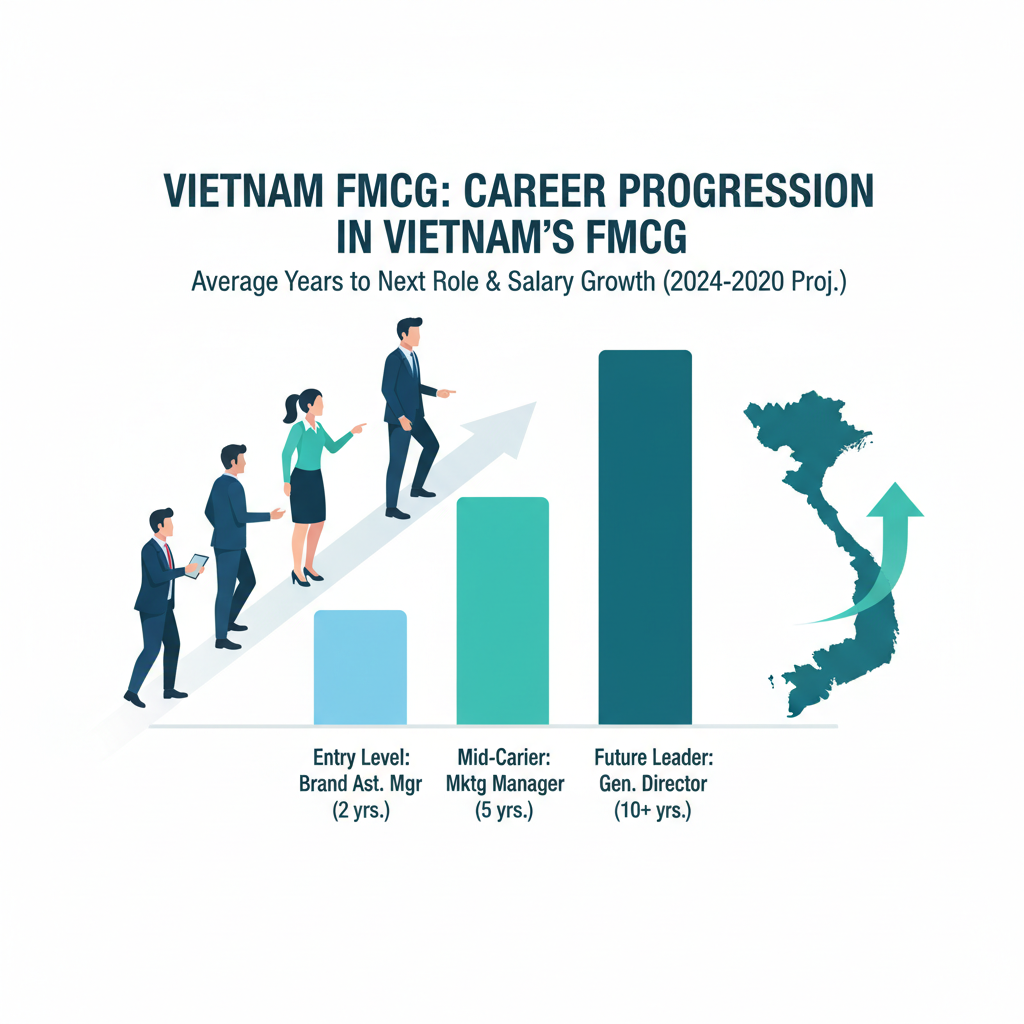
Career progression from an HR Manager to an HR Director typically involves a significant shift from operational oversight to strategic influence. This transition often requires demonstrating leadership in managing complex projects, proving the ability to align HR initiatives with business goals, and developing a holistic understanding of the organization’s strategic direction. Professionals may transition within the same company or seek opportunities in larger organizations to gain exposure to broader strategic challenges.
Moving from an SME to a corporate setting, or vice-versa, presents unique opportunities and challenges. An HR Manager from an SME joining a large corporation might initially find the structured processes and specialized HR functions overwhelming but can leverage their diverse generalist experience to quickly adapt. Conversely, a Corporate HR Director moving to an SME might enjoy greater autonomy and the chance to build HR functions from scratch, though they must adapt to potentially fewer resources and a more hands-on approach. Regardless of the direction, understanding the specific career progression HR pathways and adapting one’s skills to the demands of the new environment is crucial. Both paths offer rich opportunities for growth, fostering employee engagement and driving success in Vietnam’s competitive FMCG sector.
Partner with Shelby Global
You are looking for reliable HR Sevice Suppliers? Contact Shelby Global Now! To connect with verified talents and upgrade your orginization.
—————————————
References
– FMCG in Vietnam: A Dynamic Market Overview: https://www.mckinsey.com/industries/consumer-packaged-goods/our-insights/fmcg-in-vietnam-a-dynamic-market
– APAC HR Trends: https://hcm.workday.com/en-us/hr-trends/apac-hr-trends.html
– Deloitte Human Capital Trends: https://www2.deloitte.com/us/en/insights/topics/talent/human-capital-trends.html
– Deloitte report on Human Capital Trends in Vietnam: https://www2.deloitte.com/vn/en/pages/human-capital/articles/human-capital-trends-vietnam.html
– Global HR Trends and Insights from SHRM: https://www.shrm.org/resources-and-tools/hr-topics/global-hr/