Introduction: Understanding Vietnam’s Financial Risk Landscape
Vietnam has emerged as a compelling economic success story, rapidly transforming from an agrarian nation into a dynamic hub for manufacturing, trade, and innovation. This impressive economic growth trajectory has been mirrored by the robust expansion and increasing sophistication of its financial sector. As the nation continues to integrate deeper into the global economy, understanding the intricate web of financial risks becomes paramount for investors, policymakers, and businesses alike. This section provides an overview of Vietnam’s financial landscape, spotlighting its key players, rapid development, and the foundational risk factors that define its operational environment. Gaining insights into these elements is crucial for anyone looking to navigate or contribute to Vietnam’s burgeoning financial future, especially as we consider the trend report of the risk of finance field in vietnam.

1. Snapshot of Vietnam’s Economic and Financial Sector
Vietnam’s economy has consistently posted one of the highest GDP growth rates in Asia, driven by strong export performance, growing domestic consumption, and significant foreign direct investment (FDI). This sustained Vietnam’s economic growth has fueled the expansion of its financial sector, primarily dominated by the banking system. The sector comprises a mix of state-owned commercial banks (SOCBs), joint-stock commercial banks (JSCBs), and a growing presence of foreign banks. Beyond banking, Vietnam’s capital markets have seen remarkable development, though still smaller than more mature economies. Regulatory bodies, led by the State Bank of Vietnam (SBV) and the State Securities Commission (SSC), are continually working to enhance the regulatory framework, align with international standards, and promote financial stability. The rapid financial sector development, while offering immense opportunities, also brings forth complexities in risk management practices.
2. Traditional Risk Pillars: Credit, Market, and Operational Risks
In any financial system, a thorough understanding of traditional risk categories is fundamental. In Vietnam, these risks take on unique characteristics given the rapid pace of development and evolving regulatory landscape:
- Credit Risk: This remains a primary concern, particularly within the banking sector. Rapid credit expansion can lead to elevated levels of non-performing loans (NPLs). Sectors like real estate and state-owned enterprises (SOEs) have historically been sources of concentrated credit risk. While the SBV has made significant strides in NPL resolution and enhancing credit risk management, vigilance is crucial as new lending cycles emerge.
- Market Risk: Vietnam’s equity markets can exhibit significant volatility, influenced by both global sentiment and domestic policy shifts. Interest rate fluctuations impact banks’ net interest margins and bond valuations. Exchange rate risk, primarily concerning the Vietnamese Dong (VND) against major currencies, is another factor, though the SBV has maintained a relatively stable exchange rate regime. Global economic downturns can also transmit market shocks.
- Operational Risk: As the financial sector digitizes and expands, operational risks, including cybersecurity threats, technological infrastructure failures, and fraud, become more prominent. The increasing adoption of digital banking introduces new vulnerabilities. Furthermore, challenges related to governance, data privacy, and compliance with evolving anti-money laundering (AML) regulations contribute to the operational risk landscape. Effective risk management practices are essential to mitigate these evolving threats.
3. Key Economic Indicators Shaping Financial Stability
Monitoring a range of economic indicators is vital for assessing Vietnam’s financial stability and anticipating potential risks. These indicators act as barometers for the overall health of the economy and its capacity to absorb shocks:
- GDP Growth Rate: Sustained robust GDP growth typically correlates with healthier corporate earnings and household incomes, reducing credit risk. However, excessively high growth can sometimes mask underlying vulnerabilities or fuel asset bubbles.
- Inflation Rate: High inflation erodes purchasing power, increases operational costs, and can necessitate tighter monetary policy Vietnam, impacting borrowing costs and economic activity.
- Interest Rates: The SBV’s benchmark interest rates directly influence lending and deposit rates, affecting bank profitability, corporate investment, and consumer spending. Significant shifts can trigger market adjustments and credit re-pricing.
- Foreign Direct Investment (FDI): While a key driver of growth and employment, large inflows and potential sudden reversals of FDI can create currency volatility and impact capital market stability.
- Public Debt to GDP Ratio: A manageable public debt level provides fiscal space for the government to implement counter-cyclical policies during economic downturns, supporting financial sector stability.
- Foreign Exchange Reserves: Robust foreign exchange reserves provide a crucial buffer against external shocks, supporting the stability of the VND and bolstering investor confidence.
By closely examining these indicators and the foundational risk pillars, stakeholders can develop a more nuanced and proactive approach to managing financial risk in Vietnam’s promising yet complex environment. This holistic perspective is critical for sustainable growth and resilience within the country’s financial sector.
Emerging Risk Trends and Projections for 2026
As Vietnam continues its trajectory of economic growth and integration into the global economy, its financial field simultaneously faces a complex array of evolving risks. The period leading up to 2026 is anticipated to bring forth new challenges and amplify existing vulnerabilities, driven by both international dynamics and domestic market specificities. Understanding these emerging risk trends is paramount for policymakers, financial institutions, and investors to safeguard stability and foster sustainable development. This section delves into a forward-looking analysis, offering key projections that are crucial for a comprehensive trend report of the risk of finance field in Vietnam.
1. Impact of Global Economic Volatility and Inflationary Pressures
The global economic landscape remains highly uncertain, characterized by lingering effects of geopolitical events, persistent supply chain disruptions, and varied post-pandemic recovery paces. For Vietnam, an export-oriented economy, this translates into significant external risks. By 2026, the potential for prolonged global economic slowdowns in key trading partners (e.g., the US, EU, China) could directly depress demand for Vietnamese goods, impacting export revenues and industrial production. Furthermore, imported inflation, primarily from fluctuating global commodity prices (oil, food, raw materials), poses a considerable threat to domestic price stability. While the State Bank of Vietnam (SBV) has demonstrated adeptness in managing monetary policy, sustained external inflationary pressures could force tighter policy stances, potentially raising borrowing costs for businesses and consumers, and dampening investment appetite. The implications of these global forces on Vietnam’s financial stability are profound, influencing everything from corporate profitability to household debt sustainability. According to the IMF’s World Economic Outlook, global growth projections continue to face significant downside risks, a scenario that Vietnamese financial institutions must meticulously factor into their risk assessments for the coming years.
2. Rising Non-Performing Loans (NPLs) and Credit Concentration
A critical internal risk projected to intensify by 2026 is the potential rise in Non-Performing Loans (NPLs) across the Vietnamese banking system, coupled with concerns regarding credit concentration. The rapid credit growth observed in recent years, particularly in sectors like real estate, construction, and certain manufacturing segments, creates vulnerabilities. Should economic headwinds persist or specific sectors face downturns (e.g., a slowdown in the property market due to oversupply or tighter regulations, or reduced demand for exports affecting manufacturing firms), the ability of borrowers to service their debts could significantly deteriorate. This could lead to a surge in NPLs, eroding banks’ asset quality, capital adequacy, and profitability. While Vietnamese banks have generally strengthened their balance sheets and risk management frameworks, an unforeseen shock or a prolonged period of high interest rates could strain these improvements. Moreover, high credit concentration in a few industries or large corporate groups amplifies systemic risk. If a major borrower or a dominant sector experiences distress, the ripple effect across the financial system could be substantial. Prudent oversight, robust provisioning, and diversified lending portfolios will be crucial to mitigate these risks and ensure the resilience of Vietnam’s financial sector in the medium term. This underscores the importance of a detailed trend report of the risk of finance field in Vietnam to guide proactive measures.
3. Geopolitical Tensions and Their Effect on Foreign Investment
Geopolitical tensions, both regional and global, are poised to be a significant external risk factor for Vietnam’s financial field by 2026, primarily impacting foreign direct investment (FDI) and trade. While Vietnam has historically benefited from global supply chain diversification strategies (the “China+1” model), escalating trade wars, heightened competition for investment, or regional security challenges (e.g., in the South China Sea) could introduce new uncertainties. These tensions can deter potential foreign investors who prioritize stability and predictability. A reduction in FDI inflows could diminish capital availability, slow technology transfer, and curb job creation, all of which are vital for Vietnam’s economic momentum. Furthermore, increased protectionist policies globally or disruptions to international trade routes stemming from geopolitical conflicts could severely impact Vietnam’s export-driven economy. Financial markets are highly sensitive to such external shocks, with potential for currency volatility, capital outflows, and reduced investor confidence. Navigating these complex geopolitical currents requires agile foreign policy and robust economic diplomacy to maintain Vietnam’s attractiveness as an investment destination and ensure continued integration into global value chains, thereby protecting its financial stability against external turbulences.
Digital Transformation: Opportunities and Cyber Threats
Vietnam’s financial sector is undergoing a profound digital transformation, a dynamic shift propelled by technological advancements and increasing consumer demand for convenient, efficient services. This evolution presents a dual landscape, brimming with innovative opportunities that promise greater financial inclusion and economic growth, while simultaneously introducing a complex array of cybersecurity and operational risks. Navigating this intricate terrain requires a strategic understanding of both the potential gains and the inherent vulnerabilities, a critical insight often highlighted in the trend report of the risk of finance field in vietnam.

1. Explosion of Fintech and Digital Payment Platforms
The Vietnamese financial landscape has witnessed an unprecedented explosion of fintech innovations and digital payment solutions. Mobile banking, e-wallets, and online payment gateways have become ubiquitous, fundamentally altering how Vietnamese consumers and businesses interact with financial services. This surge is driven by a tech-savvy young population, high smartphone penetration, and government initiatives promoting a cashless society. These platforms offer unparalleled convenience, speed, and accessibility, particularly benefiting rural populations and contributing significantly to financial inclusion. Blockchain technology and Artificial Intelligence (AI) are also emerging, promising further efficiencies in areas like fraud detection, personalized banking, and secure transaction processing. This era of rapid digitization is a key subject within any comprehensive analysis of the evolving financial sector, including in the trend report of the risk of finance field in vietnam, which consistently tracks these burgeoning opportunities.
2. Escalating Cybersecurity Risks and Data Breaches
While the digital revolution unlocks vast opportunities, it concurrently expands the attack surface for malicious actors, leading to escalating cybersecurity risks. The interconnected nature of digital financial ecosystems means that a breach in one area can have ripple effects across the entire system. Vietnamese financial institutions, from large banks to agile fintech startups, are increasingly targeted by sophisticated cyber threats, including ransomware attacks, phishing schemes, and advanced persistent threats (APTs). Data breaches, particularly those involving sensitive customer information, pose significant threats not only to financial assets but also to consumer trust and institutional reputation. Ensuring robust cyber resilience is paramount for maintaining stability and confidence in the digital finance arena. The imperative to fortify defenses and implement stringent data privacy protocols is a recurring theme in discussions surrounding the trend report of the risk of finance field in vietnam, underscoring the critical balance between innovation and security.
3. Regulatory Gaps in the Rapidly Evolving Digital Space
The speed of digital transformation often outpaces the development of comprehensive regulatory frameworks, creating potential gaps that can be exploited. Vietnam’s regulatory bodies face the complex challenge of fostering innovation while ensuring market stability, consumer protection, and preventing illicit activities like money laundering and terrorist financing. Areas such as cross-border digital transactions, the precise definition and oversight of new financial products, and robust data governance standards require continuous attention. The absence of clear guidelines can create uncertainty for businesses and leave consumers vulnerable. Developing agile and adaptive regulatory sandboxes, alongside collaborative efforts between the government, industry players, and international experts, is crucial for closing these gaps. Addressing these regulatory challenges is a cornerstone of ensuring sustainable growth and managing the inherent risks within the digital finance sector, a critical aspect frequently emphasized in the trend report of the risk of finance field in vietnam.
In conclusion, Vietnam’s digital transformation in finance is a powerful engine for progress, promising enhanced efficiency and broader financial access. However, this progress is inextricably linked to heightened cybersecurity threats and the pressing need for dynamic regulatory evolution. For financial institutions and policymakers alike, the path forward involves a strategic commitment to fostering innovation responsibly, building unyielding cyber resilience, and crafting forward-thinking regulatory frameworks that protect stakeholders while paving the way for a secure and prosperous digital financial future.
Regulatory Responses and Risk Mitigation Strategies
Vietnam’s dynamic economic growth brings a complex array of financial risks. Recognizing this, regulatory bodies are proactively implementing comprehensive measures to safeguard financial stability and foster sustainable growth. This section delves into strategic responses and policy adjustments by the State Bank of Vietnam (SBV), alongside best practices financial institutions must adopt. Understanding these efforts is crucial for anyone following the trend report of the risk of finance field in vietnam, offering insights into how the nation builds resilience.
-
State Bank of Vietnam’s Policy Adjustments and Oversight
The SBV consistently adapts its regulatory framework to address financial risks. Recently, the SBV focused on macro-prudential tools to manage credit growth, especially in speculative sectors like real estate. Efforts to resolve non-performing loans (NPLs) have intensified, pushing banks for bad debt recovery and adequate provisioning. Policy adjustments include refining interest rate mechanisms for inflation stability and economic growth, balancing capital flows. The SBV has also developed a robust legal framework for digital finance, addressing risks from fintech innovations and cybersecurity threats. Its supervisory role now encompasses a broader spectrum of financial service providers, ensuring systemic stability. Directives on risk management, corporate governance, and internal controls underscore its commitment to a resilient financial system. These proactive measures are critical for maintaining overall financial stability, equipping institutions to navigate global uncertainties through regular stress tests and market surveillance.
-
Enhancing Corporate Governance and Internal Controls
Beyond regulatory directives, robust corporate governance and stringent internal controls are paramount for financial institutions to effectively manage risks. Vietnamese banks increasingly adopt international best practices: clear structures, defined roles, and independent, effective boards and audit committees. Strong governance fosters transparency, accountability, and ethical conduct, essential for preventing misconduct and operational failures. Institutions are investing significantly in comprehensive internal control systems covering all operations, from credit origination to IT security. Emphasis is placed on multi-layered verification, segregation of duties, and regular internal audits to promptly identify and rectify weaknesses. Effective credit risk management, for instance, relies on well-defined lending policies, thorough client due diligence, and continuous loan portfolio monitoring. Adopting advanced enterprise-wide risk management (ERM) frameworks enables holistic risk identification, assessment, and mitigation, aligning with strategic objectives. These internal enhancements safeguard against fraud, inefficiencies, and reputational damage.
-
Strengthening Capital Adequacy and Liquidity Management
Central to safeguarding the financial system is ensuring institutions maintain adequate capital buffers and robust liquidity. Vietnam has made significant strides in aligning its regulatory framework with international standards, particularly Basel II, with many banks now compliant. This mandates higher quality and quantity of capital, improving banks’ ability to absorb unexpected losses. Regulators continue to push for advanced risk-weighted asset calculations and ICAAP. Concurrently, effective liquidity management is critical to prevent funding crises. Financial institutions must maintain sufficient high-quality liquid assets (HQLA) and diversified funding sources, reducing reliance on short-term concentration. Stress testing frameworks are reinforced to assess resilience under adverse scenarios, from market shocks to deposit withdrawals. This proactive approach ensures banks meet short-term obligations without destabilizing fire sales. Emphasis on robust contingency funding plans (CFPs) ensures clear strategies for liquidity shortfalls. These efforts bolster the financial sector’s stability and support economic development, even amidst global pressures, crucial for the ongoing digital transformation in finance.
The proactive stance of Vietnam’s regulatory bodies, led by the State Bank of Vietnam, combined with increasing adoption of best practices by financial institutions, underscores a strong commitment to a resilient financial sector. Integrated strategies—from rigorous policy adjustments and enhanced oversight to strengthening internal controls and capital buffers—are crucial for navigating a rapidly developing economy. Sustained focus on these responses ensures long-term financial health and fosters investor confidence. This comprehensive approach is essential for understanding the evolving trend report of the risk of finance field in vietnam and the country’s dedication to financial robustness.
Sector-Specific Risk Analysis and Future Outlook
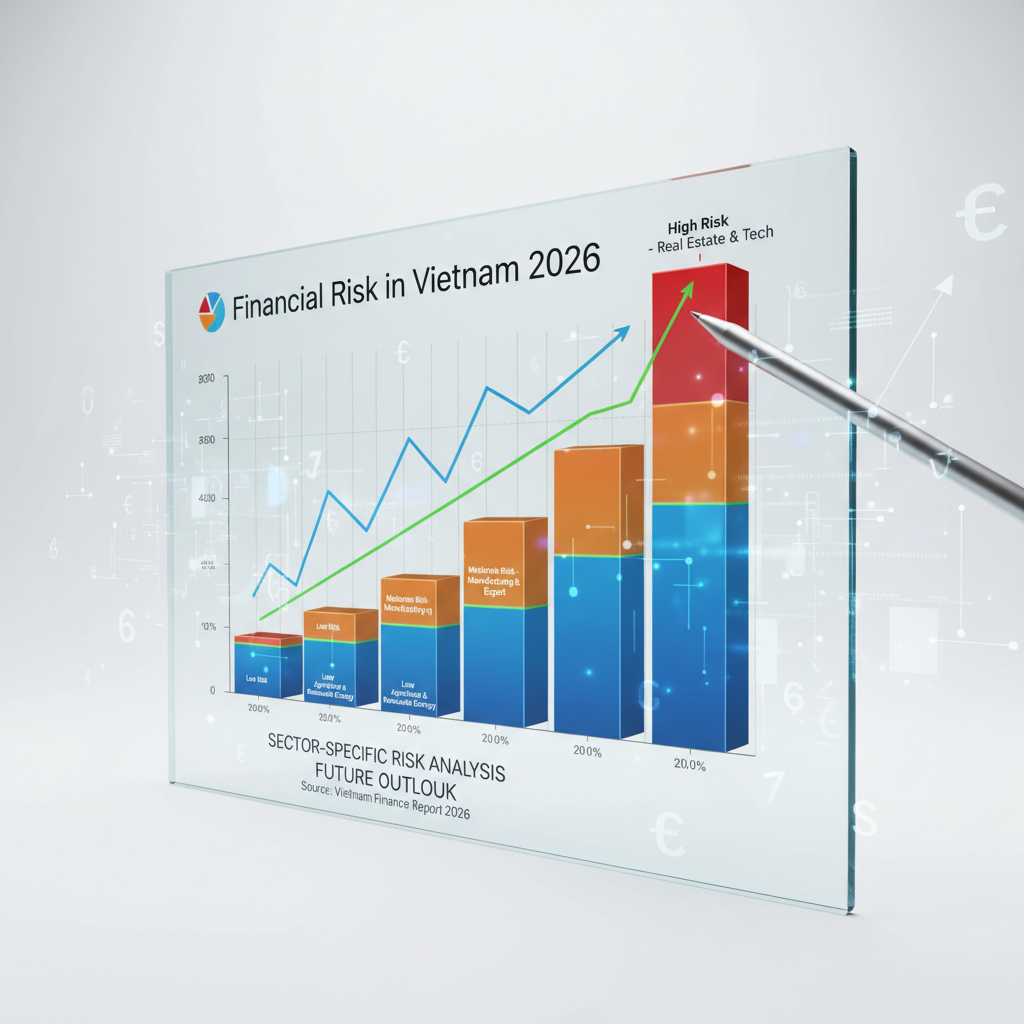
Vietnam’s financial industry is a dynamic and rapidly evolving landscape, integral to the nation’s robust economic growth. As the sector expands, so does the complexity of its risk profile. Understanding these unique challenges across different sub-sectors is crucial for sustainable development and resilience. This section offers a trend report of the risk of finance field in vietnam, delving into specific vulnerabilities and providing a forward-looking perspective on their resilience and growth potential amidst a changing global and local environment. Key areas of focus include maintaining financial stability, adapting to regulatory reforms, embracing digital transformation, and bolstering economic resilience across the board.
1. Banking Sector: Lending Practices and Asset Quality Risks
The Vietnamese banking sector, a cornerstone of its financial system, has witnessed significant growth, fueled by rapid credit expansion. However, this growth also introduces inherent risks, particularly concerning lending practices and asset quality. A primary concern is the concentration of lending in specific high-growth sectors, such as real estate and infrastructure, which can expose banks to heightened systemic risks during economic downturns. While non-performing loan (NPL) ratios have generally been managed, the true extent of asset quality issues can sometimes be masked by loan restructuring programs, especially in the wake of global economic uncertainties. Banks must navigate the delicate balance between supporting economic growth and maintaining prudent risk management.
Looking ahead, the banking sector’s resilience will hinge on several factors. Continued implementation of Basel II and progressing towards Basel III standards will enhance capital adequacy and risk management frameworks. The central bank’s proactive supervision and stress testing will be vital in identifying and mitigating potential vulnerabilities. Furthermore, the push for digital transformation offers both opportunities and risks; while it can improve efficiency and customer reach, it also necessitates robust cybersecurity measures and a modernized regulatory approach to digital lending. Enhancing transparency in reporting and strengthening corporate governance will be paramount to ensuring long-term financial stability and sustainable growth.
2. Insurance Market: Climate Change and Catastrophic Risks
Vietnam’s insurance market, though smaller than its banking counterpart, is experiencing significant growth, driven by rising incomes and increased awareness. However, it faces unique challenges, especially from climate change and catastrophic risks. As one of the countries most vulnerable to the impacts of climate change, Vietnam regularly experiences extreme weather events such as typhoons, floods, and droughts. These events can lead to substantial property damage, business interruption, and life losses, directly impacting the profitability and solvency of insurance companies through escalating claims.
The future outlook for the insurance sector demands proactive adaptation. Insurers will need to enhance their risk modeling capabilities, incorporating advanced climate data to better assess and price risks. Product innovation, including parametric insurance solutions that trigger payouts based on pre-defined event parameters, could offer more effective protection against climate-related losses. Strengthening reinsurance partnerships will be crucial for managing large-scale catastrophic exposures. Moreover, increased public awareness campaigns and regulatory reforms encouraging disaster risk financing and microinsurance schemes can expand market penetration and foster greater economic resilience among vulnerable populations. The sector’s ability to innovate and integrate sustainable practices will define its growth trajectory.
3. Capital Markets: Volatility, Investor Protection, and Market Integrity
Vietnam’s capital markets, encompassing stock exchanges and bond markets, have made considerable strides in attracting both domestic and foreign investment. Yet, they remain susceptible to significant volatility, influenced by global economic shifts, regional sentiments, and domestic policy changes. This volatility, while offering opportunities, also poses risks to investor confidence and market stability.
Key challenges for the capital markets include strengthening investor protection and ensuring market integrity. This involves implementing robust regulatory frameworks to prevent insider trading, market manipulation, and fraudulent activities. Enhancing disclosure requirements and corporate governance standards for listed companies is essential for fostering transparency and trust. From a forward-looking perspective, Vietnam aims to upgrade its market status from a frontier to an emerging market, which would attract a new wave of institutional investors. Achieving this requires continuous efforts in improving trading infrastructure, easing foreign ownership limits, and aligning regulatory practices with international standards. Further digital transformation of trading platforms and clearing systems will also enhance efficiency and security, while continuous regulatory reforms will reinforce investor confidence and support the long-term growth and stability of Vietnam’s capital markets.
Partner with Shelby Global
You are looking for reliable HR Sevice Suppliers? Contact Shelby Global Now! To connect with verified talents and upgrade your orginization.
—————————————
References
– World Bank: Vietnam Overview: https://www.worldbank.org/en/country/vietnam/overview
– IMF’s World Economic Outlook: https://www.imf.org/en/Publications/WEO
– Digital payments are booming in Vietnam, but challenges remain: https://blogs.worldbank.org/eastasiapacific/digital-payments-are-booming-vietnam-challenges-remain
– IMF – Vietnam: https://www.imf.org/en/Countries/VNM
– :