
Understanding Vietnam’s Labor Law Framework for Education
Navigating the intricate landscape of Vietnam’s labor laws is paramount for any entity operating within the education sector, from local language centers to international schools and universities. A comprehensive grasp of the foundational legal documents and key regulations is essential for ensuring HR compliance, mitigating risks, and fostering a stable working environment. This section delves into the core Legal HR terms & conditions for education companies in Vietnam, highlighting recent amendments and their implications for both domestic and foreign-invested enterprises (FIEs).
1. Key labor codes and decrees applicable to education companies
The bedrock of employment relations in Vietnam is the Labor Code, most recently updated in 2019. This pivotal legislation establishes general principles for employment contracts, working hours, wages, social insurance, labor discipline, and Vietnam labor disputes education. For education companies, understanding these core provisions is critical. Beyond the Labor Code, numerous decrees (Nghị định) and circulars (Thông tư) provide specific guidance and elaborate on the Code’s articles. For instance, Decree No. 145/2020/ND-CP details many aspects of the Labor Code, including working conditions and labor relations, directly impacting how education companies structure labor contracts education Vietnam, manage working hours, and handle employee benefits. These regulations dictate the permissible types of employment contracts (indefinite-term, definite-term), minimum wage requirements, overtime rules, and procedures for termination. Adhering to these frameworks is not merely a formality but a legal necessity to ensure robust HR compliance Vietnam education and avoid potential penalties.
2. Specific regulations for foreign-invested enterprises (FIEs) in education
Foreign-invested enterprises (FIEs) operating in Vietnam’s education sector face an additional layer of specific regulations, particularly concerning the employment of foreign workers. While the general principles of the Labor Code apply, FIEs must also navigate detailed rules on obtaining foreign teacher work permits for foreign teachers and administrative staff, temporary residence cards, and the necessary business licenses for their educational activities. Decree No. 152/2020/ND-CP, for example, outlines the conditions and procedures for foreigners working in Vietnam, including requirements for educational qualifications, health certificates, and criminal records. This decree is crucial for FIEs aiming to hire qualified foreign teachers and ensure their legal stay and employment. Furthermore, specific sub-laws govern the establishment and operation of foreign-invested schools and training centers, outlining curriculum requirements, teacher qualifications, and facility standards. Navigating these specialized requirements is vital for smooth operations and to prevent legal setbacks related to foreign teacher work permits and employment conditions for educators. These rules apply to all Foreign Invested Education Enterprises Vietnam.
3. Impact of the Labor Code 2019 and subsequent legal updates
The Labor Code 2019, effective from January 1, 2021, brought significant changes that profoundly affect HR practices across all sectors, including education. Key amendments include modifications to employment contract types, expanding employee protections, and refining procedures for labor dispute resolution. The indefinite-term contract definition was clarified, while the fixed-term contract limit remained at two renewals, impacting long-term staffing strategies for educational institutions. The Code also introduced provisions for internal labor regulations, collective bargaining agreements, and increased penalties for non-compliance, pushing education companies towards stricter adherence to Legal HR terms & conditions for education companies in Vietnam. Subsequent guiding decrees, such as Decree No. 145/2020/ND-CP and Decree No. 152/2020/ND-CP, further elaborate on these changes, addressing details related to working hours, annual leave, social insurance for teachers, and the specific processes for work permits. Staying abreast of these ongoing updates is imperative for HR departments in education to ensure continuous compliance and to effectively manage their workforce in line with Vietnam education employment law and evolving wage regulations education Vietnam.
Employment Contracts & Essential HR Documentation
For education companies operating in Vietnam, navigating the intricate web of legal HR terms & conditions for education companies in Vietnam is paramount for ensuring operational stability and mitigating legal risks. Adherence to Vietnamese labor laws is not just a recommendation but a strict requirement, impacting everything from the recruitment of educators to the long-term employment of administrative staff. Meticulous management of employment contracts and other essential HR documentation forms the bedrock of a compliant and fair workplace.
1. Types of employment contracts and their legal implications
Vietnamese labor law primarily distinguishes between three main types of employment contracts, each carrying specific legal implications for both the employer and the employee, especially relevant for educators’ rights. Understanding these is crucial for HR compliance in the education sector:
- Indefinite-Term Employment Contracts: These contracts have no specific termination date and are generally preferred under Vietnamese law as they offer greater job security. After an employee completes two consecutive definite-term contracts, the subsequent contract must be an indefinite-term contract, unless specific exceptions apply (e.g., foreign workers whose work permits have a limited duration).
- Definite-Term Employment Contracts: These contracts have a specified duration, typically between 12 and 36 months. They are common for initial hires. An employee can sign a maximum of two definite-term contracts with the same employer for the same job. After the second definite-term contract expires, if the employee continues to work, an indefinite-term contract must be signed.
- Seasonal or Task-Based Employment Contracts: For work that is seasonal or completed within a specific task, lasting less than 12 months. This type is less common for full-time educators but might apply to specific short-term projects or tutoring assignments.
Proper classification is vital as it dictates an employer’s obligations regarding termination, notice periods, severance pay, and social insurance contributions. Probation periods, typically 30 days for positions requiring professional or technical qualifications (e.g., teachers) and up to 60 days for senior management roles, must also be clearly defined within the contract.
2. Mandatory clauses, language requirements, and official seals
Every employment contract in Vietnam must contain specific mandatory clauses to be legally valid. For education companies, these elements ensure clarity and compliance with Vietnamese labor laws. Essential provisions include:
- Job Title and Description: Clearly outlining the educator’s role, responsibilities, and place of work.
- Working Hours and Rest Periods: Specifying daily/weekly working hours, break times, and days off, adhering to labor regulations.
- Salary and Remuneration: Detailing the basic salary, allowances (if any), payment method, and pay period. It must meet the regional minimum wage.
- Social Insurance: Clauses regarding compulsory social insurance, health insurance, and unemployment insurance contributions, a critical aspect of HR compliance.
- Contract Duration: Clearly stating whether it’s indefinite-term, definite-term, or seasonal.
- Rights and Obligations: Outlining the rights and duties of both the employer and employee.
- Probation Period: If applicable, its duration and terms.
A crucial legal requirement is that all employment contracts must be in Vietnamese. While bilingual contracts are common, especially for foreign educators, the Vietnamese version is always the legally binding one. Furthermore, contracts must bear the legal representative’s signature and the company’s official seal (con dấu), signifying the company’s legal consent. Any annexes or amendments to the contract must also follow these strict signing and sealing protocols, ensuring all HR documentation is legally sound.
3. Work permits, visas, and temporary residence cards for foreign educators
Employing foreign workers, particularly international educators, necessitates navigating a specific set of immigration and work permits regulations in Vietnam. This process is multi-layered and requires careful planning and execution to ensure legal residency and the right to work.
First and foremost, a work permit is mandatory for most foreign educators. Exemptions exist, but generally, an educator must meet specific criteria regarding qualifications (e.g., bachelor’s degree + relevant experience, teaching certificates) and health. The application involves submitting numerous documents, including academic credentials, criminal record checks, health certificates, and a proposed employment contract. The work permit is typically issued for the duration of the employment contract, up to a maximum of two years.
Once a work permit is obtained, the foreign educator must secure an appropriate visa. For long-term employment, this usually involves a business visa (DN) or an investment visa (DT), sponsored by the employing education company. It’s critical that the visa type matches the purpose of stay to avoid penalties. Upon arrival and with a valid work permit and visa, the next step is applying for a temporary residence card (TRC). A TRC allows foreign individuals to stay in Vietnam for an extended period without having to repeatedly apply for visas, usually for 1 to 2 years, aligning with the work permit’s validity. This streamlines residency and allows for multiple entries and exits. The rigorous process for obtaining these documents highlights the importance of expert guidance in managing the education sector HR aspects, ensuring full compliance and smooth transitions for valuable international staff.
Wages, Benefits, and Working Conditions Compliance
Navigating the intricate landscape of employment law in Vietnam is paramount for education companies seeking sustainable and ethical operations. Adherence to legal stipulations concerning wages, mandatory social insurance contributions, health insurance, and other working conditions is not merely a legal obligation but a cornerstone of robust HR management. Companies must meticulously align their legal HR terms & conditions for education companies in Vietnam with the prevailing Labor Code, decrees, and circulars to avoid penalties and foster a positive work environment for their educators and staff.
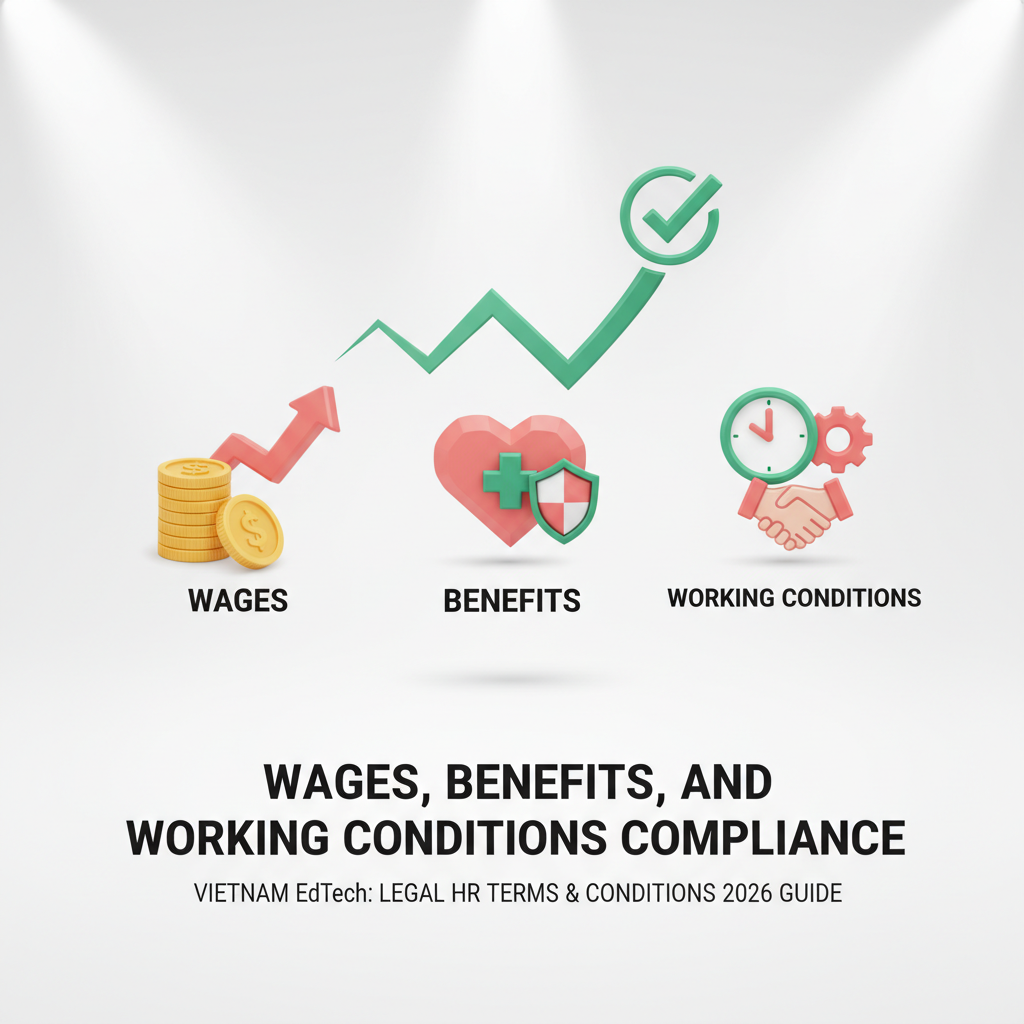
1. Minimum wage, salary structures, and performance-based incentives
Vietnam’s labor regulations mandate a minimum wage, which varies across four distinct regions (I, II, III, and IV), reflecting the differing economic conditions and cost of living. Education companies must ensure their basic salaries meet or exceed the minimum wage applicable to their operational zone. Beyond the minimum, Vietnam’s comprehensive Labor Code requires transparent and registered salary structures. These structures, often outlined in collective labor agreements or internal company regulations, must clearly define base salaries, allowances, and any supplementary payments. For education companies, this includes ensuring fair compensation structures for both local and expatriate teachers, administrative staff, and support personnel. Performance-based incentives, such as bonuses, commissions, or productivity-linked payments, are permitted but must be clearly documented in employment contracts or company policies. These incentives should be designed to encourage high performance while strictly adhering to payroll regulations regarding calculation, payment schedules, and tax implications, thereby contributing to effective HR compliance and employee remuneration.
2. Mandatory social, health, and unemployment insurance contributions
A crucial aspect of employee benefits Vietnam is the mandatory social security system. Employers and employees in the education sector are legally required to contribute to three main insurance schemes: Social Insurance, Health Insurance, and Unemployment Insurance. Social Insurance covers sickness, maternity, occupational diseases, work accidents, retirement, and death benefits. Health Insurance provides coverage for medical examinations and treatments, while Unemployment Insurance offers support during periods of job loss. Contribution rates are periodically adjusted by the government and are calculated based on the employee’s monthly salary. Typically, the employer contributes a larger percentage than the employee, with a cap on the salary used for calculation. Timely and accurate payment of these social insurance obligations is not only a legal imperative but also vital for ensuring employee welfare and mitigating future liabilities for the company. Non-compliance can lead to significant fines and retrospective payment orders, underscoring the importance of diligent HR compliance in managing employee benefits.
3. Legal working hours, overtime regulations, and public holidays
Vietnamese labor law stipulates standard working hours, generally not exceeding 8 hours per day or 48 hours per week. However, companies may implement schedules that accommodate specific operational needs, such as shifts for evening or weekend classes, provided they remain within the legal limits and ensure employee rights are protected. Overtime work is permitted under specific conditions and is subject to strict regulations regarding maximum hours and premium pay. Employees working overtime must receive higher rates, typically 150% for weekdays, 200% for weekends, and 300% for public holidays, on top of their normal wages. Vietnam observes several public holidays throughout the year, during which employees are entitled to paid leave. Companies must also adhere to regulations concerning annual leave entitlements, sick leave, and other forms of leave. Developing clear workplace policies and ensuring all employment contracts reflect these stipulations are essential for effective HR compliance and maintaining a fair and legally sound working environment within the education sector.
Termination of Employment & Dispute Resolution Processes
Navigating the complexities of employment termination and labor dispute resolution is a critical aspect of human resources, especially for education companies operating in Vietnam. Adhering strictly to the Legal HR terms & conditions for education companies in vietnam is paramount to ensure fairness, compliance, and to mitigate potential legal risks. This section outlines the essential legal procedures for terminating employment contracts and establishes effective mechanisms for resolving labor disputes within the robust Vietnamese legal framework, guided primarily by the Labor Code 2019.
1. Legitimate grounds for termination and employer’s obligations
Under the Vietnamese Labor Code 2019, employment contracts can be terminated based on several legitimate grounds, ensuring both employer and employee rights are protected. For employers, valid reasons for unilateral termination include: an employee’s repeated failure to perform duties despite prior warnings; employee illness or accident preventing them from returning to work after statutory leave; force majeure events; restructuring, technological changes, or economic reasons leading to redundancy; or the employer ceasing operations. Additionally, an employee may unilaterally terminate their contract under specific conditions, such as not being arranged for work as agreed, or mistreatment by the employer. Mutual agreement between both parties is also a common and preferred method of contract termination.
Regardless of the ground, employers bear significant obligations throughout the termination process. These include providing appropriate notice periods, conducting thorough investigations for disciplinary actions, holding consultation meetings with the internal labor collective representative organization (e.g., trade union) when required, and ensuring all documentation is meticulously prepared and filed. Failing to adhere to these Vietnamese Labor Code 2019 provisions can render a termination illegal, leading to reinstatement orders, back pay, and substantial penalties, underscoring the importance of strict compliance for education companies in Vietnam.
2. Notice periods, severance pay, and job loss allowances
Strict adherence to statutory notice periods is a fundamental requirement for legal employment termination procedures in Vietnam. For indefinite-term contracts, employers generally must provide at least 45 days’ notice. For definite-term contracts ranging from 12 to 36 months, the notice period is typically 30 days, and for contracts under 12 months, it is 3 working days. Employees also have notice period obligations if they unilaterally terminate their contract. Failure to provide adequate notice by either party can result in penalties, including compensation to the aggrieved party.
Upon termination, employees are often entitled to severance pay or job loss allowances, crucial considerations for managing HR costs and compliance. Severance pay is applicable when an employment contract is terminated due to an employee’s unilateral termination with legitimate grounds, expiry of a definite-term contract, or employer’s unilateral termination (excluding disciplinary dismissal or resignation against notice). It is calculated as half a month’s salary for each year of employment, counting from the first year of continuous employment, minus any unemployment insurance benefits the employee is entitled to. Job loss allowance, conversely, is provided when an employment contract is terminated due to restructuring, technological changes, or economic reasons. This allowance amounts to one month’s salary for each year of employment, with a minimum of two months’ salary, reflecting the government’s commitment to supporting workers affected by strategic business decisions.
3. Handling disciplinary actions and employee grievances
Effective management of disciplinary actions and employee grievances is vital for maintaining a productive and harmonious work environment within the education sector. When an employee commits a violation, the employer must follow a stringent disciplinary process. This typically involves conducting an investigation, gathering evidence, and holding a disciplinary meeting. Crucially, representatives from the internal labor collective representative organization must be present, and the employee must be given the opportunity to explain their actions. Disciplinary actions range from reprimands and extensions of wage increase periods to demotion or, in severe cases, dismissal. Each step must be meticulously documented to withstand potential scrutiny from labor authorities or courts, ensuring fair and lawful practices.
Employee grievances resolution processes in Vietnam are designed to provide fair and timely recourse. Initial resolution should always be pursued internally, ideally through direct negotiation between the employee and management or via an internal grievance committee. If internal resolution fails, the dispute can escalate to external mechanisms. These include conciliation by a labor conciliator, followed by arbitration, or direct litigation at the People’s Court. For education companies, understanding these tiered dispute resolution processes is critical. Proactive measures, such as clear HR policies, consistent application of rules, and an open-door policy for feedback, can significantly reduce the incidence of formal labor disputes, aligning with best practices for Legal HR terms & conditions for education companies in vietnam and fostering a compliant workplace culture.
Compliance Challenges & Best Practices for Education Companies
Discussing common compliance challenges faced by education companies in Vietnam and offering strategic best practices to mitigate risks, ensuring continuous adherence to HR laws.
In Vietnam’s rapidly expanding education sector, companies face a complex landscape of human resources compliance. Beyond the general intricacies of HR management, the industry must navigate specific local regulations, cultural nuances, and evolving legal frameworks. A comprehensive understanding of legal HR terms & conditions for education companies in Vietnam is not just a regulatory obligation; it is a strategic imperative for sustainable growth, talent retention, and maintaining a reputable brand. From managing diverse workforces to safeguarding sensitive information, proactive compliance is key to mitigating risks and fostering a stable, productive environment.
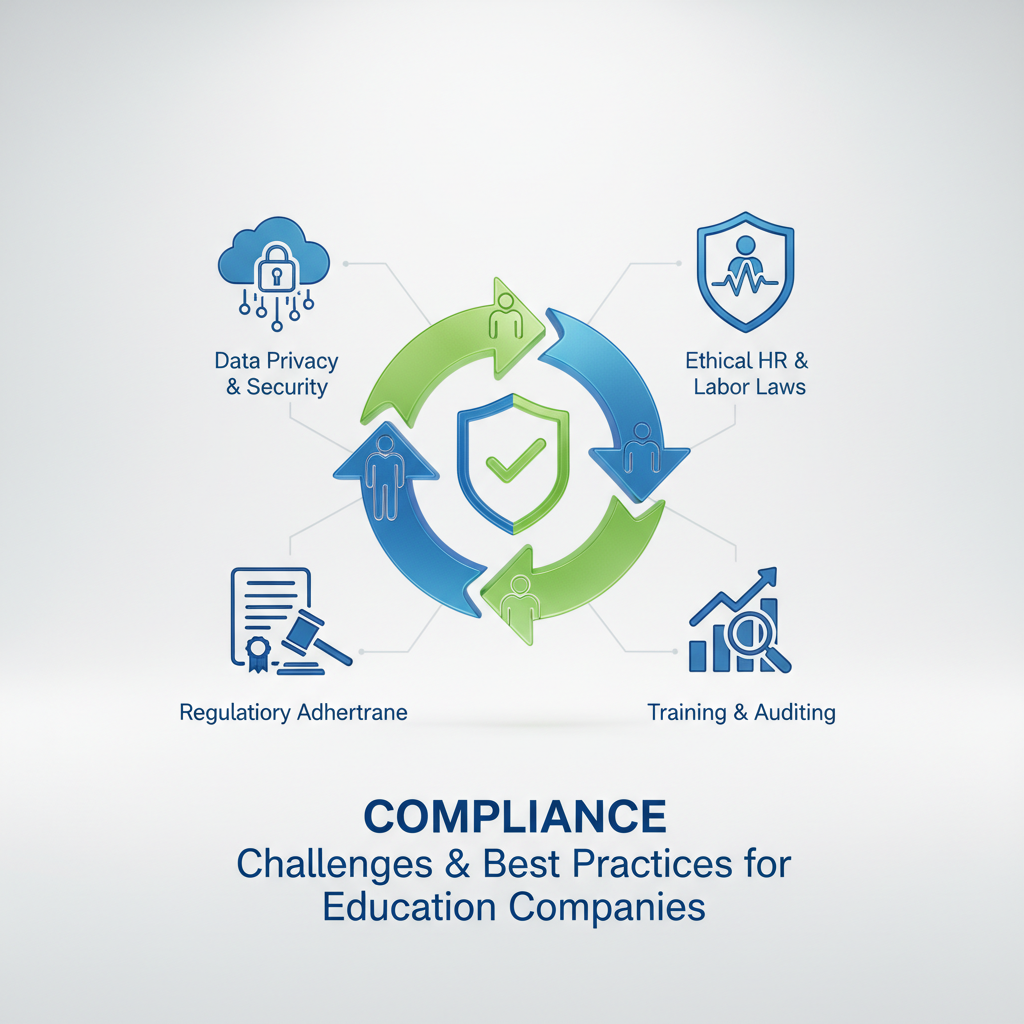
1. Navigating cultural nuances in HR management and employee relations
Vietnamese workplace culture significantly influences HR management and employee relations. Concepts like hierarchy, respect for elders and superiors, and the importance of group harmony often dictate communication styles and conflict resolution. Indirect communication is common, making clear, direct feedback sometimes challenging for foreign managers. Trust-building, often through personal relationships (quan hệ), is paramount. Education companies operating in Vietnam must understand these dynamics to build effective teams and maintain positive employee relations, ensuring their HR policies are both legally sound and culturally appropriate. Best practices include providing cultural sensitivity training for management, establishing clear and transparent communication channels that respect local norms, and involving local HR experts in policy formulation and dispute resolution. Adhering to local labor practices while respecting cultural sensitivities is crucial for fostering a compliant and harmonious workplace environment.
2. Data privacy regulations for employee and student information
With increasing digitalization, the protection of personal data has become a critical compliance area globally, and Vietnam is no exception. Decree 13/2023/ND-CP on Personal Data Protection (PDPD), effective July 1, 2023, established a robust framework for handling personal data. For education companies, this applies to both employee information (salary details, health records, performance reviews) and highly sensitive student data (academic records, contact information, behavioral assessments). Non-compliance can lead to significant penalties, reputational damage, and loss of trust. Education companies must implement stringent data security protocols, obtain explicit consent for data collection and processing, ensure secure storage and transmission of information, and train staff on Vietnam’s robust personal data protection framework. Regular audits and updates to data privacy policies are essential to ensure continuous adherence to these evolving regulations.
3. Legal aspects of training, development, and professional certifications
Employee training and professional development are vital for the quality of education services, but they come with specific legal requirements in Vietnam. The Labor Code stipulates conditions for training contracts, especially when employers invest significantly in an employee’s development. This includes provisions for training costs, repayment obligations if an “employee leaves prematurely,” and the duration of post-training service. For educators, obtaining and maintaining professional certifications, whether local or international, often involves specific regulatory oversight from the Ministry of Education and Training (MOET). Education companies must ensure that training agreements comply with labor laws, clearly outline mutual obligations, and are legally reviewed. Furthermore, verifying the legitimacy and recognition of professional qualifications, especially for foreign teachers, is critical to avoid issues with work permits and educational standards. Developing clear training policies, aligning them with Vietnamese education regulations, and continuously monitoring changes in certification requirements are best practices to ensure compliance and support continuous professional growth within the bounds of the law.
Ultimately, navigating the landscape of compliance challenges for education companies in Vietnam requires a proactive, informed, and culturally sensitive approach. By prioritizing adherence to employment regulations Vietnam, understanding data privacy Vietnam, and meticulously managing education sector HR policies, companies can build a resilient foundation. Continuous monitoring, internal audits, and seeking expert legal advice on labor contracts Vietnam and professional certifications Vietnam are indispensable practices. Embracing these best practices transforms compliance from a mere obligation into a strategic asset, fostering sustainable growth and a reputable presence in Vietnam’s dynamic education market.
Partner with Shelby Global
You are looking for reliable HR Sevice Suppliers? Contact Shelby Global Now! To connect with verified talents and upgrade your orginization.
—————————————
References
– Vietnam’s Labor Code 2019: Key Changes for Businesses: https://www.vietnam-briefing.com/news/vietnams-labor-code-2019-key-changes-for-businesses.html
– Vietnamese labor laws: https://thuvienphapluat.vn/van-ban/Lao-dong-Tien-luong/Bo-luat-lao-dong-2019-350170.aspx
– Vietnam’s Labor Law Overview: https://www.ilo.org/hanoi/areas/labour-law/lang–en/index.htm
– Key Changes to the Vietnam Labor Code 2019: https://www.dfdl.com/resources/publications/updates/key-changes-to-the-vietnam-labor-code-2019/
– Vietnam Data Privacy Handbook by DLA Piper: https://www.dlapiper.com/en/insights/publications/2023/04/vietnam-data-privacy-handbook