
Overview of Vietnamese Labor Law for Healthcare
This section will provide a foundational understanding of the key labor laws and regulations that govern employment in Vietnam’s medical sector, setting the stage for specific HR terms. Navigating the intricate landscape of Vietnamese labor law is crucial for any healthcare institution, from hospitals and clinics to pharmaceutical companies and medical equipment suppliers. Understanding the nuances of these regulations ensures compliance, fosters a productive work environment, and mitigates legal risks, especially concerning the unique demands and responsibilities of medical professionals. Effective management of Legal HR terms & conditions for medicine field in vietnam requires a deep dive into the primary legislations that shape employment practices in this vital sector.
1. Key Legislations Affecting Medical HR (e.g., Labor Code 2019)
At the core of Vietnam’s employment framework lies the Labor Code 2019, which came into full effect on January 1, 2021. This comprehensive legislation is the primary legal document governing all aspects of employment, including employment contracts, working hours, wages, social insurance, labor discipline, and dispute resolution. For the healthcare sector, the Labor Code’s provisions are foundational, dictating how medical professionals are employed, managed, and compensated. Beyond the Labor Code, several other key legislations and regulatory instruments significantly impact human resources in medicine. These include the Law on Social Insurance (No. 58/2014/QH13), which outlines mandatory social, health, and unemployment insurance contributions; the Law on Occupational Safety and Health (No. 84/2015/QH13), crucial for ensuring safe working conditions in medical environments; and various decrees and circulars issued by the Ministry of Labor, Invalids and Social Affairs (MOLISA) and the Ministry of Health (MOH). These subsidiary regulations often provide specific guidance on issues such as professional liability, ethical guidelines, and specialized working conditions unique to healthcare practitioners, forming a complex yet essential web of rules that define Legal HR terms & conditions for medicine field in vietnam.
2. Scope and Application to Healthcare Institutions
The Labor Code 2019 and its accompanying regulations apply broadly to all employers and employees within Vietnam, including foreign-invested healthcare facilities, public hospitals, private clinics, pharmaceutical companies, and medical research institutions. However, the application often comes with specific considerations tailored to the unique nature of the healthcare profession. For instance, the regulations around working hours, overtime, and night shifts are particularly critical for doctors, nurses, and other medical staff who often work irregular hours and are on-call. While the standard workweek is 48 hours, healthcare professionals may operate under different schedules due to the continuous nature of patient care, with strict rules on compensation for overtime and mandatory rest periods. Employment contracts in the medical field must meticulously detail job descriptions, professional responsibilities, specific working conditions, and adherence to professional ethical codes. Moreover, issues like professional licensing, continuous medical education requirements, and the handling of patient data (confidentiality) are often addressed through specific MOH circulars that complement the general labor laws. Compliance is not just about avoiding penalties but also about upholding the integrity and quality of medical services, making a thorough understanding of these applications vital for managing Legal HR terms & conditions for medicine field in vietnam.
3. Recent Amendments and Upcoming Changes for 2026
Vietnam’s labor legal landscape is dynamic, with continuous efforts to refine existing laws and introduce new provisions to adapt to economic development and international labor standards. The Labor Code 2019 itself represented significant amendments, notably broadening the scope of employment relationships, recognizing new forms of contracts, and enhancing employee protections, particularly concerning discrimination and harassment. Since its implementation, there have been various governmental decrees and circulars clarifying specific articles, such as those related to minimum wage adjustments, social insurance contributions, and guidelines for internal labor regulations. As for upcoming changes leading into 2026, healthcare institutions should remain vigilant regarding potential updates to social insurance rates, expansions in occupational health and safety protocols specific to medical environments, and continued efforts to streamline foreign labor management for expatriate medical specialists. There’s an ongoing emphasis on digital transformation within public administration, which may lead to more online submission and management systems for labor permits and compliance documents. Staying informed about these evolving regulations is paramount for healthcare HR departments to ensure ongoing compliance, attract and retain top medical talent, and effectively manage the complex Legal HR terms & conditions for medicine field in vietnam.
Essential Employment Contracts and Conditions
Navigating the intricate landscape of human resources within Vietnam’s burgeoning medical sector demands a profound understanding of its unique legal HR terms & conditions for medicine field in vietnam. Employment agreements are foundational documents ensuring compliance, safeguarding both employers and medical practitioners, and upholding high standards of patient care. This section delves into the critical components of employment contracts, mandatory clauses, and specific conditions that define healthcare employment in Vietnam, ensuring organizations remain compliant with Vietnamese labor law medical regulations and ethical standards.
-
Types of Labor Contracts in the Medical Field
In Vietnam, labor contracts are primarily categorized into indefinite-term, definite-term, and seasonal/specific job contracts. For medical professionals, understanding these distinctions is crucial. An indefinite-term labor contract offers continuous employment without a specified end date, providing high job security for senior doctors and long-term staff.
Definite-term labor contracts span 12 to 36 months, often used for new hires or specialist roles. Upon expiry, if employment continues, a new contract must be signed. A second definite-term contract automatically converts to indefinite-term if employment persists, highlighting the importance of contract management for healthcare employment contracts Vietnam.
Less common for core medical staff are seasonal or specific job contracts (under 12 months). Regardless of type, all contracts must adhere to Vietnamese labor law, detailing roles and conditions pertinent to the healthcare environment.
-
Mandatory Clauses: Wages, Working Hours, Benefits
Every labor contract in Vietnam’s medical sector must include specific mandatory clauses. Wages are critical, encompassing base salary, allowances (e.g., hazard pay), and bonuses. The contract must clearly state payment method, frequency, and adherence to minimum wage regulations.
Working hours for medical practitioners often deviate from standard schedules. Contracts must outline standard hours, provisions for overtime, on-call duties, and compensatory time off, all in strict adherence to Vietnamese labor law. The unique demands of hospital shifts necessitate clear, agreed-upon terms.
Benefits are paramount. Mandatory social insurance healthcare Vietnam contributions (social, health, unemployment insurance) are legal requirements and must be detailed. Beyond these, contracts should specify annual leave, sick leave, maternity/paternity leave, and professional liability insurance, vital for doctors. These provisions ensure welfare and protection, reflecting best practices in mandatory employment clauses Vietnam.
-
Specific Conditions for Medical Practitioners
Beyond general labor law, medical practitioners are subject to distinct conditions. Licensing and professional practice certificates are non-negotiable. Every medical professional must possess valid licenses issued by the Ministry of Health. Contracts should reference the requirement to maintain these, including renewals and adherence to the Law on Medical Examination and Treatment 2023. Failure can lead to termination, underscoring doctor licensing requirements Vietnam.
Professional conduct and ethics form another cornerstone. Medical professionals are bound by strict codes emphasizing patient confidentiality, informed consent, and duty of care. Employment contracts often incorporate clauses requiring adherence to these professional standards and hospital policies.
Continuous Professional Development (CPD) is increasingly mandated. Contracts may stipulate requirements for ongoing training and participation in educational programs to maintain and enhance skills. This commitment to continuous professional development medical Vietnam ensures practitioners remain updated. Other specific conditions might include intellectual property, non-compete clauses, and adherence to workplace safety unique to healthcare.
Understanding and meticulously drafting employment contracts with these specific conditions is not just about legal compliance; it’s about building a stable, ethical, and high-performing medical workforce in Vietnam. For healthcare institutions, robust and compliant agreements mitigate legal risks, foster trust, and contribute to quality patient care.
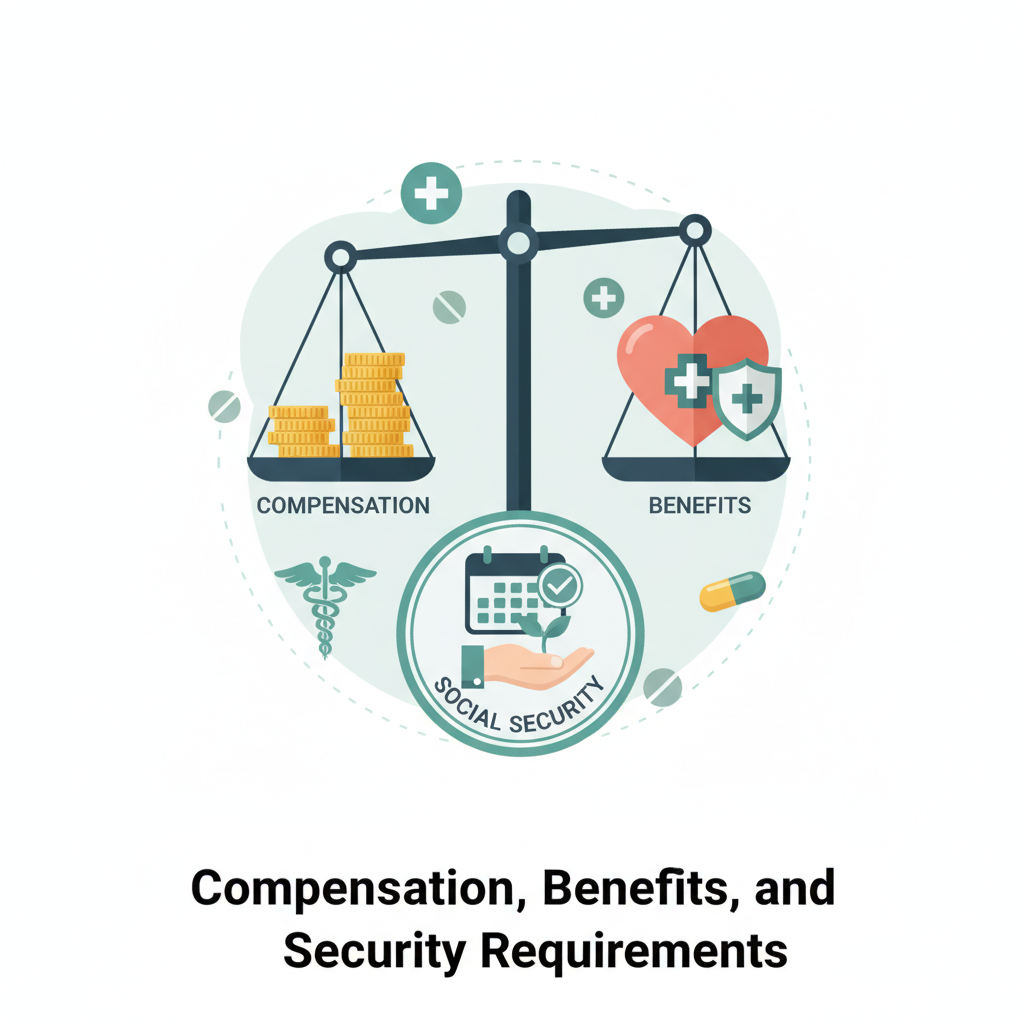
Compensation, Benefits, and Social Security Requirements
Navigating the intricate landscape of employee compensation, benefits, and social security in Vietnam’s healthcare sector is paramount for medical facilities. Compliance with these legal provisions underpins employee satisfaction, retention, and ensures a stable operational framework. This section delves into the fundamental Legal HR terms & conditions for medicine field in vietnam, covering minimum wages, mandatory social insurance contributions, and other essential benefits for healthcare professionals.
1. Minimum Wage and Salary Structures for Medical Staff
Vietnam employs a regional minimum wage system, periodically adjusted by the government. For medical staff, understanding these regional distinctions is crucial, as the minimum wage varies across four regions. As of July 1, 2024, a new minimum wage decree came into effect, increasing base rates. While the regional minimum wage serves as a legal floor, actual salaries for medical professionals are typically much higher, reflecting specialized skills, education, experience, and the specific demands of the medical field. Healthcare employers must ensure the base salary component of their employees meets or exceeds the applicable regional minimum wage. Beyond the minimum, salary structures are often influenced by internal scales, collective labor agreements, performance incentives, and allowances for specific roles (e.g., on-call duty, hazardous work). Transparently establishing and communicating these structures is vital for fairness and compliance, helping attract and retain qualified medical talent.
2. Mandatory Social, Health, and Unemployment Insurance Contributions
A cornerstone of Vietnam’s labor law, particularly for the healthcare sector, is the mandatory contribution to three key insurance funds: Social Insurance (Bảo hiểm xã hội – BHXH), Health Insurance (Bảo hiểm y tế – BHYT), and Unemployment Insurance (Bảo hiểm thất nghiệp – BHTN). These contributions are obligatory for both employers and employees with labor contracts of three months or more. Employers bear the larger portion of these contributions, calculated based on the employee’s monthly salary (up to a capped amount, typically 20 times the base salary for social and health insurance). Current approximate contribution rates are: Social Insurance (employer: 14%, employee: 3%), Health Insurance (employer: 3%, employee: 1.5%), and Unemployment Insurance (employer: 0.5%, employee: 0.5%).
These contributions provide a crucial safety net. Social Insurance covers sickness, maternity, work accidents, occupational diseases, retirement pensions, and survivor’s benefits. Health Insurance provides coverage for medical treatments and hospitalizations. Unemployment Insurance offers support to employees who involuntarily lose their jobs. Adherence to these regulations is strictly enforced by Vietnamese authorities, with significant penalties for non-compliance. Employers must accurately declare salaries and remit contributions promptly. For a comprehensive overview, further details can be found on resources like Social Insurance in Vietnam: An Overview.
3. Other Legally Required Benefits (e.g., sick leave, maternity leave)
Beyond wages and insurance, Vietnamese labor law mandates several other critical benefits for healthcare employers. These provisions protect employee welfare and ensure work-life balance, especially vital in the demanding medical profession:
- Sick Leave: Employees are entitled to paid sick leave, with a valid medical certificate. The number of paid sick days varies (30-70 days/year) based on working conditions and social insurance contributions. Payment for sick leave is from the social insurance fund, usually at 75% of the employee’s salary.
- Maternity Leave: Female employees receive a generous six-month maternity leave, with full salary paid from the social insurance fund. This can be extended. Expectant mothers are also entitled to paid time off for pre-natal check-ups. Fathers are entitled to short paid leave (5-14 working days) upon birth.
- Annual Leave: Employees are entitled to 12 days of paid annual leave after 12 months of service, increasing by one day for every five years of continuous service.
- Public Holidays: Employees are entitled to fully paid leave during public holidays. If required to work, they must be compensated at a higher rate (at least 300% of their normal daily wage).
- Workplace Accidents and Occupational Diseases: Employers are responsible for compensation and benefits for employees suffering from workplace accidents or occupational diseases. Social insurance also provides related benefits.
Strict adherence to these provisions is crucial for healthcare facilities to maintain legal compliance, foster a positive working environment, and ensure the well-being of their dedicated medical personnel. Understanding and meticulously implementing these Legal HR terms & conditions for medicine field in vietnam is key to successful human resource management.
By prioritizing compliance with these comprehensive compensation, benefits, and social security requirements, medical institutions can mitigate legal risks and build a reputation as responsible employers, attracting and retaining top talent in Vietnam’s competitive healthcare landscape.
Workplace Safety, Health, and Dispute Resolution
Navigating the complex landscape of employment law in Vietnam’s rapidly evolving healthcare sector requires a thorough understanding of both occupational safety and health (OSH) regulations and the robust framework for resolving labor disputes. For healthcare institutions, from sprawling hospitals to specialized clinics, ensuring a safe working environment and maintaining harmonious employer-employee relations are not merely best practices but legal imperatives. This section delves into the critical legal HR terms & conditions for the medicine field in Vietnam, outlining the specific obligations, procedures, and rights that govern workplace safety, health, and the resolution of grievances and employment terminations within this vital industry.
1. Occupational Safety and Health Regulations in Hospitals/Clinics
The Vietnamese government places significant emphasis on protecting its workforce, a principle particularly crucial in the healthcare environment where professionals face unique and elevated risks. The primary legislative instrument governing this area is the Law on Occupational Safety and Health 2015, complemented by various decrees and circulars. For hospitals and clinics, compliance extends beyond general workplace safety to encompass specialized protocols for biological hazard management, chemical handling, radiation safety, ergonomic workstation design, and stringent infection control measures. Employers in the healthcare sector are legally obligated to conduct regular risk assessments, provide appropriate personal protective equipment (PPE), ensure adequate training for all staff on safety procedures, and implement robust emergency response plans. Negligence in adhering to these regulations can lead to severe penalties, including fines, operational suspensions, and potential criminal charges, underscoring the importance of meticulous adherence to the Law on Occupational Safety and Health. Furthermore, these regulations are integral to the broader legal HR terms & conditions for the medicine field in Vietnam, shaping the employment contracts and operational policies of healthcare providers.
2. Handling Labor Disputes and Grievances
Despite best efforts, labor disputes and grievances can arise in any workplace, and the healthcare sector is no exception. Vietnam’s Labor Code 2019 provides a comprehensive framework for resolving these conflicts, emphasizing conciliation and mediation as the preferred initial steps. For healthcare institutions, establishing clear internal grievance procedures is paramount. This typically involves an initial attempt to resolve the issue directly between the employee and their immediate supervisor, followed by escalation to HR departments or internal labor dispute resolution committees. If internal resolution fails, employees have the right to seek intervention from external bodies, such as labor conciliators or the local People’s Courts. Common disputes in the healthcare sector might involve disagreements over working hours, overtime pay, disciplinary actions, performance evaluations, or alleged discrimination. Understanding the specific legal HR terms & conditions for the medicine field in Vietnam related to dispute resolution is crucial for both employers and employees to navigate these situations effectively, ensuring fair treatment and adherence to due process. Proactive measures, such as transparent communication, clear employment contracts, and regular training on workplace policies, can significantly mitigate the risk of escalating disputes.
3. Termination of Employment: Legal Procedures and Severance
The termination of an employment contract, whether initiated by the employer or the employee, is a sensitive process governed by strict legal provisions under Vietnam’s Labor Code. Healthcare institutions must meticulously follow these procedures to avoid costly legal challenges. Valid grounds for unilateral termination by an employer include an employee’s repeated failure to perform duties, force majeure events, or restructuring. However, employers must provide adequate notice periods, which vary depending on the contract type and the reason for termination. For instance, an employer terminating an indefinite-term contract due to restructuring generally requires 45 days’ notice. Severance allowance is another critical consideration. Employees who have worked for 12 full months or more are generally entitled to a severance allowance for each year of service, calculated as half a month’s salary per year, provided the termination is not due to disciplinary dismissal or voluntary resignation without valid reason. The precise legal HR terms & conditions for the medicine field in Vietnam regarding termination, including notice periods, severance calculations, and valid reasons, must be meticulously observed. Failure to comply can result in claims for wrongful termination, back pay, and additional damages, making legal counsel essential during such processes to ensure all legal requirements are met.
Compliance Challenges & Best Practices for 2026
As the Vietnamese healthcare sector continues its rapid expansion and modernization, human resources (HR) compliance for medical entities becomes increasingly complex. Employers in the medicine field face a dynamic regulatory landscape, demanding meticulous attention to Legal HR terms & conditions for medicine field in vietnam. For 2026, navigating these intricacies will be paramount not only for operational efficiency but also for mitigating legal risks and fostering a stable work environment. This concluding section delves into common compliance challenges, outlines effective strategies for regulatory adherence, and provides a forward-looking perspective to help healthcare employers proactively prepare for future shifts in Vietnamese labor law.
1. Common Pitfalls in HR Compliance for Medical Entities
Despite best intentions, many healthcare organizations in Vietnam encounter significant hurdles in achieving full healthcare HR compliance. One pervasive challenge revolves around ensuring that all medical staff, from doctors to nurses and technicians, possess valid and regularly updated licenses and certifications required by the Ministry of Health. Overlooking this critical detail can lead to severe legal repercussions and compromise patient safety. Another frequent pitfall is the mismanagement of working hours and overtime, particularly given the demanding and often irregular shifts inherent in the medical profession. Adherence to specific clauses within Vietnamese labor law regarding maximum working hours, rest periods, and fair overtime compensation is essential.
Furthermore, the sensitive nature of patient data necessitates stringent data protection protocols, often mirroring global standards, which many entities struggle to implement consistently. Flaws in employment contract management are also common; ensuring that specialized medical roles have contracts compliant with Vietnamese legal frameworks, including clear terms for performance, benefits, and responsibilities, is crucial. Incorrect termination procedures, failing to adhere to strict notice periods, severance calculations, or valid grounds for dismissal, frequently lead to disputes. Finally, maintaining rigorous occupational safety and health (OSH) standards, specifically tailored for medical environments dealing with hazardous materials and infection control, often requires specialized expertise that is not always readily available within internal HR teams.

2. Strategies for Ensuring Regulatory Adherence
To navigate the complex landscape of HR regulatory adherence, healthcare employers must adopt proactive and systematic approaches. A cornerstone strategy involves conducting regular, comprehensive HR audits, both internal and, critically, external. These audits help identify gaps in current practices against evolving Vietnamese labor law and sector-specific regulations. Continuous training programs for HR personnel and departmental managers on the latest amendments to labor laws, social insurance regulations, and healthcare-specific mandates are indispensable. This ensures that those on the front lines of people management are always up-to-date with HR best practices Vietnam.
Leveraging technology, specifically robust Human Resources Information Systems (HRIS), can significantly streamline compliance efforts. An effective HRIS can automate contract management, track medical staff licensing renewals, monitor working hours, and manage employee data securely, reducing manual errors and improving data integrity. Proactive engagement with experienced legal counsel specializing in Vietnamese labor law and healthcare regulations is also vital. Expert advice can prevent costly mistakes, guide complex termination scenarios, and ensure all employment contracts Vietnam are legally sound. Developing and consistently updating internal HR policies and procedures that clearly reflect current legislation, from recruitment to exit, forms the bedrock of a compliant organization. Meticulous documentation of all HR processes, training records, and compliance checks further reinforces an organization’s defense in potential legal challenges.
3. Future Outlook: Anticipating Changes and Proactive Measures
The regulatory environment surrounding labor standards in Vietnam is not static; it continually evolves to address economic shifts and international best practices. For 2026 and beyond, healthcare employers must cultivate a culture of anticipation. Staying abreast of impending legislative changes, such as further amendments to the Labor Code, social insurance laws, or specific directives from the Ministry of Health regarding medical practice, is crucial. Subscribing to legal updates, participating in industry associations, and engaging with regulatory bodies can provide early insights into future directions, helping organizations to proactively adjust their Legal HR terms & conditions for medicine field in vietnam.
Further technology integration, potentially incorporating AI-driven compliance tools for predictive analytics on HR risks, will likely become more prevalent. As the nature of work evolves, especially for administrative roles within healthcare, developing comprehensive policies for remote and hybrid work arrangements that comply with Vietnamese regulations will be essential. There’s also an increasing emphasis on employee well-being, particularly for demanding medical professions. Proactive measures might include enhancing mental health support, flexible working options where feasible, and robust grievance mechanisms. Healthcare entities that adopt a forward-thinking approach, embracing continuous learning and strategic foresight, will be best positioned to navigate future HR challenges healthcare and maintain impeccable compliance in Vietnam’s dynamic medical landscape.
Partner with Shelby Global
You are looking for reliable HR Sevice Suppliers? Contact Shelby Global Now! To connect with verified talents and upgrade your orginization.
—————————————
References
– Labor Code 2019: Key Changes to Vietnam’s Labor Law: https://www.vilaf.com/newsroom/labor-code-2019-key-changes-to-vietnam-s-labor-law
– Law on Medical Examination and Treatment 2023: https://thuvienphapluat.vn/van-ban/Y-te/Luat-kham-benh-chua-benh-2023-380696.aspx
– Social Insurance in Vietnam: An Overview: https://www.vietnam-briefing.com/news/social-insurance-in-vietnam-an-overview.html
– Law on Occupational Safety and Health 2015: https://vietnamlawmagazine.vn/law-on-occupational-safety-and-health-2015-10332.html
– International Labour Organization (ILO) on Labour Standards: https://www.ilo.org/global/standards/subjects-covered-by-international-labour-standards/labour-inspection/lang–en/index.htm