
Understanding Vietnam’s Labor Law Framework for Tourism
Vietnam’s booming tourism sector relies heavily on its dedicated workforce, from hotel staff and tour guides to transportation providers and administrative personnel. Navigating the country’s intricate labor laws is paramount for businesses to ensure compliance, foster a positive working environment, and avoid costly legal pitfalls. This comprehensive overview delves into the foundational legal context, providing critical insights into the Legal HR terms & conditions for Travels field in Vietnam. Adherence to these regulations is not just about avoiding penalties but also about building a sustainable and ethical tourism enterprise that values its human capital.
1. Key Provisions of the Vietnamese Labor Code (No. 45/2019/QH14)
The cornerstone of Vietnam’s labor legislation is the Labor Code No. 45/2019/QH14, which came into full effect on January 1, 2021. This comprehensive code outlines fundamental rights and obligations for both employers and employees across all sectors. For the dynamic tourism industry, several provisions are particularly pertinent to managing human resources effectively:
- Employment Contracts: The Code mandates written employment contracts, specifying terms like job scope, working hours, wages, social insurance contributions, and contract duration. For the tourism sector, which often employs seasonal staff or part-time guides, understanding the nuances between indefinite-term, definite-term, and seasonal contracts is crucial for compliance.
- Working Hours and Rest Periods: While the standard working week is generally 48 hours (or 40 hours for administrative work), the Code allows for flexible arrangements and overtime, which are common in hospitality. However, strict limits apply to overtime hours, and mandatory rest periods must be observed, including daily, weekly, and public holiday breaks.
- Wages and Social Insurance: The Code stipulates minimum wage requirements and the principle of equal pay for equal work. Employers in tourism must ensure timely and full payment of wages, along with compulsory contributions to social insurance, health insurance, and unemployment insurance. This represents a significant cost factor and a key compliance area.
- Termination of Employment: Procedures for contract termination, including legitimate grounds for dismissal, notice periods, and severance allowances, are clearly defined. Mismanagement of termination can lead to substantial legal disputes and financial liabilities.
- Labor Dispute Resolution: The Code emphasizes conciliation and mediation as the primary methods for resolving labor disputes, with arbitration and court proceedings as final resorts. Proactive HR practices and clear internal policies can significantly reduce the incidence and impact of disputes.
2. Specific Decrees and Circulars Affecting Tourism Businesses
While the Labor Code provides the overarching framework, its practical application is often elaborated through numerous decrees (issued by the Government) and circulars (issued by ministries). These secondary legislations provide detailed guidance on specific aspects, making them indispensable for tourism operators seeking to understand the granular Legal HR terms & conditions for Travels field in Vietnam.
- Foreign Workers: For international tourism businesses or those employing expatriate staff, decrees on foreign labor (e.g., regarding work permits, visas, and recruitment procedures) are critical. Compliance here can be complex and requires meticulous attention to detail to ensure all foreign employees are legally permitted to work.
- Working Conditions and Safety: Specific circulars detail health and safety standards applicable to workplaces, including hotels, resorts, and tour vehicles. Ensuring a safe and healthy environment for both staff and guests is not just a legal obligation but also a reputational imperative for any tourism entity.
- Social Insurance Details: Further decrees and circulars provide granular details on social insurance contributions, benefits, and administrative procedures, impacting payroll and HR budgeting significantly. Staying updated on these changes is vital to avoid non-compliance penalties.
- Seasonal and Part-time Work: While not exclusively for tourism, specific regulations or interpretations concerning the engagement of seasonal workers or those on flexible contracts can be particularly relevant for hotels during peak seasons or for tour operators hiring temporary guides. For comprehensive official details on these regulations, businesses can refer to authoritative sources such as the Official Vietnamese Legal Library (Thuvienphapluat), which provides the full text and related guiding documents.
3. Role of Local Labor Departments and Inspections
The enforcement of Vietnam’s labor laws primarily rests with the Ministry of Labor, Invalids and Social Affairs (MOLISA) at the national level, and its provincial and district-level labor departments. These local departments play a crucial role in overseeing compliance and conducting inspections, making their understanding vital for all tourism businesses.
- Compliance Monitoring: Labor departments regularly monitor businesses for adherence to labor laws, including proper employment contracts, timely wage payments, correct social insurance contributions, and appropriate working conditions.
- Inspections and Audits: Businesses in the tourism sector, like any other industry, are subject to scheduled or unscheduled labor inspections. Inspectors review HR records, payrolls, social insurance documents, and workplace conditions. Non-compliance can lead to significant fines, administrative penalties, and even criminal charges in severe cases.
- Dispute Resolution Support: Local labor departments also provide crucial support in mediating labor disputes, acting as a vital interface between employers and employees. Their involvement can often help resolve conflicts before they escalate.
Engaging proactively with local labor authorities, staying updated on regulatory changes, and maintaining transparent HR records are vital strategies for tourism businesses to ensure smooth operations and mitigate risks associated with the Legal HR terms & conditions for Travels field in Vietnam. This proactive approach minimizes exposure to penalties and fosters a reputation for responsible corporate citizenship and ethical business practices.
Essential HR Terms & Conditions for Employment Contracts
Navigating the complexities of employment law in Vietnam, particularly within the dynamic travel sector, demands meticulous attention to detail when drafting employment contracts. For businesses operating in tourism, hospitality, and related services, ensuring legal compliance is not merely a best practice but a fundamental requirement to avoid costly disputes and foster a stable workforce. This section delves into the critical elements that must be included in employment contracts for travel sector employees in Vietnam, focusing on key Legal HR terms & conditions for Travels field in vietnam to guarantee adherence to local regulations and establish clear expectations for both employers and employees. Understanding these provisions is vital for any company seeking to establish a strong, compliant, and productive presence in Vietnam’s burgeoning travel industry.
-
Mandatory Contract Clauses: Salary, Working Hours, Benefits
At the core of any legally compliant employment contract in Vietnam are explicit clauses detailing salary, working hours, and benefits. The Vietnamese Labour Code 2019 mandates that these elements be clearly defined. For travel sector employees, this includes specifying the basic wage, any applicable allowances (e.g., travel allowances, service charge, language proficiency bonuses often prevalent in tourism), and performance-based incentives. It’s crucial to outline the payment method and frequency, ensuring transparency and compliance with minimum wage regulations. Furthermore, the contract must stipulate standard working hours, typically 8 hours a day or 48 hours a week, and clearly define policies for overtime work, rest periods, and public holidays. Given the often irregular schedules in hospitality and tourism, precise provisions for shift work, night work, and compensatory time off are essential.
Beyond monetary compensation, contracts must detail mandatory social insurance contributions (including social insurance, health insurance, and unemployment insurance), which are fundamental legal requirements in Vietnam. Annual leave entitlements, sick leave policies, and other statutory benefits like maternity leave must also be explicitly stated. For companies employing expatriates in the travel sector, specific clauses regarding work permits, residency cards, and international benefits should also be integrated. Adhering to these mandatory clauses is non-negotiable and forms the bedrock of a fair and legally sound employment relationship, particularly when dealing with the diverse and often demanding roles within the travel and tourism industry.
-
Types of Employment Contracts: Fixed-term vs. Indefinite
Vietnamese labor law primarily distinguishes between two types of employment contracts: fixed-term contracts and indefinite-term contracts. Understanding the nuances of each is critical for managing the workforce effectively, especially in a sector like travel that may experience seasonal fluctuations or project-based demands. A fixed-term contract has a specific duration, typically up to 24 months, though it can be extended once for another fixed term. After two consecutive fixed-term contracts, if the employee continues to work, an indefinite-term contract automatically applies, unless specified conditions are met. This transition is a common point of oversight for businesses, leading to potential non-compliance.
Indefinite-term contracts, as the name suggests, have no specified end date and are generally preferred for permanent positions. Employers in the travel sector must carefully assess their staffing needs to determine the appropriate contract type. For instance, seasonal tour guides or event staff might initially be on fixed-term contracts, while core management and administrative roles would typically warrant indefinite-term agreements. Proper classification and management of these contract types are vital to avoid legal challenges related to termination rights, benefits, and employee status. Clear guidelines on contract renewal processes and the implications of non-renewal must also be articulated within the employment agreement to maintain transparent HR terms & conditions.
-
Probationary Periods and Termination Procedures
The establishment of clear probationary periods and comprehensive termination procedures is another cornerstone of compliant employment contracts for travel sector employees in Vietnam. Probationary periods allow employers to assess an employee’s suitability for a role, but these are subject to strict legal limits based on the job’s complexity. For highly skilled positions (e.g., senior hotel managers, specialized travel consultants), the maximum probationary period is 60 days. For roles requiring vocational qualifications or technical expertise, it’s 30 days, and for other positions, it’s 6 working days. Critically, if an employee successfully completes probation, the probationary period counts towards their service period, and a formal employment contract must be signed (if not already in place) with the probationary period included.
Termination procedures require careful navigation to prevent costly disputes. The Vietnamese Labour Code specifies various grounds for termination by both employer and employee, along with mandatory notice periods. Employers must have justifiable reasons (e.g., serious misconduct, redundancy, force majeure) and adhere to prescribed notice periods, which vary depending on the contract type and length of service (e.g., 45 days for indefinite-term contracts, 30 days for fixed-term contracts of 12-24 months). Severance allowances or job loss allowances may also be required, depending on the reason for termination and the employee’s tenure. For the travel industry, which can be susceptible to economic downturns or unforeseen global events, understanding and meticulously following these termination protocols is paramount for ensuring Legal HR terms & conditions for Travels field in vietnam and safeguarding the company’s reputation and financial stability.
Wages, Benefits, and Social Insurance Obligations
Navigating the intricacies of compensation structures, mandatory employee benefits, and social insurance obligations is paramount for businesses operating in Vietnam’s dynamic travel industry. Adherence to these regulations is not just a legal requirement but also a cornerstone for attracting and retaining talent, fostering a stable workforce, and ensuring operational compliance. This section offers a detailed examination of the Legal HR terms & conditions for Travels field in Vietnam, crucial for both local and international travel enterprises. Understanding these provisions is key to mitigating risks and building a sustainable business presence in the country.
1. Minimum Wage Regulations and Overtime Calculations
Vietnam’s labor law dictates a tiered minimum wage system, varying by region (I, II, III, IV) to account for differing living costs and economic conditions. For the travel industry, which often operates across various regions, identifying the correct minimum wage applicable to each employee’s work location is critical. These rates are periodically updated by the government, typically taking effect on January 1st each year. Employers must ensure that the basic salary for employees working full-time under normal conditions is not lower than the region-specific minimum wage.
Beyond the basic wage, overtime work is a common occurrence in the travel sector, especially during peak seasons or for roles requiring non-standard hours. Vietnamese law prescribes specific rates for overtime pay:
- Weekdays: At least 150% of the normal hourly wage.
- Weekends: At least 200% of the normal hourly wage.
- Public Holidays and Paid Leave Days: At least 300% of the normal hourly wage.
Employers must also provide compensatory rest days for overtime worked on public holidays or weekends. Accurate tracking of working hours and diligent calculation of overtime pay are indispensable to avoid penalties and maintain positive employee relations. Compliance with these wage and overtime regulations forms a fundamental part of effective Legal HR terms & conditions for Travels field in Vietnam.
2. Health Insurance, Social Insurance, and Unemployment Insurance Contributions
The Vietnamese social insurance system is a mandatory framework designed to provide a safety net for employees, covering various contingencies. For the travel industry, ensuring timely and accurate contributions to Health Insurance, Social Insurance, and Unemployment Insurance is a non-negotiable legal obligation for employers.
- Social Insurance (SI): This covers sickness, maternity, occupational accidents/diseases, retirement, and death benefits. Contributions are split between the employer (typically 17.5% of the employee’s monthly salary) and the employee (8% of their monthly salary).
- Health Insurance (HI): Provides access to medical services. The employer contributes 3% and the employee 1.5% of the monthly salary.
- Unemployment Insurance (UI): Offers financial support during periods of unemployment. Both employer and employee contribute 1% of the monthly salary.
These contributions are based on the employee’s salary as stated in their labor contract, capped at 20 times the common minimum wage (which is different from the regional minimum wage). Strict compliance with these rates and reporting procedures is essential to avoid penalties and ensure employees receive their entitled benefits. This is a critical aspect of the Legal HR terms & conditions for Travels field in Vietnam, demanding meticulous attention from HR departments.
For a comprehensive understanding of Vietnam’s broader labor and employment laws, including social insurance specifics, employers can consult authoritative resources such as those provided by firms specializing in Vietnamese legal frameworks.
3. Annual Leave, Public Holidays, and Sick Leave Entitlements
Employee leave entitlements are clearly defined under Vietnamese labor law, aiming to ensure work-life balance and employee well-being.
- Annual Leave: Employees working under indefinite-term contracts or definite-term contracts of 12 months or more are generally entitled to 12 days of paid annual leave per year. For employees working in heavy, hazardous, or dangerous conditions (which might apply to certain roles within the travel sector, e.g., adventure tour guides), or those working in remote or island areas, an additional 2 to 4 days of annual leave may be granted. Employees with 5 full years of service at the same employer are granted an additional 1 day of annual leave for every 5 subsequent years.
- Public Holidays: Vietnam observes several public holidays throughout the year, during which employees are entitled to fully paid leave. These typically include New Year’s Day, Lunar New Year (Tet Holiday), Hung Kings’ Commemoration Day, Reunification Day, and International Labor Day, totaling around 11 days annually, though the exact number for Tet can vary.
- Sick Leave: Employees requiring time off due to illness or injury are entitled to paid sick leave, provided they have social insurance contributions. The duration of paid sick leave varies depending on the number of years the employee has contributed to social insurance and the type of work they perform. For instance, employees in normal working conditions generally receive between 30 to 60 days of sick leave per year, fully paid by the social insurance fund, not the employer, provided they meet specific medical certification requirements.
Managing these various leave types efficiently and in strict adherence to legal provisions is a core component of Legal HR terms & conditions for Travels field in Vietnam. Companies like Shelby Global can provide further insights and support on these crucial HR matters.
Foreign Employees and Expatriate Regulations in Travel
Vietnam’s vibrant tourism sector continues to attract significant foreign investment and expertise, leading to a growing demand for foreign employees. Navigating the intricate web of Legal HR terms & conditions for Travels field in vietnam, however, requires a thorough understanding of the specific legal requirements and considerations for employing foreign workers. From initial recruitment to repatriation, compliance with Vietnamese labor and immigration laws is paramount to ensure smooth operations and avoid legal pitfalls in the travel and hospitality industry.
1. Work Permits and Visa Requirements for Foreign Tourism Professionals
Employing foreign nationals in Vietnam’s travel sector necessitates strict adherence to work permit and visa regulations. Generally, any foreign individual working in Vietnam for more than 3 months must possess a valid work permit, unless specific exemptions apply (e.g., intra-company transferees under certain conditions, highly skilled experts working for less than 30 days total in a year). The application process for a work permit is complex and involves several stages, beginning with the employer obtaining an approval in principle from the provincial Department of Labour, Invalids and Social Affairs (DOLISA) or Ministry of Labour, Invalids and Social Affairs (MOLISA) regarding the demand for foreign labor. Required documents typically include the foreign employee’s passport, health check certificate, criminal record certificate (from both Vietnam and their home country), educational qualifications, professional experience certificates, and various corporate documents from the employing entity.
Once the work permit is secured, foreign employees can apply for a work visa (often a multiple-entry business visa type DN or LĐ) and subsequently, a Temporary Residence Card (TRC), which allows for longer stays without frequent visa renewals. The validity period of a work permit and TRC is typically up to two years, after which renewal is required. Employers in the tourism sector must ensure that foreign professionals, such as tour managers, hospitality consultants, specialized chefs, or marketing directors, meet the prescribed qualifications and experience for their roles, as stipulated in relevant Vietnamese decrees like Decree No. 152/2020/ND-CP on Foreign Workers. Failure to comply can result in substantial fines for both the employer and the employee, and potential deportation.
2. Employment Contracts for Expatriates: Special Considerations
Employment contracts for expatriates in Vietnam are subject to the Vietnamese Labor Code and must incorporate specific provisions tailored to foreign workers. These contracts should be written in Vietnamese and, typically, in another language mutually agreed upon by both parties (e.g., English), with the Vietnamese version often holding legal precedence in case of dispute. Key considerations include the contract’s duration (usually matching the work permit’s validity), detailed job description, working hours, and clear definitions of salary and benefits. It is common for expat contracts to specify a net salary, meaning the employer is responsible for deducting and remitting personal income tax and compulsory insurance contributions on behalf of the employee.
Beyond basic remuneration, expat contracts often include clauses for housing allowances, relocation support, annual leave, medical insurance (beyond statutory requirements), and round-trip airfare to the home country. Termination clauses must align with Vietnamese labor law, which provides specific notice periods and conditions for dismissal. Companies in the travel industry should also consider non-compete clauses, confidentiality agreements, and intellectual property rights, especially for senior roles or those involving proprietary business strategies. Crafting a robust and compliant employment contract is crucial for protecting the interests of both the foreign employee and the employing tourism enterprise, ensuring transparency and legal certainty.
3. Repatriation and Tax Obligations for Foreign Workers
The conclusion of a foreign employee’s tenure in Vietnam involves specific repatriation and tax obligations. When an employment contract ends, employers must facilitate the timely return of the employee’s original passport and other personal documents held by the company. Depending on the employment contract, the employer might also be responsible for repatriation costs, such as return flights to the employee’s home country. Severance allowance, if applicable, must be calculated and paid according to Vietnamese labor law, typically based on years of service for roles without fixed-term contracts or specific conditions.
From a tax perspective, foreign employees in Vietnam are subject to Personal Income Tax (PIT). Their tax residency status—whether they reside in Vietnam for 183 days or more within a calendar year or 12 consecutive months from their arrival date—determines the applicable tax rates and calculation methods. Resident foreign employees are taxed on their worldwide income, while non-residents are taxed on their Vietnam-sourced income at a flat rate of 20%. Employers are obligated to register their foreign employees with the tax authorities, calculate, deduct, and remit PIT on a monthly or quarterly basis, and complete annual tax finalization declarations. Additionally, foreign workers are now subject to compulsory social insurance contributions (health, social, and unemployment insurance) under Vietnamese law, with both employee and employer contributing. Navigating these final HR and financial obligations correctly is essential for ensuring full compliance and a smooth departure for foreign talent in the Vietnamese travel sector.
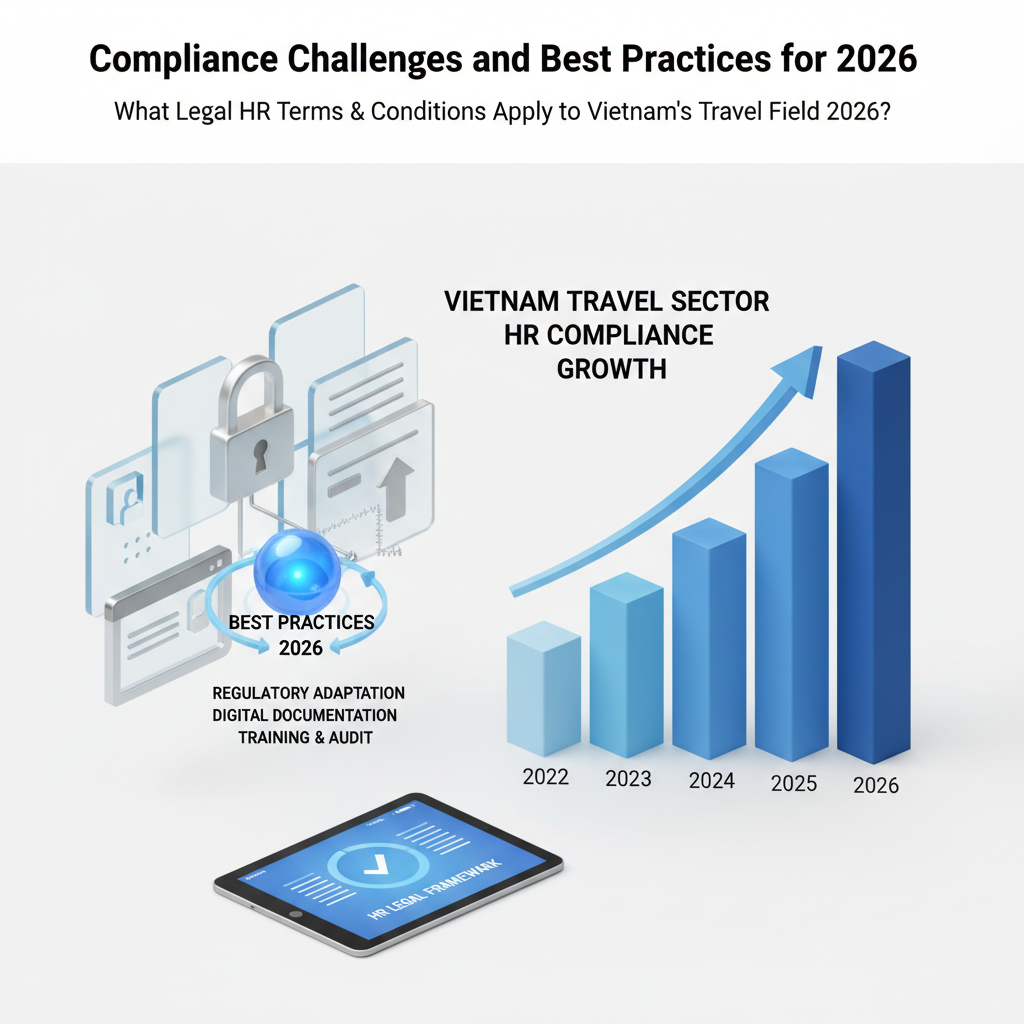
Compliance Challenges and Best Practices for 2026
Highlights common pitfalls and offers strategic advice for travel businesses to maintain compliance and mitigate HR-related legal risks in the evolving 2026 landscape.
The year 2026 presents a dynamic and evolving regulatory environment for the travel industry in Vietnam. As the sector recovers and expands, ensuring robust HR compliance is not just a legal obligation but a strategic imperative for sustainable growth. Travel businesses must navigate a complex web of labor laws, social insurance regulations, and immigration policies to avoid significant penalties, reputational damage, and operational disruptions. Proactive engagement with these challenges, underpinned by clear internal strategies, will be crucial for mitigating legal HR risks.
1.
Recent Amendments and Upcoming Changes to Labor Laws
Vietnam’s labor legal framework is subject to continuous review and amendment, reflecting the country’s economic development and integration into global markets. For 2026, travel businesses must remain vigilant regarding potential updates to the Labor Code, particularly concerning working hours, minimum wage adjustments, social insurance contributions, and the regulations governing foreign workers. The digital transformation also brings new considerations, such as guidelines for remote work, data privacy for employees, and the legal recognition of digital employment agreements.
Keeping abreast of these changes requires consistent monitoring of official announcements from the Ministry of Labor, Invalids and Social Affairs (MOLISA) and other relevant government bodies. Travel companies operating in Vietnam should allocate resources to regularly review legal updates, potentially subscribing to legal alerts or consulting with local HR and legal experts. Understanding the nuances of these amendments early can provide a competitive advantage, allowing businesses to adapt their policies and practices before mandatory enforcement, thereby minimizing the risk of non-compliance. For a comprehensive overview of the current legal framework governing employment, refer to authoritative guides on Labor Law in Vietnam.
2.
Avoiding Common HR Violations and Penalties
Despite best intentions, travel businesses often fall victim to common HR violations, leading to hefty fines and protracted legal disputes. Key areas of concern include improper employment contracts that do not meet Vietnamese legal standards, particularly regarding probation periods, termination clauses, and severance pay calculation. Misclassifying employees or failing to correctly calculate and contribute to mandatory social insurance, health insurance, and unemployment insurance funds are also frequent pitfalls.
Additionally, issues around working hours, overtime compensation, and holiday pay often lead to disputes. For companies employing foreign staff, ensuring compliance with complex work permit and visa regulations is paramount. Any misstep in these areas can result in significant administrative penalties, back-pay requirements, and even criminal charges in severe cases. To navigate the complex “Legal HR terms & conditions for Travels field in vietnam” and mitigate these risks, travel companies must ensure meticulous record-keeping, transparent policies, and regular internal audits. Understanding and adhering to every facet of the Legal HR terms & conditions for Travels field in vietnam is vital for operational continuity and reputation.
3.
Developing Robust Internal HR Policies and Training Programs
A proactive approach to HR compliance involves establishing clear, comprehensive internal policies and implementing effective training programs. Robust HR policies should cover every stage of the employee lifecycle, from recruitment and onboarding to performance management, disciplinary actions, and termination. Key policies should address:
- Employment Contracts: Standardized, legally compliant contracts for different employee types.
- Code of Conduct: Clear expectations for employee behavior and professional ethics.
- Working Hours & Leave: Detailed rules on work schedules, overtime, and all types of statutory leave.
- Social Insurance & Benefits: Transparent information on mandatory contributions and additional benefits.
- Grievance Procedures: Fair and accessible mechanisms for resolving employee complaints.
- Data Privacy: Compliance with personal data protection regulations for employee information.
- Anti-Discrimination & Harassment: Policies promoting a respectful and inclusive workplace.
Regular training sessions are equally important, not just for HR personnel and management, but for all employees. This ensures everyone understands their rights, responsibilities, and the company’s expectations, fostering a culture of compliance. For managers, specific training on labor law updates and correct disciplinary procedures can significantly reduce legal exposure. Investing in ongoing education and policy refinement is a critical best practice for any travel business aiming for long-term success in Vietnam.
Conclusion:
The evolving legal landscape in Vietnam demands that travel businesses prioritize HR compliance in 2026. By staying informed about legislative changes, proactively addressing common violations, and implementing robust internal policies and training, companies can effectively navigate the complexities of Vietnamese labor law. This strategic commitment to compliance not only safeguards against legal and financial penalties but also strengthens employee relations, enhances brand reputation, and underpins sustainable business growth in the dynamic travel sector.
Partner with Shelby Global
You are looking for reliable HR Sevice Suppliers? Contact Shelby Global Now! To connect with verified talents and upgrade your orginization.
—————————————
References
– Official Vietnamese Legal Library (Thuvienphapluat): https://thuvienphapluat.vn/van-ban/Lao-dong-Tien-luong/Bo-luat-lao-dong-2019-45-2019-QH14-411352.aspx
– Vietnamese Labour Code 2019: https://thuvienphapluat.vn/van-ban/Lao-dong-Tien-luong/Bo-luat-Lao-dong-2019-411229.aspx
– Vietnam Labor and Employment Laws – PwC: https://www.pwc.com/vn/en/services/tax/vietnam-tax-and-legal-news/vietnam-labor-and-employment-laws.html
– Vietnam Government Decree on Foreign Workers: https://vietnamlawmagazine.vn/decree-no-1522020nd-cp-dated-december-29-2020-of-the-government-on-foreigners-working-in-vietnam-and-recruitment-and-management-of-vietnamese-employees-working-for-foreign-organizations-and-individuals-in-vietnam-43750.html
– Labor Law in Vietnam: A Guide to Employment Regulations: https://www.vietnam-briefing.com/news/labor-law-in-vietnam-a-guide-to-employment-regulations.html/