
Introduction to Malaysia’s Finance Landscape & Salary Trends
Malaysia’s financial sector stands as a pivotal pillar of its economy, characterized by dynamism, innovation, and robust growth. As a key player in Southeast Asia, the nation has cultivated a sophisticated financial ecosystem encompassing conventional banking, Islamic finance, capital markets, and a rapidly expanding fintech landscape. Understanding the intricacies of this environment is crucial for professionals seeking career advancement and for businesses aiming to attract top talent. This section sets the stage by providing a comprehensive overview of Malaysia’s financial industry, its trajectory of growth, the economic factors shaping its compensation structures, and a forward-looking perspective on general salary trends. For anyone interested in the remuneration within this vibrant sector, a detailed salary range report of jobs in finance field in Malaysia offers invaluable insights, helping to benchmark expectations and strategize career paths.

1. Overview of Malaysia’s Financial Sector Growth
Malaysia’s financial sector has demonstrated remarkable resilience and strategic growth over the past decades, evolving into a sophisticated and diversified industry. Anchored by a strong regulatory framework overseen by Bank Negara Malaysia (BNM), the sector has fostered innovation while maintaining stability. The nation is a global leader in Islamic finance, providing a comprehensive range of Sharia-compliant products and services that cater to both domestic and international markets. Beyond traditional banking and insurance, the capital market, regulated by the Securities Commission Malaysia, has deepened with active equity and bond markets, facilitating corporate fundraising and investment opportunities. For detailed insights into the nation’s financial health and regulatory environment, refer to the official Bank Negara Malaysia Economic and Financial Reports. Furthermore, the advent of digital transformation has propelled the growth of financial technology (FinTech), with numerous startups and established institutions leveraging technology to enhance service delivery, improve efficiency, and expand financial inclusion. This continuous evolution creates a consistent demand for skilled professionals, making a salary range report of jobs in finance field in Malaysia particularly relevant for those tracking industry compensation benchmarks. The sector’s expansion is not just about size but also about its increasing sophistication and integration into the global financial architecture, attracting foreign investment and fostering a competitive environment for talent.
2. Key Economic Factors Influencing Finance Salaries
Salaries within Malaysia’s finance sector are intricately linked to a confluence of macroeconomic factors and industry-specific dynamics. Gross Domestic Product (GDP) growth, for instance, directly influences corporate profitability and, consequently, the capacity of financial institutions to offer competitive remuneration. Inflation rates also play a critical role, as higher inflation often necessitates salary adjustments to maintain purchasing power. Foreign Direct Investment (FDI) inflows into Malaysia can stimulate economic activity, particularly in sectors that require financial services, thereby increasing demand for finance professionals and potentially driving up their salaries. Government policies, including fiscal incentives for specific industries or regulatory changes impacting financial institutions, can also have a profound effect. For example, initiatives promoting digital banking or green finance might lead to higher demand and better pay for specialists in these areas. The talent supply and demand equation is equally crucial; niche skills in areas like cybersecurity, data analytics, risk management, and compliance are highly sought after, commanding premium salaries due to their scarcity. Conversely, an oversupply in certain entry-level roles might temper salary growth. Moreover, regional economic integration and global financial trends also impact the local landscape, making a detailed salary range report of jobs in finance field in Malaysia essential for understanding these nuances.
3. General Salary Trend Observations (2023-2026 Outlook)
Looking ahead from 2023 to 2026, Malaysia’s finance sector is anticipated to experience nuanced salary trends, reflecting both global economic shifts and domestic market specifics. While overall salary increments are expected to remain steady, they may not always outpace inflation, suggesting a cautious but stable growth environment. Areas witnessing significant talent demand, such as FinTech, ESG (Environmental, Social, and Governance) finance, and roles in risk management and compliance, are projected to command higher-than-average salary increases. This reflects the industry’s pivot towards digitalization, sustainable practices, and robust regulatory adherence. Data scientists, AI/ML specialists, and cybersecurity experts within financial institutions are also likely to see attractive compensation packages due to the critical need for digital transformation and data protection. Conversely, more traditional roles might experience moderate growth, driven primarily by cost-of-living adjustments and general market rates rather than significant demand surges. Employers are increasingly focusing on a holistic compensation package that includes not just base salary but also performance bonuses, benefits, and professional development opportunities to attract and retain top talent. For a more granular understanding of specific roles and their earning potential across various levels, consult our detailed resource on the salary range report of jobs in finance field in Malaysia. This comprehensive outlook underscores the importance of continuous skill development and strategic career planning to capitalize on the evolving opportunities in Malaysia’s dynamic financial landscape.
Entry-Level & Junior Finance Salaries in Malaysia
For fresh graduates and early-career professionals stepping into Malaysia’s dynamic finance sector, understanding the expected salary landscape is crucial. This section provides a comprehensive outlook on what individuals can anticipate in various foundational finance roles across different industries, from banking and corporate finance to accounting and audit. Navigating the initial stages of your career requires a clear picture of potential earnings, growth trajectories, and the factors that influence remuneration.
1. Average Starting Salaries for Graduates (Banking, Accounting, etc.)
Fresh graduates entering the Malaysian finance industry can expect a diverse range of starting salaries, largely dependent on the specific sector, company size, and individual qualifications. Generally, a bachelor’s degree holder with little to no prior full-time experience might anticipate a monthly salary ranging from RM 2,500 to RM 3,500. Roles in top-tier investment banks or large multinational corporations (MNCs) in Kuala Lumpur, however, often command higher starting figures, potentially reaching RM 3,800 to RM 4,500 for highly sought-after programmes or specialized departments. Public accounting firms, especially the Big Four, typically offer competitive starting packages, often inclusive of benefits and support for professional certifications, with salaries usually falling within the RM 2,800 to RM 3,500 range for audit or tax assistants. Roles in commercial banking, such as management trainees or junior credit analysts, generally align with the broader average, while entry-level positions in corporate finance or treasury departments within large conglomerates may vary based on industry and specific responsibilities.
2. Common Roles & Their Pay Bands (e.g., Junior Analyst, Audit Assistant)
As early-career professionals gain some experience (typically 1-3 years), their earning potential begins to differentiate based on the specific role and sector. Here’s a look at common entry-level and junior finance roles and their typical monthly pay bands:
- Junior Financial Analyst: Often found in investment banking, corporate finance, or fund management, these roles typically command salaries between RM 3,000 and RM 5,000. Responsibilities include financial modelling, data analysis, and report generation.
- Audit Assistant / Junior Auditor: In accounting firms, these roles are foundational. Salaries range from RM 2,800 to RM 4,000, with progression often tied to passing professional exams like ACCA or CPA.
- Junior Accountant: Working in corporate accounting departments, duties involve managing ledgers, preparing financial statements, and supporting month-end closing. Expected pay is usually between RM 2,800 and RM 4,200.
- Treasury Assistant: Focused on cash flow management, banking relationships, and financial risk, these positions typically offer RM 3,200 to RM 4,800, often found in larger corporations.
- Credit Analyst (Entry-Level): In banks or financial institutions, analyzing loan applications and assessing creditworthiness can fetch RM 3,000 to RM 4,500.
- Operations Assistant (Banking): Supporting back-office functions in banks, salaries generally fall between RM 2,500 and RM 3,500.
These figures can see an increment of 10-20% when moving from an entry-level position to a junior professional role with 1-2 years of experience. For a broader perspective on the financial landscape, a detailed salary guide for finance professionals in Malaysia can offer valuable insights.
3. Factors Affecting Entry-Level Compensation (Qualifications, Internships)
Several critical factors influence the starting salary and overall compensation package for entry-level and junior finance professionals in Malaysia:
- Academic Qualifications: A strong academic record from a reputable university, particularly in finance, accounting, economics, or business administration, is a significant advantage. Pursuing or having partial completion of professional certifications like CFA, ACCA, CPA, or ICAEW can substantially boost earning potential and career progression, often justifying a higher initial offer.
- Internship and Practical Experience: Prior internships, even unpaid or short-term, are invaluable. They demonstrate practical exposure, industry understanding, and a commitment to the field, making candidates more attractive to employers and potentially securing a higher starting salary. Companies often prefer candidates who require less training.
- Company Type and Size: Multinational corporations (MNCs) and large local conglomerates or banks generally offer more competitive salaries and benefits packages compared to small and medium-sized enterprises (SMEs). This is often due to their larger financial capacity, more structured compensation frameworks, and the complex nature of their operations.
- Location: As expected, roles based in major economic hubs like Kuala Lumpur typically command higher salaries than those in other states, reflecting the higher cost of living and concentration of larger financial institutions.
- Specialized Skills: Proficiency in relevant software (e.g., SAP, Oracle Financials, Bloomberg Terminal, advanced Excel), data analytics tools (e.g., Python, R for financial analysis), or specific financial modeling techniques can also be a strong bargaining chip.
- Soft Skills: Strong analytical abilities, problem-solving skills, effective communication, and teamwork are highly valued and can positively influence an employer’s offer.
Understanding these elements empowers fresh graduates and junior professionals to strategically position themselves for better opportunities and negotiate more effectively. For a comprehensive salary range report of jobs in jobs in finance field in malaysia, exploring various industry reports is highly recommended to benchmark expectations and career planning.
Mid-Career & Specialist Finance Salary Ranges
Dive into the compensation for professionals with several years of experience and specialized skills, highlighting growth from junior positions.
As finance professionals in Malaysia progress beyond entry-level roles, their career trajectories often diverge, leading to specialized paths that command significantly higher compensation. Understanding the evolving salary range report of jobs in finance field in Malaysia is crucial for strategic career planning, ensuring that your skills and experience are appropriately valued in the competitive market. This section delves into the earning potential for mid-career managers, senior analysts, and highly specialized experts, illustrating the growth from junior positions and the impact of further professional development.
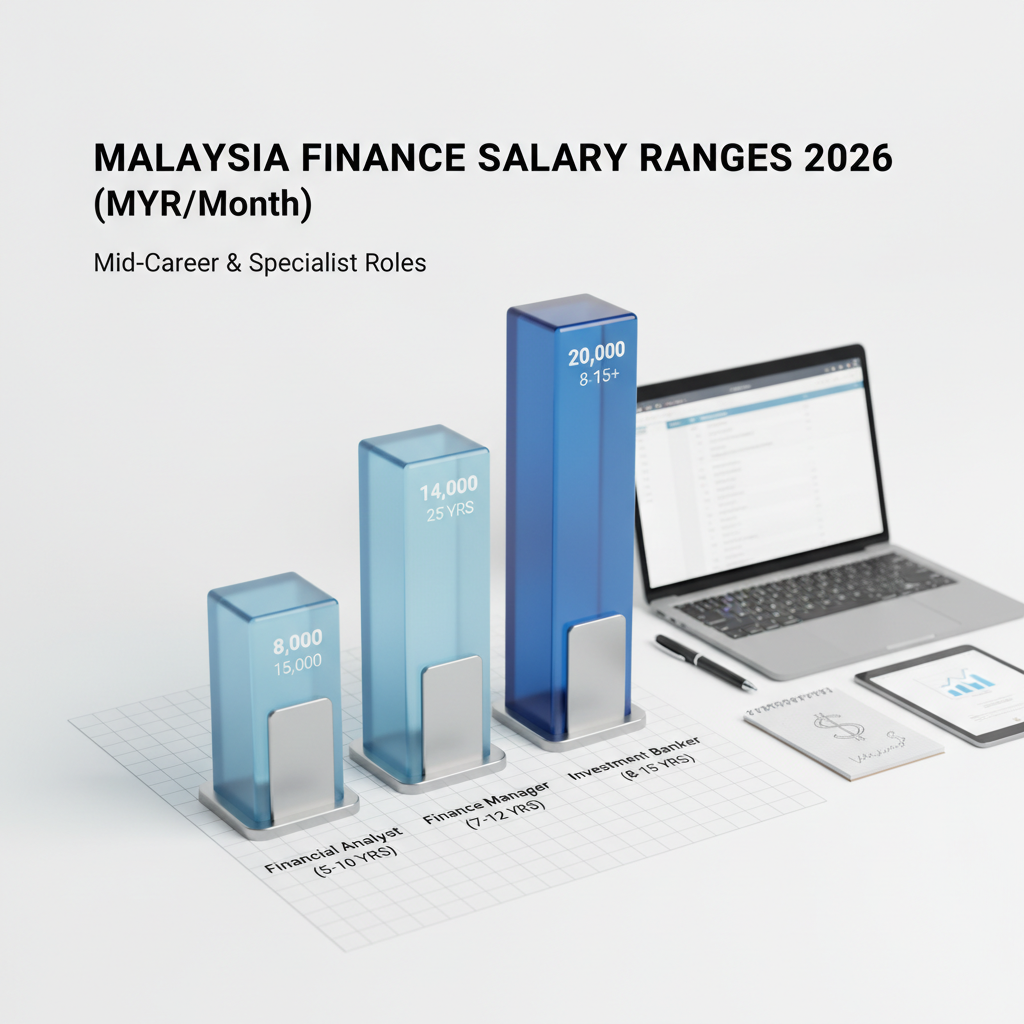
1. Salary Benchmarks for Mid-Level Managers & Senior Analysts
For finance professionals with 4-8 years of experience, mid-level management and senior analyst positions represent a significant step up in both responsibility and remuneration. In Malaysia, a mid-career finance professional in roles such as a Finance Manager, Senior Accountant, or Assistant Vice President (AVP) can typically expect a monthly salary ranging from RM 7,000 to RM 15,000. These figures are heavily influenced by factors like the size and type of the organization (multinational corporations often pay more than local SMEs), the specific industry sector, and the scope of their duties. Senior Analysts, including Financial Analysts, Investment Analysts, or Credit Analysts, usually command between RM 6,000 and RM 12,000 per month, reflecting their deeper analytical expertise and increased autonomy. Geographic location within Malaysia also plays a role, with positions in Kuala Lumpur generally offering higher pay scales due to the concentration of financial institutions and higher cost of living.
2. Specialized Roles & Their Premium Pay (e.g., Risk, Compliance, Fintech)
The finance industry in Malaysia, like globally, is witnessing a surge in demand for highly specialized skills, leading to premium pay for professionals in niche areas. These specialized finance roles often require unique technical expertise, a deep understanding of regulatory frameworks, or cutting-edge technological proficiency. For instance, professionals in Risk Management, such as Senior Risk Managers or Market Risk Analysts, are vital for maintaining financial stability and mitigating potential threats; their salaries typically range from RM 10,000 to RM 20,000+ per month. Similarly, Compliance Officers, including AML Compliance Managers and Regulatory Compliance Specialists, are indispensable in navigating complex regulatory landscapes, often earning between RM 9,000 and RM 18,000+ monthly. The burgeoning Fintech sector has also created a new class of specialists, such as Product Managers in Fintech or Data Scientists specializing in financial services, whose salaries can soar from RM 8,000 to RM 25,000+ due to the high demand for their innovative and technological skills. According to the latest Robert Walters Malaysia Salary Survey, these specialized roles consistently feature among the top earners, reflecting their critical importance to modern financial institutions.
3. Impact of Certifications (CFA, ACCA) on Salary Progression
For ambitious finance professionals, acquiring professional certifications is a strategic move that significantly impacts salary progression and career mobility. These credentials demonstrate a commitment to excellence and a mastery of specialized knowledge, making candidates highly attractive to employers. The CFA (Chartered Financial Analyst) designation, revered in the investment management industry, can lead to a substantial salary uplift, often increasing earnings by 15-30% or more compared to non-certified peers. CFA charter holders in senior analyst, portfolio management, or fund management roles frequently command salaries exceeding RM 15,000, potentially reaching RM 30,000 or higher with extensive experience. Likewise, the ACCA (Association of Chartered Certified Accountants) qualification is a gold standard in accounting and audit. ACCA-qualified professionals in mid-to-senior positions, such as Financial Controllers or Audit Managers, typically earn between RM 10,000 and RM 20,000+ per month, with excellent prospects for advancement into executive leadership. These professional certifications are not just badges of honor; they are tangible assets that directly translate into enhanced earning potential and access to more prestigious and challenging roles within the finance sector.
Top-Tier & Executive Finance Salaries in Malaysia
Malaysia’s dynamic economic landscape, bolstered by robust financial services and a growing digital economy, offers significant opportunities for finance professionals seeking to reach the pinnacle of their careers. For those with extensive experience, specialized skills, and proven leadership, the potential for high earnings in top-tier and executive finance roles is substantial. This section explores the highest earning potential within the Malaysian finance industry, delving into the lucrative salary range report of jobs in finance field in Malaysia, particularly focusing on senior leadership and highly demanding positions that command premium compensation.
1. Executive Compensation for Directors, VPs, and Heads of Departments
At the apex of corporate finance in Malaysia, executive compensation packages for roles such as Chief Financial Officers (CFOs), Finance Directors, Vice Presidents (VPs) of Finance, and Heads of Departments are designed to attract and retain elite talent. These individuals are strategic partners responsible for financial planning, risk management, capital allocation, and driving the overall financial health and growth of their organizations. Their compensation reflects the immense responsibility, strategic impact, and complex decision-making involved in navigating intricate market conditions.
A typical salary range for these top-tier finance roles in Malaysia can vary significantly based on company size, industry, and revenue, as well as the candidate’s specific track record and expertise. For instance, a CFO in a large multinational or publicly listed company might command an annual base salary well into the mid to high six figures (MYR), often supplemented by substantial performance-based bonuses, stock options, and other long-term incentives. Finance Directors and VPs, while slightly below the CFO level, still enjoy highly competitive packages, typically ranging from MYR 250,000 to MYR 500,000+ annually, depending on their scope and direct reports. Heads of specific finance functions like Corporate Finance, Treasury, or Financial Planning & Analysis (FP&A) also fall within this elite bracket, with remuneration reflecting the specialized nature and critical importance of their departments.
2. Highest Paying Finance Sectors (Investment Banking, Private Equity)
While executive roles across various industries offer attractive compensation, certain sectors within the finance industry consistently emerge as the highest paying. Investment Banking and Private Equity stand out as particularly lucrative fields in Malaysia, driven by their high-stakes nature, complex transactions, and direct impact on significant capital generation and deployment. These sectors demand exceptional analytical prowess, resilience, long working hours, and a keen understanding of global financial markets.
In Investment Banking, professionals involved in mergers and acquisitions (M&A), capital markets, and corporate advisory roles are compensated handsomely. As they climb the ladder to Vice President, Director, and Managing Director roles, their compensation escalates significantly. Bonuses, a substantial component of total compensation, can sometimes equal or even surpass base salaries, especially during buoyant market conditions. Similarly, Private Equity (PE) professionals, responsible for identifying, acquiring, and managing investments, receive top-tier remuneration. Their pay structures often include a base salary coupled with carried interest – a share of the profits from successful investments – leading to exceptionally high earnings over time, reflecting the direct financial impact of their decisions. These roles offer the pinnacle of earning potential for finance professionals in Malaysia.
3. The Role of Experience and Leadership in Senior Salaries
Beyond specific role titles or sectors, commanding a top-tier salary in Malaysian finance is fundamentally driven by extensive experience, demonstrated leadership capabilities, and a continuous commitment to professional development. Employers pay a premium for individuals who bring not just years of service, but a proven track record of strategic thinking, successful project execution, and the ability to lead high-performing teams.
Senior finance leaders are expected to possess deep industry knowledge, regulatory expertise, and a global perspective. Qualifications such as a Chartered Financial Analyst (CFA) designation, an MBA from a reputable institution, or certifications in specific financial disciplines significantly enhance earning potential. More critically, intangible qualities—like strategic vision, exceptional communication, negotiation prowess, and the ability to drive change and innovation—differentiate top earners. A leader who can navigate economic uncertainties, identify growth opportunities, and optimize financial performance is invaluable. The ability to articulate complex financial information to non-financial stakeholders, build strong relationships, and foster financial accountability across the organization directly translates into higher compensation. Continuous professional development, staying abreast of FinTech advancements, and demonstrating adaptability are also crucial in elevating executive salary range report of jobs in finance field in Malaysia over a prolonged career.
In conclusion, the path to the highest finance salaries in Malaysia is paved with specialized expertise, a drive for leadership, and a strategic understanding of the market. For those aspiring to these elite positions, continuous professional growth and a focus on impactful financial stewardship are key to unlocking exceptional earning potential.
Future Outlook & Strategies for Salary Advancement
The financial landscape in Malaysia is undergoing rapid transformation, driven by technological innovations, evolving regulatory frameworks, and a heightened focus on sustainability. For finance professionals, navigating these shifts effectively requires a proactive approach to career planning and compensation negotiation. This section offers insights into future salary trends and actionable strategies for career growth in the Malaysian financial sector. Utilizing resources like a salary range report of jobs in finance field in malaysia is essential for staying competitive and securing optimal compensation.

1. Emerging Roles and Their Future Salary Potential (ESG, AI in Finance)
The Malaysian finance industry is witnessing the rise of specialized roles, driven primarily by the global emphasis on sustainability and the pervasive integration of technology. These emerging areas offer significant growth potential and often command higher salaries due to their niche expertise.
- ESG Specialists: As regulatory pressures and investor demand for responsible investing intensify, roles such as ESG Analysts, Sustainable Finance Managers, and Climate Risk Specialists are in high demand. Professionals skilled in integrating environmental, social, and governance factors into financial strategies are critical for institutions aiming to meet global standards and attract conscious capital. These positions offer premium compensation reflecting their specialized knowledge.
- AI and Data Science in Finance: The application of Artificial Intelligence, machine learning, and big data analytics is revolutionizing various financial functions, including risk management, algorithmic trading, and personalized financial advice. Roles like AI/ML Engineers, Data Scientists, and Fintech Innovators are highly sought after. Professionals capable of developing and managing AI-powered solutions in finance are among the highest earners in the Malaysian finance job market, given the complexity and transformative impact of their work. Proficiency in data interpretation and strategic application is a major salary driver.
As the Malaysian financial landscape continues to embrace these innovations, individuals equipped with forward-looking skills will enjoy a significant competitive edge and more attractive salary prospects.
2. Negotiating Your Salary: Tips & Best Practices
Effective salary negotiation is a vital skill for maximizing your earning potential. Many professionals inadvertently undersell themselves by not engaging in strategic negotiation. Here are key practices for success in Malaysia:
- Thorough Research: Always begin with comprehensive research. Utilize industry reports, professional networks, and salary guides, especially a salary range report of jobs in finance field in malaysia, to ascertain typical compensation for your role, experience, and location. This empowers you to establish realistic yet ambitious salary expectations.
- Articulate Your Value: Clearly quantify your past achievements and contributions. Focus on demonstrable impacts such as cost savings, revenue generation, or process improvements. Frame your discussion around how your skills will directly benefit the prospective employer.
- Practice and Preparation: Anticipate potential questions and objections. Rehearse your responses to confidently articulate your worth. Be ready to justify your desired salary based on market benchmarks and your unique qualifications.
- Consider the Total Package: Beyond the base salary, evaluate the entire compensation package. This includes bonuses, health insurance, retirement contributions, annual leave, professional development allowances, and flexible work options. A holistic view ensures you secure the best overall deal.
- Maintain Confidence and Flexibility: Approach negotiations with professionalism and confidence. While advocating for your worth, also demonstrate flexibility and a willingness to collaborate, underscoring your team-player attitude.
3. Continuous Learning & Upskilling for Career Progression
In the fast-evolving finance industry, continuous learning is imperative for sustained career progression and salary growth in Malaysia. The rapid obsolescence of skills necessitates proactive upskilling.
- Specialized Certifications: Acquire globally recognized certifications such as CFA (investment management), FRM (risk management), or certifications in data analytics (e.g., Python, SQL, Tableau), and cloud platforms. These credentials significantly enhance your marketability and earning potential.
- Digital and Data Literacy: Proficiency in data analytics tools and programming languages (Python, R) is becoming fundamental across all finance functions, from financial modeling to market analysis. These highly valued skills open doors to specialized, higher-paying roles.
- Critical Soft Skills: Beyond technical prowess, develop crucial soft skills like critical thinking, problem-solving, communication, leadership, and adaptability. These are essential for advancing into senior management positions and effectively navigating complex business challenges.
- Stay Informed on Trends: Regularly engage with industry publications, webinars, and professional forums to remain updated on the latest developments, regulatory changes, and emerging opportunities in the Malaysian financial sector. This proactive approach ensures your expertise stays relevant and in demand.
By diligently investing in personal and professional development, finance professionals in Malaysia can secure their career trajectory, unlock new opportunities, and achieve substantial salary advancements in a competitive market.
Partner with Shelby Global
You are looking for reliable HR Sevice Suppliers? Contact Shelby Global Now! To connect with verified talents and upgrade your orginization.
—————————————
References
– Bank Negara Malaysia Economic and Financial Reports: https://www.bnm.gov.my/publications/economic-financial-reports
– salary guide for finance professionals in Malaysia: https://www.randstad.com.my/hr-resources/randstad-salary-guide/
– Robert Walters Malaysia Salary Survey: https://www.robertwalters.com.my/en/salary-survey.html
– Robert Walters Malaysia Salary Survey: https://www.robertwalters.com.my/salary-survey.html
– Bank Negara Malaysia Financial Stability Review: https://www.bnm.gov.my/documents/20124/966675/SR3.pdf/d935b0d0-fb16-f28a-79a4-28a1c1d0e80a



































































































