
Understanding the Unique FMCG Talent Landscape in Singapore
Singapore, a vibrant hub for Fast-Moving Consumer Goods (FMCG) in Southeast Asia, presents a unique and often challenging environment for talent acquisition and retention. The sector, characterized by rapid innovation, intense competition, and evolving consumer demands, requires a highly skilled and agile workforce. For CEOs of FMCG companies, navigating this landscape effectively is paramount, particularly when considering salary budget optimizing manners for the CEO of FMCG companies in singapore. Attracting and retaining top talent here isn’t just about competitive pay; it involves a nuanced understanding of market dynamics, regional influences, and the specific aspirations of a diverse talent pool.

1. Navigating talent scarcity and high demand
Singapore’s robust economic growth and its position as a regional FMCG headquarters have created a paradox: while it attracts a global talent pool, certain specialized roles within the FMCG sector face significant talent scarcity. Roles in digital marketing, e-commerce, supply chain optimization, data analytics, and sustainable product development are particularly in high demand. This scarcity, coupled with the industry’s fast-paced nature, drives up the premium for skilled professionals. Companies must therefore think beyond traditional recruitment methods, focusing on employer branding, skills development, and creating compelling career pathways. Implementing effective salary budget optimizing manners for the CEO of FMCG companies in singapore becomes critical here, not just to offer competitive base salaries but also to design total reward packages that include performance bonuses, stock options, and comprehensive benefits. This proactive approach helps mitigate the impact of talent scarcity and ensures a steady pipeline of qualified candidates.
2. Impact of regional competition on compensation
Singapore does not operate in a vacuum. Its proximity to other burgeoning markets like Malaysia, Thailand, and Indonesia, and its role as a regional hub, means that FMCG companies in Singapore compete not only domestically but also regionally for top talent. High-performing professionals are often courted by multinational corporations across Southeast Asia, leading to an upward pressure on compensation packages. This regional competition extends beyond direct competitors to tech companies and other industries that often poach talent for similar skill sets (e.g., marketing, data science). For CEOs, understanding these regional benchmarks is crucial for devising competitive compensation strategies. A detailed analysis of salary data, industry trends, and total rewards offered in key regional cities is essential. This allows for a more strategic allocation of resources, ensuring that salary budgets are optimized to attract and retain the best, rather than merely reacting to market pressures. Focusing on non-monetary benefits like work-life balance, career development opportunities, and a strong company culture can also be powerful differentiators when direct salary competition is fierce.
3. Balancing global trends with local market nuances
FMCG companies in Singapore often operate within global frameworks, adhering to international best practices in talent management and compensation. However, a successful strategy must deftly balance these global trends with distinct local market nuances. What motivates a professional in New York or London may not be the same as someone in Singapore. Local nuances include specific cultural expectations around career progression, work-life integration, the value placed on benefits like healthcare and education subsidies, and even the preference for specific types of professional development. For instance, while global trends might emphasize agile working environments, local regulations or cultural norms might require a different approach to implementation. CEOs must ensure that their salary budget optimizing manners for the CEO of FMCG companies in singapore account for these local expectations, tailoring packages to resonate with the local workforce while remaining globally competitive. This involves gathering local market intelligence, engaging with employees to understand their priorities, and adapting global policies to fit the Singaporean context. According to a report by EY, the Singaporean workforce values career progression, skills development, and purpose-driven work, highlighting the need for holistic talent strategies beyond just salary. This balance ensures that talent strategies are both effective locally and aligned with broader organizational goals.
In conclusion, the FMCG talent landscape in Singapore is intricate and demanding. CEOs must adopt a multi-faceted approach to talent management, focusing on strategic salary budget optimization that considers talent scarcity, regional competition, and local market specificities. By integrating robust compensation strategies with strong employer branding, continuous professional development, and a deep understanding of employee needs, FMCG companies can successfully navigate this competitive environment and secure the top talent essential for sustained growth and innovation.
Strategic Compensation Benchmarking and Design
In the fiercely competitive Fast-Moving Consumer Goods (FMCG) sector in Singapore, attracting, retaining, and motivating top talent is paramount for sustained success. For a CEO, mastering salary budget optimizing manners for the CEO of FMCG companies in Singapore is not just about cost control; it’s about strategic investment. This involves adopting sophisticated, data-driven approaches to construct competitive salary structures that resonate with market realities and uphold internal equity. By meticulously benchmarking compensation against industry standards and designing programs that incentivize performance, FMCG leaders can ensure their remuneration strategies are powerful tools for achieving business objectives, enhancing employee retention, and fostering a high-performance culture.
1. Leveraging Industry-Specific Compensation Surveys
A cornerstone of effective compensation strategy for FMCG companies in Singapore is the diligent use of industry-specific compensation surveys. These comprehensive data sets provide invaluable insights into prevailing market rates for various roles within the sector, from sales and marketing to supply chain and executive leadership. CEOs must go beyond generic data, seeking out surveys that offer granular detail specific to the FMCG industry and the unique economic landscape of Singapore. By analyzing these surveys, companies can identify where their current compensation package stands relative to competitors, ensuring that base salaries and variable pay are not only competitive but also attractive to high-calibre professionals. This allows for precise adjustments, preventing both overpayment and underpayment, thereby ensuring optimal allocation of the salary budget optimizing manners for the CEO of FMCG companies in Singapore. Understanding regional nuances and talent scarcity in specialized roles through robust data intelligence is crucial for maintaining a leading edge in talent acquisition and ensuring the sustainability of the workforce.
2. Designing Performance-Based Incentive Programs
Beyond base salaries, strategically designed performance-based incentive programs are critical for driving productivity and aligning employee efforts with company goals. For FMCG organizations, such programs might link bonuses directly to sales targets, market share growth, new product launches, or profitability performance metrics. When structured effectively, these incentives serve as powerful motivators, encouraging employees to go above and beyond while directly contributing to the company’s bottom line. For the CEO, this means linking a portion of compensation to measurable outcomes that reflect business success, which inherently provides salary budget optimizing manners for the CEO of FMCG companies in Singapore by ensuring remuneration is tied to value creation. Implementing clear, transparent, and equitable performance criteria is essential to ensure these programs foster internal equity and prevent perceptions of unfairness, which could otherwise undermine morale and impact employee retention. Such programs are especially vital in a dynamic market like Singapore where rapid response to consumer trends is key.
3. Structuring Competitive Benefits Packages
While salary is a primary consideration, a holistic view of total rewards is indispensable for attracting and retaining top-tier talent attraction in the Singaporean FMCG market. A competitive benefits package extends beyond monetary compensation to encompass health and wellness programs, retirement plans, flexible work arrangements, professional development opportunities, and employee recognition schemes. For CEOs, understanding the preferences of their workforce and the competitive landscape of benefits in Singapore is crucial. For instance, enhanced health coverage, mental wellness support, or flexible working hours might be highly valued by employees, offering significant perceived value at a relatively optimized cost compared to a direct salary increase. A well-crafted benefits package not only reinforces a company’s commitment to its employees’ well-being but also acts as a powerful differentiator in the war for talent. These non-cash elements contribute significantly to employee retention and overall engagement, reinforcing a positive employer brand and ultimately supporting long-term business growth without solely relying on upward adjustments to base market rates.
In conclusion, for a CEO of an FMCG company in Singapore, strategic compensation benchmarking and design are foundational pillars for sustainable growth. By meticulously leveraging data from industry surveys, crafting performance-aligned incentives, and offering holistic, competitive benefits, leaders can optimize their salary budget optimizing manners for the CEO of FMCG companies in Singapore. This integrated approach not only ensures financial prudence but also cultivates a motivated, high-performing workforce ready to tackle the dynamic challenges of the FMCG landscape.
Leveraging HR Technology for Budget Efficiency
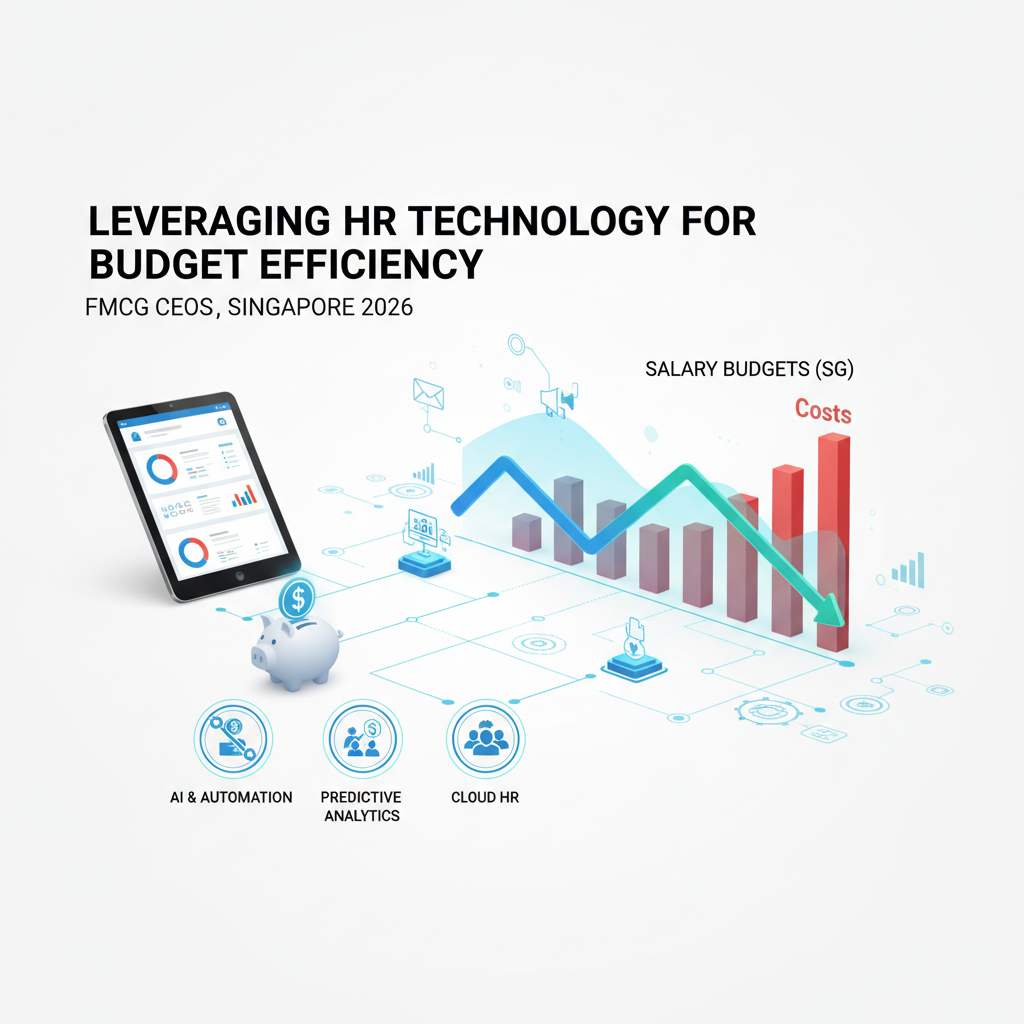
For CEOs of Fast-Moving Consumer Goods (FMCG) companies in Singapore, navigating the competitive landscape requires an astute approach to operational costs, especially when it comes to human capital. Modern HR technologies offer powerful salary budget optimizing manners for the CEO of FMCG companies in Singapore, enabling businesses to streamline salary management, enhance forecasting accuracy, and pinpoint areas for significant cost optimization. In an environment where talent acquisition and employee retention are paramount, smart investment in HR technology is not just an expense but a strategic imperative that directly impacts the bottom line and overall business agility within the dynamic FMCG Singapore market.
The strategic deployment of HR technology allows companies to move beyond reactive budget adjustments to proactive, data-driven decisions. This shift is crucial for managing compensation effectively, ensuring compliance, and fostering a productive workforce without overspending. By integrating various HR functions, businesses can gain holistic insights into their human resources, transforming how they approach compensation management and overall workforce planning.
1. Automating payroll and compensation administration
Manual payroll processing is not only time-consuming but also prone to errors, which can lead to compliance issues, employee dissatisfaction, and significant financial penalties. Implementing advanced payroll automation software dramatically reduces the administrative burden on HR departments. These systems can automatically calculate salaries, deductions, taxes, and benefits, ensuring accuracy and adherence to Singaporean labor laws and regulations. For FMCG Singapore companies, this means fewer discrepancies, faster processing times, and a substantial reduction in operational costs associated with manual data entry and verification. Furthermore, automated compensation administration streamlines the entire cycle from offer letter generation to performance-based incentives, creating a transparent and equitable system that boosts employee retention and morale. By freeing up HR personnel from routine tasks, they can focus on more strategic initiatives, such as talent development and improving employee experience, which indirectly contributes to budget efficiency through enhanced productivity and reduced turnover.
2. Implementing predictive analytics for salary forecasting
Accurate salary forecasting is a cornerstone of effective budget management. Predictive analytics tools, powered by machine learning, leverage historical data, market trends, and internal performance metrics to forecast future salary expenses with remarkable precision. For FMCG companies in Singapore, this capability is invaluable. It allows CEOs to anticipate upcoming salary increases, plan for bonus structures, and model the financial impact of different compensation strategies. These tools can identify potential budget overruns before they occur, providing early warnings and allowing for proactive adjustments. By analyzing factors such as inflation rates, industry salary benchmarks, and projected talent acquisition needs, predictive analytics supports better financial planning and enables more informed decisions regarding staffing levels and salary adjustments. This foresight is critical for maintaining competitive compensation packages while strictly adhering to budget constraints, ensuring sustainable growth and preventing unexpected financial shocks.
3. Utilizing HRIS for talent and budget insights
A robust Human Resources Information System (HRIS) serves as a centralized hub for all HR-related data, integrating various functions from recruitment and onboarding to performance management and offboarding. For CEOs looking for salary budget optimizing manners for the CEO of FMCG companies in Singapore, an HRIS offers unparalleled insights into the workforce. By consolidating data on employee demographics, performance, training, and compensation, an HRIS provides a comprehensive view of talent assets and their associated costs. This integrated perspective allows for more effective cost optimization strategies. For instance, by analyzing performance data alongside salary expenditures, companies can identify high-performing, high-value employees and allocate resources strategically. An HRIS facilitates robust workforce planning by simulating various scenarios, such as the financial implications of expanding specific departments or introducing new product lines. It also supports better talent management, ensuring that investments in employee development and benefits are yielding the desired returns. Ultimately, a well-implemented HRIS empowers FMCG leaders to make data-backed decisions that optimize their human capital budget, ensuring that every dollar spent contributes to strategic business objectives and competitive advantage.
Optimizing Non-Monetary Benefits and Employee Value Proposition
In Singapore’s dynamic and highly competitive Fast-Moving Consumer Goods (FMCG) sector, CEOs face the persistent challenge of attracting, retaining, and motivating top talent without solely relying on escalating salary packages. This critical need for strategic workforce management necessitates exploring alternative, non-monetary approaches to enhance employee satisfaction and foster a robust employee value proposition. By focusing on holistic well-being, robust career development, and a compelling organizational culture, FMCG companies can achieve significant salary budget optimizing manners for the CEO of FMCG companies in singapore, ensuring a sustainable and engaged workforce amidst rising operational costs and intense talent acquisition battles. These strategies are pivotal for enhancing overall productivity and long-term business success, moving beyond traditional compensation models to build a resilient talent ecosystem.
The modern workforce, particularly in a developed market like Singapore, places increasing value on factors beyond just pay. Employees are looking for environments that support their personal growth, well-being, and provide a sense of purpose. For FMCG leaders, understanding and implementing effective non-financial incentives can drastically improve employee retention Singapore and strengthen their FMCG talent strategies. This involves a careful assessment of what truly motivates their diverse workforce, enabling them to craft a unique and compelling offering that stands out in the crowded talent market.
1. Enhancing work-life balance initiatives
One of the most impactful non-monetary benefits is the provision of robust work-life balance initiatives. For FMCG employees, who often face demanding schedules and high-pressure environments, the ability to balance professional responsibilities with personal life is paramount. This can manifest through various strategies, including the implementation of flexible work arrangements Singapore, such as staggered hours, compressed workweeks, or hybrid work models where roles permit. Beyond scheduling, it encompasses comprehensive mental health support programs, access to wellness resources, and generous leave policies that recognize diverse employee needs, including parental leave, eldercare support, and sabbatical options.
Investing in employees’ well-being not only fosters a healthier and happier workforce but also significantly reduces burnout and stress-related absenteeism. A positive work-life balance directly contributes to higher job satisfaction and improved employee well-being programs, which in turn boosts productivity and loyalty. Research consistently shows that employees who feel supported in balancing their lives are more engaged and less likely to seek opportunities elsewhere. For instance, studies indicate a strong correlation between workplace well-being initiatives and positive business outcomes, underscoring their importance beyond mere perks. The World Health Organization highlights the significant impact of mental health at work on productivity and overall well-being, advocating for supportive workplaces.
2. Investing in professional development and upskilling
A significant driver for talent attraction and retention, especially among younger generations, is the availability of meaningful career growth opportunities. FMCG companies can create immense value by investing heavily in professional development and upskilling programs. This goes beyond generic training; it involves tailoring development paths to individual career aspirations and organizational needs. Examples include mentorship programs, leadership development workshops, cross-functional training initiatives, and support for external certifications or higher education. Providing employees with opportunities to learn new skills, embrace emerging technologies, and take on new challenges not only enhances their capabilities but also demonstrates a long-term commitment to their professional journey.
Such investments serve a dual purpose: they elevate the skills of the existing workforce, ensuring the company remains agile and competitive, and they act as a powerful motivator for employees. Knowing that an employer is invested in their future fosters a sense of loyalty and reduces turnover. This proactive approach to talent development is a cornerstone of effective FMCG talent strategies, creating a robust internal talent pipeline that can fill critical roles and adapt to market changes. It positions the company as an employer of choice, attracting ambitious individuals seeking more than just a paycheck.
3. Fostering a strong company culture and recognition programs
A vibrant, inclusive, and supportive company culture is arguably one of the most powerful non-financial incentives an FMCG company can offer. This culture is built on transparent communication, shared values, ethical leadership, and a sense of community. Beyond foundational elements, the implementation of effective staff recognition programs plays a crucial role. These programs should go beyond annual performance reviews, incorporating frequent, specific, and genuine recognition for efforts and achievements, whether big or small. This could involve peer-to-peer recognition systems, spot bonuses, employee-of-the-month awards, or celebrating milestones and successes publicly.
Cultivating a strong culture and consistently recognizing employees’ contributions significantly boosts employee engagement strategies. When employees feel valued, respected, and part of a collective mission, their motivation, productivity, and commitment skyrocket. A positive workplace environment fosters psychological safety, encourages innovation, and reduces stress, ultimately leading to higher retention rates. These initiatives collectively contribute to a powerful employee value proposition that resonates deeply with individuals seeking more than just financial compensation, solidifying the company’s standing as a desirable employer in Singapore’s competitive FMCG landscape.
Agile Budget Forecasting and Strategic Workforce Planning
In today’s fast-paced global economy, particularly within the dynamic FMCG sector in Singapore, traditional annual budgeting often falls short. CEOs require dynamic approaches to financial planning and talent management to maintain competitive advantage. This section addresses the critical importance of dynamic budget planning and its seamless alignment with long-term business goals, ensuring that resource allocation robustly supports strategic growth and evolving talent needs. For the CEO navigating the complexities of the Singaporean market, optimizing salary budgets isn’t just about cutting costs; it’s about strategic investment in human capital. Effective salary budget optimizing manners for the CEO of FMCG companies in Singapore hinge on embracing agility, foresight, and a deep understanding of both financial health and human resource capabilities. Adopting an agile financial planning mindset is paramount for achieving sustainable growth and market leadership.
1. Implementing rolling forecasts for salary budgets
Moving away from static, annual budget cycles to dynamic budgeting through rolling forecasts is a transformative step for any FMCG CEO in Singapore. This approach allows for continuous adjustment of financial projections based on the latest market data, economic indicators, and business performance. For salary budgets specifically, rolling forecasts enable more precise allocation, responding swiftly to changes in the Singaporean talent market, inflation rates, or shifts in organizational structure. Instead of a fixed annual outlook, a 3-6 month rolling forecast, updated quarterly, provides a more accurate picture of future compensation needs. This ensures that resources are allocated efficiently, supporting effective HR budget optimization. It empowers CEOs to make proactive decisions regarding talent acquisition, retention strategies, and performance-based incentives, directly impacting the salary budget optimizing manners for the CEO of FMCG companies in Singapore by aligning spending with real-time strategic priorities. Such flexibility minimizes the risk of overspending or underspending on critical human capital, fostering greater cost efficiency in FMCG operations.
2. Integrating workforce planning with financial objectives
The synergy between workforce planning and financial objectives is indisputable for salary budget optimizing manners for the CEO of FMCG companies in Singapore. Strategic workforce planning is not merely an HR function; it’s a critical component of financial strategy. By analyzing future talent needs against current capabilities and market trends, companies can develop a robust talent acquisition strategy that is financially sound. This involves detailed strategic headcount planning, forecasting roles required, skills gaps, and the associated compensation costs. Utilizing workforce analytics allows CEOs to gain deep insights into employee performance, turnover rates, and the true cost of human capital, informing strategic decisions about where to invest in talent. Integrating this with the overall financial plan ensures that every hire, every promotion, and every compensation adjustment directly supports the company’s revenue goals and profitability targets. For comprehensive strategic workforce planning insights, aligning HR and finance teams is essential to predict and manage the costs associated with talent, especially when considering Singapore compensation trends and global competition for skilled labor. This holistic view ensures that talent investment is strategic and delivers measurable ROI.
3. Scenario planning for economic shifts and market changes
In a volatile global market, FMCG companies in Singapore must be prepared for unforeseen economic shifts and market changes. Scenario planning becomes an indispensable tool for future-proof budgeting and managing salary expenditures. By developing multiple financial and workforce scenarios – ranging from optimistic growth to severe downturns – CEOs can pre-emptively assess the impact on their salary budgets and identify potential mitigation strategies. For instance, how would a sudden increase in raw material costs or a significant currency fluctuation affect the ability to maintain competitive salaries? What if there’s a surge in demand requiring rapid scaling of the workforce? Through scenario planning, companies can determine trigger points for activating alternative strategies, such as adjustments to performance-based compensation, exploring flexible work arrangements, or re-prioritizing recruitment efforts. This proactive approach to dynamic resource allocation ensures that the organization remains resilient and adaptable, safeguarding both financial stability and the ability to attract and retain top talent through effective strategic talent management, even amidst uncertainty. Ultimately, this foresight is crucial for salary budget optimizing manners for the CEO of FMCG companies in Singapore, allowing for swift and informed adjustments that protect the bottom line while nurturing a high-performing workforce.
Partner with Shelby Global
You are looking for reliable HR Sevice Suppliers? Contact Shelby Global Now! To connect with verified talents and upgrade your orginization.
—————————————
References
– EY Singapore Workforce of the Future Outlook: https://www.ey.com/en_sg/people/singapore-workforce-of-the-future-outlook
– Global Salary Budget Planning Report – WTW: https://www.wtwco.com/en-US/Insights/2/global-salary-budget-planning-report
– :
– The World Health Organization highlights the significant impact of mental health at work on productivity and overall well-being: https://www.who.int/news-room/fact-sheets/detail/mental-health-at-work
– :