
Core Differences in HR Team Size and Scope
The landscape of Human Resources (HR) management in Malaysia’s vibrant Food & Beverage (F&B) sector presents a fascinating dichotomy, primarily driven by business scale. The Differences between the SMEs’ HR Structure and the Corporates’ HR Structure in Food & Beverage field in malaysia are profound, dictating everything from daily operational tasks to long-term strategic planning. This section delves into the fundamental variations in HR department size, structure, and general responsibilities, highlighting the crucial role of resource allocation in shaping HR capabilities and priorities across smaller F&B businesses and large corporations. Understanding these distinctions is vital for effective HR strategy development and talent management within this dynamic industry.
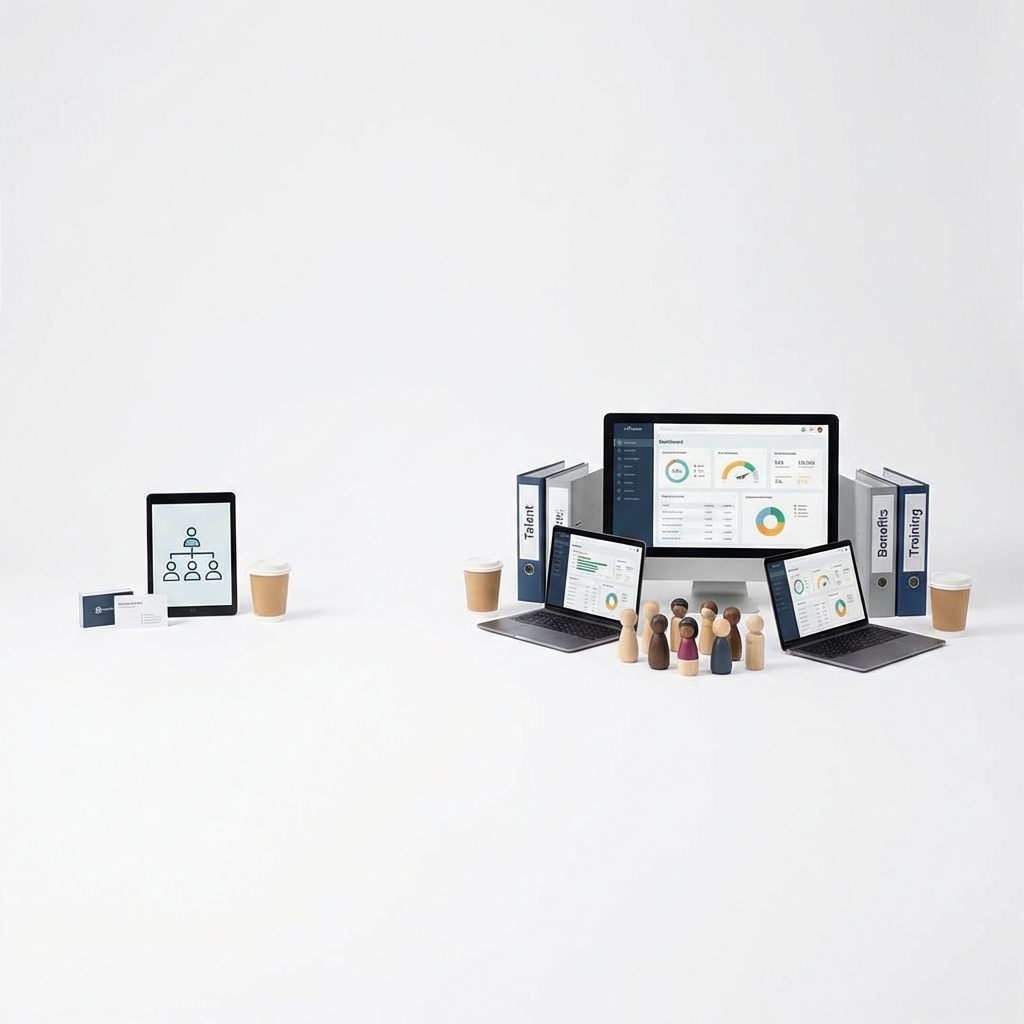
1. Lean HR Teams and Generalist Roles in F&B SMEs Malaysia
In Malaysia’s F&B Small and Medium Enterprises (SMEs), HR functions are typically managed by lean teams, often comprising a single HR manager or even an administrative staff member who juggles HR duties alongside other responsibilities. This organizational model is a direct consequence of limited financial and human resources. For these businesses, the HR professional acts as a versatile generalist, expected to cover the entire spectrum of HR functions. Their day-to-day tasks can range from recruitment and onboarding new kitchen staff or service crew, to managing payroll, handling employee grievances, ensuring basic compliance with Malaysian labour laws, and conducting performance appraisals.
The focus for SME HR challenges Malaysia F&B often revolves around immediate operational needs, such as filling vacancies quickly due to high turnover rates characteristic of the F&B industry, or managing basic employee welfare. There’s less emphasis on specialized areas like talent development or sophisticated HR analytics. The HR role here demands immense adaptability and a hands-on approach, often requiring proficiency in various aspects of employment law and employee relations without the luxury of dedicated specialists. Effective HR resource allocation F&B Malaysia in SMEs means optimizing a single individual’s time and capabilities to meet the most pressing needs of the business. This generalist approach is a hallmark of HR generalist vs specialist F&B dynamics in smaller setups, where breadth of knowledge trumps depth in specific areas. Malaysian SMEs play a significant role in human resource development, often requiring HR generalists to cover a wide range of responsibilities.
2. Multi-Departmental Corporate HR Structures with Specialist Functions
Conversely, large F&B corporations in Malaysia, whether local conglomerates or international franchises, operate with significantly more extensive and structured HR departments. These HR teams are often multi-departmental, featuring dedicated specialists for various HR domains. Instead of a single generalist, a corporate HR structure might include distinct departments for talent acquisition, compensation and benefits, learning and development (L&D), employee relations, HR information systems (HRIS), and organizational development.
Each specialist team focuses on a particular facet of human capital management, allowing for greater depth of expertise and the implementation of sophisticated HR strategies. For instance, the talent acquisition team would focus on building a robust talent management large F&B companies pipeline, utilizing advanced recruitment technologies and employer branding strategies. The L&D team would design comprehensive training programs for leadership development, skill enhancement, and career progression, which is crucial for fostering a culture of continuous improvement. The compensation and benefits team would meticulously craft competitive remuneration packages and employee welfare programs, leveraging market data and compliance expertise. This structured approach underpins Corporate HR strategy Malaysia F&B, enabling these companies to address complex HR challenges with specialized solutions and dedicated resources, moving beyond basic operational support to strategic business partnership.
3. The Impact of Business Scale on HR Mandates and Prioritization
The sheer scale of an F&B business fundamentally reshapes its HR mandates and priorities. For SMEs, HR is often reactive, focusing on compliance and immediate problem-solving. Compliance HR small F&B businesses is critical, ensuring adherence to minimum wage laws, EPF, SOCSO contributions, and basic workplace safety standards to avoid legal repercussions. Their HR efforts are primarily geared towards maintaining operational continuity and addressing essential employee needs. Strategic HR planning, such as succession planning or long-term workforce development, often takes a backseat due to resource constraints and the immediate demands of business survival and growth.
In contrast, large corporations approach HR with a much more proactive and strategic lens. Their HR departments are integral to achieving broader business objectives, focusing on areas like organizational effectiveness, change management, and cultivating a strong corporate culture. They invest heavily in HR analytics to inform decision-making, global mobility programs for talent exchange, and robust performance management systems aligned with corporate goals. The complexity of managing a large, diverse workforce, often across multiple locations or even countries, necessitates advanced HR systems and policies. Their priorities extend to mitigating risks associated with complex labour regulations, fostering diversity and inclusion, and building a resilient workforce capable of adapting to market changes. This strategic divergence underscores the profound Differences between the SMEs’ HR Structure and the Corporates’ HR Structure in Food & Beverage field in malaysia, where the former often navigates through exigencies with limited support, while the latter leverages comprehensive frameworks for sustainable growth.
Recruitment, Talent Acquisition, and Retention Strategies
In Malaysia’s vibrant yet highly competitive Food & Beverage (F&B) market, the quest for exceptional talent is a perennial challenge. Businesses, whether burgeoning Small and Medium-sized Enterprises (SMEs) or established multinational Corporates, constantly navigate the complexities of finding, attracting, and most crucially, keeping skilled employees. The differences between the SMEs’ HR structure and the Corporates’ HR structure in Food & Beverage field in Malaysia are stark, primarily dictated by their respective resource availability, brand reputation, and operational scale. These disparities fundamentally shape their approaches to recruitment, talent acquisition, and long-term retention strategies, influencing everything from hiring methodologies to employee development programs.
-
Budget Constraints and Localized Hiring in F&B SMEs
SMEs in the Malaysian F&B sector often operate with lean budgets, impacting their capacity for extensive HR functions. Their differences between the SMEs’ HR structure and the Corporates’ HR structure in Food & Beverage field in Malaysia are most evident here, as SMEs typically lack dedicated, specialized HR departments found in larger entities. This translates into significant F&B talent acquisition challenges Malaysia, particularly when competing for skilled chefs, experienced service staff, and managerial talent. Recruitment for SMEs is frequently localized, relying heavily on word-of-mouth referrals, community networks, and affordable online job portals. These SME F&B recruitment methods prioritize cost-effectiveness, with owners or general managers often directly overseeing the hiring process. Compensation packages might be less competitive than those offered by Corporates, leading to higher turnover rates. Retention, in this context, often hinges on fostering a strong, family-like culture, providing opportunities for cross-training, and offering flexible working arrangements where possible. While these businesses excel at developing raw talent through on-the-job training, attracting and retaining seasoned professionals remains a constant uphill battle due to limited resources for competitive benefits and professional development programs.
-
Employer Branding and Accessing Global Talent Pools for F&B Corporates
In stark contrast, F&B Corporates in Malaysia leverage their substantial resources to implement sophisticated HR strategies. Their dedicated human resources departments are equipped with larger budgets for advanced recruitment technologies, partnerships with executive search firms, and robust employer branding in Malaysian F&B. These Corporates can invest heavily in projecting a desirable workplace image, highlighting career growth opportunities, comprehensive benefits, and a vibrant corporate culture. This strong brand appeal not only attracts top-tier local talent but also enables them to tap into global talent acquisition Malaysia, bringing in experienced professionals such as international executive chefs, hospitality consultants, and senior management. Their corporate F&B HR strategies often involve structured recruitment campaigns, presence at university career fairs, and active engagement on professional networking platforms. The ability to offer competitive salaries, extensive health benefits, retirement plans, and clear advancement paths significantly enhances their attractiveness, setting them apart in the battle for premier talent. Access to a broader talent pool and the capacity to offer substantial career development distinguish their HR approach markedly from their SME counterparts.
-
Employee Engagement and Retention Tactics: Tailored Approaches
Employee engagement and retention are critical for both business types, but their approaches are distinct, reflecting the fundamental differences between the SMEs’ HR structure and the Corporates’ HR structure in Food & Beverage field in Malaysia. For SMEs, retention is often built on personal relationships, direct recognition, and a sense of belonging. Strategies include regular, informal feedback, skill diversification through cross-training across kitchen or front-of-house roles, and team-building activities that reinforce a cohesive unit. While formal career progression might be limited, the opportunity for employees to wear multiple hats and gain diverse experience can be a strong draw. For Corporates, employee retention in F&B industry is a more formalized process, driven by structured performance management systems, continuous professional development, and attractive incentive programs. This includes comprehensive training modules, mentorship programs, opportunities for internal mobility or even international assignments, and performance-based bonuses. Corporates also often utilize HR technology for F&B businesses to monitor employee satisfaction, identify flight risks, and personalize development plans. Both strive to create positive work environments, but SMEs lean on intrinsic motivators and community, while Corporates rely on robust frameworks, clear career paths, and significant investment in employee welfare and growth. Understanding these diverse strategies is crucial for anyone navigating or operating within Malaysia’s dynamic F&B labor landscape, recognizing that what works for one size of business may not be feasible or effective for the other.
Compensation, Benefits, and Employee Development
In Malaysia’s vibrant Food & Beverage (F&B) sector, the battle for skilled talent is fierce. The structural differences in Human Resources (HR) between Small and Medium-sized Enterprises (SMEs) and large corporate entities significantly impact their ability to attract, retain, and develop employees. These disparities, particularly in compensation packages, employee benefits, and professional development opportunities, are central to understanding the differences between the SMEs’ HR Structure and the Corporates’ HR Structure in Food & Beverage field in Malaysia. As the F&B industry continues to evolve, the approaches to nurturing its workforce become a critical differentiator, influencing everything from staff morale to service quality.
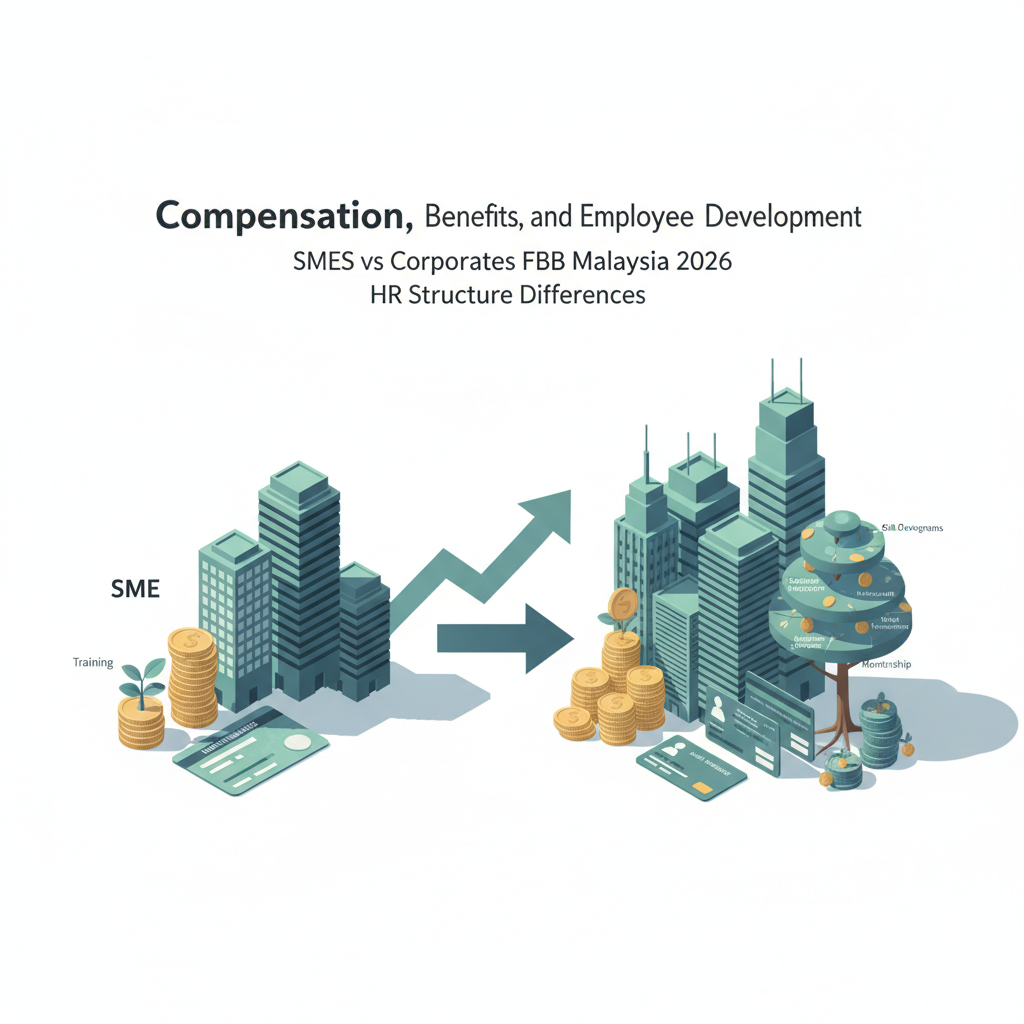
1. Standard vs. Comprehensive Benefits Packages in F&B Malaysia
One of the most immediate F&B HR differences Malaysia lies in the scope of employee benefits. SMEs, often operating with tighter budgets, typically adhere to statutory requirements such as Employees Provident Fund (EPF), Social Security Organization (SOCSO), and Employment Insurance System (EIS). Their compensation often revolves primarily around basic salary, with limited room for extensive additional perks. While this fundamental provision is crucial, it often struggles to compete with the more elaborate offerings from larger corporations. The restricted nature of SME HR benefits F&B often means they might miss out on top-tier talent who prioritize comprehensive packages.
In stark contrast, large F&B corporates in Malaysia leverage their financial stability to provide a holistic range of benefits. These comprehensive packages extend beyond statutory requirements to include private medical and dental insurance, optical care, life insurance, and even wellness programs. Many corporate HR compensation Malaysia strategies also incorporate meal allowances, transport subsidies, employee discounts, and robust performance-based bonuses. These extensive offerings not only enhance employee well-being but also serve as a powerful magnet for attracting skilled labor, creating a more attractive value proposition that significantly outperforms the standard offerings of smaller establishments.
2. Learning & Development Initiatives: From On-the-Job to Structured Programs
The approach to employee development F&B also starkly delineates SMEs from corporate giants. SMEs typically rely heavily on informal, on-the-job training (OJT). New hires learn through direct experience, mentorship from senior staff, and observation. While practical and cost-effective, this approach can lack structure, consistency, and often depends on the availability and teaching aptitude of experienced team members. Formal training budgets are minimal, and opportunities for external certifications or advanced skill acquisition are rare, limiting long-term career growth potential within the organization.
Conversely, corporate F&B organizations invest significantly in structured learning and development (L&D) initiatives. These include comprehensive onboarding programs, regular workshops on culinary skills, customer service, hygiene standards, and management principles. They often offer access to e-learning platforms, leadership development courses, and even subsidies for external certifications or higher education. These clear pathways for skill enhancement and career progression are critical for attracting ambitious professionals and ensuring a highly competent workforce. Such structured programs contribute immensely to the overall talent attraction F&B Malaysia landscape, positioning corporates as employers of choice for those seeking continuous growth.
3. Performance Management and Career Progression Frameworks
The final significant disparity lies in performance management and career progression. In many F&B SMEs, performance reviews might be informal, ad-hoc, or even non-existent. Career advancement is often organic, based on loyalty, the owner’s discretion, and the rare opening of a senior role. This informal structure can lead to a lack of clarity regarding growth paths, making it difficult for employees to envision a long-term future within the company. Limited internal promotion opportunities due to smaller organizational structures further compound this challenge, contributing to HR disparities F&B.
Large F&B corporates, however, implement robust and transparent performance management systems. These often involve regular appraisals based on Key Performance Indicators (KPIs), 360-degree feedback, and clear goal setting. Crucially, they establish well-defined career ladders and succession planning frameworks, outlining specific steps and requirements for promotion. Employees can see a clear trajectory for advancement, whether it’s moving from a junior chef to an executive chef, or from a service crew member to a restaurant manager across multiple outlets. This systematic approach not only motivates employees but also acts as a powerful tool for talent attraction F&B Malaysia, demonstrating a commitment to professional growth and long-term career development. Understanding broader Malaysian labor market trends is essential for both types of organizations to strategize effectively in this competitive environment.
In conclusion, the differences in HR structures related to compensation, benefits, and employee development create a two-tiered system within Malaysia’s F&B industry. While corporates leverage their resources to offer comprehensive packages and structured growth, SMEs often struggle to match these. This disparity significantly impacts their respective abilities to attract and retain skilled labor, highlighting the need for strategic HR planning tailored to each organizational type to thrive in a competitive market.
HR Technology Adoption and Digital Transformation
The Malaysian Food & Beverage (F&B) sector, a cornerstone of the nation’s economy, presents a fascinating dichotomy in its approach to Human Resources (HR) technology. From bustling street-side hawkers to expansive restaurant chains, the journey towards digital transformation within HR operations varies significantly. This section explores the different levels of technology integration, highlighting the differences between the SMEs’ HR structure and the Corporates’ HR structure in Food & Beverage field in Malaysia, and the resulting efficiencies or challenges that arise from their respective HR tech adoption strategies.
1. Manual Processes and Basic Software for F&B SMEs HR
For many Malaysian F&B Small and Medium-sized Enterprises (SMEs), HR operations often remain deeply rooted in traditional, manual processes. Think paper-based employee records, handwritten attendance logs, and reliance on spreadsheets for tracking leave or basic payroll calculations. While some SMEs have embraced fundamental digital tools, such as off-the-shelf payroll software (e.g., PayrollPanda, Kakitangan.com) or simple accounting packages, true HR tech adoption Malaysia is still in its nascent stages for many. The allure of lower operational costs and a focus on immediate business demands often overshadows strategic investment in integrated HR systems.
This manual approach, while seemingly cost-effective initially, brings forth numerous challenges. It’s time-consuming, prone to human error, and makes compliance with local regulations (like EPF, SOCSO, and EIS contributions) a constant administrative burden. Data accessibility for decision-making is limited, hindering efficient workforce planning and talent management. Furthermore, the lack of robust HRIS implementation SMEs F&B means that opportunities for enhancing the employee experience, through self-service portals or automated communication, are largely missed. This often contributes to a higher administrative load for owners or small HR teams, detracting from more strategic HR initiatives critical for growth.
2. Integrated HRIS and Analytics for Corporate HR in Malaysia’s F&B Industry
In stark contrast, large F&B corporates in Malaysia are at the forefront of digital transformation F&B HR. These organizations typically leverage sophisticated, integrated Human Resources Information Systems (HRIS) or Human Capital Management (HCM) platforms. Solutions from global players like SAP SuccessFactors, Workday, or Oracle HCM, alongside robust local providers, enable a seamless flow of HR data across various functions.
These comprehensive systems automate a vast array of HR processes, from recruitment and onboarding to performance management, learning & development, and complex payroll administration. The emphasis here is on strategic HR. With integrated HRIS, corporate HR teams can harness powerful Corporate HR analytics Malaysia to gain deep insights into workforce trends, employee engagement, talent gaps, and operational efficiency. This data-driven approach supports strategic decision-making, allowing corporates to optimize staffing levels, personalize employee development, and proactively manage talent. Moreover, these systems often include features designed to enhance the employee experience technology F&B, offering self-service portals, mobile access, and integrated communication tools, which are crucial for attracting and retaining talent in a competitive market.
3. Impact of Digitalization on HR Efficiency and Data Management
The embrace of HR technology, whether basic or advanced, fundamentally reshapes HR efficiency and data management across the F&B sector. For SMEs, even the adoption of basic cloud-based payroll and HR management tools can yield significant gains by reducing administrative time, minimizing errors, and ensuring better compliance. This shift allows HR personnel (or business owners performing HR duties) to redirect focus from tedious data entry to more impactful areas like staff training and customer service.
For corporates, the impact is transformative. Integrated HRIS platforms drastically improve HR efficiency F&B sector by automating repetitive tasks, standardizing processes, and providing a single source of truth for all HR data. This centralization not only enhances data accuracy and security but also facilitates robust reporting and predictive analytics, which are vital for strategic workforce planning and maintaining a competitive edge. The ability to quickly generate reports on turnover rates, training effectiveness, or compensation trends allows for agile responses to market changes and internal challenges.
However, digitalization isn’t without its challenges. Both SMEs and corporates face hurdles such as initial implementation costs, the need for adequate training, ensuring data security and privacy, and managing organizational change. Despite these, the clear benefits in terms of operational efficiency, improved data management, and the ability to leverage HR for strategic business advantage continue to drive the evolution of HR technology adoption across the Malaysian F&B landscape. As detailed in global trends like Deloitte’s Global Human Capital Trends, the future of HR is undeniably digital, pushing even the most traditional F&B businesses towards greater technological integration.
Strategic HR Partnership and Business Impact
In the dynamic and highly competitive Food & Beverage (F&B) sector in Malaysia, the role of Human Resources has evolved significantly. No longer confined to mere administrative tasks, HR is now recognized as a critical strategic partner, integral to business decision-making and navigating the industry’s unique challenges. This shift is particularly evident when examining the differences between the SMEs’ HR structure and the Corporates’ HR structure in Food & Beverage field in Malaysia, which often dictate their capacity to adapt to compliance requirements and future trends. Understanding these distinctions is crucial for optimizing HR functions and driving business success in the Malaysian F&B landscape.
-
HR as an Administrative Function vs. Strategic Business Partner in F&B
The divergence in HR’s role between small and medium-sized enterprises (SMEs) and large corporates within Malaysia’s F&B sector is stark. For many SMEs, particularly newer or smaller establishments, HR responsibilities frequently remain an administrative function. This often means managing payroll, basic recruitment, leave applications, and maintaining employee records – tasks typically handled by an owner-manager, an office administrator, or a single generalist HR personnel. The focus here is on day-to-day operational support, often reacting to immediate needs rather than proactive planning. This lean approach, while cost-effective for smaller scale operations, can lead to significant HR challenges F&B Malaysia, especially when scaling up or facing complex employee issues.
Conversely, corporate HR structure F&B operations typically boast specialized departments that function as strategic business partners. These teams move beyond administrative duties to engage in talent acquisition, performance management, learning and development, succession planning, and even organizational design. They actively participate in strategic discussions, aligning HR initiatives with overall business objectives, such as market expansion, brand building, and profitability targets. This strategic HR F&B approach allows corporates to leverage their workforce as a competitive advantage, attracting and retaining top talent in a sector known for high turnover and intense competition. The ability to forecast staffing needs, implement robust training programs, and foster a strong organizational culture are hallmarks of this advanced HR model.
-
Navigating Labor Laws and Compliance: Malaysia F&B Context for SMEs and Corporates
Compliance with Malaysian labor law F&B regulations is a non-negotiable aspect of operating in the F&B sector. The Employment Act 1955, Minimum Wages Order, Occupational Safety and Health Act 1994, and various food safety regulations impose stringent requirements on employers. For SMEs, navigating this complex legal landscape can be daunting. With limited resources and often no dedicated legal or HR expert, many SMEs struggle to keep pace with changes in legislation or fully understand their obligations regarding working hours, overtime, rest days, benefits, and statutory contributions. This vulnerability can expose them to fines, legal disputes, and reputational damage.
In contrast, the corporate HR structure F&B provides a significant advantage in ensuring compliance. Large F&B corporations typically have dedicated legal teams, compliance officers, or robust HR departments with specialized knowledge of labor legislation. They proactively implement policies, conduct regular audits, and provide continuous training to managers and employees to ensure adherence to all relevant laws and industry standards. This systematic approach not only mitigates legal risks but also fosters a fair and safe working environment, enhancing employee trust and brand reputation. Staying informed about regulations set by bodies like the Ministry of Human Resources Malaysia is easier for companies with dedicated resources.
-
Future Trends and Adaptability in F&B HR Structures
The F&B sector is constantly evolving, driven by technological advancements, changing consumer preferences, and workforce dynamics. Future HR trends F&B Malaysia point towards increased adoption of HR technology, automation, and data analytics to streamline operations, enhance employee experience, and inform strategic decisions. Both SMEs and corporates face the imperative to adapt their HR structures to these emerging trends.
For SMEs, adaptability means exploring cloud-based HR Information Systems (HRIS) that offer affordable solutions for payroll, leave management, and performance tracking, thereby transforming their SME HR structure F&B. Embracing flexible work arrangements, upskilling employees in digital competencies, and leveraging social media for recruitment are also crucial. Corporates, on the other hand, are investing in advanced HR analytics, AI-powered recruitment tools, and comprehensive employee well-being programs. They are also at the forefront of designing agile HR structures that can respond quickly to market shifts, such as the demand for sustainable practices or the gig economy’s impact on staffing models. Both must focus on talent retention strategies, fostering a culture of continuous learning, and building resilient workforces capable of thriving amidst uncertainty. The ability to integrate sustainability and ethical practices into HR policies will also be a defining factor for future success in Malaysia’s F&B sector.

Partner with Shelby Global
You are looking for reliable HR Sevice Suppliers? Contact Shelby Global Now! To connect with verified talents and upgrade your orginization.
—————————————
References
– Small and Medium Enterprises (SMEs) contribute to human resource development | DOSM: https://www.dosm.gov.my/portal-main/release-content/small-and-medium-enterprises-(smes)-contribute-to-human-resource-development
– SHRM Talent Acquisition Resources: https://www.shrm.org/resources-and-tools/hr-topics/talent-acquisition
– Malaysian job market to see cautious optimism in 2024, say experts: https://www.thestar.com.my/business/business-news/2023/12/28/malaysian-job-market-to-see-cautious-optimism-in-2024-say-experts
– Deloitte’s Global Human Capital Trends: https://www2.deloitte.com/us/en/insights/focus/human-capital-trends.html
– Ministry of Human Resources Malaysia: https://www.mohr.gov.my/index.php/en/labour-policy-and-legislation



































































































