
Understanding the Landscape of Beauty Management in Singapore
Singapore’s beauty industry is a vibrant, competitive, and rapidly evolving sector, presenting unique opportunities and challenges for managerial talent. This section sets the stage by outlining the unique demands, market trends, and specific skill sets required for managerial roles within Singapore’s dynamic beauty industry. To effectively navigate this landscape, businesses need robust strategies, not least of which involves assessing managerial candidates. Developing a comprehensive Test structure to assess Manager Level CVs in beauty field in singapore is paramount to identifying individuals who can drive growth and innovation in this fast-paced environment.
1. Key Competencies for Beauty Managers in Singapore
The role of a beauty manager in Singapore extends far beyond operational oversight. It demands a sophisticated blend of strategic thinking, hands-on execution, and acute awareness of local and global market nuances. At the forefront is robust Strategic Leadership, enabling managers to set clear visions and inspire their teams to achieve ambitious goals. Coupled with this is strong Commercial Acumen, essential for understanding P&L, managing budgets, and identifying profitable ventures amidst intense competition. In today’s digital age, proficiency in Digital Marketing Strategies is non-negotiable; managers must leverage social media, e-commerce platforms, and influencer collaborations to expand brand reach and customer engagement. Delivering an Exceptional Customer Experience remains the cornerstone of success, requiring managers to cultivate customer loyalty through personalized services and effective feedback mechanisms. Navigating Singapore’s stringent consumer protection and health product regulations necessitates impeccable Regulatory Compliance Expertise. Furthermore, effective Team Motivation & Development skills are crucial for fostering a productive and cohesive work environment, attracting and retaining top talent. Lastly, a drive for Market Innovation is vital, pushing managers to continuously seek new products, services, and technologies to stay ahead of the curve.
2. Current Trends Shaping the Singapore Beauty Market
The beauty market in Singapore is continually reshaped by evolving consumer preferences and technological advancements. One significant trend is the growing demand for Sustainable Beauty Practices. Singaporean consumers are increasingly eco-conscious, seeking brands that offer ethically sourced, cruelty-free, and environmentally friendly products and packaging. This shift puts pressure on managers to integrate sustainability into their supply chains and marketing narratives. Another powerful trend is the rise of Personalized Product Offerings, leveraging data analytics and AI to recommend tailored skincare routines, makeup shades, and fragrance profiles. The surge in online shopping has solidified E-commerce Dominance, requiring beauty businesses to optimize their digital storefronts, enhance user experience, and streamline logistics for seamless delivery. Beyond traditional aesthetics, there’s a significant movement towards Holistic Wellness Integration, where beauty is seen as interconnected with mental and physical well-being. This has led to an uptick in demand for products and services that offer both cosmetic and therapeutic benefits. Finally, rapid Beauty Tech Adoption, from AI-powered skin analysis tools to augmented reality try-on apps, is transforming how consumers discover and engage with beauty products. Managers must embrace these technologies to enhance operational efficiency and customer engagement.

3. Challenges in Sourcing Top Beauty Management Talent
Despite the vibrant growth, recruiting and retaining high-caliber beauty management talent in Singapore poses distinct challenges. A notable Skilled Talent Shortage persists, particularly for roles requiring a blend of strategic foresight, digital prowess, and local market understanding. The rapid pace of market changes means that the required skill sets are constantly evolving, creating a gap between available talent and industry needs. Moreover, the intensely Competitive Market Dynamics mean that top professionals are in high demand, leading to bidding wars and increased pressure on compensation packages. Companies must not only offer attractive remuneration but also compelling career progression and a positive work culture to stand out. Effective talent acquisition strategies, therefore, must look beyond traditional recruitment methods, focusing on comprehensive assessment frameworks and continuous professional development. According to a report on the Asia Pacific beauty market, the demand for innovative leadership within the sector is consistently high, underscoring the urgency for robust talent identification strategies across the region. Understanding the market’s value and growth helps frame the critical need for skilled managers to capture this potential.
In conclusion, the Singaporean beauty landscape is rich with opportunity but demands a highly adaptive and skilled managerial force. Success hinges on a manager’s ability to lead strategically, embrace digital transformation, understand consumer shifts towards sustainability and personalization, and effectively navigate a challenging talent market. By understanding these dynamics, businesses can better identify and develop the leaders who will shape the future of beauty in Singapore.
Deconstructing the Ideal Manager-Level Beauty CV
Dive deep into what constitutes an impactful CV for a beauty manager, moving beyond basic experience to identify strategic contributions, leadership potential, and industry-specific achievements.
To establish a robust Test structure to assess Manager Level CVs in beauty field in singapore, understanding the nuances of an effective resume is paramount. A beauty manager’s CV isn’t merely a chronological list; it’s a strategic document showcasing leadership, business acumen, and a proven track record of driving success within the dynamic beauty industry. It must articulate how a candidate has transitioned from operational tasks to strategic planning, brand development, and team cultivation.
1. Essential Sections and Information to Look For
An exemplary manager-level beauty CV extends far beyond contact details. It should immediately convey a candidate’s strategic capabilities and relevance to the beauty sector. Key sections to scrutinize include:
- Professional Summary/Profile: A concise, powerful paragraph or bulleted list highlighting key competencies like
brand strategy,market penetration,P&L management, andteam leadershipwith specific reference to the beauty industry. It should succinctly answer why this candidate is ideal for a managerial role. - Core Competencies/Skills: Beyond generic skills, look for specialized beauty-centric abilities: luxury retail management, e-commerce optimization,
customer experienceenhancement,digital marketingproficiency,supply chain optimizationfor beauty products, and an understanding ofregulatory compliance. - Work Experience (Strategic Focus): Each role must demonstrate progressive responsibility, showcasing involvement in decision-making, strategic initiatives, and team oversight. Look for evidence of developing and executing
product launchstrategies, expanding distribution channels, or implementing innovativesales growthtactics. - Education and Certifications: Relevant degrees in business, marketing, or cosmetology are valuable. Certifications in project management or specific beauty technologies signal a commitment to continuous professional development.
- Awards and Recognition: Any industry awards, internal accolades, or recognition for outstanding performance add significant weight, validating the candidate’s impact.
2. Quantifiable Achievements vs. General Responsibilities
This is perhaps the most critical differentiator for a manager-level CV. Generic job descriptions like “managed a team” fail to impress. Instead, look for quantifiable achievements that demonstrate direct impact and commercial results. A strong beauty manager’s CV will transform responsibilities into accomplishments using specific metrics and data.
- Example 1 (Sales/Revenue): Instead of “Managed a beauty counter,” look for “Increased quarterly sales by 25% year-over-year at the flagship store, exceeding targets by 15% through targeted promotional campaigns and
staff development.” - Example 2 (Market Share/Growth): Rather than “Developed new product lines,” seek “Successfully launched three new skincare lines, achieving a 10%
market shareincrease within the premium segment in its first six months.” - Example 3 (Efficiency/Profitability): Not “Oversaw inventory,” but “Reduced inventory holding costs by 18% through optimized forecasting and demand planning, improving overall profitability.”
- Example 4 (Customer Experience): Instead of “Handled customer complaints,” find “Improved customer satisfaction scores by 30% by implementing a new feedback system and training program, leading to a 12% increase in repeat purchases.”
These types of statements provide concrete evidence of strategic thinking and results-driven leadership, essential for management roles. For further insights on how to frame your accomplishments effectively, consider this guide on quantifying achievements in your resume.
3. Identifying Red Flags and Inconsistencies
A thorough Test structure to assess Manager Level CVs in beauty field in singapore must also involve identifying potential red flags.
- Vague Language and Lack of Metrics: The most prominent red flag for a manager-level role is the absence of
KPIsor quantifiable results. If a candidate uses phrases like “involved in,” “assisted with,” or “responsible for” without specifying outcome, it suggests a lack of strategic ownership. - Employment Gaps: Significant or unexplained gaps in employment history warrant further inquiry. A strong candidate will address these professionally, perhaps citing personal development or further education.
- Lack of Progression: A manager’s CV should clearly show upward mobility and increasing responsibility. If a candidate holds multiple roles at the same level for extended periods without promotion, it might indicate stagnation.
- Inconsistencies: Discrepancies in dates, job titles, or responsibilities between the CV and other professional profiles (e.g., LinkedIn) are major red flags, suggesting dishonesty or lack of attention to detail.
- Generic Skills Lists: A beauty manager’s CV needs specific, industry-relevant skills. A long list of generic “team player” skills without context is less impactful than demonstrated expertise in
market analysis,brand development, orluxury retail operations. - Poor Presentation: Typos, grammatical errors, and inconsistent formatting signal a lack of professionalism—qualities critical for any manager.
By meticulously evaluating these components, especially focusing on quantifiable achievements and consistency, recruiters can effectively Test structure to assess Manager Level CVs in beauty field in singapore and identify candidates truly poised for leadership success.
Crafting a Robust CV Assessment Framework
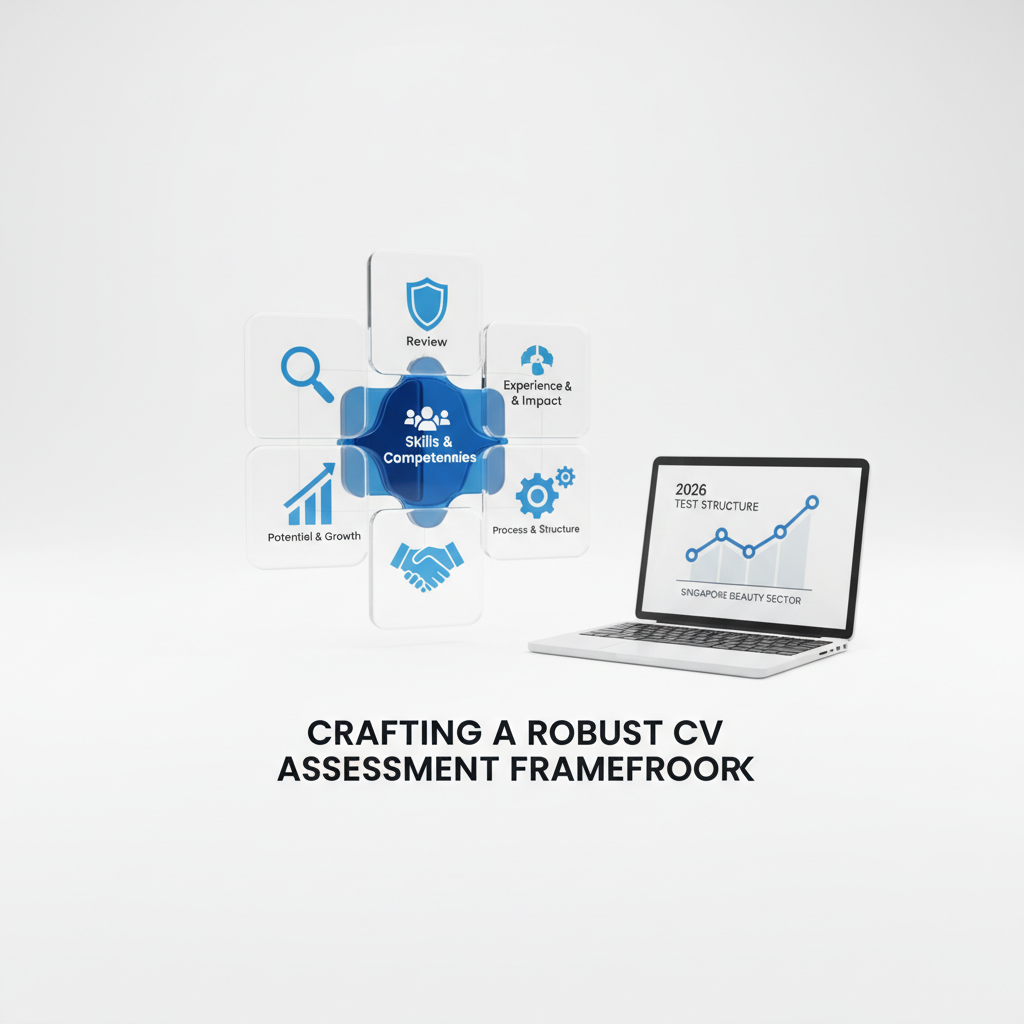
Learn how to build a systematic and objective framework for evaluating manager-level beauty CVs, ensuring consistency and fairness in your screening process. In the competitive beauty landscape of Singapore, securing top managerial talent requires more than just a quick glance at resumes. A test structure to assess Manager Level CVs in beauty field in Singapore is paramount for an objective and effective recruitment process. This section delves into creating a comprehensive candidate evaluation framework that brings rigor and fairness to your beauty industry hiring, moving beyond subjective impressions to a data-driven approach.
Implementing a structured approach to CV screening not only streamlines the recruitment best practices but also significantly enhances the quality of hires. It ensures that every candidate is assessed against the same criteria, fostering fair hiring practices and identifying individuals with the strategic talent acquisition capabilities required for leadership roles in the dynamic beauty sector.
-
Developing a Scoring Rubric for Managerial Skills
The foundation of any robust CV assessment framework is a well-defined scoring rubric. For manager-level roles in the beauty industry, this means identifying core managerial competencies essential for success. Key areas include leadership, strategic thinking, team management, communication, problem-solving, and financial acumen. Each competency should be broken down into measurable indicators, allowing for an objective CV review. For instance, ‘leadership’ could be assessed by evidence of managing diverse teams, leading successful projects, or implementing significant initiatives within a beauty brand or retail environment.
Creating a points-based system where specific achievements or experiences are assigned scores ensures consistency across all applicants. A comprehensive skills matrix development can map desired skills against experience levels and assign weightings based on their criticality to the role. This methodical approach transforms the subjective art of resume reading into a more scientific process, aligning closely with desired performance indicators for managers. For example, a candidate demonstrating a track record of increasing sales or market share for beauty products in a previous role would score highly on commercial acumen and strategic execution.
-
Integrating Role-Specific Competency Checks
Beyond general managerial skills, success in the beauty field requires a unique blend of industry-specific knowledge and experience. Integrating role-specific competency checks means evaluating a candidate’s understanding of the Singapore beauty market, their experience with product launches, brand development, retail operations, digital marketing in beauty, and client relationship management within a luxury or mass-market context. This is where a deep understanding of the beauty industry hiring landscape becomes critical.
Review CVs for tangible achievements such as launching new product lines, expanding market reach for beauty brands, or successfully navigating regulatory landscapes specific to Singapore. Look for language that demonstrates a grasp of current beauty trends, consumer behavior shifts, and innovative retail strategies. This competency-based assessment ensures that candidates not only possess the generic managerial capabilities but also the specialized expertise required to thrive in a managerial role within the competitive Singapore beauty market. To effectively define these, refer to established frameworks like those discussed by authoritative HR bodies, which guide the creation of relevant competency models. (SHRM: Build Your Own Competency Model)
-
Leveraging Technology for Initial Screening (ATS & AI)
In today’s high-volume recruitment environment, leveraging technology is no longer optional but a necessity for an efficient CV screening process. Applicant Tracking Systems (ATS) play a crucial role in managing applications, standardizing data, and performing initial keyword searches. These systems can filter out candidates who don’t meet minimum requirements, such as specific years of experience or qualifications, saving valuable recruiter time.
Furthermore, AI in recruitment is advancing rapidly, offering capabilities to analyze CVs for more nuanced traits, predict job performance, and even help mitigate unconscious bias by focusing purely on skills and experience. AI tools can identify patterns, extract relevant information, and score CVs based on predefined criteria from your rubric. While technology provides powerful initial insights and helps narrow down a large pool, it’s crucial to remember that it serves as an aid. The final stages of candidate evaluation framework should always involve human discernment to assess soft skills, cultural fit, and strategic alignment, ensuring a balanced and comprehensive approach to talent acquisition for your beauty organization.
By systematically applying these three pillars, your organization can establish a robust, fair, and highly effective framework for assessing manager-level CVs in the beauty field in Singapore. This structured approach not only enhances the efficiency of your recruitment efforts but also ensures you consistently attract and onboard the best leadership talent to drive your business forward.
Beyond the CV: Validating Potential & Leadership
In the dynamic and competitive beauty industry of Singapore, a curriculum vitae (CV) alone often presents only a superficial view of a candidate’s true capabilities. To truly unearth high-calibre managerial talent, particularly within the fast-evolving Singapore beauty market, recruiters must look beyond basic qualifications. This involves employing a robust test structure to assess Manager Level CVs in beauty field in singapore that delves into leadership style, strategic thinking, and cultural fit – insights crucial for success but rarely apparent from a resume. Our approach focuses on validating managerial potential assessment and evaluating leadership qualities evaluation by employing targeted methodologies designed for the unique demands of beauty brand management and retail operations leadership.
1. Structuring Targeted Pre-Screening Questions
Effective talent acquisition strategies begin with meticulously crafted pre-screening questions. These aren’t merely about verifying experience; they’re designed to elicit behavioral insights and gauge a candidate’s alignment with the role’s strategic demands. For manager-level positions in the beauty sector, questions should probe beyond direct accomplishments to understand *how* those accomplishments were achieved. For instance, instead of “Did you lead a team?”, ask “Describe a time you had to pivot a team strategy in response to an unexpected market shift in the beauty industry. What was your role, what challenges did you face, and what was the outcome?” This approach allows for early identification of strategic decision-making skills and an individual’s approach to innovation in beauty. Questions should also explore a candidate’s understanding of the unique consumer behaviors and market trend analysis (beauty) prevalent in Southeast Asia, particularly Singapore. Behavioral interview techniques, when integrated early, can significantly enhance the initial screening process, sifting out candidates who might look good on paper but lack the depth required for complex managerial roles.
2. Analyzing Leadership Styles and Strategic Thinking
Once initial screenings are complete, the next phase focuses on a deeper dive into leadership competencies. This often involves structured interviews and, increasingly, scenario-based assessments or case studies. For instance, presenting a hypothetical challenge related to product launch in the Singapore beauty market or a crisis in retail operations leadership allows candidates to demonstrate their strategic thinking abilities in real-time. How do they prioritize? What data do they consider? How do they plan for contingencies? This can be particularly revealing for assessing a candidate’s capacity for stakeholder management (beauty sector) and their ability to drive results in a competitive landscape. Furthermore, understanding their leadership style—are they transformational, collaborative, or decisive?—is paramount. Tools like the STAR method (Situation, Task, Action, Result) are invaluable for dissecting past experiences and predicting future performance. This systematic evaluation, which goes beyond superficial job titles, is critical for identifying individuals who can genuinely contribute to the organization’s strategic goals and foster a high-performing team. The Society for Human Resource Management (SHRM) provides excellent resources on strategic interviewing techniques, which can be adapted for the beauty industry’s specific nuances.
3. Assessing Industry-Specific Business Acumen
Beyond generic leadership and strategic capabilities, a successful manager in the beauty industry requires acute industry-specific business acumen. This means understanding not just general business principles but also the unique challenges and opportunities within beauty brand management, product lifecycle, supply chain intricacies, and consumer psychology specific to the beauty market. Assessments can include requiring candidates to develop a mini marketing plan for a new beauty product launch in Singapore, or to analyze the financial implications of expanding a retail footprint. This approach helps evaluate their grasp of market dynamics, competitive landscape, and regulatory environment in Singapore. Candidates should be able to articulate their vision for growth, demonstrate an understanding of profitability drivers, and showcase their ability to translate market insights into actionable business strategies. For instance, a question might be: “Given current market trends, how would you innovate to capture a larger share of the sustainable beauty segment in Singapore?” Such questions not only reveal their business knowledge but also their creativity and forward-thinking approach, which are vital for sustained success in the fast-paced beauty sector. This holistic view, blending technical expertise with leadership prowess, ensures that the selected manager is not only a good leader but also a genuine industry expert capable of navigating the unique complexities of the beauty industry recruitment landscape.
Optimizing Your Hiring Process for 2026 and Beyond
Gain forward-thinking strategies for continuously refining your CV assessment and overall recruitment pipeline, adapting to future industry changes and attracting top-tier talent.
In the rapidly evolving landscape of global talent, the beauty sector Singapore is no exception, demanding a strategic overhaul of traditional hiring practices. As we look towards 2026 and beyond, businesses must move beyond reactive recruitment to embrace a proactive, data-driven approach designed for future-proof hiring. This means not just filling roles, but meticulously crafting a Test structure to assess Manager Level CVs in beauty field in singapore that identifies true leadership potential, adaptability, and specialized expertise crucial for navigating dynamic market trends and technological shifts. Optimizing your entire recruitment pipeline optimization is paramount to securing high-caliber professionals who will drive innovation and growth.

1. Feedback Loops for Continuous Improvement
A truly optimized hiring process thrives on continuous learning. Establishing robust continuous feedback mechanisms is essential for refining your CV assessment strategies and ensuring your Test structure to assess Manager Level CVs in beauty field in singapore remains relevant and effective. This involves gathering insights not just from hiring managers and interviewers, but critically, from newly onboarded managerial leadership skills talent. What aspects of their CV were truly indicative of their on-the-job success? Where did the assessment fall short? Equally important is soliciting feedback from candidates, even those not selected. Understanding their perception of the candidate journey enhancement, the clarity of the interview frameworks, and the relevance of any tests provides invaluable data. This iterative process allows HR and talent acquisition teams to regularly review and adjust assessment criteria, improving the predictive validity of their selection tools and enhancing the overall efficacy of the recruitment pipeline optimization. By actively listening and adapting, organizations can ensure their assessment tools evolve alongside their business needs, making every hiring cycle smarter than the last.
2. Adapting to Evolving Industry Standards and Skill Demands
The beauty industry is a vibrant ecosystem, constantly shaped by technological advancements, consumer preferences, and sustainability imperatives. To attract and retain top-tier talent attraction, your hiring process must be agile and forward-looking. This necessitates a deep understanding of evolving industry demands and anticipated skill gap analysis. For managerial roles in Singapore’s beauty sector, this might mean prioritizing digital literacy, e-commerce expertise, data analytics capabilities, and a strong understanding of AI’s potential applications, alongside traditional leadership and marketing prowess. HR teams should collaborate closely with business leaders to forecast future skill needs, not just current requirements. Regularly updating job descriptions, refining interview frameworks, and integrating modern digital assessment tools that evaluate critical thinking, adaptability, and emotional intelligence are vital steps. Keeping abreast of global trends in talent development, as highlighted in reports like Deloitte’s “Rethinking skills: Beyond the reskilling imperative”, can provide a competitive edge in identifying and valuing the competencies that will define future success. This proactive stance ensures your Test structure to assess Manager Level CVs in beauty field in singapore is designed to spot leaders who can truly innovate and steer the company through upcoming challenges.
3. Enhancing Candidate Experience for High-Caliber Professionals
In a competitive market, high-caliber professionals have options. A streamlined, respectful, and engaging candidate journey enhancement isn’t just a nicety; it’s a strategic imperative for strategic HR planning. From the initial application to the final offer, every touchpoint reflects on your employer brand. For manager-level candidates, this often means clear communication, realistic expectations about the Test structure to assess Manager Level CVs in beauty field in singapore, and a perceived value in the process itself. Long delays, opaque communication, or generic feedback can deter even the most promising individuals. Investing in user-friendly application systems, providing timely updates, and ensuring that any assessments or interviews are professionally conducted and relevant to the role can significantly improve perceptions. A positive experience, regardless of the outcome, can turn a candidate into a brand advocate or even a future applicant. This holistic approach to talent acquisition ensures that your organization not only identifies the right skills but also wins over the hearts and minds of the beauty sector Singapore’s most sought-after talent, reinforcing your reputation as an employer of choice committed to an agile talent acquisition strategy. Learn more about refining your assessment processes for specific roles by exploring resources on Test structure to assess Manager Level CVs in beauty field in singapore.
Partner with Shelby Global
You are looking for reliable HR Sevice Suppliers? Contact Shelby Global Now! To connect with verified talents and upgrade your orginization.
—————————————
References
– Statista: Beauty & Personal Care Market in Singapore: https://www.statista.com/outlook/cmo/beauty-personal-care/singapore
– quantifying achievements in your resume: https://hbr.org/2021/04/how-to-write-a-resume-that-gets-noticed
– SHRM: Build Your Own Competency Model: https://www.shrm.org/hr-today/news/hr-magazine/0517/pages/competency-model.aspx
– Strategic Interviewing Techniques: https://www.shrm.org/resources-and-tools/hr-topics/talent-acquisition/pages/strategic-interviewing.aspx
– :



































































































