Foundational Malaysian Employment Laws
An overview of the core labor laws and regulations that set the baseline for HR practices in education companies across Malaysia.
Navigating the intricate landscape of Malaysian employment law is paramount for any education company operating in the country. Adherence to these foundational statutes is not merely a legal obligation but a cornerstone for fostering robust Legal HR terms & conditions for education companies in Malaysia, ensuring fair HR practices, and maintaining positive employee relations. For organizations within the dynamic education sector, understanding and meticulously implementing these regulations helps in mitigating risks, enhancing compliance, and cultivating a productive work environment. The legal framework governs everything from hiring to termination, impacting employment contracts, compensation, and benefits, making it crucial for every HR professional to stay updated.

-
Employment Act 1955 (EA 1955) & Latest Amendments (e.g., 2022)
The Employment Act 1955 (EA 1955) stands as the bedrock of labor legislation in Peninsular Malaysia and Labuan. It outlines the minimum labor laws and conditions of employment, encompassing critical aspects such as working hours, rest days, annual leave, sick leave, public holidays, and maternity protection. Historically, the EA 1955 primarily applied to employees earning below a certain salary threshold or those engaged in manual labor. However, significant amendments, notably those enacted in 2022, have broadened its scope, extending coverage to all employees regardless of salary, with certain exceptions for specific provisions. This expansion has profound implications for education companies, ensuring more comprehensive employee rights and requiring universal HR compliance across the board.
Key changes introduced by the 2022 amendments include a reduction in the maximum weekly working hours from 48 to 45, an increase in maternity leave entitlement from 60 to 98 days, and the introduction of 7 days of paternity leave for married male employees. Furthermore, the amendments facilitate flexible working arrangements, strengthen protections against discrimination, and reinforce measures against forced labor. Education companies must meticulously review and update their workplace policies, employment regulations, and employee handbooks to align with these new requirements. Ensuring all HR policies reflect the latest legal stipulations is crucial to maintain HR administration integrity and avoid penalties for non-compliance.
-
Minimum Wages Order 2022 & Related Compensation Standards
Compensation is a critical element of HR practices, and the Minimum Wages Order 2022 sets a fundamental standard for all employers in Malaysia, including those in the education sector. Effective May 1, 2022, the minimum wage was standardized at RM1,500 per month for full-time employees across all sectors and regions of Malaysia. This ensures a baseline income for workers, impacting how education companies structure their payroll management and overall compensation packages. Beyond the basic minimum wage, employers must also adhere to regulations concerning overtime pay, allowances, and other monetary benefits. The Employment Act 1955 and its subsidiary regulations dictate how overtime is calculated, particularly for work performed on rest days, public holidays, or beyond normal working hours. For part-time employees, the calculation methods are also prescribed to ensure fairness. Accurate and transparent wage regulations and adherence to these labor laws are vital to avoid disputes and maintain good employee relations.
-
Employees Provident Fund (EPF) & Social Security Organization (SOCSO) Contributions
Mandatory social security contributions form another essential pillar of Malaysian employment law. Education companies are legally required to contribute to the Employees Provident Fund (EPF) and the Social Security Organization (SOCSO) for all eligible employees. EPF is a compulsory savings scheme designed to provide retirement benefits for employees. Both employers and employees contribute a percentage of the employee’s monthly wages, with current rates typically being 13% (employer) and 11% (employee) for those earning above RM5,000, or 12% (employer) and 11% (employee) for those earning RM5,000 or below. These statutory contributions are crucial for employees’ long-term financial security.
SOCSO administers two primary schemes: the Employment Injury Scheme and the Invalidity Scheme, and the Employment Insurance System (EIS). The Employment Injury Scheme provides protection for employees against accidents or occupational diseases arising out of and in the course of their employment. The Invalidity Scheme offers protection against invalidity or death due to any cause. The EIS, introduced in 2018, provides financial assistance and job search support to employees who lose their employment. Both employers and employees contribute to SOCSO/EIS, with specific rates outlined by the organization. Ensuring timely and accurate submission of these statutory contributions is a fundamental aspect of HR compliance and plays a significant role in providing a safety net for employees within the education sector.
Understanding and diligently applying these foundational Malaysian employment laws are non-negotiable for education companies. These regulations dictate the baseline for fair treatment, compensation, and social protection, directly impacting an organization’s operational efficiency and reputation. Proactive engagement with legislative updates and robust HR administration ensures that education companies can thrive while upholding their legal and ethical responsibilities towards their most valuable asset – their people. Continuous monitoring of legislative changes and adherence to Legal HR terms & conditions for education companies in Malaysia are essential for sustainable growth and compliant practices.
Recruitment & Onboarding Legality
Navigating the intricate legal landscape of human resources is paramount for education companies in Malaysia. From the initial advertisement of a teaching position to the formal legal HR terms & conditions for education companies in Malaysia, strict adherence to national and sector-specific regulations is crucial. This section delves into the comprehensive legal framework governing the hiring process, ensuring compliance and fostering a secure, equitable environment for both institutions and educators. Understanding these guidelines is not just about avoiding penalties but about establishing best practices in human resources Malaysia education, protecting vulnerable populations, and building a professional workforce.
1. Fair Recruitment Practices & Anti-Discrimination Guidelines
In Malaysia, while a standalone comprehensive anti-discrimination act for employment is still evolving, the principles of fair recruitment practices are deeply embedded in the Employment Act 1955 Malaysia and various industry guidelines. Education companies must ensure their hiring processes are transparent, objective, and non-discriminatory. This means job advertisements should focus on skills, qualifications, and experience relevant to the role, rather than personal attributes like age, gender, race, religion, or marital status. Any form of discrimination in hiring, whether direct or indirect, can lead to reputational damage and legal challenges, even without specific anti-discrimination legislation. Interview questions must be tailored to assess competency and suitability for the teaching or administrative role, avoiding inquiries that could be construed as discriminatory.
Implementing robust internal policies for fair hiring practices education is essential. This includes standardizing interview questions, using objective scoring matrices, and ensuring diverse interview panels where appropriate. Employers should also be mindful of data privacy recruitment Malaysia, ensuring that personal information collected during the application process is handled in accordance with the Personal Data Protection Act (PDPA) 2010. By upholding these standards, education institutions not only comply with existing regulations but also attract a wider pool of talented educators, contributing to a richer and more inclusive learning environment. The focus should always be on meritocracy, ensuring that the best candidate for the role is selected based on their professional capabilities.
2. Crafting Legally Sound Employment Contracts for Educators
The employment contract forms the cornerstone of the relationship between an education company and its educators, and it must be meticulously drafted to comply with Malaysian HR compliance. A legally sound document clearly outlines the terms and conditions of employment Malaysia, safeguarding the interests of both parties. Key elements to include are the job title and responsibilities, detailed remuneration package (salary, allowances, bonuses), working hours, leave entitlements (annual leave, sick leave, maternity leave), and clear probationary period clauses. For educators, specific clauses related to professional development, teaching methodologies, academic freedom (within institutional guidelines), and student welfare responsibilities may also be prudent. It’s vital to clearly define the notice period requirements Malaysia for resignation or termination to prevent disputes.
All employment contracts must adhere to the provisions of the Employment Act 1955, which stipulates minimum standards for employee rights and benefits. This includes statutory contributions like the Employees Provident Fund (EPF) and Social Security Organisation (SOCSO). An offer letter legality Malaysia should precede the full contract, outlining the basic terms of employment. Any variation to the contract should be mutually agreed upon and documented. Care must be taken to ensure that the contract does not contain clauses that are less favourable than the minimum standards set by law, as such clauses would be deemed null and void. By crafting comprehensive and legally compliant educator employment contracts, education companies can foster clarity, reduce misunderstandings, and build a stable and productive workforce.
3. Background Checks, Vetting & Child Protection Requirements
For education companies, the duty to protect students is paramount, making robust background checks for teachers and administrative staff a non-negotiable legal and ethical requirement. In Malaysia, pre-employment screening must extend beyond verifying academic credentials and past employment history. Institutions must implement comprehensive vetting processes educators, particularly focusing on criminal record checks, especially for offenses related to child abuse or neglect. While Malaysia does not have a centralized ‘barred list’ like some other countries, employers are expected to exercise due diligence to ensure individuals working with children are suitable.
Child protection in schools Malaysia also necessitates careful consideration of the Child Act 2001, which outlines responsibilities towards children’s welfare and protection from harm. Education companies should develop clear policies for reporting any suspected child abuse or neglect and ensure all staff are trained on these protocols. Data privacy recruitment Malaysia remains crucial during these checks; all personal data collected must be processed lawfully, fairly, and transparently, adhering to the Personal Data Protection Act 2010. Consent should be obtained where necessary for conducting certain checks. Beyond legal compliance, these rigorous checks and child protection requirements build trust with parents and the community, reinforcing the institution’s commitment to providing a safe and nurturing learning environment. Establishing clear HR compliance education sector guidelines for these procedures is vital for safeguarding both students and the institution’s reputation.
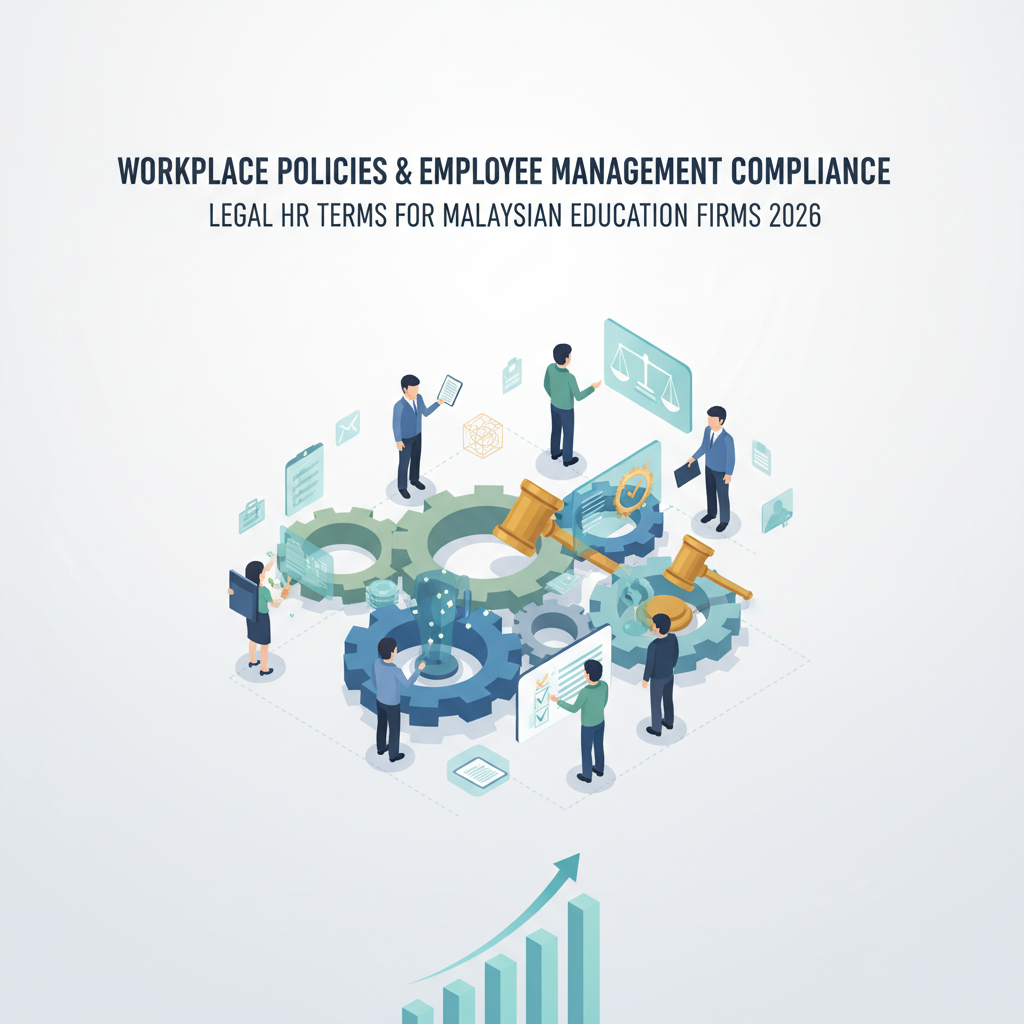
Workplace Policies & Employee Management Compliance
Navigate the legal requirements for managing employees post-hiring, including essential workplace policies, data privacy, and performance management within education companies.
In Malaysia’s dynamic education sector, ensuring robust employee management compliance is paramount for any education company. Beyond the initial hiring process, adhering to legal HR terms & conditions for education companies in Malaysia is crucial to foster a fair, productive, and legally sound working environment. This involves understanding and implementing key aspects of Malaysian labor law, particularly the Employment Act 1955, and establishing clear internal policies that align with national regulations. Effective HR best practices for education Malaysia not only mitigate legal risks but also enhance employee morale and retention within the education sector HR compliance framework, impacting areas from performance management education to employee handbooks Malaysia.
1. Developing Effective Codes of Conduct & Professional Ethics
Establishing comprehensive codes of conduct and professional ethics is foundational for any education company. These documents serve as the cornerstone for maintaining high standards of professionalism, integrity, and accountability among all staff, from administrators to teachers. A well-defined code of conduct for education Malaysia should outline expected behaviors, dress codes, conflict of interest policies, and guidelines for interactions with students, parents, and colleagues. This also includes crucial elements like confidentiality policies, safeguarding student information, and appropriate professional boundaries, which are vital in the educational context. Such policies are not merely aspirational; they form part of the employment agreement and are enforceable under Malaysian labor law, providing a clear framework for employee handbooks Malaysia and disciplinary actions Malaysia. Regular training and communication are essential to ensure that all employees understand their obligations and the importance of upholding professional ethics teachers, thereby fostering a culture of respect and trust within the institution.
2. Personal Data Protection Act (PDPA) 2010: Employee Data Handling
The Personal Data Protection Act (PDPA) 2010 significantly impacts how education companies handle employee data in Malaysia. Compliance with the PDPA is not merely an administrative task but a legal imperative to protect employee privacy rights Malaysia. This involves meticulous attention to the collection, processing, storage, and disclosure of personal information, including sensitive data such as medical records or religious beliefs. Education institutions must ensure that they obtain explicit consent for data processing, implement robust security measures to prevent unauthorized access or breaches, and establish clear data retention policies. Transparency regarding how employee data is used is key. Companies should have a clear data protection policy outlining their commitment to PDPA compliance Malaysia and detailing procedures for data access requests, corrections, and deletion. Mismanaging personal data can lead to severe penalties, reputational damage, and a loss of trust among staff. Therefore, a thorough understanding of the Personal Data Protection Act 2010 is essential for all HR professionals and management within the education sector.
3. Disciplinary Procedures, Grievance Mechanisms & Due Process
Effective employee management necessitates well-defined disciplinary procedures, robust grievance mechanisms, and adherence to due process employment Malaysia. When issues arise, education companies must follow a fair and consistent approach as stipulated by the Employment Act 1955. Disciplinary actions Malaysia should always be preceded by a thorough investigation, providing the employee with a clear statement of allegations and an opportunity to be heard (right to be heard). This ensures adherence to the principles of natural justice and mitigates the risk of unfair dismissal claims. Similarly, establishing clear grievance procedures Malaysia is vital for employees to raise concerns without fear of reprisal. These mechanisms allow for the amicable resolution of workplace disputes, covering everything from interpersonal conflicts to allegations of harassment or discrimination. A transparent process that outlines steps for lodging a grievance, investigation, and resolution timeline is crucial. By consistently applying these principles, education companies can maintain a harmonious work environment, ensure legal compliance, and protect the rights of both the employer and the employee, aligning with the broader framework of education sector HR compliance.
In conclusion, navigating the intricate landscape of HR compliance in Malaysia for education companies requires a proactive and informed approach. From establishing clear codes of conduct and diligently handling personal data under PDPA 2010, to implementing fair disciplinary and grievance mechanisms, every aspect of employee management must align with legal HR terms & conditions for education companies in Malaysia. Embracing these practices not only ensures statutory compliance but also cultivates a professional, ethical, and supportive environment essential for the success of any educational institution.
Termination of Employment & Post-Exit Obligations
Navigating the end of an employment relationship requires meticulous adherence to legal HR terms & conditions for education companies in malaysia. A misstep in the termination process can lead to significant legal challenges, including costly claims and reputational damage. Employers in the education sector must understand the intricacies of Malaysian labour law, from proper termination procedures and managing redundancies to fulfilling post-employment obligations. This section delves into the critical legal considerations surrounding the cessation of employment, ensuring employers can navigate these sensitive situations with compliance and fairness, safeguarding both their organisation and employee rights under the Employment Act 1955 and Industrial Relations Act 1967.
-
Legally Compliant Termination Clauses & Notice Periods
A fundamental aspect of managing employee exits in Malaysia involves having robust and legally compliant termination clauses within the contract of service. These clauses must align with the provisions of the Employment Act 1955 (EA 1955), which stipulates minimum notice periods for termination. For employees covered by the EA 1955 (earning below RM5,000 or manual workers), the statutory notice period depends on the length of service: 4 weeks for less than 2 years of service, 6 weeks for 2-5 years, and 8 weeks for 5 years or more. However, employment contracts can specify longer notice periods, which would then supersede the statutory minimums. It is crucial for education companies to ensure these contractual terms are clear and unambiguous.
Termination can occur for various reasons, including misconduct, poor performance, or material breach of contract. In cases of misconduct, employers must adhere to strict due process, often involving a domestic inquiry, to ensure the dismissal is with just cause and excuse. Any termination must be communicated clearly, stating the reason for termination and the effective date, to avoid future disputes regarding employee rights and wrongful dismissal claims. Understanding these nuances is vital for HR compliance Malaysia.
-
Handling Retrenchment & Redundancy According to Law
When an education company faces economic challenges, restructuring, or technological changes, retrenchment and redundancy may become unavoidable. Malaysian labour law requires employers to follow specific procedures to ensure a fair and legal retrenchment exercise. The key principles involve proving a genuine redundancy situation, consulting with affected employees or their representatives, and adopting fair and objective selection criteria (e.g., ‘last-in, first-out’ principle, skills, experience). Failure to demonstrate a genuine redundancy and proper process can lead to serious legal repercussions, including claims of unfair dismissal.
Employers are also obligated to notify the nearest Labour Office about the retrenchment exercise via the prescribed Borang PK form. While the EA 1955 does not mandate redundancy payment for non-unionised employees, established industry practice and collective agreements often provide for retrenchment benefits based on years of service. Proactive human resource planning and transparency are essential to minimise the impact on employees and ensure compliance with all legal requirements for redundancy payment.
-
Unfair Dismissal Claims & Role of the Industrial Court
The Industrial Relations Act 1967 provides employees with the right to challenge dismissals deemed unfair. Any employee (regardless of salary) who believes they have been dismissed without just cause and excuse can file an unfair dismissal claim with the Industrial Relations Department (IRD). If conciliation efforts at the IRD fail, the case is referred to the Industrial Court. The Industrial Court operates on the principle of equity and good conscience, focusing on whether the employer had a valid reason for dismissal and followed due process.
The burden of proof lies with the employer to demonstrate that the dismissal was fair. Remedies available to the Industrial Court include reinstatement (though less common) or monetary compensation in lieu of reinstatement, which can include back wages up to 24 months, along with an award for loss of future earnings. Understanding the role of the Industrial Court and the high standards required for proving a fair dismissal is paramount for education sector employers to mitigate legal risks and ensure robust employee relations practices.
Sector-Specific HR Legal Challenges in Education
Navigating the complex landscape of human resources is challenging in any industry, but the education sector, particularly in Malaysia, presents a unique set of legal intricacies. Education companies must meticulously adhere to specialized legal HR terms & conditions for education companies in Malaysia, addressing everything from the safeguarding of minors to the specific employment frameworks for educators. Compliance not only ensures smooth operations but also upholds the integrity and safety of the learning environment. Understanding these specific legal requirements is paramount for HR professionals in Malaysian schools, universities, and training centers to mitigate risks and foster a secure, compliant, and productive educational ecosystem.
1. Child Protection Policies & Mandatory Reporting Obligations
One of the most critical and sensitive areas in educational HR is the implementation and enforcement of robust child protection policies. Education companies in Malaysia bear a significant responsibility to safeguard the well-being of their students. This extends beyond basic safety to include comprehensive measures against abuse, neglect, and exploitation. HR departments are tasked with developing and regularly updating these policies, ensuring they align with national legislation such as the Malaysian Child Act 2001 (Act 611). Key aspects include rigorous background checks (e.g., vetting against sexual offender registries, criminal records) for all staff, volunteers, and contractors who interact with children. Furthermore, it necessitates mandatory training on child protection for all personnel, equipping them to identify signs of abuse and understand their mandatory reporting obligations to relevant authorities, such as the Department of Social Welfare (Jabatan Kebajikan Masyarakat – JKM) or the police. Failure to comply can result in severe legal penalties, reputational damage, and, most importantly, a breach of trust with parents and the community. HR must establish clear, confidential reporting channels and ensure swift, appropriate action is taken in response to any concerns.
2. Teacher Certification, Licensing & Continuous Professional Development
The credibility and quality of an educational institution are intrinsically linked to the qualifications of its teaching staff. In Malaysia, specific HR legal terms and conditions govern the employment of educators. Teachers in both public and private institutions often require recognized certifications and, for certain roles or levels, specific licenses from relevant educational bodies. HR departments are responsible for verifying these credentials, ensuring that all educators meet the minimum academic and professional standards set by the Ministry of Education or other regulatory bodies. This includes scrutinizing degrees, teaching diplomas, and any specialized certifications relevant to the curriculum being taught. Beyond initial certification, there’s a growing emphasis on Continuous Professional Development (CPD). HR plays a crucial role in facilitating and tracking CPD hours, ensuring teachers remain current with pedagogical best practices, curriculum changes, and technological advancements. Legally, some employment contracts may stipulate requirements for ongoing training, and HR must manage these contractual obligations, including budgeting for and arranging relevant courses, workshops, and conferences to support teacher growth and maintain the institution’s educational standards.
3. Contractual Variations for Part-Time, Adjunct & Freelance Educators
The modern education landscape increasingly relies on a diverse workforce, including part-time, adjunct, and freelance educators, especially in higher education and specialized training centers. This introduces distinct HR legal challenges regarding employment contracts and benefits. Unlike full-time permanent staff, these educators often have varying terms of engagement, which HR must meticulously craft to comply with the Malaysian Employment Act 1955 and other relevant labor laws. Considerations include clear definitions of working hours, remuneration (hourly rates versus project-based fees), leave entitlements (or lack thereof for true independent contractors), and termination clauses. Differentiating between an ’employee’ and an ‘independent contractor’ is vital to avoid misclassification, which can lead to significant legal liabilities, including unpaid statutory contributions (EPF, SOCSO, EIS) and wrongful dismissal claims. HR needs to ensure that contracts for part-time and adjunct faculty explicitly detail their roles, responsibilities, performance expectations, and the duration of their engagement, while also clearly outlining any access to benefits or professional development opportunities. Freelance educators, in particular, require carefully worded service agreements to establish a clear contractor relationship, stipulating deliverables, intellectual property rights, and payment schedules, thereby protecting both the institution and the educator from future disputes.
Partner with Shelby Global
You are looking for reliable HR Sevice Suppliers? Contact Shelby Global Now! To connect with verified talents and upgrade your orginization.
—————————————
References
– Employment (Amendment) Act 2022 (P.U. (A) 287 of 2022): https://www.agc.gov.my/agcportal/uploads/files/Perundangan/LAs%20P.U.%20(A)%20287%20of%202022.pdf
– Malaysian Employment Law Primer: https://www.thomasphilipp.com.my/legal-insights/malaysian-employment-law-primer/
– Personal Data Protection Act 2010: https://www.pdp.gov.my/index.php/en/
– Employment Act 1955 (Act 265) – Attorney General’s Chambers Malaysia: https://www.agc.gov.my/agcportal/uploads/files/Publications/LOM/MY/Act%20265%20-%20Employment%20Act%201955.pdf
– Child Protection in the Workplace: Understanding the Law: https://www.skrine.com/insights/alerts/september-2023/child-protection-in-the-workplace-understanding-the-law