
Scope of Role: From Hands-On to Broad Vision
In Vietnam’s vibrant and rapidly evolving technology sector, the distinctions between an HR Manager at a Small and Medium-sized Enterprise (SME) and a Corporate HR Director are profound, reflecting vastly different strategic priorities, operational demands, and leadership scopes. Understanding these differences between the SMEs’ HR Manager and the Corporates’ HR Director in technology field in vietnam is crucial for aspiring HR professionals and businesses aiming to optimize their human capital strategies. While both roles are fundamental to an organization’s success, they navigate distinct challenges and opportunities within their respective environments, requiring unique skill sets and approaches.

1. Operational vs. Strategic Focus
The primary divergence lies in the fundamental orientation of their work. An SME HR Manager in Vietnam’s tech landscape is typically characterized by an operational focus. Their day-to-day responsibilities are heavily skewed towards immediate, tactical needs. This includes managing recruitment drives for urgent hiring needs, ensuring compliance with local labor laws (which can be complex and ever-changing in Vietnam), handling payroll processing, administering employee benefits, and addressing immediate employee relations issues. Their role is often reactive, responding to the daily demands of a growing, agile organization with limited resources. They are the frontline implementers of HR policies and procedures, ensuring smooth daily operations.
Conversely, a Corporate HR Director operates with a predominantly strategic focus. In a large tech corporation, their purview extends far beyond daily administration to encompass long-term organizational development. They are instrumental in shaping talent management frameworks, designing compensation and benefits structures that attract top-tier tech talent, developing robust succession planning initiatives, and fostering a corporate culture that aligns with the company’s global vision. This role involves proactive planning, forecasting future workforce needs, and integrating HR strategies directly with the overarching business objectives, often advising senior leadership on talent-related decisions that impact the entire organization’s trajectory.
2. Holistic Generalist vs. Specialized Leadership
Another significant distinction lies in the breadth versus depth of responsibility. The SME HR Manager often functions as a Holistic Generalist. Due to leaner structures and budget constraints prevalent in Vietnamese SMEs, the HR Manager is frequently a one-person HR department or part of a very small team. This means they are responsible for a wide array of HR functions: from sourcing candidates and conducting interviews to drafting employment contracts, managing performance reviews, overseeing training programs, and even internal communications. They must possess a broad understanding of all HR domains, adapting quickly to diverse demands and often wearing multiple hats concurrently.
In contrast, a Corporate HR Director leads Specialized Leadership teams. Large corporations typically have dedicated departments for various HR functions—talent acquisition, compensation and benefits, HR information systems (HRIS), organizational development, and employee relations. The HR Director’s role is to oversee these specialized units, ensuring cohesion and alignment with the overall HR strategy. They guide specialists, make high-level decisions regarding policy implementation across multiple departments or even countries, and leverage expert knowledge from their teams to execute complex HR initiatives. Their leadership is more about strategic oversight and less about hands-on execution of every HR task.
3. Day-to-Day HR Administration (SME)
The emphasis on Day-to-Day HR Administration (SME) is a defining characteristic of the SME HR Manager’s role. Their workload is heavily weighted towards the routine, transactional, and compliance-driven aspects of human resources. This includes meticulous record-keeping, managing employee onboarding and offboarding processes, handling leave requests, processing visa and work permit applications for foreign tech talent, mediating workplace disputes, and ensuring that all HR activities adhere to the strict guidelines of Vietnamese labor law. They are often the first point of contact for employee queries, concerns, and administrative needs, requiring strong interpersonal skills and a deep understanding of local regulations.
While a Corporate HR Director is ultimately accountable for the effective administration of HR within their domain, they typically delegate these granular tasks to their specialized teams or HR business partners. Their involvement is usually at a policy or strategic review level, ensuring that administrative processes are efficient, compliant, and supportive of the larger HR objectives. The Director’s time is freed up to focus on higher-level concerns such as talent analytics, market trend analysis, and developing innovative HR solutions that drive competitive advantage in Vietnam’s dynamic tech industry.
In essence, while both roles are pivotal in nurturing human capital, the SME HR Manager is the architect and builder of foundational HR operations, whereas the Corporate HR Director is the visionary leader mapping the strategic landscape, ensuring that HR effectively fuels the organization’s long-term growth and success within the competitive Vietnamese tech sector.
Strategic Influence & Decision-Making Power
In Vietnam’s dynamic technology sector, the strategic influence and decision-making power of HR professionals vary significantly between Small and Medium-sized Enterprises (SMEs) and large corporations. While both the HR Manager in an SME and the HR Director in a corporate giant are crucial for organizational success, their scope, methods, and impact on long-term planning, business decisions, and HR policy formulation diverge considerably, reflecting their respective company structures and strategic imperatives. Understanding these key differences in HR roles is essential for appreciating the unique contributions each brings to their organization’s strategic journey, especially concerning strategic HR planning and execution.
1. Direct Business Partnering vs. Boardroom Presence
The HR Manager in a Vietnamese tech SME typically operates in a highly agile and often hands-on capacity. Their strategic influence is characterized by direct business partnering, often working side-by-side with founders and the core leadership team. Given the lean structures of SMEs, the HR Manager is frequently involved in day-to-day operational decisions that have immediate strategic implications, such as rapid talent acquisition for a crucial project deadline or advising on compensation packages to secure a high-demand tech specialist. Their contribution to HR strategy Vietnam tech startups often involves an intimate understanding of individual team dynamics and direct, informal input into immediate business challenges. While a formal “boardroom presence” might be less frequent or structured, their proximity to decision-makers ensures their voice is heard and acted upon swiftly.
Conversely, the Corporate HR Director in a large technology firm commands a more formal and systemic strategic influence. Operating within a multi-layered organizational structure, the HR Director typically leads a department of specialized HR professionals and serves as a key strategic partner to the executive board. Their presence in boardroom discussions is regular and expected, where they contribute to high-level discussions on enterprise-wide growth initiatives, market expansion, and long-term organizational design. Their influence is channeled through comprehensive data analysis, strategic recommendations, and the development of overarching HR frameworks that impact thousands of employees. They are responsible for ensuring that HR strategies are meticulously aligned with the corporate vision, often influencing decisions related to global talent mobility, large-scale organizational restructuring, or the integration of new technologies across diverse business units.
2. Budgetary Control & Resource Allocation
For an HR Manager in an SME, budgetary control is often limited and directly tied to immediate business needs. Their influence over resource allocation is typically focused on demonstrating tangible returns on investment for every HR initiative. Budgets are usually tight, and decisions on spending for recruitment campaigns, essential training, or basic HR software are made with a keen eye on immediate impact and cost-efficiency. The challenge often lies in convincing stakeholders of the long-term value of HR investments when faced with pressing operational expenses. Their strategic input here involves prioritizing critical HR functions that directly support revenue generation or operational efficiency, addressing common SME HR challenges related to resource scarcity.
In contrast, the Corporate HR Director wields substantial budgetary control over a dedicated HR department, managing significant resources for a wide array of functions. This includes budgets for extensive talent acquisition drives, comprehensive learning and development programs, competitive compensation and benefits packages, and advanced HR technology platforms. Their influence extends to advocating for major investments in areas like employer branding initiatives to attract top-tier tech talent globally, or implementing cutting-edge HR analytics systems to gain deeper insights into workforce performance. Resource allocation is part of a sophisticated, cyclical planning process, where HR investments are strategically aligned with long-term business goals, market competitiveness, and the company’s financial health, demonstrating robust Corporate HR leadership.
3. Talent Strategy & Workforce Planning
The HR Manager in a tech SME primarily focuses on a talent strategy that is agile and often reactive to the rapid growth and fluctuating demands of the startup environment. Workforce planning technology sector SMEs typically entails short-term projections, adapting quickly to new project requirements, funding rounds, and competitive market shifts for critical tech roles. Their emphasis is heavily on attracting and retaining core technical talent – software engineers, data scientists, and product managers – who are vital for product development and innovation. Policy formulation is similarly flexible, often evolving in response to immediate challenges or opportunities, with less emphasis on formal succession planning or extensive leadership development programs due to flatter organizational structures and a more immediate focus on core operational output.
Conversely, the Corporate HR Director is responsible for crafting and implementing comprehensive, long-term talent strategies that align with the organization’s multi-year business objectives and global market presence. This involves sophisticated workforce planning, which includes identifying future skill gaps, developing robust succession plans for critical leadership roles, and building robust talent pipelines across diverse regions. Policy formulation at this level is broad, ensuring consistency and compliance across various business units or international markets, covering areas such as global compensation frameworks, diversity and inclusion initiatives, and extensive leadership development programs. Utilizing advanced data analytics, the Corporate HR Director predicts future talent needs and risks, shaping strategic investments in learning technologies, global mobility programs, and talent development initiatives to maintain a competitive edge in the evolving technology landscape.
Team, Resources & HR Technology Landscape
Vietnam’s technology sector is a dynamic arena, characterized by rapid growth and intense competition for talent. This vibrant landscape creates distinct challenges and opportunities for Human Resources departments, drawing a stark contrast between the operational realities for SMEs (Small and Medium-sized Enterprises) and large corporations. The Differences between the SMEs’ HR Manager and the Corporates’ HR Director in technology field in vietnam extend across team structures, financial backing, and the sophistication of HR technology adoption, fundamentally shaping their approach to talent management and organizational development.
1. Lean HR Teams vs. Departmental Structures
In Vietnam’s tech SMEs, the HR function is often embodied by a lean team, or even a single HR Manager. This individual typically juggles a wide array of responsibilities, from recruitment and onboarding to payroll, compliance, employee relations, and even some aspects of strategic planning. Their role is largely operational, focusing on immediate needs and ensuring basic HR functions are met. The emphasis is on versatility and efficiency, with limited capacity for highly specialized tasks or extensive strategic initiatives. The HR Manager in an SME must be a generalist, adept at wearing many hats and responding quickly to the evolving demands of a smaller, often rapidly scaling workforce.
Conversely, large corporations in the Vietnamese tech industry boast sophisticated, multi-layered HR departments. An HR Director in such an environment oversees specialized teams dedicated to specific functions: Talent Acquisition, Compensation & Benefits, Learning & Development, HR Business Partners (HRBPs), and dedicated HRIS (Human Resources Information System) specialists. Each team contributes to a comprehensive, strategic HR framework. The focus shifts from day-to-day operations to long-term talent strategies, organizational design, global mobility, and complex HR analytics. HR Directors here are strategic leaders, driving initiatives that align with broader corporate objectives, managing large budgets, and leveraging extensive resources to attract, develop, and retain a diverse workforce that often spans thousands of employees.
2. Limited vs. Extensive HR Budget
Financial resources form another critical dividing line. Tech SMEs in Vietnam typically operate with constrained HR budgets. Investment decisions prioritize essential functions like payroll and basic compliance, with limited funds allocated for advanced HR technology, extensive training programs, or elaborate employee engagement initiatives. The HR Manager must be exceptionally resourceful, seeking cost-effective solutions and often relying on manual processes or free/low-cost tools. Budget limitations often mean talent acquisition relies more on networking and direct outreach rather than costly recruitment platforms or agencies. Long-term talent development might involve internal mentorships or free online resources rather than extensive external training programs.
In stark contrast, large corporations allocate substantial budgets to their HR functions. These resources enable significant investments in cutting-edge HR technology, comprehensive learning and development academies, competitive compensation packages, robust employee wellness programs, and extensive talent acquisition campaigns. An HR Director has the financial leverage to implement best-in-class solutions, commission in-depth market research for compensation benchmarking, and provide employees with continuous professional development opportunities. These extensive budgets allow for strategic, proactive HR planning, ensuring the organization can compete effectively for top talent both domestically and internationally. This difference in HR budget for Vietnam tech companies directly impacts the quality and breadth of HR services and programs offered.
3. Basic HR Tools vs. Integrated HRIS & AI
The technological landscape within HR departments reflects the same disparity. SMEs often rely on a patchwork of basic tools: spreadsheets for tracking data, simple local payroll software, and perhaps a cloud-based Applicant Tracking System (ATS) for recruitment. Integration between these systems is rare, leading to data silos and manual data entry, which can be time-consuming and prone to error. Data analytics capabilities are usually rudimentary, limiting insights into workforce trends or HR effectiveness. While some embrace basic digital solutions, the journey towards comprehensive HR tech adoption in Vietnam’s SMEs is often piecemeal and driven by immediate pain points.
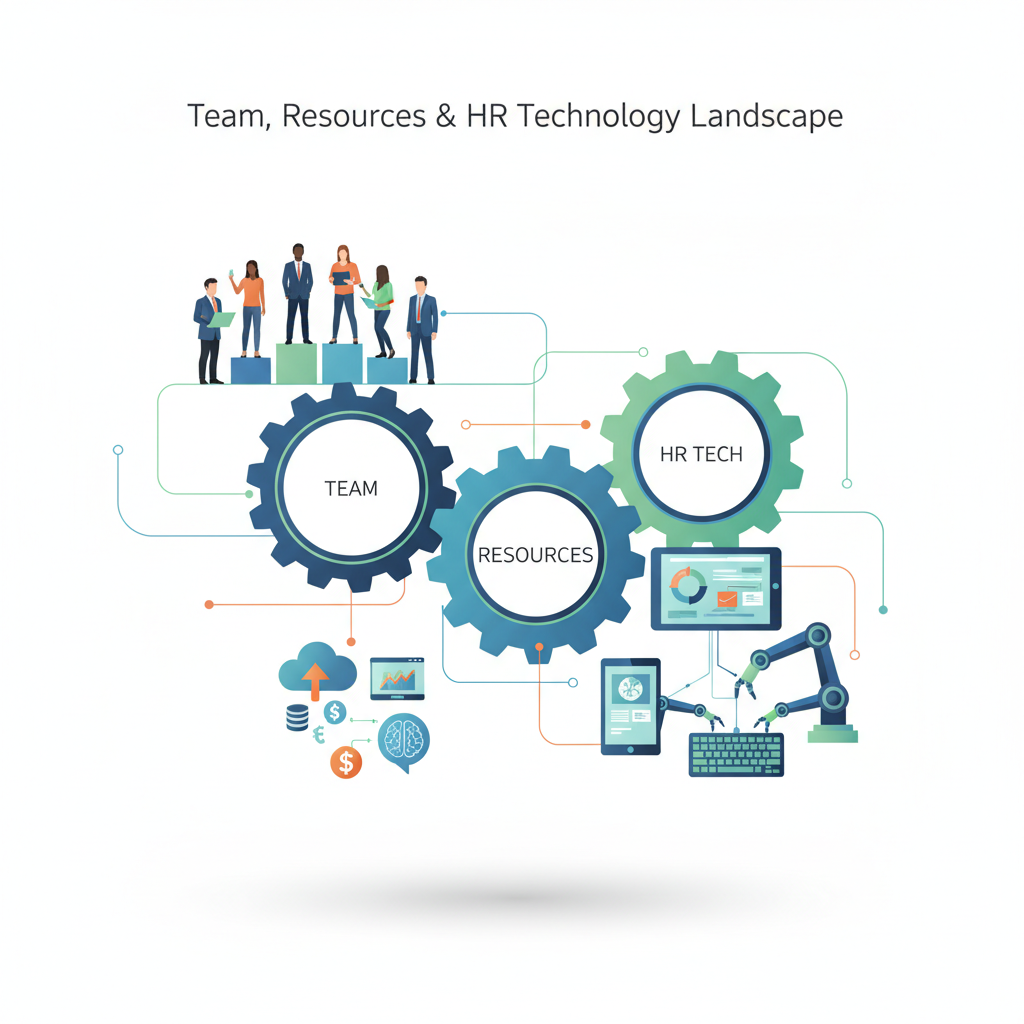
Large corporations, on the other hand, are at the forefront of HR tech adoption in Vietnam. They invest heavily in fully integrated Human Resources Information Systems (HRIS) or Human Capital Management (HCM) suites from global providers like SAP SuccessFactors, Workday, or Oracle. These platforms unify all HR functions, from recruitment and onboarding to performance management, payroll, and learning. Beyond core HRIS, large corporates increasingly leverage artificial intelligence (AI) and machine learning (ML) for advanced analytics, predictive staffing, personalized learning recommendations, and automated recruitment processes (e.g., AI chatbots for candidate screening). This sophisticated tech stack enables data-driven decision-making, streamlines operations, enhances employee experience, and allows HR teams to focus on strategic initiatives rather than administrative tasks. The goal is a seamless, efficient, and intelligent HR ecosystem that supports a large, complex organization.
Key Performance Indicators & Impact Measurement
Defining and measuring success in Human Resources is a nuanced undertaking, particularly when comparing an HR Manager in a Vietnamese Small and Medium-sized Enterprise (SME) versus an HR Director in a large corporate environment within the nation’s rapidly evolving technology field. While both roles are foundational, their Key Performance Indicators (KPIs), evaluation metrics, and direct impact on business outcomes diverge significantly. Understanding these differences between the SMEs’ HR Manager and the Corporates’ HR Director in technology field in Vietnam is crucial for appreciating the distinct value each brings to their organization’s HR strategy Vietnam tech landscape.
An SME HR Manager’s KPIs are often tied to immediate operational efficiency and employee well-being due to limited resources. Conversely, a Corporate HR Director focuses on long-term strategic growth, talent pipeline resilience, and aligning HR initiatives with overarching business objectives. This distinction is paramount in Vietnam’s high-stakes, competitive tech sector.
-
Employee Retention & Satisfaction (SME)
For an HR Manager in a Vietnamese tech SME, employee retention and satisfaction are top-tier KPIs. Given lean structures, every employee’s contribution is critical; high turnover can devastate productivity and morale, incurring significant recruitment costs. Success is measured by immediate, tangible metrics:
- Voluntary Turnover Rate: A direct indicator of employee flight, crucial for team stability and successful employee engagement SME Vietnam efforts.
- Employee Satisfaction Scores (e.g., eNPS): Gauge sentiment to identify areas for workplace culture improvement.
- Absenteeism Rate: Signals underlying issues with morale or workload.
- Onboarding Completion & Satisfaction: Ensures new hires integrate smoothly and become productive quickly.
The impact for an SME is immediate: a happy, stable workforce directly translates to higher productivity, better team cohesion, and project delivery—vital for survival and growth. The HR Manager’s ability to foster a positive environment directly impacts the company’s bottom line, more acutely than in a larger corporation.
-
Talent Pipeline & Succession Planning (Corporate)
In the corporate sphere, especially for an HR Director in a large Vietnamese tech firm, the focus shifts to strategic, future-oriented talent management. While retention is important, emphasis is on building robust talent pipelines and intricate succession plans to sustain long-term growth and mitigate future leadership gaps. The scale of corporate operations necessitates proactive workforce planning corporate Vietnam. Key KPIs include:
- Talent Pipeline Strength & Depth: Tracks availability of qualified internal candidates for critical roles, ensuring future leaders and specialists.
- Internal Promotion Rates: Indicates effectiveness of internal development, fostering loyalty and leveraging existing talent.
- Succession Readiness Rates: Quantifies critical positions with designated, ready-to-advance successors, reducing business risk.
- Leadership Development Program Effectiveness: Measures participation and subsequent performance improvement.
- Time-to-Fill for Critical Roles: Highlights efficiency in high-volume, specialized recruitment for strategic roles.
The impact is strategic and far-reaching. An HR Director ensures the organization has the right people for years to come, involving intricate workforce planning and significant employee development. A strong talent pipeline reduces reliance on external hiring, improves organizational agility, and supports sustained innovation—critical for success in the dynamic tech industry. According to a report by SHRM on Strategic Workforce Planning, effective planning directly contributes to business resilience and competitive advantage.
-
ROI on HR Initiatives
Measuring the Return on Investment (ROI) for HR initiatives is vital for both, yet interpretation differs. For the SME HR Manager, ROI often correlates with tangible cost savings and immediate productivity gains: reduced recruitment fees, increased output from training, or improved efficiency from HR tech. KPIs like cost-per-hire, training effectiveness (post-training performance), and employee productivity (e.g., revenue per employee) are critical in a budget-conscious environment.
For the Corporate HR Director, ROI encompasses a broader, more strategic perspective. Beyond cost savings, emphasis is on long-term strategic value and impact on the overall business ecosystem. This includes value from a robust leadership pipeline, mitigation of business risks through compliance, strengthening the employer brand, and HR programs’ contribution to innovation and market expansion. HR metrics tech industry Vietnam for corporate HR might also include the impact of diversity and inclusion on market share, or the long-term financial impact of sound HR practices reducing litigation risks. While direct financial calculations are complex, the HR Director often articulates ROI in terms of sustained competitive advantage, enhanced organizational resilience, and strategic alignment of human capital with business objectives.
In essence, while the SME HR Manager’s KPIs revolve around immediate operational health and minimizing direct costs, the Corporate HR Director’s metrics are geared towards strategic foresight, long-term talent cultivation, and driving significant organizational growth within the competitive Vietnamese tech landscape. Both are indispensable, but their success parameters are finely tuned to their unique organizational contexts.
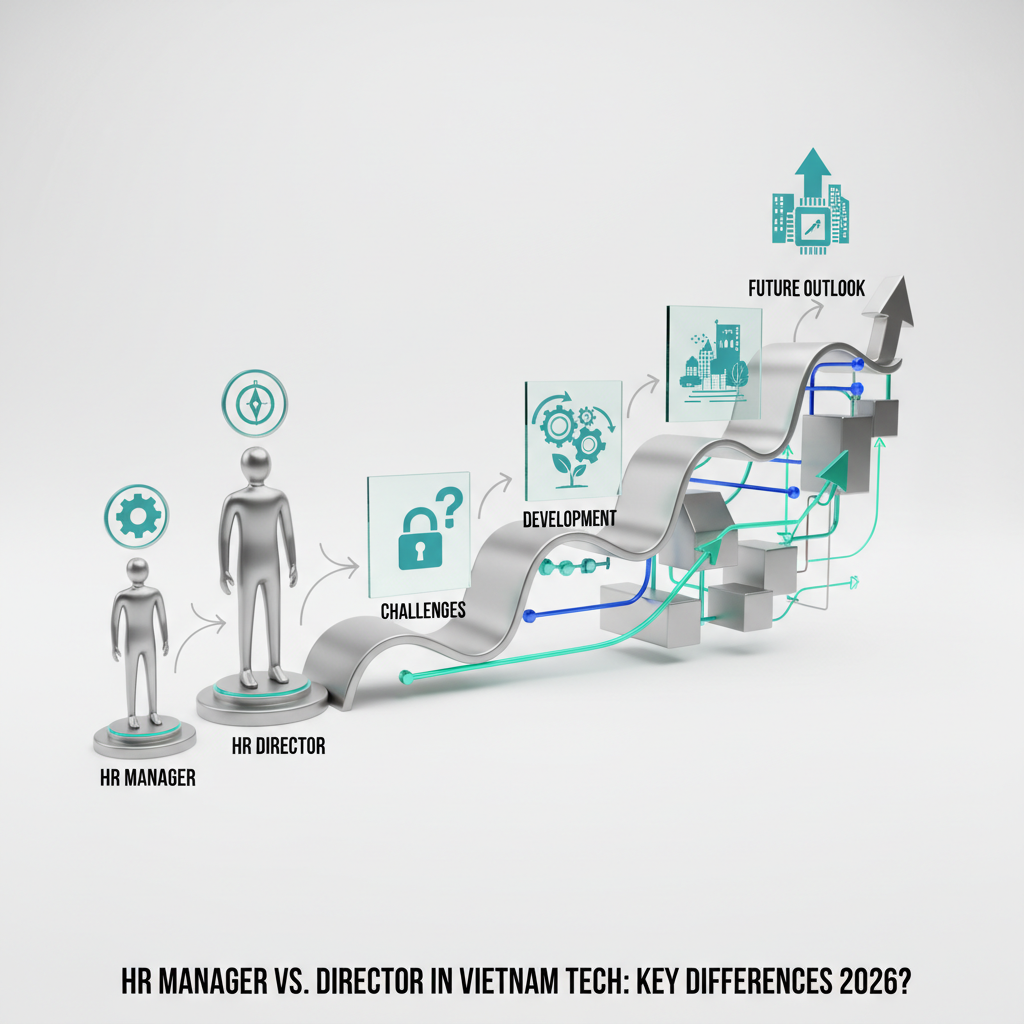
Challenges, Development & Future Outlook
The dynamic landscape of Vietnam’s technology sector presents a unique set of challenges and opportunities for Human Resources professionals. As the nation rapidly transforms into a regional tech hub, the differences between the SMEs’ HR Manager and the Corporates’ HR Director in technology field in Vietnam become particularly pronounced, each navigating distinct complexities while striving for professional development and adapting to evolving global HR trends.
1. Adapting to Rapid Growth & Scarcity (SME)
For HR Managers in Small and Medium-sized Enterprises (SMEs) within Vietnam’s tech domain, the primary challenge is often adapting to hyper-growth with limited resources. These roles demand an exceptionally agile and hands-on approach. SMEs are frequently in a state of rapid scaling, which necessitates swift and effective tech talent acquisition in Vietnam, often in a fiercely competitive market where top-tier candidates are scarce. The ability to attract, hire, and retain skilled engineers, developers, and product managers amidst a booming industry is paramount.
SME HR Managers must be resourceful innovators, often wearing multiple hats. Their responsibilities extend beyond traditional HR functions to include pioneering employer branding efforts, fostering a strong company culture from the ground up, and designing compensation and benefits packages that can compete with larger corporations despite budget constraints. Developing an effective HR strategy Vietnam tech for an SME means building scalable processes that can accommodate exponential employee growth, establishing foundational HR systems, and proactively addressing high turnover rates – a common issue in fast-paced startups. Professional development for these individuals often involves mastering lean HR methodologies, improving negotiation skills for talent acquisition, and becoming adept at utilizing affordable HR tech solutions.
2. Navigating Complex Structures & Global Mandates (Corporate)
In contrast, HR Directors within multinational corporations or large domestic tech giants face a different set of intricate challenges. Their roles are typically more strategic and less operational, focusing on organizational development, strategic workforce planning, and aligning local HR practices with global mandates. The complexity arises from managing large, diverse workforces, often across multiple locations, and integrating into established global frameworks and reporting structures.
Corporate HR Directors must navigate bureaucratic complexities, ensure compliance with both local labor laws and international standards, and drive large-scale change management initiatives. They are instrumental in fostering leadership development, succession planning, and implementing sophisticated performance management systems. Staying abreast of global HR trends in Vietnam, such as diversity, equity, and inclusion (DEI) initiatives or the future of hybrid work, is crucial. Moreover, the effective implementation of HR tech adoption in Vietnam, involving advanced HRIS, analytics platforms, and AI-powered recruitment tools, falls under their purview to optimize operations and provide data-driven insights to leadership.
3. Continuous Learning & Skill Upgrading
Regardless of their organizational scale, both SME HR Managers and Corporate HR Directors in Vietnam’s tech sector share an imperative for continuous learning and skill upgrading. The rapid evolution of technology, particularly the advent of AI, machine learning, and automation, demands that HR professionals constantly enhance their digital literacy and analytical capabilities. Data analytics, strategic workforce planning, change management, and a deep understanding of HR technologies are no longer optional but essential competencies.
For SME HR Managers, development often involves broadening their skill set across all HR domains, from compensation and benefits to employee relations and legal compliance, while also honing their ability to act as strategic business partners. For Corporate HR Directors, it means deepening their expertise in areas like organizational psychology, advanced analytics, global mobility, and leadership coaching. Both roles benefit immensely from professional certifications, participation in industry forums, and networking with peers to share best practices and insights on the evolving talent landscape. The proactive pursuit of knowledge ensures that HR professionals can effectively support their organizations through periods of intense change, making them indispensable drivers of success in Vietnam’s burgeoning tech economy. The ongoing need to understand and adapt to the specific differences between the SMEs’ HR Manager and the Corporates’ HR Director in technology field in Vietnam will continue to shape their respective developmental paths, ensuring that HR remains at the forefront of strategic business growth.
Partner with Shelby Global
You are looking for reliable HR Sevice Suppliers? Contact Shelby Global Now! To connect with verified talents and upgrade your orginization.
—————————————
References
– operational focus: https://www.shrm.org/resources-and-tools/hr-topics/human-resources-strategy/pages/default.aspx
– Strategic HR Planning: https://www.shrm.org/resources-and-tools/hr-topics/talent-acquisition/pages/strategic-hr-planning.aspx
– :
– SHRM: Strategic Workforce Planning: https://www.shrm.org/resources-and-tools/hr-topics/talent-acquisition/articles/strategic-workforce-planning
– e-Conomy SEA 2023 Report by Google, Temasek, & Bain & Company: https://www.bain.com/insights/e-conomy-sea-2023-report/