
Scope of Responsibilities and Daily Operations
The landscape of Human Resources (HR) management varies dramatically across organizations, particularly when comparing an HR Manager in a small to medium-sized enterprise (SME) to an HR Director within a large corporate transport company in Singapore. The differences between the SMEs’ HR Manager and the Corporates’ HR Director in transportation field in Singapore are profound, shaped by organizational scale, resource availability, and the complexity of operations. While both roles are pivotal to an organization’s success, their daily routines, strategic focus, and the breadth of their responsibilities diverge significantly, highlighting distinct challenges and opportunities within the dynamic Singaporean transport sector.
An SME HR Manager often wears multiple hats, acting as a generalist who handles everything from payroll processing to employee grievances. Their role is intrinsically hands-on, deeply embedded in the day-to-day operational fabric of the company. In contrast, an HR Director in a large corporate transport entity typically oversees a specialized team, focusing on high-level strategic planning, policy development, and ensuring alignment with global corporate objectives. This distinction is crucial for understanding effective HR management in Singapore across different business sizes.

1. Operational vs. Strategic Task Allocation
For an HR Manager in an SME transport company, the bulk of their time is dedicated to operational tasks. This includes managing recruitment drives for drivers and logistics staff, processing leaves and expenses, administering benefits, and handling routine employee inquiries. They are often the sole point of contact for all HR-related matters, necessitating a broad understanding of various HR functions. The focus is primarily on maintaining smooth day-to-day operations and ensuring immediate personnel needs are met. This often means addressing SME HR challenges directly and reactively, with limited resources for proactive, long-term strategic initiatives.
Conversely, the HR Director in a large corporate transport company operates at a much more strategic level. Their responsibilities include developing comprehensive human capital strategies, driving organizational culture, talent development programs, and workforce planning across multiple departments or even international branches. They collaborate closely with executive leadership to shape the company’s future by focusing on long-term goals such as succession planning, organizational design, and optimizing corporate HR strategy. While they oversee operational aspects, these are typically delegated to dedicated teams or managers, allowing the Director to concentrate on broader organizational impact and high-level decision-making.
2. Compliance and Regulatory Adherence in HR
Navigating the complex web of employment laws and regulations is a critical aspect for both roles, yet the scope and depth vary. An SME HR Manager must ensure compliance with general Singaporean labor laws, such as the Employment Act and the Central Provident Fund (CPF) regulations. Their approach is often more reactive, relying on general knowledge and external advice when necessary. They must stay updated with changes in Singapore’s employment regulations to avoid penalties, but the scale of compliance is generally less intricate.
For a corporate HR Director in the transport sector HR, compliance extends far beyond local general labor laws. Given the international nature of large transport companies, they must navigate a multitude of domestic and international maritime, aviation, or land transport regulations, alongside complex contractual agreements, cross-border labor laws, and potentially union agreements. This often involves collaborating with legal departments and specialized compliance officers to manage risks associated with global operations, ensuring adherence to stringent safety standards and international labor conventions. Their role is highly proactive, anticipating regulatory changes and implementing robust compliance frameworks across the entire organization.
3. Talent Acquisition and Retention Strategies
In an SME, the HR Manager is directly involved in the entire talent acquisition process, from writing job descriptions to conducting interviews and onboarding new hires. Resources for sophisticated recruitment tools or extensive employer branding are often limited. Retention strategies might be more personalized, focusing on direct communication and flexible arrangements due to the smaller team size. The emphasis is on filling immediate vacancies efficiently with the best available talent who fit the company culture, often with a reliance on local networks.
A corporate HR Director, however, orchestrates comprehensive talent acquisition and retention strategies. This involves developing employer branding initiatives, leveraging advanced HR technologies for sourcing and applicant tracking, and working with specialized recruitment teams. Their focus is on building a talent pipeline for critical roles, developing sophisticated employee engagement initiatives, and implementing robust career development programs to foster long-term loyalty. They utilize data analytics to identify talent gaps, predict future workforce needs, and design competitive compensation and benefits packages that attract top-tier professionals in a competitive global market, ensuring the company’s sustained growth and leadership in the transport industry.
Strategic Impact and Decision-Making Authority
The dynamic landscape of Singapore’s transportation sector demands agile HR leadership, yet the profound differences between the SMEs’ HR Manager and the Corporates’ HR Director in transportation field in singapore are most evident in their strategic impact and decision-making authority. While both roles are crucial for organizational health, their scope, influence, and involvement in shaping overall business strategy diverge significantly, largely due to organizational scale, resource availability, and operational complexity. This analysis will explore how these distinct HR roles contribute to strategy and their level of influence in organizational decisions, touching upon elements of HR strategy Singapore transport, talent management transportation, and organizational development Singapore.
1. Influence on Business Growth and Expansion
For an SME’s HR Manager in Singapore’s transportation sector, influence on business growth and expansion is typically direct but constrained by immediate operational demands and limited resources. Their strategic contributions often center on efficient, reactive recruitment to fill urgent operational gaps, ensuring compliance, and maintaining workforce stability. While they might advise on manpower planning for a new small route or fleet addition, their role leans towards executing tactical HR initiatives rather than driving large-scale strategic growth. Their decisions support existing operations, focusing on the immediate needs for talent acquisition and retention.
In contrast, a Corporate HR Director exerts substantial, proactive influence over business growth and expansion. Operating within a large transportation conglomerate, their role extends beyond operational support to actively shape the company’s long-term strategic direction. They are integral to executive-level discussions concerning mergers and acquisitions, diversification into new transport modes, or significant international expansion. Their strategic input includes developing comprehensive talent management transportation strategies for new markets, designing scalable organizational structures, and implementing sophisticated workforce planning models. They forecast future talent needs, identify critical skill gaps, and build a leadership pipeline crucial for driving massive organizational change and expansion, directly impacting market share and competitive advantage. Their ability to align human capital with ambitious growth objectives underscores the vital role of HR as a strategic partner.
2. Policy Formulation and Implementation
The scope of policy formulation for an SME’s HR Manager is largely confined to adapting existing best practices and ensuring compliance with Singaporean labor laws specific to the transportation sector. Their policy work typically involves creating and updating basic employee handbooks, developing simple performance management frameworks, and streamlining daily HR operations. Decisions prioritize immediate efficiency and cost-effectiveness. While they implement policies ensuring fair treatment and legal adherence, their input into broader, transformative corporate policies is minimal. Implementation efforts are hands-on, involving direct communication and training for a smaller, more homogeneous workforce.
Conversely, a Corporate HR Director is a primary architect of extensive, high-impact HR policies that resonate across the entire organization. They are involved in crafting sophisticated policies on executive compensation, global mobility, diversity and inclusion, remote work arrangements, and complex labor relations transport sector strategies. Their policy formulation considers not just current legal compliance but also future talent trends, industry benchmarks, and the long-term strategic objectives of the corporation. Implementation involves navigating complex stakeholder interests, working with legal teams, and designing robust communication and training programs for a diverse, geographically dispersed workforce. Their decisions have far-reaching implications, influencing company culture, employee engagement across multiple business units, and the organization’s reputation as an employer of choice.
3. Cross-Departmental Collaboration and Leadership
In an SME, the HR Manager’s cross-departmental collaboration is typically informal and direct, often working closely with department heads on specific, immediate issues like recruitment, performance reviews, or employee grievances. Their leadership role is primarily functional, ensuring HR services effectively support operational departments. While they might participate in general management meetings, their influence on strategic decisions outside the HR domain is usually consultative and advisory, centered on people-related matters rather than overall business direction. The focus remains on facilitating smooth day-to-day operations and fostering positive inter-departmental relations.
A Corporate HR Director, however, plays a pivotal leadership role extending far beyond HR functions, deeply embedding them in cross-departmental strategic initiatives. They frequently sit on the executive board or leadership committees, collaborating with CFOs, COOs, and heads of technology to integrate human capital strategies with financial planning, operational efficiency improvements, and technological innovations. For example, in developing a new digital logistics platform, the HR Director would lead in identifying new skill requirements, designing training, and managing change to ensure smooth adoption. Their leadership is crucial in driving organizational development Singapore-wide, fostering a unified corporate culture, and championing initiatives that enhance overall organizational capability and responsiveness to market shifts. Their ability to influence decisions across departments positions HR as a strategic driver, not merely a support function.
In conclusion, while both HR roles are indispensable, the differences between the SMEs’ HR Manager and the Corporates’ HR Director in transportation field in singapore in terms of strategic impact and decision-making authority are profound. The SME HR Manager focuses on foundational HR support and tactical execution, whereas the Corporate HR Director is an executive-level strategic partner, shaping macro-level organizational policies, driving significant growth initiatives, and exercising broad leadership across all business functions to secure the company’s future in the competitive Singaporean transportation landscape.
Team Structure, Resources, and Budget Management
The intricate world of human resources in Singapore’s dynamic transport sector presents a fascinating study in adaptation and scale. The Differences between the SMEs’ HR Manager and the Corporates’ HR Director in transportation field in singapore are profound, shaped primarily by organizational size and strategic ambition. While both roles are fundamental to attracting, retaining, and developing talent, their operational realities, team compositions, technological reliance, and financial responsibilities diverge significantly, reflecting unique challenges and opportunities within this critical industry.
1. Size and Composition of HR Teams
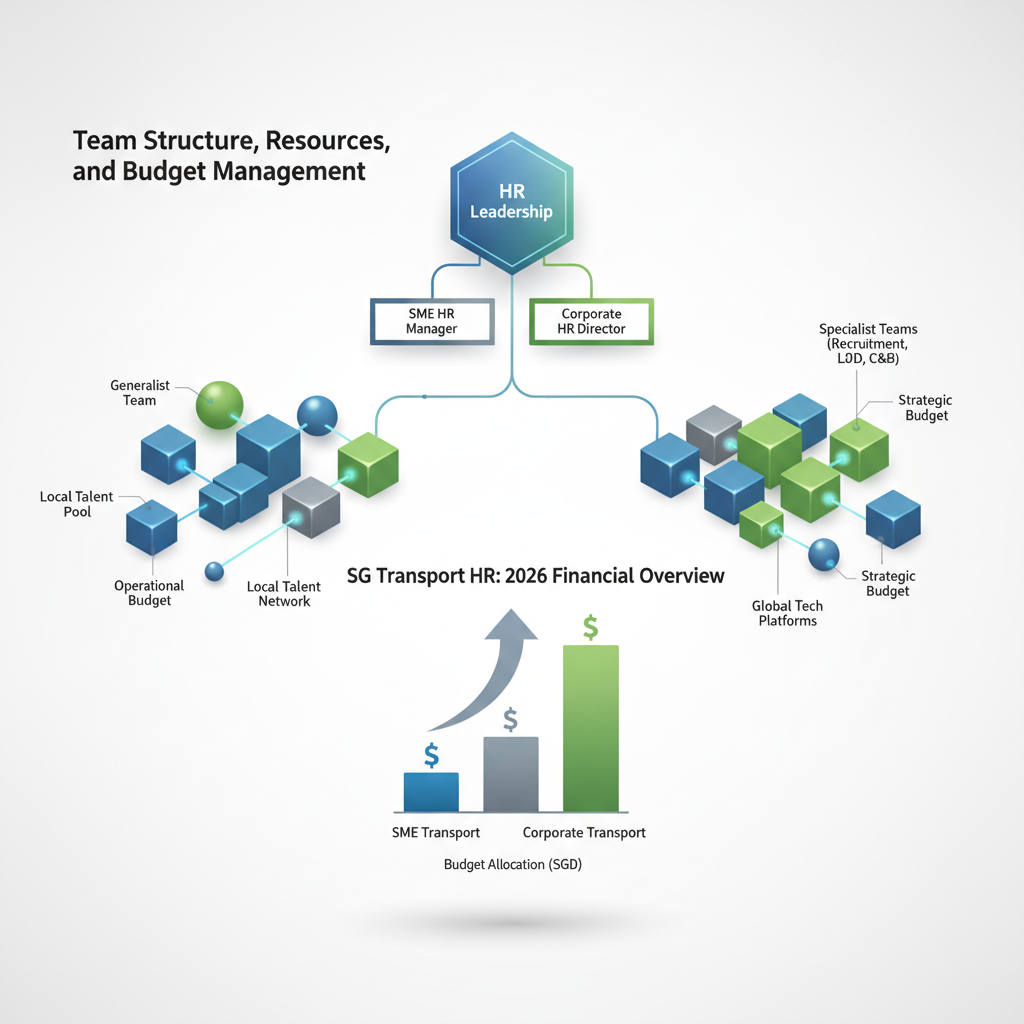
For a Small and Medium-sized Enterprise (SME) in the transport sector, such as a local logistics firm or a niche cargo handler, the HR function is often embodied by a single HR Manager or a compact team of one to three individuals. This HR Manager is typically a generalist, responsible for the entire spectrum of HR activities. Their daily tasks range from recruitment and onboarding drivers or mechanics, processing payroll, managing employee benefits, handling industrial relations, to ensuring compliance with local labour laws. The focus is intensely operational and hands-on, requiring direct engagement with employees. Limited specialization means the SME HR Manager must possess a broad understanding of all HR facets, reporting directly to the business owner or general manager.
In stark contrast, a Corporate HR Director in a large transport conglomerate—like a major airline or an international shipping line—oversees a much larger, multi-tiered, and highly specialized HR department. This department is often structured into distinct functions such as Talent Acquisition, Compensation and Benefits, HR Information Systems (HRIS), Learning and Development, and HR Business Partners. The HR Director’s role is predominantly strategic, focusing on developing and implementing HR policies aligned with overarching business objectives. They lead a team of specialists, delegating operational tasks, and concentrating on succession planning, workforce analytics, and fostering corporate culture. Reporting to a Chief Human Resources Officer (CHRO) or directly to the CEO, the Corporate HR Director navigates complex organizational structures, often dealing with unionized workforces and international HR regulations.
2. Access to HR Technology and Systems
The disparity in available resources is perhaps nowhere more evident than in access to HR technology. An SME HR Manager typically operates with a limited budget, making sophisticated HR technology an aspirational rather than an immediate reality. They may rely on a combination of basic, often cloud-based, software for payroll processing, simple Applicant Tracking Systems (ATS) for recruitment, and manual data management. Selection criteria for technology are heavily skewed towards cost-effectiveness, ease of implementation, and essential functionality. Integrating disparate systems can be a considerable challenge, with the focus remaining on automating time-consuming administrative tasks to free up time for core HR functions.
Conversely, a Corporate HR Director commands substantial investment in cutting-edge HR technology. Large transport corporations leverage integrated Human Capital Management (HCM) suites such as Workday, SAP SuccessFactors, or Oracle HCM Cloud, which provide end-to-end solutions for recruitment, payroll, performance management, learning, and talent analytics. These systems are designed for scalability, data security, and generating strategic insights from vast employee data. Corporate HR departments often have dedicated HRIS teams responsible for managing and optimizing these complex platforms. The adoption of AI and machine learning for predictive analytics in talent management, advanced recruitment marketing tools, and robust employee self-service portals are common. As observed by industry experts, the strategic implementation of advanced HR technology is crucial for gaining a competitive edge in talent acquisition and retention, a prerogative that corporate entities can more readily pursue due to their extensive resource base and strategic foresight.
3. Budgetary Control and Resource Allocation
Budgetary responsibilities also highlight a significant divergence. An SME HR Manager generally operates with limited direct budgetary control. Their financial purview often extends to managing operational expenses such as recruitment advertising costs, basic training program fees, and essential HR software subscriptions. Decisions regarding significant HR investments, like new benefits packages or substantial training initiatives, are usually subject to direct approval from the business owner or senior management. Resource allocation for the SME HR Manager is primarily tactical and reactive, focused on making the most of tight budgets to address immediate personnel needs and comply with regulatory requirements. The emphasis is consistently on cost-saving and demonstrating a tangible, short-term return on investment for every dollar spent on HR.
A Corporate HR Director, on the other hand, holds significant and strategic budgetary authority. They are responsible for developing, defending, and managing substantial departmental budgets, often encompassing millions of dollars. This includes allocating funds across various specialized HR functions—from compensation and benefits packages, large-scale learning and development programs, technology infrastructure upgrades, to global talent acquisition campaigns. The Corporate HR Director is deeply involved in the organization’s strategic financial planning, justifying large investments in HR initiatives by demonstrating alignment with long-term business goals, such as workforce productivity, employee retention rates, and overall organizational performance. They engage in high-level vendor negotiations, manage complex contracts for HR services and software, and are expected to deliver a strategic return on investment (ROI) for HR initiatives, contributing directly to the corporation’s bottom line and competitive advantage in the transport industry.
Required Skill Sets and Professional Development
Singapore’s robust and ever-evolving transport industry, a critical pillar of its economy, demands a sophisticated and adaptable human resources function. The differences between the SMEs’ HR Manager and the Corporates’ HR Director in the transportation field in Singapore are profound, reflecting varied strategic mandates, operational scales, and resource allocations. While both roles are fundamental to talent management, their required skill sets, educational backgrounds, and professional development trajectories diverge significantly. Understanding these distinctions is crucial for aspiring HR professionals and organizations seeking to optimize their human capital strategies within this dynamic sector.
1. Core Competencies and Leadership Qualities
For an SME HR Manager in Singapore’s transportation sector, core competencies center on operational agility and broad generalist expertise. This individual typically manages diverse functions: talent acquisition strategies for operational staff, payroll, employee relations, and basic HR policy. Leadership is hands-on, focusing on team cohesion, daily operational efficiency, and direct employee support. They must be resourceful, adept at problem-solving with limited budgets, and possess strong interpersonal skills, adapting quickly to immediate needs like staffing shifts or urgent compliance. Conversely, a Corporate HR Director in a large transport conglomerate (e.g., airlines, port authorities) operates strategically. Their role demands highly developed leadership, vision, and complex stakeholder management. This includes driving organizational development programs, leading large-scale change management, and shaping overall talent strategy across business units. They focus on aligning HR with long-term business objectives, utilizing competencies like data analytics for workforce planning, complex policy formulation, and a deep understanding of corporate governance. Their leadership impacts the entire organization’s culture and future readiness.
2. Industry-Specific Knowledge (Transportation)
Both roles demand industry understanding, but depth and breadth diverge. An SME HR Manager needs practical knowledge of their company’s specific niche. This includes local land transport regulations for logistics, driver licensing, and safety protocols relevant to their fleet. Their focus is on ensuring regulatory compliance framework for their immediate operational context, adhering to LTA or MOM guidelines for transport workers. Knowledge of local labor laws regarding shift work, overtime, and foreign worker quotas is crucial for effective employee engagement initiatives. Conversely, the Corporate HR Director requires an expansive, macro-level understanding of the entire Singaporean and often regional/global transportation ecosystem. This includes intricate knowledge of regulations across multiple modes (air, sea, land, rail), international labor laws, and geopolitical factors affecting supply chains. They must possess foresight regarding technological disruptions (e.g., autonomous vehicles), sustainability mandates, and their implications for workforce planning. Strategic partnerships with bodies like LTA, CAAS, and MPA are often part of their remit. They lead strategic workforce planning to address future skills gaps for complex, integrated transport networks, factoring in automation and digitalization.
3. Continuing Education and Certifications
Ongoing professional development is vital, though pathways diverge. For an SME HR Manager, development focuses on practical, skills-based training. This includes certifications in HR functions like payroll, compensation & benefits, or local labor law compliance from institutions like SHRI or through WSQ programmes. Workshops on conflict resolution, performance management, and basic HR analytics are highly valuable. The emphasis is on continuous learning to enhance day-to-day HR operations and keep pace with local regulations. Attending industry-specific seminars on transport safety or logistics workforce trends is also beneficial. A Corporate HR Director’s professional development is more strategic and executive-level. This includes advanced certifications like the IHRP Senior Professional (IHRP-SP) certification, or global credentials like SHRM-SCP/SPHR. Executive education from business schools, focusing on organizational leadership, change management, and business acumen, is common. They participate in national/international HR forums, contribute to thought leadership, and mentor. Their learning journey emphasizes global HR trends, digital transformation, and cultivating a future-ready workforce for complex, multinational transportation operations. This ensures they remain strategic partners to the C-suite, guiding the organization through future challenges in Singapore’s critical transport landscape.
Compensation, Career Progression, and Future Outlook
The human resources landscape within Singapore’s dynamic transport sector presents a fascinating dichotomy, particularly when examining the Differences between the SMEs’ HR Manager and the Corporates’ HR Director in transportation field in Singapore. These roles, while both pivotal, operate within vastly different frameworks, influencing everything from daily responsibilities to long-term career trajectories and compensation. Singapore’s status as a global logistics and transport hub creates a unique environment where HR professionals are critical in navigating talent acquisition, employee retention, and strategic workforce planning across diverse sub-sectors like aviation, maritime, land transport, and logistics. Understanding these distinctions is crucial for aspiring and current HR professionals.
1. Salary Expectations and Benefits Packages
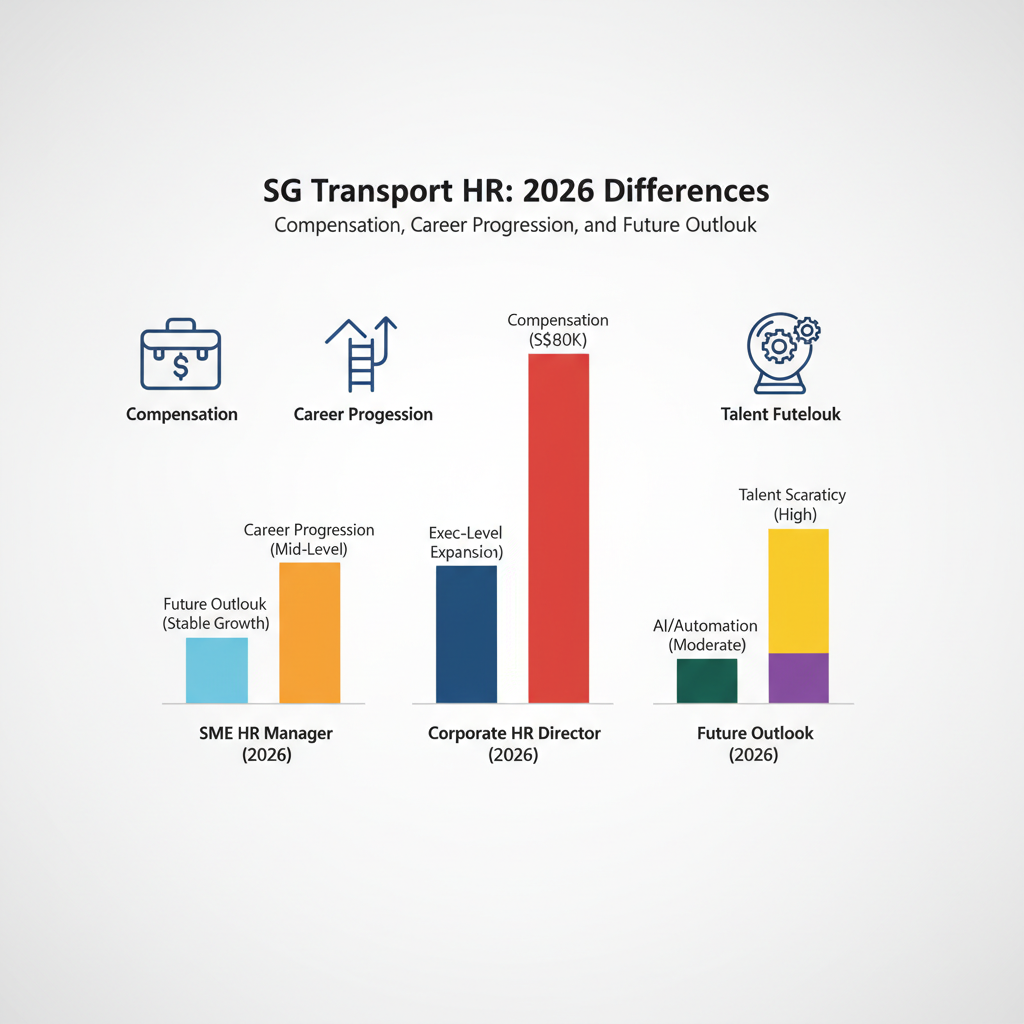
The compensation structure for HR professionals in Singapore’s transport sector varies significantly based on employer size. An HR Manager in a Small and Medium-sized Enterprise (SME) typically handles a broad generalist portfolio, covering recruitment, payroll, and employee relations. Reflecting this operational focus, typical monthly salaries for SME HR Managers in transport might range from S$4,000 to S$7,000. Benefits are usually standard, including annual leave, medical coverage, and CPF contributions, with less frequent or substantial performance bonuses. The compensation structure in the transport sector for SMEs prioritizes stability and comprehensive generalist skills over highly specialized strategic remuneration.
In contrast, a Corporate HR Director in a large transport conglomerate (e.g., major airline, port operator, global logistics firm) commands a much higher remuneration, reflecting their strategic influence and leadership scope. These roles involve setting overarching HR strategy, driving talent management initiatives, overseeing multiple HR functions, and partnering with senior leadership. Salary expectations for a Corporate HR Director can range from S$10,000 to S$20,000 per month, with highly experienced individuals in top-tier global firms potentially earning more. Benefits are comprehensive, often including generous annual bonuses, executive perks, car allowances, and share options, with opportunities for regional or global assignments. This disparity highlights the strategic value placed on experienced HR leadership in complex corporate environments. According to the Hays Asia Salary Guide, senior HR roles across industries in Singapore consistently show higher salary bands, aligning with increased strategic responsibilities and specialized expertise.
2. Potential Career Paths and Growth
Career trajectories for HR professionals also diverge considerably. An HR Manager in an SME gains invaluable breadth, becoming adept at numerous HR functions. Growth within an SME might involve progressing to a Head of HR role, leading a small team, or becoming a trusted advisor on all people matters. For those aiming for larger organizations, the SME experience serves as an excellent foundation, allowing transitions into specialist roles (e.g., Talent Acquisition Lead) or junior HR Business Partner positions in larger firms, leveraging their comprehensive operational understanding.
For a Corporate HR Director, the career path is typically geared towards greater strategic impact and broader organizational leadership. Progression often leads to roles such as Group HR Director, Regional Head of HR, Vice President of Human Resources, or even Chief People Officer, influencing HR policies across multiple countries or business units. These roles demand strong leadership, strategic thinking, and the ability to drive organizational change on a large scale. Continuous learning, specialization in areas like workforce planning aviation, and demonstrable success in implementing talent management strategies Singapore transport are crucial for upward mobility. Opportunities for cross-functional leadership and global mobility are also more prevalent in larger corporations, offering pathways to international assignments and exposure to diverse business challenges.
3. Emerging Trends and Industry Challenges
Singapore’s transport sector is undergoing rapid transformation, driven by technological advancements, sustainability mandates, and evolving workforce dynamics, presenting both challenges and opportunities for HR professionals. Emerging trends include the increasing adoption of HR technology adoption logistics, such as AI-powered recruitment tools and advanced HRIS, demanding new skill sets. The push towards sustainable transport also positions HR to develop green skills and foster environmentally conscious cultures. Hybrid work models, while more prevalent in administrative roles, also influence how transport companies manage their office-based staff, requiring adaptive HR policies.
Challenges are significant: talent scarcity, particularly for skilled technical roles (e.g., aviation engineers, maritime navigators, data scientists), remains a hurdle. High attrition rates in certain operational segments necessitate robust employee retention strategies maritime. HR professionals must navigate an aging workforce demographic while attracting younger talent to ensure future readiness. Regulatory compliance in this globalized and regulated industry adds complexity. These challenges, however, create immense opportunities for HR to be strategic partners. By implementing proactive workforce planning, developing innovative talent acquisition and development programs, and fostering strong employee engagement, HR professionals, whether in SMEs or large corporations, can significantly contribute to their organization’s resilience and success in Singapore’s ever-evolving transport sector.
Partner with Shelby Global
You are looking for reliable HR Sevice Suppliers? Contact Shelby Global Now! To connect with verified talents and upgrade your orginization.
—————————————
References
– Singapore’s employment regulations: https://www.mom.gov.sg/employment-practices
– HR as a Strategic Partner – SHRM: https://www.shrm.org/resources-and-tools/hr-topics/talent-acquisition/pages/hr-as-strategic-partner.aspx
– The SHRM Foundation’s HR Economic Outlook for 2024: A Look at Data, Trends, and the Future of Work: https://www.shrm.org/resources-and-tools/hr-topics/talent-acquisition/shrm-foundation-economic-outlook-2024
– Institute for Human Resource Professionals (IHRP) Singapore: https://www.ihrp.sg/
– Hays Asia Salary Guide: https://www.hays.com.sg/salary-guide