
Laying the Foundation: What HR Means for Vietnam Education SMEs
For a fresh CEO stepping into the dynamic world of education Small and Medium Enterprises (SMEs) in Vietnam, understanding Human Resources (HR) isn’t just about managing staff — it’s about laying a robust foundation for strategic growth and sustainable success. In a landscape characterized by rapid development, intense competition, and evolving parental expectations, HR transcends its traditional administrative role to become a vital strategic partner. This section aims to define HR within the unique context of Vietnam’s education sector SMEs, highlighting its critical importance for new leaders navigating this challenging yet rewarding environment, providing a Step by Step to understand SMEs HR Structure for the fresh the CEO in education companies in vietnam.

1.
Defining HR in SME Education Context
In a Vietnamese education SME, HR is far more encompassing than merely hiring and firing. It’s the strategic function that builds, nurtures, and optimizes the human capital — the teachers, administrators, curriculum developers, and support staff — who are the very heart of the learning experience. For a fresh CEO, HR means designing systems for effective talent acquisition, ensuring that highly qualified and passionate educators are recruited. It involves robust teacher development programs, ongoing training, and performance management to maintain high educational standards. Moreover, HR in this context focuses heavily on employee retention strategies, recognizing that high turnover can severely impact student learning outcomes and institutional reputation. It also shapes the organizational culture, fostering a positive, collaborative, and student-centric environment, while ensuring strict compliance with local labor laws and educational regulations.
2.
Unique Challenges of Education SMEs in Vietnam
Vietnam’s education sector presents a unique set of challenges that HR must strategically address. Firstly, the fierce competition from both domestic and international education providers demands top-tier talent, making teacher recruitment and retention particularly arduous. Secondly, the rapidly evolving regulatory environment requires constant vigilance and adaptation to new policies, especially concerning foreign language centers, vocational training, and online learning platforms. Parental expectations are high, often requiring educators to possess not only academic prowess but also strong pastoral care skills. HR in Vietnamese education SMEs must navigate cultural nuances in communication and management, building cohesive teams that understand and cater to local student needs. Furthermore, managing limited budgets while attracting and retaining quality staff is a constant balancing act. These factors underscore the need for a strategic HR function that can proactively identify and mitigate risks while capitalizing on opportunities for growth.
3.
The Strategic Role of HR for Growth
For a new CEO, recognizing HR as a strategic pillar, not just a back-office function, is paramount for business growth. Strategic HR directly contributes to the SME’s ability to deliver high-quality education, which is the ultimate differentiator in the market. By ensuring a steady supply of well-trained, motivated educators, HR underpins the brand’s reputation and student enrollment figures. It drives innovation by fostering a culture where new teaching methodologies and curriculum improvements are encouraged. Effective HR practices also enhance operational efficiency, reducing costs associated with high turnover and poor performance. Beyond talent management, HR ensures compliance, protecting the SME from legal liabilities and maintaining its license to operate. Ultimately, a strong HR strategy enables the education SME to adapt to market changes, scale its operations responsibly, and build a sustainable competitive advantage, making it an indispensable partner in charting the future trajectory of the company. Understanding and investing in strategic HR is the fresh CEO’s blueprint for success in Vietnam’s vibrant education sector. For further insights into the broader context of human resource management in developing economies, a report from the World Bank on Jobs and Development offers valuable perspectives applicable to SMEs navigating growth challenges.
Assessing Your Current HR Structure: A CEO’s Toolkit
As a fresh CEO in an education company in Vietnam, understanding your Human Resources (HR) structure is paramount. HR is the backbone supporting your institution’s mission, ensuring compliance, and driving growth. Given Vietnam’s unique regulatory landscape and the demands of the education sector, a robust HR framework is indispensable. This toolkit offers a practical, step-by-step approach to evaluate your current HR framework, identify strengths, pinpoint weaknesses, and address critical compliance gaps, laying a solid foundation for your leadership.
1. Auditing Existing HR Policies and Practices
A comprehensive HR audit acts as a diagnostic health check for your organization’s policies and daily practices. For any fresh CEO in an education company in Vietnam, this initial phase is crucial. Scrutinize all documented and informal processes against best practices, industry standards, and, critically, prevailing Vietnamese labor laws and education-specific regulations.
Begin by meticulously reviewing all official HR documentation: employee handbooks, employment contracts (especially for local and expatriate teachers), job descriptions, performance management systems, compensation and benefits policies, recruitment procedures, training programs, and termination guidelines. Pay close attention to how these policies address unique education sector requirements, such as teacher qualifications, student safeguarding, and academic freedom.
Ensuring unwavering compliance with Vietnamese labor laws is non-negotiable. Verify that your policies align with regulations on working hours, minimum wages, social insurance, severance pay, and labor dispute resolution. Assess if policies reflect the latest updates from MOLISA and any directives from MOET impacting your staff. Beyond documentation, observe practical policy application. Are recruitment processes fair? Is performance management effective? Do employees understand their rights? For deeper insights into effective HR frameworks and legal adherence, consult authoritative resources on HR compliance best practices from organizations like SHRM. This audit provides your baseline, revealing robust areas and potential risks or inefficiencies needing strategic attention.
2. Identifying Key HR Personnel & Their Roles
Following a policy audit, the next critical step for a fresh CEO is to understand the human element driving your HR functions: your HR personnel. In an education company, HR department effectiveness hinges on the capabilities, defined roles, and strategic alignment of its team. This assessment delves into their competencies, experience, and how well they support the unique demands of an educational institution in Vietnam.
Map out your current HR team structure. Are roles and responsibilities clearly defined, or are there overlaps and gaps? Identify individuals responsible for core functions: talent acquisition (especially for teachers and academic staff), compensation and benefits, employee relations, training, and compliance. Evaluate their qualifications, experience, and understanding of general HR principles, as well as specific education sector challenges like faculty development and academic integrity.
Assess if your HR team can move beyond administrative tasks to contribute strategically to growth. Do they anticipate future talent needs, develop effective retention strategies for educators, and foster a positive organizational culture? In Vietnam’s evolving education market, HR professionals must be agile and knowledgeable about local labor market trends. Consider if there’s a dedicated HR leader with executive influence. If HR functions are fragmented or lack specialized expertise, this indicates a significant area for improvement. An effective HR team, adept at communication and conflict resolution, acts as a vital bridge between management and staff, fostering a harmonious and productive work environment.
3. Gap Analysis: What’s Missing or Inefficient?
With a comprehensive audit and personnel assessment complete, you are ready for gap analysis—synthesizing findings to identify what’s missing, inefficient, or requires immediate attention. For a fresh CEO, this analysis provides a crucial blueprint for strategic HR improvements and helps prioritize actions for long-term success in Vietnam’s competitive education market.
First, pinpoint compliance gaps. Does your current practice diverge from Vietnamese labor law, MOET regulations, or international education standards? This could mean outdated employment contracts, insufficient social insurance, or inadequate safeguarding policies. Address these swiftly to mitigate legal risks and protect your institution’s reputation.
Next, identify efficiency gaps. Are HR processes overly manual, time-consuming, or error-prone? Examples include paper-based onboarding, manual payroll, or lacking an integrated Human Resources Information System (HRIS). Implementing appropriate HR technology can streamline operations, allowing your HR team to focus on strategic tasks and improve data accuracy. Consider digitizing record-keeping, leave management, and performance reviews to boost productivity and transparency.
Examine strategic gaps. Is HR merely reactive, or does it proactively support your education company’s overall business strategy? Are robust talent acquisition strategies in place for teachers and administrators? Do you have effective succession planning or professional development frameworks aligned with educational goals? A common gap is the absence of a forward-looking HR strategy that anticipates growth and skill development.
Assess talent management gaps. High teacher turnover, difficulty recruiting specialized educators, or lack of internal mobility can signal issues in compensation, employee engagement, or career development. Retaining experienced educators is critical for consistent quality.
Finally, consider cultural and engagement gaps. Does your HR structure foster a positive, inclusive, and supportive work environment? Are employees’ voices heard? Low morale can impact teaching quality. Employee surveys can reveal underlying issues needing HR attention.
This comprehensive gap analysis empowers you to prioritize improvements, allocate resources effectively, and develop a strategic roadmap for your HR department. It’s a crucial Step by Step to understand SMEs HR Structure for the fresh the CEO in education companies in vietnam, ensuring your HR framework is robust, future-ready, and fully capable of supporting your company’s mission and growth objectives.
Core HR Functions for Education Companies in Vietnam
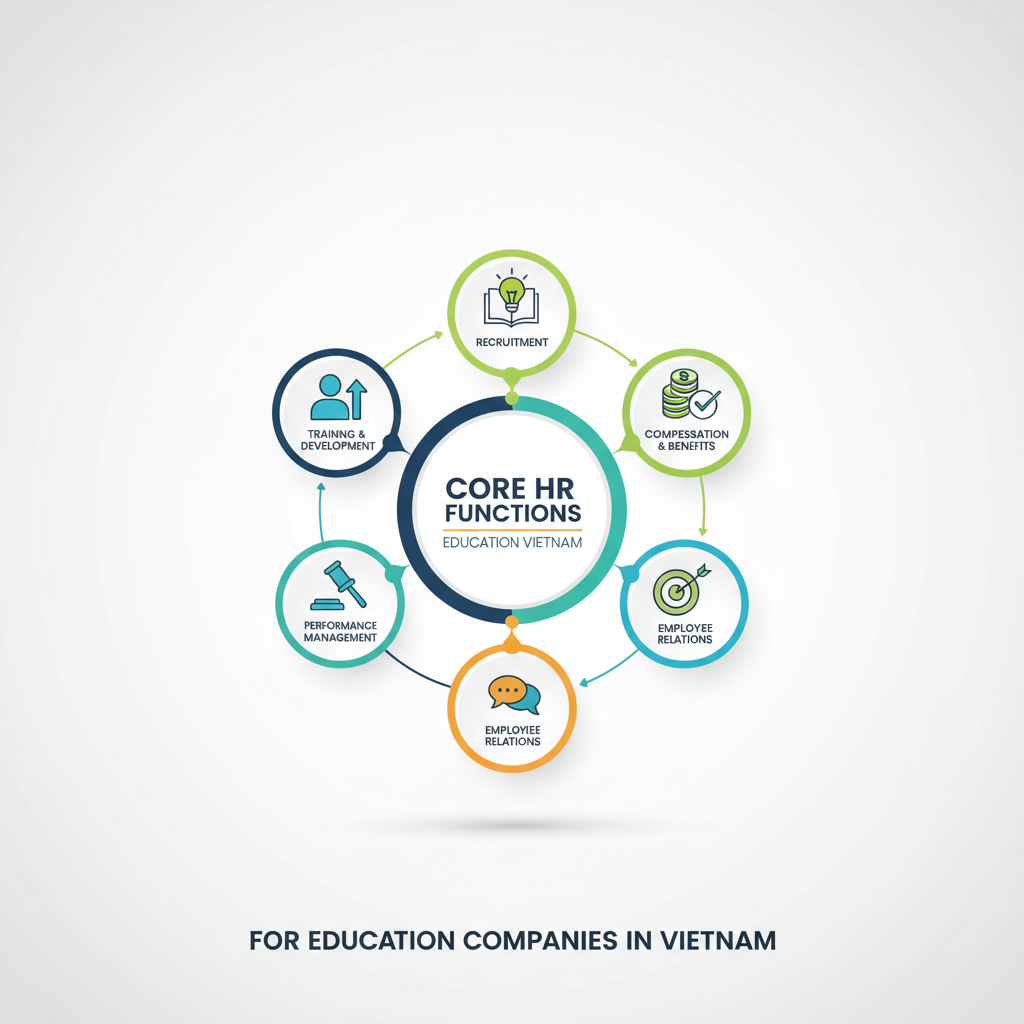
Navigating the dynamic landscape of education in Vietnam presents unique opportunities and challenges for Small and Medium-sized Enterprises (SMEs). For a fresh CEO, understanding the foundational HR functions is paramount for sustainable growth and operational excellence. This section delves into the essential HR functions critical for the smooth operation and growth of an education SME, from recruitment and talent management to employee relations, providing a Step by Step to understand SMEs HR Structure for the fresh the CEO in education companies in vietnam. Mastering these areas helps ensure compliance, fosters a positive work environment, and ultimately drives the quality of educational services provided.
1. Talent Acquisition & Onboarding Strategies
For education companies, attracting and retaining top-tier educators and administrative staff is the cornerstone of success. Talent acquisition goes beyond simply filling vacancies; it involves strategic workforce planning to identify future needs, crafting compelling employer branding that resonates with teaching professionals, and implementing efficient recruitment processes. In Vietnam, where the demand for quality education continues to rise, competition for skilled local and expatriate teachers can be fierce. A robust strategy includes leveraging online platforms, professional networks, and educational institutions for sourcing. Once candidates are selected, a structured onboarding program is crucial. This program should not only cover administrative paperwork but also integrate new hires into the company culture, clarify expectations, provide necessary training, and introduce them to key stakeholders. Effective onboarding significantly reduces turnover rates, improves productivity, and ensures new employees feel supported and valued from day one. Considering the multifaceted nature of HR, there are at least 16 key aspects to consider in talent acquisition alone, ranging from interview techniques to background checks and legal compliance, which is critical for an education SME in Vietnam.
2. Performance Management & Employee Development
Once talent is acquired, nurturing it becomes the next critical phase. Performance management in an education SME should be a continuous cycle, not just an annual review. It involves setting clear, measurable goals aligned with the company’s educational objectives, providing regular constructive feedback, and conducting fair performance appraisals. For educators, this often includes peer observations, student feedback, and professional development goal setting. Linked directly to performance is employee development. Education companies thrive on the continuous learning and growth of their staff. Investing in professional development — through workshops, certifications, mentoring programs, or further education — not only enhances individual capabilities but also directly improves the quality of teaching and student outcomes. This also plays a vital role in employee retention, demonstrating a commitment to their long-term career aspirations. Crafting individual development plans that align with both employee ambitions and the company’s strategic direction ensures a motivated and highly skilled workforce.
3. Compensation, Benefits & Employee Relations
A competitive compensation and benefits package is essential for attracting and retaining talent in Vietnam’s education sector. This involves understanding local market rates, legal requirements for minimum wage, social insurance, and health benefits, as well as offering attractive incentives that go beyond basic pay. These might include performance bonuses, professional development allowances, health insurance, and other perks relevant to educators and their families, especially for expatriate staff. Beyond monetary aspects, fostering positive employee relations is paramount. This encompasses creating a supportive and respectful work environment, establishing clear communication channels, and having fair and transparent policies for conflict resolution and grievance handling. Regularly soliciting employee feedback through surveys or one-on-one meetings can help identify issues early and foster a sense of belonging and psychological safety. Understanding Vietnam’s labor laws and HR regulations is critical for compliance and to build trust with employees. Effective employee relations contribute to a positive company culture, reduced absenteeism, and higher levels of employee engagement, all of which directly impact the quality and consistency of educational services.
Navigating Vietnam’s Labor Laws & Cultural Nuances
For fresh CEOs entering Vietnam’s dynamic educational sector, effective human resources management demands a strategic blend of legal compliance and cultural understanding. This guide provides a Step by Step to understand SMEs HR Structure for the fresh the CEO in education companies in vietnam, equipping leaders with crucial insights to navigate Vietnam labor law compliance, mitigate risks, and foster a productive workplace. Successfully addressing the unique CEO HR challenges in Vietnam means developing a robust HR strategy tailored to local conditions, ensuring smooth Vietnam HR management for education companies. Ignoring these critical considerations can lead to significant legal pitfalls, operational inefficiencies, and hinder your education company’s growth in this competitive market, making an understanding of SME HR Vietnam vital.
1. Key Vietnamese Labor Laws for SMEs
Understanding Vietnam’s legal framework is paramount for compliant and effective HR for education companies Vietnam. The primary legislation is the Vietnamese Labor Code (Law No. 45/2019/QH14). For SMEs, key areas demanding close attention include:
- Employment Contracts: All employees require written contracts (indefinite, definite, or seasonal), clearly specifying terms. Misclassification is a significant legal pitfall.
- Working Hours & Overtime: Standard is 8 hours/day or 48 hours/week, with strict regulations and premium pay for overtime.
- Wages & Benefits: Adherence to regional minimum wage and mandatory contributions to social insurance Vietnam, health, and unemployment insurance are statutory obligations.
- Trade Unions: While not always mandatory to establish one, employers must respect employee rights to join unions and consult on collective issues.
- Termination & Dismissal Procedures Vietnam: This area is complex, requiring strict adherence to notice periods, severance, and valid grounds. Failure leads to costly disputes. Refer to comprehensive resources like the Employment in Vietnam: Q&A for specific guidance.
- Holidays & Leave: Statutory annual leave, public holidays (including critical Tet holiday regulations), sick leave, and maternity/paternity leave must be integrated into HR policies and academic calendars.
Navigating these complex regulations is crucial for any SME HR Vietnam operation to thrive without legal challenges, ensuring robust Vietnam labor law compliance.
2. Understanding Local Workplace Culture & Etiquette
Beyond legal compliance, a deep appreciation of Vietnamese workplace culture is indispensable for effective leadership and talent retention. Cultural sensitivity Vietnam directly impacts employee morale and team cohesion.
- Hierarchy & Respect: Vietnamese workplaces are hierarchical; respect for superiors is deeply ingrained. Communication styles Vietnam often reflect this, with subordinates typically deferring to leaders.
- Collectivism & Harmony: Group harmony often outweighs individual aspirations. Decision-making may involve extensive consultation to ensure consensus; direct confrontation is generally avoided to “save face.”
- Indirect Communication: Direct criticism or refusal can be perceived as disrespectful. Leaders should learn to read between the lines and provide feedback constructively and privately.
- Personal Relationships (Guanxi): Building strong personal relationships with employees enhances loyalty and trust. This is particularly important for performance management Vietnam, where rapport can smooth feedback.
- The Importance of Face: “Face” (dignity, reputation) is a crucial concept. Actions that cause someone to “lose face” can severely damage relationships. Public praise is welcomed; public criticism is not.
Integrating these cultural insights into your HR strategy Vietnam will not only prevent misunderstandings but also empower your team to perform at its best.
3. Building a Compliant and Ethical HR Framework
To avoid common legal pitfalls Vietnam HR and foster a positive environment, CEOs must build a robust, ethical, and culturally intelligent HR framework. This involves proactive management and continuous adaptation.
- Clear Policies & Procedures: Develop comprehensive HR policies for recruitment, onboarding, conduct, performance management, grievance handling, and termination. Ensure these are translated, communicated, and regularly reviewed to reflect legal changes.
- Regular Training: Invest in training for managers and employees on labor laws, company policies, and workplace ethics. Specific training on effective communication in a Vietnamese context is invaluable for managers, vital for robust Vietnam HR management.
- Fair & Transparent Practices: Uphold fairness, transparency, and non-discrimination in all HR processes. This builds trust and minimizes disputes, ensuring objective promotion, salary adjustments, and performance evaluations.
- Employee Engagement & Feedback: Create effective channels for employees to voice concerns, provide feedback, and address issues before they escalate.
- Local Expertise: Partner with local HR consultants or legal experts specializing in Vietnamese labor law. Their insights are invaluable for navigating complex cases, ensuring compliance, and offering strategic advice for your HR for education companies Vietnam.
By proactively addressing legal requirements and embracing cultural nuances, fresh CEOs can establish a resilient HR structure, ensuring their education companies in Vietnam are not only compliant but also thrive with a motivated and harmonious workforce, mastering Vietnam HR management.
Building a Future-Proof HR Strategy: Next Steps for CEOs
For new CEOs leading education companies in Vietnam, evolving beyond basic HR understanding to developing a robust, scalable HR strategy is paramount. This strategic shift isn’t just about managing staff; it’s about embedding human capital as a core driver of your company’s long-term vision and success. A future-proof HR strategy is dynamic, data-driven, and intrinsically linked to business objectives, ensuring your organization can attract, develop, and retain the talent crucial for navigating the evolving education landscape. This section provides actionable advice on how new CEOs can transition their understanding into a powerful, scalable HR strategy that supports long-term goals, guiding them step by step to understand SMEs HR structure for the fresh the CEO in education companies in Vietnam.
1.
Integrating HR with Business Strategy
The cornerstone of a future-proof HR strategy is its seamless integration with overall business objectives. For education companies, this means HR initiatives must directly support goals such as curriculum innovation, student enrollment growth, teacher development, and market expansion. HR should proactively anticipate future talent requirements, identify skill gaps, and design programs that build a high-performing workforce capable of achieving organizational goals. This includes developing robust talent acquisition strategies tailored to the unique demands of hiring educators and administrative staff, establishing comprehensive onboarding processes, and implementing effective performance management systems that align individual contributions with strategic outcomes.
Strategic HR also plays a pivotal role in fostering a positive organizational culture that attracts and retains top talent. In the competitive education sector, where skilled educators are invaluable, creating an environment that supports professional growth, recognizes achievements, and promotes work-life balance is crucial. This extends beyond compensation to include learning and development opportunities, leadership pipelines, and employee well-being programs. By aligning HR with business strategy, CEOs ensure that every HR decision contributes to the company’s competitive advantage and sustainable growth. For deeper insights into this crucial alignment, consider exploring resources on developing a strategic HR plan that emphasizes business integration.
2.
Leveraging Technology in HR (HRIS)
In today’s fast-paced environment, technology is essential for efficient and strategic HR management. Implementing a robust HR Information System (HRIS) is a critical next step for CEOs aiming to modernize their HR operations. An HRIS centralizes and automates various HR functions, including payroll, benefits administration, time and attendance tracking, recruitment, and performance management. This automation frees HR professionals from tedious administrative tasks, allowing them to focus on more strategic initiatives such as talent development, employee engagement, and data analysis.
For education companies, an HRIS can streamline the management of faculty credentials, contract cycles, professional development hours, and compliance requirements, which can be particularly complex. Furthermore, a well-implemented HRIS provides valuable data and analytics, offering CEOs insights into workforce trends, turnover rates, recruitment effectiveness, and employee satisfaction. This data is invaluable for evidence-based decision-making and for identifying areas for improvement. Choosing the right HRIS involves assessing the company’s specific needs, scalability requirements, and integration capabilities with existing systems. It’s an investment that pays dividends in increased efficiency, accuracy, and strategic foresight, enabling better management of the 16 key aspects of human capital within an educational enterprise.

3.
Continuous Improvement & HR Metrics for Success
A future-proof HR strategy is never static; it’s a living framework requiring continuous evaluation and adaptation. CEOs must champion a culture of continuous improvement within HR, driven by measurable outcomes. Establishing key HR metrics (Key Performance Indicators or KPIs) is essential for monitoring the effectiveness of HR initiatives and demonstrating their impact on the business. Relevant metrics for education companies might include employee turnover rates (especially for critical roles like teachers and department heads), time-to-hire, training effectiveness scores, and employee satisfaction and engagement levels.
Regularly reviewing these metrics allows CEOs and their HR teams to identify what’s working well, pinpoint areas needing adjustment, and make data-driven decisions. For instance, high teacher turnover might indicate issues with compensation, workload, or professional development, prompting strategic interventions. Similarly, positive trends in employee engagement surveys could validate successful culture-building initiatives. By committing to continuous improvement and leveraging robust HR analytics, CEOs can ensure their HR strategy remains agile, responsive to internal and external changes, and consistently contributes to the sustainable growth and success of their education company in Vietnam. This proactive approach ensures the HR structure evolves dynamically, making it truly future-proof.
In conclusion, for fresh CEOs in Vietnamese education companies, building a future-proof HR strategy is a strategic imperative. It requires deeply integrating HR with business goals, leveraging technology for efficiency and insight, and fostering a culture of continuous improvement driven by data. By embracing these next steps, CEOs can transform HR into a powerful strategic partner, poised to drive innovation, enhance talent capabilities, and secure the long-term success of their organization in a competitive and evolving market.
Partner with Shelby Global
You are looking for reliable HR Sevice Suppliers? Contact Shelby Global Now! To connect with verified talents and upgrade your orginization.
—————————————
References
– World Bank on Jobs and Development: https://www.worldbank.org/en/topic/jobs-and-development
– SHRM HR Compliance Best Practices: https://www.shrm.org/resources-and-tools/hr-topics/compliance/pages/default.aspx
– Vietnam’s labor laws and HR regulations: https://www.vietnam-briefing.com/news/understanding-human-resources-and-payroll-vietnam.html
– Employment in Vietnam: Q&A: https://www.dlapiper.com/en/uk/insights/publications/2021/08/employment-in-vietnam-qanda
– developing a strategic HR plan: https://www.shrm.org/resources–tools/pages/developing-a-strategic-hr-plan.aspx