Understanding the Malaysian Entertainment Landscape
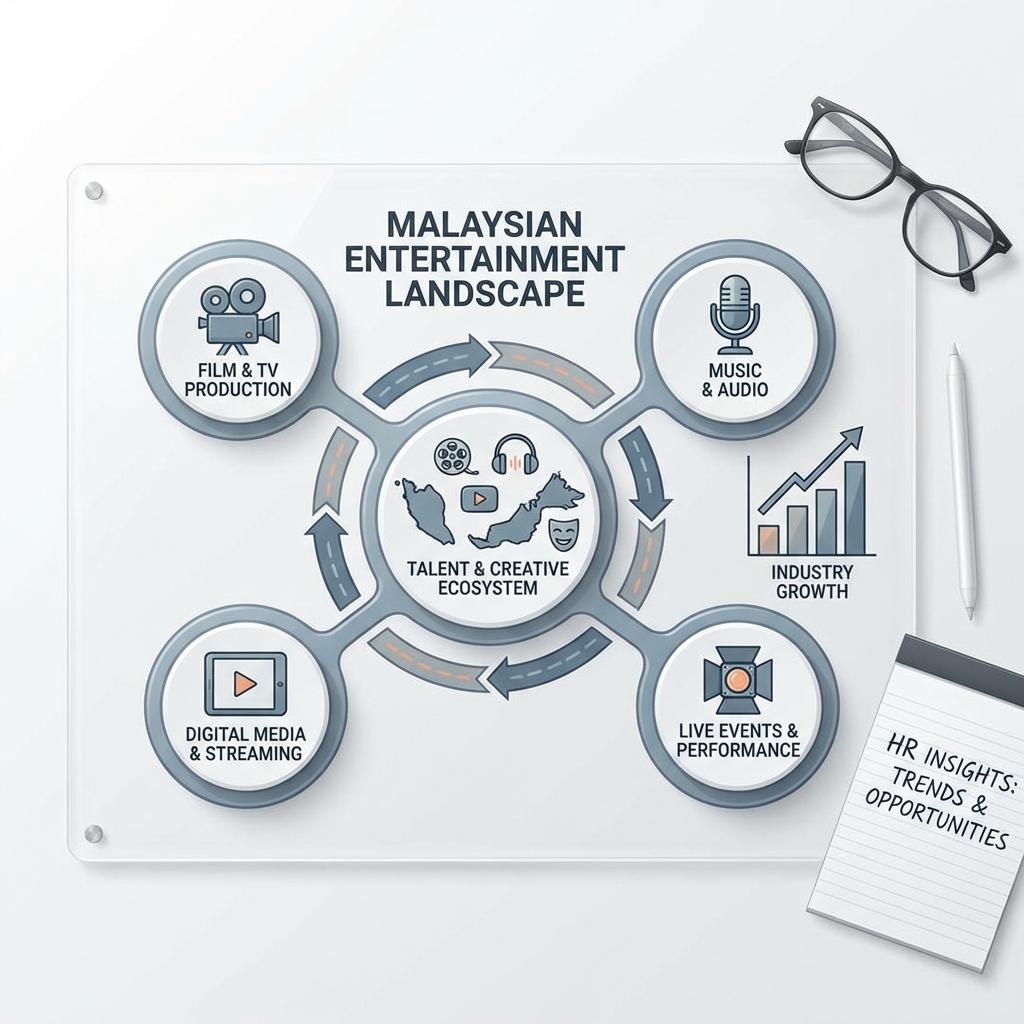
Malaysia’s entertainment industry is a vibrant, dynamic, and increasingly significant sector within Southeast Asia. For hiring managers, navigating this unique landscape requires more than just standard recruitment practices; it demands an acute understanding of local market dynamics, intricate cultural nuances, and rapid technological shifts. This context is crucial when developing a robust framework or a Test structure to assess Manager Level CVs in Entertainment field in malaysia, ensuring that potential leaders possess not only generic management acumen but also specialized industry insights. The industry is characterized by its multicultural bedrock, a burgeoning digital economy, and a supportive yet watchful regulatory environment, all of which shape the demand for specific skill sets and leadership qualities.
-
Current trends and market demands
The Malaysian entertainment sector is in the midst of a profound digital transformation. Streaming platforms (local and international), social media giants, and user-generated content platforms have fundamentally altered content consumption patterns and distribution channels. This shift has fueled a significant demand for professionals who are not only adept at traditional production and marketing but also possess strong digital literacy, data analytics capabilities, and an understanding of audience engagement in the online sphere. There’s a noticeable surge in local content production, from compelling drama series and feature films to animated masterpieces and original music, all reflecting Malaysia’s rich tapestry of cultures. This trend, coupled with the influence of global entertainment, necessitates managers who can blend international best practices with localized appeal. Furthermore, the industry is increasingly seeking multi-skilled individuals capable of navigating intellectual property (IP) management, monetization strategies in the gig economy, and the burgeoning esports scene. An effective Test structure to assess Manager Level CVs in Entertainment field in malaysia must therefore prioritize candidates demonstrating agility, foresight, and a proven track record in digital innovation and market responsiveness.
-
Regulatory environment and cultural nuances
Malaysia’s unique multicultural and multi-religious fabric plays a pivotal role in shaping its entertainment output and regulatory landscape. Content creation and dissemination must carefully navigate a range of cultural sensitivities, religious tenets, and linguistic diversity (Malay, English, Mandarin, Tamil being prominent). Government bodies like the National Film Development Corporation Malaysia (FINAS) and the Malaysian Communications and Multimedia Commission (MCMC) play significant roles in fostering local content while also enforcing guidelines related to censorship, moral standards, and broadcasting ethics. For instance, the concept of “Halal” compliance can influence content themes and production practices, particularly in film and television. Managers operating in this environment need a nuanced understanding of these guidelines, ensuring content remains engaging and commercially viable without transgressing cultural or regulatory boundaries. When evaluating managerial candidates, the Test structure to assess Manager Level CVs in Entertainment field in malaysia should scrutinize their experience in stakeholder management, compliance, and their ability to lead diverse creative teams through potentially sensitive projects, demonstrating cultural intelligence and ethical leadership.
-
Key sectors: Film, music, events, digital content
The Malaysian entertainment industry is incredibly diverse, encompassing several robust sectors, each with its distinct operational dynamics and challenges.
- Film: While facing global competition, local film production continues to grow, with Malaysian films gaining traction both domestically and internationally. Challenges often revolve around funding, distribution networks, and securing international co-productions.
- Music: The music scene is vibrant, witnessing the rise of independent artists, the dominance of streaming platforms like Spotify and Joox, and a blend of traditional sounds with contemporary genres like hip-hop and K-Pop influenced pop. Managers here need expertise in artist development, digital distribution, and global market penetration.
- Events: Post-pandemic, the live events sector – encompassing concerts, festivals, corporate gatherings, and cultural shows – has seen a strong resurgence. There’s a growing trend towards hybrid events, combining physical and virtual experiences, demanding innovative management and technical skills.
- Digital Content: This is perhaps the fastest-growing sector, fueled by a thriving ecosystem of YouTube creators, TikTok influencers, podcasters, and independent online media producers. Managing talent and content in this space requires specific expertise in platform algorithms, audience analytics, and direct-to-consumer monetization models.
Hiring managers must appreciate that leading in one sector doesn’t automatically translate to success in another. Therefore, a comprehensive assessment framework, or a specialized Test structure to assess Manager Level CVs in Entertainment field in malaysia, is essential to identify candidates whose expertise aligns precisely with the strategic needs of specific industry verticals. This involves evaluating their strategic planning, project management capabilities, and network within their target sector.
In conclusion, success in recruiting top-tier managerial talent within Malaysia’s entertainment industry hinges on a deeply informed and tailored approach. The confluence of digital disruption, rich cultural heritage, and a unique regulatory landscape necessitates leaders who are not just experienced but also culturally astute, technologically proficient, and adaptable. By implementing a finely tuned Test structure to assess Manager Level CVs in Entertainment field in malaysia, hiring managers can confidently identify candidates who are truly poised to drive innovation and growth in this exciting and evolving market.
Core Competencies for Entertainment Managers in Malaysia
Defining the essential skills and qualities sought in high-level candidates for the Malaysian entertainment sector goes beyond generic managerial attributes. The dynamic and culturally rich landscape of Malaysia’s entertainment industry demands a unique blend of capabilities. For recruiters and hiring committees, developing a robust Test structure to assess Manager Level CVs in Entertainment field in malaysia is paramount to identifying candidates who can truly thrive. This framework must evaluate not only foundational management principles but also specific expertise tailored to the nuances of the local market and its rapid evolution, including the complex Essential Skills for Entertainment Management.
The Malaysian entertainment sector is characterized by its diversity, encompassing everything from traditional performing arts to modern digital content, music, film, and live events. Managers in this field must navigate a unique set of challenges, including diverse audience preferences, regulatory frameworks, technological shifts, and intense regional competition. Success hinges on a candidate’s ability to demonstrate competencies that are both universally applicable to high-level management and specifically attuned to the Malaysian context. Below are the core competencies that form the bedrock of an effective assessment framework.
1. Leadership & team management skills
Effective leadership in the Malaysian entertainment industry requires more than just delegation; it demands an ability to inspire diverse creative and operational teams. Managers must possess strong interpersonal skills to foster collaboration among artists, technical crew, marketing specialists, and administrative staff. This includes talent identification, mentorship, and conflict resolution, particularly within a multi-ethnic and multi-lingual workforce. A crucial aspect is the ability to adapt leadership styles to suit varying project demands, from the high-pressure environment of live event production to the long-term strategic planning of content development. For entertainment managers in Malaysia, effective leadership also extends to understanding and leveraging the unique strengths of local talent, thereby contributing to sustainable strategic talent management within the industry. A strong leader will be adept at building cohesive units that can consistently deliver high-quality entertainment products and experiences, navigating project complexities while nurturing creativity and professional growth.
2. Business acumen & financial literacy
While creativity drives the entertainment industry, solid business acumen ensures its sustainability. High-level entertainment managers in Malaysia must exhibit a comprehensive understanding of market dynamics, revenue generation models, and cost-efficiency. This includes proficiency in budgeting, financial forecasting, risk assessment, and contract negotiation. Given the project-based nature of much of the sector, the ability to manage multiple budgets, secure funding, and optimize resource allocation is critical. Candidates should demonstrate an understanding of intellectual property rights, licensing agreements, and various monetization strategies pertinent to local and international markets. Moreover, a keen awareness of the evolving Malaysian entertainment sector dynamics – including consumer spending habits, digital transformation, and competitive landscapes – is vital for making informed strategic decisions. Financial literacy is not merely about balancing books; it’s about shrewd investment in projects with high potential returns, managing cash flow for long-term stability, and identifying new commercial opportunities that align with artistic vision.
3. Creative vision & industry network
Perhaps the most distinctive competency for an entertainment manager is the blend of creative vision and an expansive industry network. A manager must possess an innate understanding of aesthetic appeal and market trends, capable of identifying compelling content and innovative performance concepts. This creative intuition must be balanced with commercial viability, recognizing what resonates with the Malaysian audience while also holding international appeal. Coupled with this is the indispensable value of an established network. Connections within the local arts community, media outlets, production houses, government bodies (e.g., FINAS, MDEC), and corporate sponsors are invaluable. This network facilitates collaborations, opens doors for talent, secures partnerships, and provides crucial insights into emerging opportunities and challenges. Managers demonstrating strong networking skills can bridge gaps between creative teams and business stakeholders, fostering an environment ripe for innovation and growth. They are instrumental in facilitating cross-cultural content development, ensuring that local narratives gain broader exposure while also bringing international formats to the Malaysian market. A well-connected manager is not just a facilitator but a strategic architect, capable of leveraging relationships to advance projects and enhance the overall industry ecosystem, solidifying their role as a key player in the ever-evolving Malaysian entertainment landscape.
In conclusion, assessing manager-level candidates for the Malaysian entertainment industry requires a comprehensive approach. Beyond generic management skills, an effective Test structure to assess Manager Level CVs in Entertainment field in malaysia must delve into these specialized competencies. Identifying leaders with strong team management, astute business and financial capabilities, and a robust creative vision underpinned by an extensive industry network is crucial for driving success and innovation in this vibrant sector. Only through such targeted evaluation can organizations secure the talent necessary to navigate the complexities and capitalize on the immense potential of Malaysia’s entertainment landscape.
Designing an Effective CV Assessment Framework
In the dynamic and competitive landscape of Malaysia’s entertainment industry, identifying top-tier managerial talent requires more than a cursory glance at résumés. A structured, objective, and robust approach to CV assessment is crucial for sifting through applications and pinpointing candidates who not only possess the requisite experience but also demonstrate the strategic acumen and leadership potential vital for success. This section details a comprehensive test structure to assess Manager Level CVs in Entertainment field in Malaysia, focusing on a multi-layered evaluation designed to uncover true talent effectively.

1. Pre-screening Filters and Knockout Criteria
The initial phase of CV assessment for manager-level roles in the entertainment sector in Malaysia involves establishing stringent pre-screening filters and clear knockout criteria. This helps to efficiently narrow down the applicant pool to only the most relevant candidates, saving significant time and resources. Key filters include verifying minimum educational qualifications, relevant industry experience (e.g., in film production, digital media, event management, or talent acquisition within entertainment), and specific technical skills pertinent to the managerial role, such as proficiency in project management software or understanding of local market trends. Knockout criteria might include a lack of demonstrated leadership experience, absence of any work history in the entertainment sector, or a significant mismatch with the company’s cultural values as inferred from previous roles. For instance, a candidate applying for a Production Manager role in a Malaysian film studio must show a clear track record in local or regional film production, not just general media. This stage acts as the first robust layer of our test structure to assess Manager Level CVs in Entertainment field in Malaysia, ensuring only viable candidates proceed.
2. Weighted Scoring for Experience and Achievements
Once pre-screened, CVs undergo a more granular evaluation using a weighted scoring system, a core component of any effective test structure to assess Manager Level CVs in Entertainment field in Malaysia. This system assigns specific points to different aspects of a candidate’s profile, reflecting their importance to the managerial role. For manager-level positions, emphasis is placed heavily on quantifiable achievements, leadership roles, and strategic impact rather than just duration of tenure. For example:
- Industry Experience (40%): Direct experience in the Malaysian entertainment industry, number of years in managerial roles, and diversity of experience across different entertainment segments (e.g., broadcasting, live events, digital content).
- Quantifiable Achievements (30%): Specific metrics demonstrating success, such as increasing viewership by X%, managing budgets exceeding Y amount, successfully launching Z number of projects, or growing team performance. These achievements should directly align with the strategic goals of an entertainment manager.
- Leadership & Team Management (20%): Evidence of leading and developing teams, conflict resolution, mentoring, and fostering a positive work environment.
- Strategic Contributions & Innovation (10%): Instances where the candidate introduced new processes, developed market strategies, or spearheaded innovative projects that resulted in tangible benefits for their previous employers.
This systematic approach ensures objectivity and highlights candidates whose contributions align most closely with the strategic needs of an entertainment organization in Malaysia.
3. Identifying Red Flags and Potential Areas for Deeper Inquiry
Beyond scoring positive attributes, a critical part of a comprehensive assessment framework is the ability to identify potential red flags in CVs that warrant deeper inquiry during subsequent interview stages. This proactive approach helps to mitigate hiring risks and ensures a thorough understanding of a candidate’s career trajectory. Common red flags include frequent job hopping (short tenures without clear upward progression), significant unexplained career gaps, vague job descriptions lacking specific achievements, or a lack of career progression despite many years in the workforce. Additionally, pay close attention to inconsistencies in dates or job titles, which could indicate inaccuracies. For manager-level candidates, a failure to articulate strategic impact or provide quantifiable results for their past projects should also raise questions. These red flags aren’t necessarily disqualifiers but serve as crucial discussion points for interviews, allowing recruiters to probe further into the candidate’s motivations, problem-solving skills, and resilience. Understanding these warning signs is integral to a robust test structure to assess Manager Level CVs and ensures that potential liabilities are addressed before making a hiring decision.
Tailoring Assessment for Specific Entertainment Roles
The Malaysian entertainment industry is a vibrant, multifaceted landscape, constantly evolving and demanding highly specialized talent. For HR professionals, designing a robust Test structure to assess Manager Level CVs in Entertainment field in malaysia is critical, yet challenging. A one-size-fits-all approach is insufficient given the diverse nature of roles, from film production to digital marketing. Effective CV assessment must be meticulously tailored to the unique demands and required competencies of each managerial position, ensuring the right talent is identified to drive success in this dynamic sector.
1. Film Production vs. Music Label Management
Assessing managerial CVs for film production management requires a keen eye for operational expertise, project lifecycle understanding, and crisis management. A candidate’s CV should highlight experience in budgeting, scheduling, crew coordination, vendor negotiations, and a strong grasp of post-production workflows. Look for evidence of successfully delivered projects, adherence to timelines and budgets, and the ability to navigate complex regulatory frameworks. Experience with local Malaysian film regulations or international co-production agreements would be a significant advantage. The ability to manage diverse creative teams and problem-solve under pressure are non-negotiable.
Conversely, evaluating CVs for music label management shifts the focus dramatically. Here, the emphasis is on A&R (Artist & Repertoire), talent scouting, understanding of music trends, artist development, marketing, and robust knowledge of intellectual property rights and royalty management. A strong candidate’s CV will showcase experience in artist acquisition, successful album campaigns, digital distribution strategies, and a proven track record in revenue generation from music assets. Familiarity with streaming services, social media promotion for artists, and contract negotiation skills are paramount. While both roles demand leadership, their technical and industry-specific knowledge are profoundly different, necessitating distinct evaluation criteria in the assessment structure.
2. Event Management vs. Digital Marketing Leadership
The distinction between event management leadership and digital marketing leadership within the entertainment sphere is equally pronounced. For an event manager, CV assessment should prioritize demonstrable experience in large-scale logistics, vendor and stakeholder management, risk assessment, sponsorship acquisition, and on-the-ground execution. Look for examples of successful festivals, concerts, or launch events, focusing on the candidate’s ability to conceptualize, plan, and execute flawless experiences. Strong negotiation skills, contingency planning, and an unwavering commitment to safety and quality are key indicators of a top-tier event manager.
In contrast, a digital marketing strategy leader’s CV must reflect deep expertise in online engagement, audience analytics, search engine optimization (SEO), social media strategy, content marketing, and performance-based campaigns. Assess their experience in leveraging digital platforms to build brand awareness, drive fan engagement, and generate revenue for entertainment properties. Look for quantifiable achievements in increasing online reach, conversion rates, and ROI from digital marketing initiatives. Proficiency with various analytics tools, A/B testing, and a forward-thinking approach to emerging digital trends are crucial. Both roles demand strategic thinking, but their operational canvases and required skill sets diverge significantly.
3. Emphasis on Soft Skills and Cross-Functional Experience
Beyond technical and industry-specific competencies, a holistic Test structure to assess Manager Level CVs in Entertainment field in malaysia must place strong emphasis on soft skills and cross-functional experience. The fast-paced, often unpredictable nature of the entertainment industry demands managers with exceptional adaptability, resilience, and problem-solving capabilities. CVs should be scrutinized for evidence of strong communication, negotiation prowess, creative thinking, and the ability to inspire and lead diverse teams. These soft skills are the bedrock upon which technical expertise can be effectively applied. For instance, a manager’s ability to mediate disputes on a film set or negotiate a complex artist contract is often as critical as their understanding of specific production tools or legal clauses.
Furthermore, candidates demonstrating valuable cross-functional experience in entertainment often possess a significant advantage. Managers who have worked across different silos—e.g., from production into marketing, or from events into digital strategy—tend to have a more holistic understanding of the business ecosystem. This broader perspective fosters strategic thinking, enhances collaboration, and allows them to anticipate challenges and opportunities that purely specialized managers might miss. Such experience indicates a manager’s versatility and potential for growth, making them invaluable assets in an industry where convergence and innovation are constant. Ultimately, identifying the best managerial talent in Malaysia’s entertainment sector requires a nuanced assessment that balances specific technical expertise with the essential human elements of leadership, adaptability, and a comprehensive understanding of the industry’s interconnected parts. Staying abreast of industry trends and required future skills, such as those discussed in Deloitte’s report on Future of Entertainment, Media & Sports, is vital for refining these assessment structures.
Leveraging Technology and Future Trends in CV Review
In the dynamic and rapidly evolving entertainment industry in Malaysia, the traditional CV review process is undergoing a significant transformation. Entertainment managers are increasingly challenged to identify top-tier talent not just based on past experience, but also on future potential and adaptability. To streamline and enhance this crucial assessment, modern technological tools and forward-thinking strategies are essential. This section explores innovative approaches and future considerations for developing a robust Test structure to assess Manager Level CVs in Entertainment field in malaysia, ensuring that recruitment efforts align with the industry’s pace and demands.
1.
AI-powered screening tools and ATS optimization
The first line of defense in managing a high volume of applications for manager-level positions in entertainment is often an Applicant Tracking System (ATS), now frequently enhanced with Artificial Intelligence (AI). These sophisticated tools move beyond simple keyword matching, employing Natural Language Processing (NLP) and machine learning to analyze CVs for contextual relevance, sentiment, and even indicators of soft skills. For entertainment managers in Malaysia, leveraging AI-powered ATS means faster identification of candidates who possess specific industry experience, project management capabilities, and leadership qualities essential for navigating the complex local and regional entertainment landscape. These systems can efficiently filter out unqualified applicants, highlight key achievements, and even flag potential biases, creating a more objective and efficient initial screening process. Optimizing CVs for ATS involves structuring information clearly, using industry-standard terminology, and highlighting quantifiable achievements, ensuring that qualified candidates are not overlooked by automated systems.

2.
Portfolio and project-based assessments
While traditional CVs provide a snapshot of a candidate’s career, the entertainment sector—especially at managerial levels—demands tangible proof of creative vision, strategic execution, and leadership. This is where portfolio and project-based assessments become invaluable. Instead of solely relying on descriptions, candidates for manager-level roles in Malaysian entertainment can be asked to submit portfolios showcasing past campaigns, event successes, artist development projects, or even strategic proposals they have spearheaded. This approach moves beyond theoretical knowledge, offering direct insight into a candidate’s ability to conceptualize, execute, and deliver results. For instance, a candidate for an events manager role might present a detailed breakdown of a successful large-scale festival, including budget management, vendor coordination, and audience engagement metrics. Similarly, a content manager might present a portfolio of successful multimedia campaigns. These assessments provide a holistic view of a candidate’s practical skills, problem-solving abilities, and creative flair, which are critical for managerial success in Malaysia’s diverse entertainment scene.
3.
Future-proofing skills for 2026 and beyond
The entertainment industry is in a perpetual state of flux, driven by technological advancements and evolving consumer behaviors. Therefore, a forward-looking Test structure to assess Manager Level CVs in Entertainment field in malaysia must prioritize future-proof skills. Beyond traditional management competencies, entertainment managers in Malaysia will need strong analytical skills to interpret market data and audience insights, adaptability to embrace new platforms (e.g., VR/AR experiences, metaverse events), and a deep understanding of digital monetization strategies. Sustainability and ethical considerations in content creation and event management are also becoming increasingly vital. Furthermore, global collaboration and cross-cultural communication skills are paramount as Malaysian entertainment expands its reach. According to the World Economic Forum’s Future of Jobs Report 2023, critical thinking, creativity, and self-efficacy are among the top skills growing in importance, directly impacting the strategic roles of entertainment managers. Incorporating assessment methods that identify these future-oriented capabilities—such as scenario-based interviews, strategic case studies focusing on emerging technologies, or questions around handling unforeseen industry disruptions—will be crucial for building resilient and innovative leadership teams for 2026 and beyond.
Partner with Shelby Global
You are looking for reliable HR Sevice Suppliers? Contact Shelby Global Now! To connect with verified talents and upgrade your orginization.
—————————————
References
– National Film Development Corporation Malaysia (FINAS): https://www.finas.gov.my/en/about-us/
– Essential Skills for Entertainment Management: https://www.backstage.com/magazine/article/essential-skills-entertainment-management-73600/
– 10 Red Flags To Look For On Resumes: https://www.forbes.com/sites/forbeshumanresourcescouncil/2023/10/26/10-red-flags-to-look-for-on-resumes/
– Deloitte’s Future of Entertainment, Media & Sports Report: https://www2.deloitte.com/content/dam/Deloitte/global/Documents/deloitte-media-trends-report-2023.pdf
– World Economic Forum’s Future of Jobs Report 2023: https://www.weforum.org/publications/future-of-jobs-report-2023/