Understanding the Unique HR Landscape for Singapore EdTech SMEs
Singapore’s vibrant education technology (EdTech) sector presents a unique blend of innovation and challenges, particularly for Small and Medium-sized Enterprises (SMEs). For these nimble entities, human resources (HR) isn’t just an administrative function; it’s a strategic imperative that directly impacts growth, innovation, and market competitiveness. Unlike larger corporations with established HR departments, EdTech SMEs in Singapore often face the intricate task of balancing rapid scaling with limited resources, navigating a highly competitive talent market, and ensuring stringent regulatory compliance. The very HR structures for SMEs are frequently shaped by the visionary leadership of the CEO in education companies in Singapore, who often spearheads early-stage talent acquisition and culture building. This section delves into these specific challenges and opportunities, setting the stage for effective HR strategies tailored for Singaporean EdTech SMEs.
1. Growth Trajectories and Talent Demands in Singapore’s Education Sector
The EdTech sector in Singapore is experiencing robust growth, driven by a national push for digital transformation in education and increasing demand for personalized learning solutions. This expansion fuels a continuous demand for specialized talent, ranging from experienced instructional designers and curriculum developers to skilled software engineers, data scientists, and digital marketing specialists who understand the education ecosystem. However, attracting and retaining this diverse pool of professionals is a significant hurdle for SMEs. They often compete directly with well-funded multinational tech giants and established educational institutions, which can offer more attractive compensation packages and extensive career development programs. For EdTech SMEs, the challenge lies in creating compelling value propositions that go beyond salary, focusing instead on unique company culture, impact-driven work, rapid career progression, and equity opportunities. Successfully navigating these talent demands requires a proactive approach to employer branding, strategic recruitment, and investment in continuous upskilling initiatives to bridge existing skills gaps within their teams.
2. The CEO’s Pivotal Role in Early-Stage HR Strategy
In the nascent stages of an EdTech SME, the CEO in education companies in Singapore is not merely the chief strategist and visionary; they frequently serve as the de facto Head of HR. This central role in shaping initial HR structures for SMEs is profound. The CEO’s vision, values, and leadership style directly influence the company’s culture, hiring philosophy, and employee engagement strategies from day one. They are responsible for making critical early hires that form the foundational team, setting performance expectations, and establishing the initial compensation frameworks. This hands-on involvement ensures that every hire aligns with the company’s mission and long-term goals. As the company scales, the CEO’s challenge shifts from direct HR execution to strategically delegating these responsibilities, nurturing a strong organizational culture that can thrive independently, and transitioning towards a dedicated HR function. Understanding how to evolve these early HR structures for SMEs led by the CEO is crucial for sustainable growth in the dynamic Singapore EdTech landscape. For more insights on evolving these functions, explore effective HR structures for SMEs, especially where the CEO plays a critical role in education companies in Singapore.

3. Navigating Regulatory Compliance: MOM & PDPA for SMEs
Operating in Singapore means adhering to a robust framework of employment laws and data protection regulations. For EdTech SMEs, navigating this complex landscape, often without dedicated legal or HR teams, is a significant challenge. The Ministry of Manpower (MOM) sets out comprehensive guidelines on employment practices, covering everything from fair hiring and non-discrimination to working hours, leave entitlements, and foreign worker quotas. SMEs must ensure their employment contracts, payroll processes, and HR policies are fully compliant to avoid penalties and maintain a positive reputation. Proactive understanding and adherence to these regulations are critical for building a fair and equitable workplace. For detailed information on statutory requirements, SMEs should consult official Ministry of Manpower (MOM) guidelines on employment practices.
Equally critical is compliance with the Personal Data Protection Act (PDPA). EdTech companies handle vast amounts of sensitive personal data, including information belonging to students, parents, and employees. The PDPA mandates strict rules around data collection, use, disclosure, and protection. SMEs must implement robust data security measures, obtain clear consent for data processing, and establish procedures for data access, correction, and breach notification. Non-compliance can lead to severe fines and irreparable damage to an SME’s credibility and trust with its users. For EdTech SMEs, ensuring both MOM and PDPA compliance is not just a legal obligation but a fundamental aspect of responsible business practice, safeguarding both their employees and their valued customers in the digital learning space.
Common HR Structures for Small to Medium Enterprises
For small to medium enterprises (SMEs), especially those thriving in Singapore’s competitive education sector, effective human resource management is crucial. The right HR structures for SMEs the CEO in education companies in Singapore are not just about compliance; they are strategic assets that drive talent acquisition, retention, and operational efficiency. CEOs must carefully evaluate various HR models to align with their budget, strategic goals, and unique organizational culture. This section details common HR structures, assessing their suitability for different stages of SME development.
1. Outsourced HR vs. Dedicated In-house HR: Pros and Cons
The initial HR decision for many SMEs often boils down to outsourcing versus building an internal department.
Outsourced HR Solutions:
Engaging a third-party to manage HR functions like payroll, benefits, compliance, and recruitment.
- Pros:
- Cost Efficiency: More economical than a full-time in-house team, paying only for needed services.
- Access to Expertise: Immediate access to specialists with broad industry knowledge and up-to-date compliance understanding, vital for the regulated education sector.
- Focus on Core Business: Frees up internal resources, allowing the CEO to concentrate on education delivery and business growth.
- Scalability: Easily adjust services based on fluctuating business needs.
- Cons:
- Less Control: Reduced direct oversight of daily HR operations.
- Impersonal Service: May lack a deep understanding of unique company culture and employee needs.
- Data Security: Requires robust agreements and trust when sharing sensitive data.
- Communication Gaps: Potential for miscommunication or slower response times.
Dedicated In-house HR:
Establishing an internal HR department with dedicated staff.
- Pros:
- Cultural Integration: HR professionals become integral to the team, understanding company culture and employee dynamics deeply.
- Direct Control & Tailored Solutions: Enables precise control over HR policies and customized solutions for talent management.
- Enhanced Employee Relations: Provides accessible support, fostering trust and improving communication, critical for staff morale.
- Strategic Alignment: More effectively aligns HR strategies with overall business objectives.
- Cons:
- Higher Costs: Significant expenses for salaries, benefits, and training.
- Limited Expertise: A small team may lack specialized expertise across all HR domains without continuous investment.
- Administrative Burden: The internal team bears the full administrative load.
2. Hybrid Models: Balancing External Expertise with Internal Oversight
For many growing education companies in Singapore, a hybrid approach to HR structures for SMEs the CEO in education companies in Singapore offers a strategic balance. This model combines outsourced services for transactional or highly specialized functions with a lean internal HR presence for strategic oversight and cultural integration.
- How it Works: SMEs might outsource payroll, benefits, or specialized recruitment, while an internal HR generalist manages employee relations, performance, cultural development, and strategic planning.
- Advantages:
- Optimal Cost-Effectiveness: Leverages outsourcing benefits for routine tasks while investing internally in high-impact areas.
- Access to Specialized Knowledge: External partners bring niche expertise (e.g., legal compliance, HR tech).
- Cultural Preservation: Internal HR safeguards company culture and employee well-being.
- Improved Agility: Provides flexibility to adapt to changing business needs.
- Disadvantages:
- Coordination Complexity: Requires careful management between internal and external teams.
- Clear Responsibility Demarcation: Ambiguity can lead to inefficiencies.
- Vendor Management: Requires time and effort to manage external provider relationships.
3. HR Generalist vs. Specialist: When to Scale Up Your Team
As an education SME expands, the focus shifts to scaling the internal HR team effectively.
- The HR Generalist: Initially, a single HR generalist is often sufficient. This individual handles a broad spectrum of tasks: recruitment, onboarding, employee relations, policy implementation, and basic compliance. They offer comprehensive, cost-effective support for smaller teams.
- When to Introduce Specialists: The need for specialists arises as the company grows in headcount, complexity, or strategic ambition.
- Growth in Headcount: A larger workforce demands dedicated attention to areas like recruitment, learning & development, or compensation.
- Increased Complexity: Maturing SMEs face more intricate legal requirements (e.g., Singapore employment law) and sophisticated talent management needs.
- Strategic Objectives: If the education company prioritizes specific goals (e.g., employer of choice, strong talent pipeline), specialists (e.g., Talent Acquisition, L&D Manager) become crucial.
- Preventing Burnout: Scaling with specialists distributes the workload, prevents generalist burnout, and provides deeper expertise in critical areas.
For CEOs in education companies in Singapore, understanding these evolving HR structures for SMEs the CEO in education companies in Singapore is crucial. It enables informed decisions that support sustainable growth, ensure compliance, and cultivate a thriving workplace. Organizations should periodically review their HR model to ensure it continuously meets strategic and operational needs. For more detailed resources on building resilient HR frameworks tailored for growing businesses, explore authoritative insights from leading HR organizations.
Building an Effective HR Foundation for Education Companies
In the dynamic landscape of education, companies, particularly those operating as SMEs in Singapore, face a unique set of human resource challenges. Establishing a robust HR foundation is not just about compliance; it’s a strategic imperative that directly impacts an organisation’s ability to innovate, deliver quality education, and achieve sustainable growth. For the CEO in education companies, understanding and implementing effective HR structures for SMEs is paramount to attracting, developing, and retaining the specialised talent crucial for both pedagogical excellence and technological advancement. This section delves into the core components of HR that are particularly critical for education companies, emphasizing strategic talent acquisition, development, and retention to foster a thriving learning environment.
1. Strategic Talent Acquisition for Educators and Tech Professionals
The success of any education company hinges on the caliber of its people. Unlike traditional businesses, education firms require a dual focus on sourcing highly skilled educators—teachers, curriculum developers, and academic leaders—alongside proficient tech professionals such as developers, instructional designers, and data analysts—who build and maintain learning platforms. Strategic talent acquisition for education companies means going beyond standard recruitment. It involves crafting compelling employer branding that highlights the mission-driven nature of education, utilizing specialized job boards and professional networks relevant to both teaching and technology, and implementing rigorous assessment methods that evaluate both pedagogical expertise and technical proficiency. In Singapore’s competitive job market, an effective strategy must also consider the unique cultural nuances and expectations of candidates, offering clear career pathways and professional development opportunities from the outset. Proactive talent pipelining for critical roles ensures that the company is always ready to scale and innovate, maintaining a competitive edge in an evolving sector.
2. Performance Management & Employee Engagement in a Learning Environment
A thriving education company fosters a culture of continuous learning and improvement, not just for its students but for its employees too. Performance management in this context transcends annual reviews; it’s about creating a supportive ecosystem where educators and tech teams receive regular, constructive feedback, opportunities for professional growth, and recognition for their contributions. For SMEs, agile performance frameworks that align individual goals with the company’s educational mission are vital. Employee engagement is particularly critical in a sector often driven by passion and purpose. Strategies should include fostering collaborative team environments, providing clear communication channels, celebrating successes, and actively soliciting employee feedback to drive improvements. Recognising the unique stressors faced by educators and tech professionals—such as workload, emotional labor, or rapid technological changes—HR must implement well-being initiatives and provide resources that support mental health and work-life balance. Engaged employees are more likely to stay, contribute positively to the learning environment, and act as ambassadors for the company’s mission.
3. Developing Competitive Compensation & Benefits Packages (Singapore Context)
Attracting and retaining top talent in Singapore, a global hub with a high cost of living, necessitates a thoughtful approach to compensation and benefits. For education companies, this means benchmarking salaries not just against other educational institutions but also against relevant tech companies for their technical roles. A competitive compensation philosophy should be transparent, equitable, and structured to reward performance and skill development. Beyond base salaries, comprehensive benefits packages are crucial. This includes robust health insurance, professional development budgets, flexible work arrangements, and potentially unique perks tailored to the education sector, such as subsidized courses or opportunities for educational research. Understanding local regulations and market trends is key. The Ministry of Manpower (MOM) Singapore provides valuable guidelines on employment practices and compensation standards, which can help CEOs of education companies in Singapore navigate this complex area effectively. Regular review and adjustment of these packages ensure that the company remains attractive to both new hires and long-serving employees, securing the human capital essential for its enduring success.
The CEO’s Playbook: Implementing and Evolving HR Strategy
Provides guidance for CEOs on how to actively participate in, oversee, and strategically adapt their HR initiatives as their company grows and market conditions shift.
In today’s dynamic business landscape, particularly for small and medium-sized enterprises (SMEs) in the specialized education sector in Singapore, the CEO’s active involvement in human resources is not merely beneficial—it’s imperative. Far from being a mere administrative function, HR is a strategic driver that shapes organizational culture, fuels growth, and ensures resilience against market fluctuations. For CEOs overseeing an education company in Singapore, understanding and actively steering HR structures for SMEs the CEO in education companies in singapore is paramount. This section outlines a playbook for CEOs to not only implement robust HR strategies but also to continuously evolve them to meet current demands and future challenges.
-
Aligning HR Strategy with Business Goals and Company Culture
The foundation of effective HR lies in its seamless integration with the overarching business objectives and the unique ethos of the company. For an education company, this means ensuring that HR strategies directly support educational excellence, student outcomes, and the growth trajectory. CEOs must champion a clear vision where talent acquisition SMEs focuses on hiring educators and staff who not only possess the requisite skills but also deeply resonate with the company’s mission and values. Strategic HR leadership dictates that every HR initiative, from onboarding to performance management, reinforces the desired organizational culture development – one that fosters innovation, collaboration, and a passion for learning. The CEO’s role extends to clearly articulating these connections, ensuring that HR is seen as a strategic partner, not just a support function. This alignment is critical for growing company HR, as it ensures that people strategies are always propelling the business forward rather than merely reacting to immediate needs. It also directly impacts employee retention strategies by creating a work environment where staff feel valued, understood, and connected to a larger purpose, ultimately reducing turnover within the education sector HR Singapore.
-
Leveraging HR Tech for Efficiency and Data-Driven Decisions
In an increasingly competitive environment, leveraging technology is no longer an option but a necessity for modern HR. For SMEs, particularly in the education space, HR technology adoption can revolutionize operations, bringing efficiency, transparency, and actionable insights. CEOs should actively explore and invest in HR information systems (HRIS), applicant tracking systems (ATS), and learning management systems (LMS) that streamline administrative tasks, from payroll and benefits to performance reviews and compliance. More importantly, these technologies provide a wealth of data. CEOs must encourage a shift towards data-driven HR decisions, utilizing analytics to understand workforce trends, identify skill gaps, predict turnover, and measure the effectiveness of training programs. For example, tracking employee engagement metrics or the impact of professional development on student performance can offer invaluable insights. This not only enhances SME HR strategy but also allows for proactive workforce planning Singapore. Embracing HR tech enables an education company to optimize its human capital, making smarter investments in its people and programs. For further insights on how technology can transform HR, refer to resources like SHRM’s Technology section, which offers comprehensive guidance on the latest HR tech trends and implementations.
-
Future-Proofing HR: Adapting to Market Shifts & Global Trends
The education sector, like many others, is in a constant state of evolution, influenced by technological advancements, demographic changes, and evolving learning methodologies. The CEO’s role in HR strategy must therefore extend to future-proofing HR practices. This involves anticipating market shift adaptation HR, such as the increasing demand for online learning, personalized education paths, or new regulatory landscapes affecting HR compliance for SMEs in Singapore. CEOs need to foster a culture of continuous learning and adaptability within their workforce. This means investing in upskilling and reskilling programs, encouraging agile work methodologies, and exploring flexible work arrangements that cater to a diverse and evolving talent pool. Global trends, such as the rise of the gig economy or AI’s impact on job roles, also necessitate a forward-thinking approach. The CEO’s role in HR becomes one of a foresight leader, guiding the organization to build a resilient and agile workforce capable of navigating uncertainties. By proactively addressing these challenges, an education company can maintain its competitive edge, attract top talent, and ensure its relevance for years to come. This strategic foresight is crucial for sustaining success in the complex and competitive landscape of the future of work HR.
Ultimately, the CEO’s journey in implementing and evolving HR strategy is a continuous one. By actively engaging in aligning HR with business goals, embracing technology for efficiency and data-driven insights, and proactively future-proofing the workforce against market shifts and global trends, CEOs can transform their HR function into a powerful engine for growth and sustained success. For education companies in Singapore, this hands-on approach ensures that people remain at the heart of their mission, driving both educational excellence and commercial viability.
Singapore-Specific HR Considerations for Education SMEs in 2026
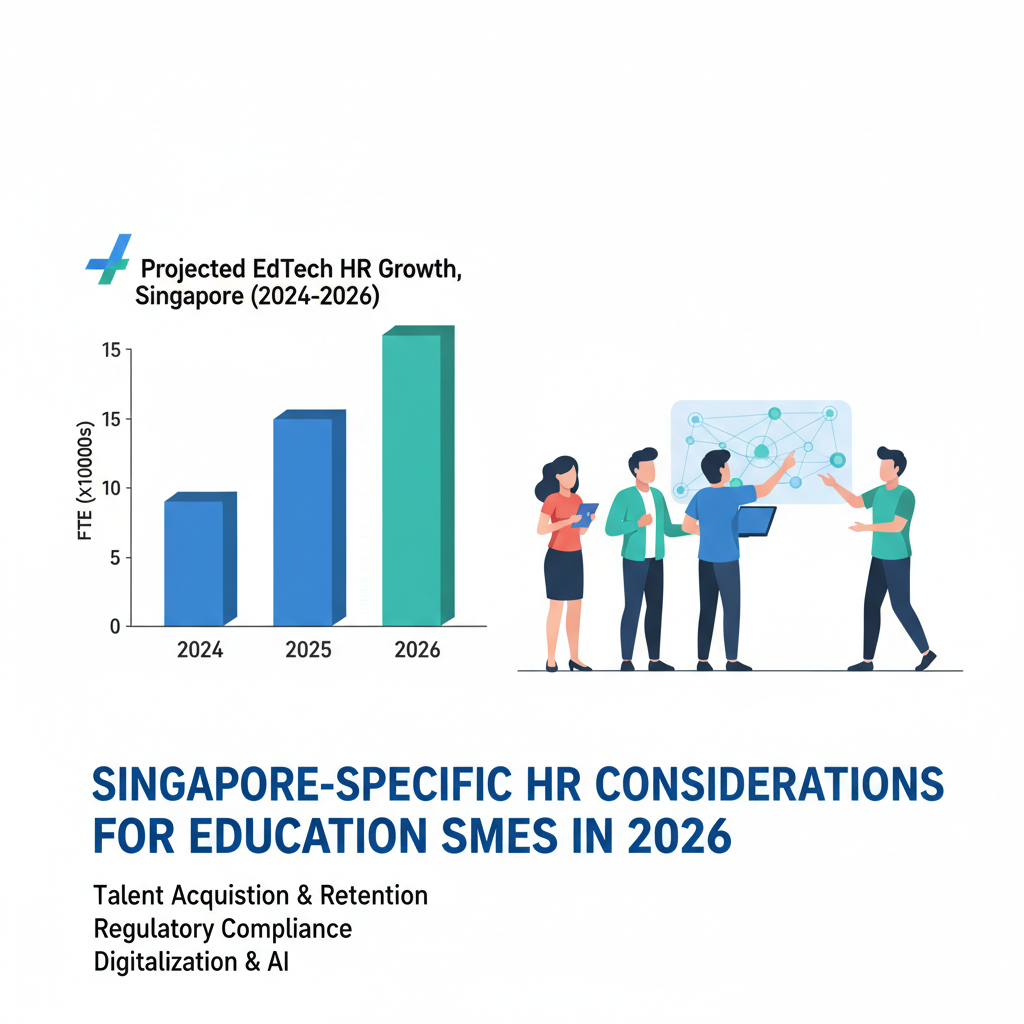
Singapore’s dynamic economy, coupled with a highly competitive education sector, presents unique challenges and opportunities for Small and Medium-sized Enterprises (SMEs). For CEOs navigating the complexities of their education companies in 2026, understanding the local human resources landscape is paramount. Effective HR structures for SMEs the CEO in education companies in Singapore are not just about managing personnel; they are about strategic workforce planning, talent acquisition, and fostering an environment of continuous growth and compliance. This section dives into the critical Singapore-specific HR considerations, from leveraging government support to adapting to evolving labor laws and proactively addressing future skills gaps, ensuring your education SME remains agile and competitive.
1. Singapore Government Grants & Schemes for SME HR Development (e.g., PSG, WSG)
The Singapore government consistently demonstrates its commitment to supporting local SMEs, and the education sector is no exception. In 2026, a suite of grants and schemes remains available to help education SMEs enhance their HR capabilities, boost productivity, and invest in their workforce. A cornerstone of this support is the Productivity Solutions Grant (PSG), which provides funding for the adoption of pre-scoped IT solutions and equipment that improve business processes. For education SMEs, this can translate directly into subsidies for HR technology solutions such as payroll software, applicant tracking systems, or learning management systems, significantly streamlining administrative tasks.
Beyond technological upgrades, Workforce Singapore (WSG) offers various programmes focused on learning and development and upskilling initiatives. Schemes like the Job Redesign Grant can help companies transform job roles to match evolving industry needs, particularly crucial as education experiences digital transformation. Furthermore, the SkillsFuture Enterprise Credit (SFEC) provides eligible employers with a one-off S$10,000 credit to cover up to 90% of out-of-pocket expenses for supportable programmes, including enterprise transformation and workforce transformation programmes. This is an invaluable resource for education SMEs looking to invest in continuous training, reskilling programs, or even professional certifications for their educators and administrative staff, directly impacting pedagogical innovation and service quality. CEOs should actively explore these grants to bolster their HR strategy, ensuring their talent acquisition efforts are supported by a strong foundation of employee development and welfare. These financial incentives are critical for enhancing competitive HR structures for SMEs the CEO in education companies in Singapore.
2. Updates on Employment Act & Fair Consideration Framework (FCF)
Staying abreast of Singapore’s labor laws is non-negotiable for any SME, and 2026 will continue to see an emphasis on fair and progressive employment practices. The Employment Act (EA), the cornerstone of employee rights in Singapore, undergoes periodic reviews. Education SMEs must ensure their HR policies are fully compliant with the latest provisions, particularly concerning working hours, overtime pay, leave entitlements, and termination processes. Non-compliance can lead to significant penalties, making robust HR compliance essential.
A key framework impacting talent acquisition and workforce planning is the Fair Consideration Framework (FCF). The FCF mandates that employers fairly consider Singaporean candidates before hiring foreign professionals, managers, and executives (PMEs). In recent years, the FCF has been progressively strengthened, with an expansion of job roles and firms covered, along with longer minimum advertisement periods on the MyCareersFuture portal. For education SMEs seeking specialized educators or niche administrative talent, this means a rigorous process of local outreach and demonstrating genuine efforts to find suitable Singaporean candidates. Strategic HR structures for SMEs the CEO in education companies in Singapore must factor in these requirements, potentially leading to longer hiring timelines and a greater focus on developing a strong local talent pipeline. It also encourages education companies to invest more in local employee development to meet future needs, reducing reliance on foreign talent where local capabilities can be cultivated. Understanding these updates is crucial for effective HR strategy and maintaining a diverse yet compliant workforce.
3. Addressing Skills Gaps and Future Workforce Needs in Education
The education sector is undergoing rapid transformation, driven by technological advancements and evolving learning methodologies. For education SMEs, identifying and addressing current and future skills gaps is critical for sustained growth and ensuring high-quality educational delivery. Beyond traditional pedagogical skills, the workforce of 2026 demands expertise in areas such as EdTech integration, data analytics for learning outcomes, digital content creation, and adaptive teaching methodologies for online and blended learning environments. Educators also need strong socio-emotional intelligence and skills in fostering student engagement in diverse settings.
To proactively address these needs, education SMEs must implement robust workforce planning and strategic learning and development programmes. This involves regular skills audits to pinpoint deficiencies and then launching targeted upskilling initiatives and reskilling programs for existing staff. For instance, training teachers in using AI-powered learning tools or developing curriculum for future-ready skills. Talent acquisition strategies should also prioritize candidates demonstrating adaptability, digital literacy, and a growth mindset. Furthermore, fostering a culture of mental wellness support and continuous professional development is key to employee retention. Embracing HR technology for skills tracking and personalized learning paths can significantly enhance these efforts. Ultimately, building resilient and forward-looking HR structures for SMEs the CEO in education companies in Singapore involves anticipating educational trends and proactively shaping a workforce equipped to lead the charge.
In conclusion, 2026 presents a pivotal moment for education SMEs in Singapore to refine their HR strategies. By judiciously leveraging government grants, adhering to evolving employment regulations, and proactively investing in skill development, CEOs can build robust and adaptive HR structures. These strategic considerations will not only ensure compliance but also empower education companies to attract, develop, and retain the talent critical for future success in a competitive and rapidly changing landscape.
Partner with Shelby Global
You are looking for reliable HR Sevice Suppliers? Contact Shelby Global Now! To connect with verified talents and upgrade your orginization.
—————————————
References
– Employment Practices – Ministry of Manpower: https://www.mom.gov.sg/employment-practices/employment-act
– Small Business Resources | SHRM: https://www.shrm.org/resources-and-tools/hr-topics/small-business/
– Ministry of Manpower Singapore – Salary and Wages: https://www.mom.gov.sg/employment-practices/salary-and-wages
– SHRM’s Technology section: https://www.shrm.org/resources-and-tools/hr-topics/technology/
– Workforce Singapore (WSG) Programmes for Businesses: https://www.wsg.gov.sg/home/programmes-for-businesses/grants-schemes/