
Overview of Vietnamese Labor Law for Healthcare
The dynamic landscape of Vietnam’s healthcare sector is underpinned by a robust legal framework designed to protect both employers and employees. For healthcare professionals and institutions, understanding the Legal HR terms & conditions for medicine field in vietnam is not merely a compliance task but a strategic imperative. This section introduces the foundational legal framework governing employment within the country’s medical sector, highlighting the general labor laws critically applicable to doctors, nurses, pharmacists, and administrative staff across various medical facilities.
Vietnam’s primary legislation governing employment relationships is the Labor Code (Law No. 45/2019/QH14), effective January 1, 2021. This comprehensive code, alongside numerous guiding decrees and circulars, establishes rights and obligations pertaining to labor contracts, working conditions, wages, social insurance, and dispute resolution. While the Labor Code applies broadly, specific nuances often arise within the highly regulated healthcare industry, necessitating a detailed understanding for effective human resource management. Navigating these legalities ensures fair treatment for medical professionals while enabling healthcare providers to operate within national regulations.

1. Key Articles from the Labor Code Affecting Medical Professionals
Several articles within Vietnam’s Labor Code are particularly significant for healthcare professionals. Understanding these provisions is crucial for compliance and safeguarding employee rights.
- Labor Contracts (Articles 13-24): These articles define contract types (indefinite-term, definite-term, and seasonal) and their mandatory contents. For medical professionals, contracts must clearly specify job descriptions, working hours, wages, social insurance, and other benefits. The nature of medical work often requires indefinite-term contracts for core staff.
- Working Hours, Rest Periods, and Overtime (Articles 105-115): The standard working week is generally 48 hours, or less as agreed, but healthcare often involves shift work and emergency duties. The Code sets strict limits on overtime (not exceeding 200-300 hours/year), requiring employers to compensate appropriately (150-300% of normal wage). This is critical for healthcare institutions given their 24/7 services.
- Wages and Social Insurance (Articles 90-99 & Social Insurance Law): The Labor Code mandates minimum wages and wage payment principles. Employers are obligated to contribute to mandatory social, health, and unemployment insurance funds for their employees, providing essential social security benefits like sick leave, maternity leave, and retirement. Adhering to these provisions is fundamental to the Legal HR terms & conditions for medicine field in vietnam.
- Occupational Safety and Health (Articles 136-159): Given inherent risks in medical environments, these articles are paramount. Employers must provide a safe working environment, necessary protective equipment, regular health checks, and safety training. Specific regulations often apply to medical waste management and infectious disease control.
2. Recent Updates to Labor Code Relevant to Healthcare (2026 Outlook)
The current Labor Code 2019, effective from January 1, 2021, introduced significant changes impacting the healthcare sector, and its continued interpretation will shape the 2026 outlook. Key revisions focused on expanding employee rights, promoting gender equality, and enhancing dispute resolution.
A notable change broadened the “labor relationship” definition, potentially impacting contractual arrangements for specialist medical consultants. The Code also refined internal labor rules, requiring clearer policies on working schedules, discipline, and compensation – highly relevant for complex healthcare operations.
The 2019 Labor Code increased flexibility for employees’ unilateral contract termination. For employers, dismissal processes were tightened, emphasizing robust internal disciplinary procedures. Looking towards 2026, digitalization and evolving healthcare work (e.g., telemedicine) may prompt further legislative guidance on flexible working arrangements and data privacy. Harmonization with international labor standards might also lead to refinements, particularly concerning working hours and occupational health. For a comprehensive overview, refer to PwC’s summary on the Labor Code 2019 key changes.
3. Distinction Between Public and Private Healthcare Employment Rules
While the overarching Labor Code provides a universal foundation, employment rules differ between public (state-owned) and private healthcare facilities in Vietnam. These distinctions primarily stem from the public sector’s adherence to additional civil servant and public employee regulations.
- Public Healthcare Sector: Employees in public hospitals and clinics are typically governed by both the Labor Code and specific decrees related to civil servants. This means more rigid frameworks for recruitment, promotion, and salary structures, based on state-mandated scales and seniority. Job security is generally higher, and benefits might be more standardized and comprehensive, though less flexible. Disciplinary actions follow strict government protocols.
- Private Healthcare Sector: Private hospitals, clinics, and international medical centers operate predominantly under the Labor Code, offering greater flexibility in HR management. They have more autonomy in setting competitive salaries, performance incentives, and designing unique benefits packages to attract top talent. Recruitment and promotion are more agile and merit-based, responding to market demands. While bound by core labor laws, private facilities often adopt more modern HR practices.
Understanding these distinctions is crucial for medical professionals considering career paths and for HR managers formulating policies within both sectors.
Specific HR Regulations for Medical Professionals
The healthcare sector, by its very nature, operates under a distinct and rigorous set of human resources regulations, especially in Vietnam. This is largely due to the critical nature of medical services, which directly impact public health and safety. For doctors, nurses, pharmacists, and other allied medical staff, understanding these specialized legal HR terms & conditions for medicine field in Vietnam is not just about compliance, but about upholding professional standards and ensuring the highest quality of patient care. These regulations delve into unique aspects of their roles, encompassing everything from initial qualification to daily operational protocols and ethical conduct.
1. Licensing, Certification, and Continuous Professional Development Requirements
For any individual to practice medicine in Vietnam, a foundational requirement is the acquisition of the necessary professional licenses and certifications. These are meticulously governed by the Ministry of Health and specific professional bodies, ensuring that all practitioners possess the requisite education, skills, and ethical understanding. Doctors, nurses, pharmacists, medical technicians, and other specialists must meet stringent criteria, including graduating from accredited institutions, passing national examinations, and often completing supervised practical training periods. The legal framework, particularly the Vietnamese Law on Medical Examination and Treatment, outlines the specific conditions for obtaining and maintaining these practice certificates. However, initial certification is merely the beginning. Medical professionals are also mandated to engage in Continuous Professional Development (CPD) or Continuing Medical Education (CME). This ensures they remain updated with the latest medical advancements, technologies, and treatment protocols, fostering ongoing competence and preventing professional stagnation. Non-compliance with CPD requirements can lead to the suspension or revocation of a professional license, underscoring its importance for both individual practitioners and the healthcare system as a whole.
2. Working Hours, Overtime, and On-Call Duties for Healthcare Workers
The operational demands of healthcare necessitate a unique approach to working hours, often deviating significantly from standard corporate schedules. Medical professionals frequently work shifts, including nights, weekends, and holidays, to provide continuous care. Vietnamese labor laws, while generally applicable, feature specific provisions for healthcare workers concerning standard working hours, which typically do not exceed 48 hours per week, with specific limitations on daily hours. Overtime regulations are particularly crucial in this sector, ensuring that staff are adequately compensated for work beyond their regular hours, which is a common occurrence given the unpredictable nature of medical emergencies and patient needs. More distinctively, regulations surrounding on-call duties are designed to balance continuous patient access to care with the well-being of healthcare providers. These rules define what constitutes on-call time, compensation for standby duties, and specific protocols for immediate call-backs. The aim is to prevent burnout, ensure adequate rest periods between shifts, and ultimately safeguard patient safety by having alert and effective medical staff. Adherence to these regulations is vital for healthcare institutions to maintain a healthy and compliant workforce, mitigating risks associated with fatigue and overwork.
3. Professional Ethics, Conduct, and Disciplinary Procedures in Medicine
Beyond technical competence, medical professionals are bound by a robust framework of professional ethics and conduct, which forms the bedrock of patient trust and the integrity of the healthcare system. These ethical principles include patient confidentiality, informed consent, truthfulness, integrity, and the primary commitment to patient welfare. Violations of these ethical codes or professional misconduct can lead to severe consequences. In Vietnam, disciplinary procedures are established through a combination of institutional policies, professional associations, and the Ministry of Health. These procedures address a range of infringements, from minor breaches of conduct to serious malpractice, negligence, or unethical behavior. Investigations are typically thorough, involving committees or designated bodies that review evidence, interview parties, and determine appropriate actions. Disciplinary actions can range from formal warnings, suspension of duties, mandatory retraining, to the ultimate revocation of a professional license, which effectively ends a medical professional’s career. The strict enforcement of these standards is crucial for maintaining public confidence in the healthcare system and ensuring that all medical professionals adhere to the highest standards of care and ethical practice, reinforcing the vital role of legal HR terms & conditions for medicine field in Vietnam in professional accountability.
Compensation, Benefits, and Social Insurance in Medicine
Covers the legal aspects of salary structures, employee benefits, and mandatory social welfare contributions specifically tailored for the medical field in Vietnam.
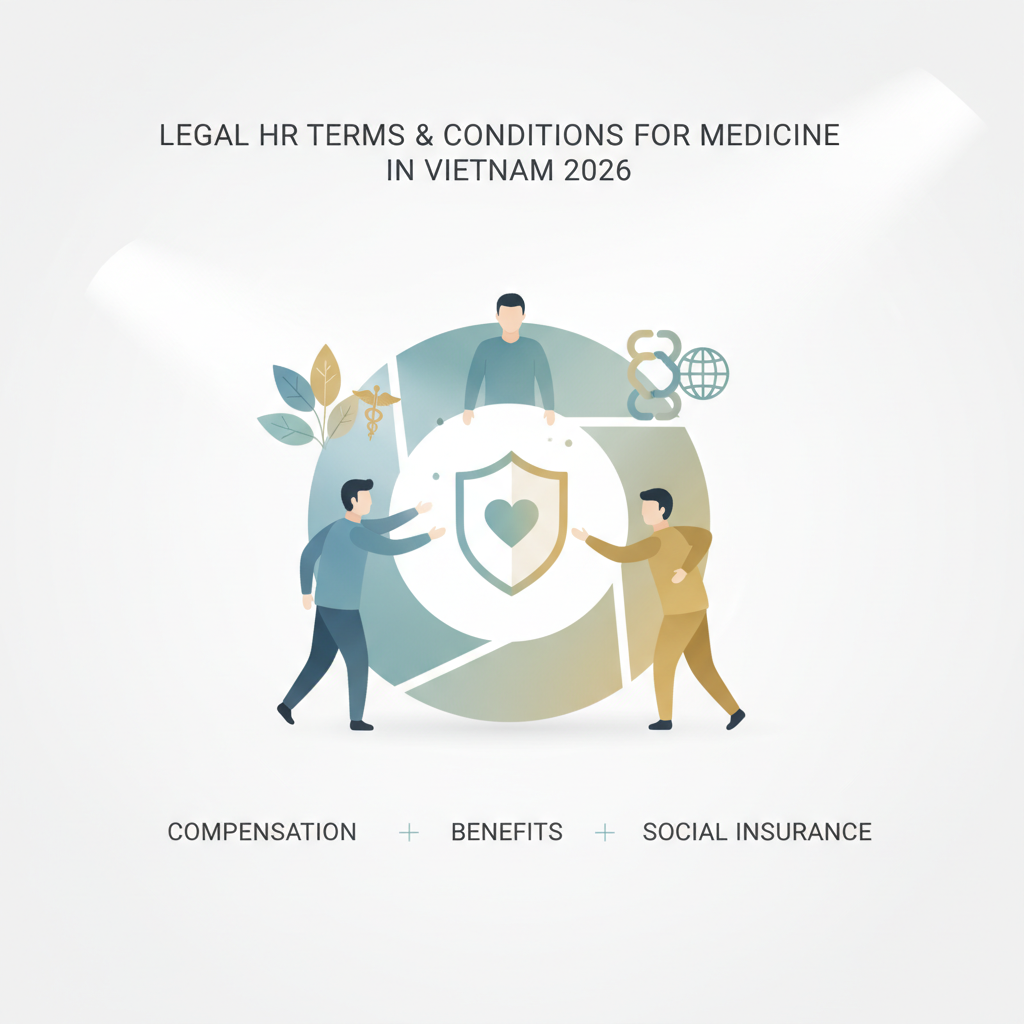
Navigating the intricate landscape of human resources within Vietnam’s burgeoning medical sector demands a profound understanding of the country’s labor laws. For healthcare institutions, hospitals, and clinics, adherence to the specific Legal HR terms & conditions for medicine field in vietnam is not just about compliance; it’s about fostering a fair, attractive, and sustainable work environment for dedicated medical personnel. This section delves into the critical components of compensation, comprehensive benefits, and mandatory social welfare contributions, ensuring medical facilities operate within legal frameworks while attracting and retaining top talent.
1.
Minimum Wage, Sector-Specific Allowances, and Performance Incentives
Vietnam’s labor law establishes regional minimum wage rates, which all employers, including those in the medical field, must strictly observe. These rates serve as the baseline for calculating salaries and must be reviewed and updated periodically by the government. Beyond the fundamental minimum wage, the unique demands of the medical profession necessitate the implementation of sector-specific allowances. These often include hazard pay for those working with infectious diseases, on-call allowances for staff required to be available outside regular hours, night shift differentials, and allowances for medical professionals working in remote or underserved areas. These allowances are crucial for fairly compensating medical personnel for their specialized skills and challenging working conditions.
Furthermore, structuring performance incentives plays a vital role in motivating and retaining high-achieving staff within the Vietnamese medical sector. Legally structured incentive programs can be tied to patient outcomes, service quality metrics, research contributions, or departmental efficiency. Such incentives must be clearly defined in employment contracts or internal regulations, ensuring transparency and fairness. Establishing a robust and compliant system for base salaries, sector-specific allowances, and performance incentives is paramount for any healthcare provider aiming for operational excellence and employee satisfaction.
2.
Health Insurance, Social Insurance, and Unemployment Benefits for Staff
A cornerstone of employee welfare in Vietnam, particularly for medical personnel, is the comprehensive framework of mandatory social welfare contributions. Employers in the medical field are legally obligated to contribute to Social Insurance, Health Insurance, and Unemployment Insurance for their employees, with specific rates set by the government, typically involving contributions from both the employer and the employee.
Health Insurance is critical, providing access to medical examination and treatment services, which is especially pertinent for those who provide such services. Social Insurance covers benefits related to sickness, maternity, labor accidents, occupational diseases, retirement, and death. Given the inherent risks and demanding nature of medical work, these provisions are invaluable. Unemployment Benefits offer a safety net for employees who lose their jobs through no fault of their own, providing financial support during periods of job transition. Compliance with these regulations ensures that medical staff receive essential protections, fostering a secure and supportive working environment. Staying updated on the latest amendments to these contributions is vital for healthcare institutions to avoid penalties and ensure full adherence to Vietnamese social security policies.
3.
Maternity Leave, Sick Leave, and Other Statutory Leaves for Medical Personnel
Vietnam’s labor law is robust in protecting employee rights concerning various types of leave, a critical aspect for the demanding medical profession. Maternity Leave is a significant provision, offering female employees six months of paid leave before and after childbirth, with additional entitlements for multiple births or challenging pregnancies. This ensures new mothers in the medical field can recover and care for their newborns without financial distress, promoting gender equality and supporting family life.
Sick Leave provisions are also vital, allowing medical personnel to take time off for illness or injury, often with social insurance benefits covering a portion of their wages, provided proper medical certification is submitted. Given the high-stress and exposure-prone nature of healthcare work, accessible sick leave is essential for staff well-being and preventing the spread of illness within medical facilities.
Beyond these, other statutory leaves include annual leave, which varies based on years of service, national holidays, and personal leave for significant family events. For medical personnel who often work irregular hours and face intense schedules, understanding and facilitating these leave entitlements is not just a legal obligation but also a crucial strategy for managing burnout, ensuring work-life balance, and maintaining high morale. Adhering to these provisions is fundamental to creating a compliant and supportive HR framework within the medical field in Vietnam, directly impacting staff retention and overall institutional reputation.
In conclusion, ensuring full compliance with Vietnam’s labor laws regarding compensation, benefits, and social insurance is non-negotiable for medical institutions. From adhering to minimum wage standards and providing essential sector-specific allowances to managing comprehensive social welfare contributions and statutory leaves, each element plays a critical role in fostering a stable, equitable, and attractive workplace. Proactive management of these Legal HR terms & conditions for medicine field in vietnam not only mitigates legal risks but also strengthens an organization’s ability to attract, motivate, and retain the highly skilled medical personnel vital for the nation’s healthcare advancement.
Recruitment, Termination, and Dispute Resolution
Navigating the complex landscape of human resources within medical organizations in Vietnam requires a thorough understanding of the nation’s labor laws. From the initial stages of hiring to the sensitive processes of employment termination and conflict resolution, strict adherence to Vietnamese regulations is paramount. This section delves into the legal frameworks governing these critical HR functions, ensuring healthcare providers maintain compliance, foster fair working environments, and effectively manage their workforce under the umbrella of Legal HR terms & conditions for medicine field in vietnam.
1.
Fair Recruitment Practices and Anti-Discrimination Laws in Healthcare Hiring
Recruitment in Vietnam’s healthcare sector is governed by principles of fairness, equality, and non-discrimination, as stipulated primarily by the Labor Code 2019 and other relevant decrees. Medical organizations must ensure their hiring processes are transparent, merit-based, and free from any form of discrimination based on gender, age, race, religion, disability, or marital status. Job advertisements should clearly state the requirements without imposing discriminatory conditions that are unrelated to the job functions. For instance, requiring only female applicants for a general medical practitioner role would likely violate anti-discrimination provisions unless there’s a specific and justifiable occupational requirement. Interview questions must focus on qualifications, experience, and suitability for the role, avoiding personal questions that could lead to discriminatory hiring decisions. Background checks, while permissible, must comply with privacy laws and focus solely on job-related information. Furthermore, employers are obligated to prioritize Vietnamese citizens, and the hiring of foreign medical professionals requires adherence to specific regulations regarding work permits, professional licenses, and visa requirements, ensuring they meet the country’s medical standards and legal prerequisites.
2.
Legal Grounds for Employment Termination, Notice Periods, and Severance Pay
The termination of employment in Vietnam is strictly regulated to protect both employers and employees. The Labor Code 2019 outlines specific legal grounds under which an employment contract can be terminated. These include mutual agreement, unilateral termination by either party with proper notice, expiry of the contract, an employee’s inability to perform the job due to health issues or force majeure, disciplinary dismissal for serious breaches of labor discipline, and the employer’s organizational restructuring or technological changes. The required notice periods vary depending on the type of contract (definite or indefinite term) and the reason for termination. For instance, an employer terminating an indefinite-term contract due to restructuring must provide at least 45 days’ notice, while an employee terminating an indefinite-term contract only needs to give 30 days’ notice in most cases. Crucially, employers must ensure due process is followed, including proper documentation and adherence to internal disciplinary procedures, to prevent claims of unfair dismissal. Employees are generally entitled to a severance allowance if their employment contract is terminated due to reasons such as unilateral termination by the employer, expiry of the contract (in certain cases), or a force majeure event, provided they have worked for the employer for a full 12 months or more. The allowance is calculated based on half a month’s salary for each year of service. In cases of job loss due to organizational restructuring or technological changes, employees may be entitled to a job loss allowance, calculated as one month’s salary for each year of service, but not less than two months’ salary. Understanding these intricate details is vital for medical organizations to manage workforce changes legally and ethically, as highlighted by significant changes introduced by the Vietnam Labour Code 2019.
3.
Labor Dispute Resolution Mechanisms for Healthcare Workers and Employers
Despite best practices, labor disputes can arise within healthcare settings. Vietnam’s legal framework provides a multi-tiered approach to resolving these conflicts, aiming for resolution at the earliest possible stage. The process typically begins with internal grievance procedures, where employees and employers attempt to resolve disputes directly or through internal representatives. If an internal resolution is not reached, the dispute can escalate to a labor conciliator, often appointed by the district labor department, who attempts to mediate a solution. For collective labor disputes or individual disputes that remain unresolved after conciliation, the parties can refer the matter to a Labor Arbitration Council. This council’s decision is legally binding if neither party objects within a specified timeframe. As a final resort, labor disputes can be brought before a competent People’s Court. Common disputes in the healthcare sector might involve issues such as salary and benefits, working hours, occupational safety, disciplinary actions, or wrongful termination. It is imperative for medical organizations to establish clear internal policies for dispute resolution, educate employees on these mechanisms, and ensure all actions taken during a dispute comply with legal requirements to avoid prolonged legal battles and maintain a stable working environment.
Compliance Challenges & Best Practices for 2026
The dynamic landscape of the Vietnamese medical field demands vigilant adherence to evolving HR regulations. For HR departments, navigating the intricate web of legal HR terms & conditions for the medicine field in Vietnam requires proactive strategies. This section highlights common compliance pitfalls and offers strategic advice to effectively prepare for and manage the legal landscape expected in 2026, ensuring operational integrity and staff welfare.

-
Common Legal Non-Compliance Issues in Medical HR Management
HR departments in Vietnam’s medical sector frequently encounter several legal compliance challenges. A prevalent issue involves non-adherence to labor contract regulations, particularly regarding fixed-term contracts and indefinite-term contracts, leading to potential disputes and penalties. Misclassification of employees, incorrect calculation of wages, overtime pay, and social insurance contributions (including health insurance and unemployment insurance) are also significant areas of risk. Many medical facilities struggle with maintaining up-to-date employee records, ensuring proper health and safety protocols specific to healthcare environments, and implementing fair disciplinary procedures. Furthermore, understanding and applying the nuances of termination processes, severance allowances, and the rights of specific employee groups, such as pregnant workers or those with disabilities, often proves complex. Non-compliance in any of these areas can result in hefty fines, reputational damage, and increased scrutiny from regulatory bodies, making it crucial for HR professionals to stay abreast of current legal HR terms & conditions for the medicine field in Vietnam.
-
Implementing Robust HR Policies in Line with 2026 Regulations
To mitigate compliance risks, HR departments must prioritize developing and implementing robust policies that anticipate and align with the evolving regulatory framework for 2026. This includes comprehensive updates to employment contracts, ensuring they reflect the latest amendments to the Labor Code and specific decrees governing the medical profession. Policies on working hours, leave entitlements (including sick leave, maternity leave, and annual leave), and performance management must be clearly defined and communicated. Emphasizing fair recruitment practices, non-discrimination policies, and robust grievance mechanisms will also be vital. Moreover, establishing transparent procedures for social insurance contributions, personal income tax declarations, and termination protocols will help safeguard against common pitfalls. Regular internal audits and training for HR staff and managers on these updated policies are essential to ensure consistent application and understanding across the organization. Proactive engagement with legal experts specializing in Vietnamese labor law is highly recommended to validate policy frameworks.
-
Future Trends and Anticipated Changes in Vietnamese Medical Labor Law
The landscape of Vietnamese labor law, particularly concerning the medical sector, is continuously evolving. Anticipated changes for 2026 and beyond may include stricter regulations on data privacy for employee medical records, enhanced protections for whistleblowers in healthcare settings, and further refinement of rules surrounding foreign labor employment within the medical field. There is also a growing emphasis on digital transformation within HR, which could lead to new compliance requirements for electronic record-keeping and digital signatures. Furthermore, international labor standards, particularly those promoted by the International Labour Organization (ILO), often influence Vietnamese legislative reforms, pushing towards improved working conditions and greater worker protections. HR professionals should closely monitor announcements from the Ministry of Labour, Invalids and Social Affairs (MOLISA) and other relevant bodies for updates. Investing in continuous professional development and subscribing to legal news services focused on Vietnamese labor law will be critical for staying ahead of these trends and ensuring ongoing compliance for legal HR terms & conditions for the medicine field in Vietnam. Proactive adaptation to these changes will be key to maintaining a compliant, ethical, and efficient medical workforce.
Partner with Shelby Global
You are looking for reliable HR Sevice Suppliers? Contact Shelby Global Now! To connect with verified talents and upgrade your orginization.
—————————————
References
– PwC’s summary on the Labor Code 2019 key changes: https://www.pwc.com/vn/en/services/tax/vietnam-tax-news/vietnam-tax-news-2021/labour-code-2019-key-changes-from-1-january-2021.html
– Vietnamese Law on Medical Examination and Treatment: https://thuvienphapluat.vn/van-ban/Y-te/Luat-kham-benh-chua-benh-2023-15-2023-QH15-546023.aspx
– Vietnamese Social Security Policies on Social Insurance, Health Insurance, and Unemployment Insurance: https://en.vss.gov.vn/News/Detail/en-vss-vietnamese-social-security-policies-on-social-insurance-health-insurance-and-unemployment-insurance
– :
– Ministry of Labour, Invalids and Social Affairs (MOLISA): https://molisa.gov.vn/en/



























































































































![TOP 4 recruitment agency in vietnam 2026 [highlight Shelby Global]](https://shelbyglobal.com.vn/wp-content/uploads/2026/04/TOP-4-recruitment-agency-in-vietnam-2026-highlight-Shelby-Global-1.webp "TOP 4 recruitment agency in vietnam 2026 125")