
Foundations of Employment Law in Malaysia for Agencies
For marketing agencies operating in Malaysia, understanding the intricacies of employment law is not merely a bureaucratic task but a critical foundation for sustainable growth and operational stability. Navigating the regulatory landscape ensures compliance, fosters a healthy work environment, and mitigates significant legal and financial risks. This section provides an essential overview of core Malaysian labor laws, highlighting their direct impact on the operational and staffing aspects inherent in the dynamic marketing agency sector. From hiring practices to contractual agreements, adherence to Legal HR terms & conditions for marketing agency in malaysia is paramount.

1. Understanding the Employment Act 1955 and Key Amendments
The cornerstone of Malaysian labor legislation is the Employment Act 1955 (EA 1955). This pivotal act dictates the minimum terms and conditions of employment for a vast majority of workers in Peninsular Malaysia and Labuan. For marketing agencies, compliance with the EA 1955 is non-negotiable, covering aspects such as working hours, rest days, annual leave, public holidays, sick leave, maternity protection, termination benefits, and adherence to minimum wage Malaysia standards. The Act ensures basic protections for employees, making it essential for agencies to align their marketing agency HR regulations with its provisions.
Crucially, the EA 1955 underwent significant amendments, particularly those effective from January 1, 2023. These updates broadened the scope of the Act to cover all employees regardless of their salary (with some exceptions), introduced provisions for flexible working arrangements Malaysia, increased maternity and paternity leave, reduced weekly working hours from 48 to 45, and strengthened protections against discrimination and forced labor. Agencies must be fully aware of these Employment Act 1955 updates to avoid non-compliance fines and penalties. Understanding these legal shifts is vital for managing employee benefits Malaysia and ensuring fair treatment. For a detailed insight into these changes, refer to resources from reputable legal bodies like the Malaysian Bar Council.
2. Contractual vs. Freelance Staff: Legal Distinctions
Marketing agencies frequently leverage a mix of permanent employees and freelance or contractual staff to manage fluctuating project demands. However, the legal distinction between an ’employee’ (governed by the EA 1955) and an ‘independent contractor’ or ‘freelancer’ is crucial and can have profound implications for Malaysian labor law compliance. An employee is entitled to statutory benefits like EPF, SOCSO, annual leave, and sick leave, whereas a true independent contractor is not. The Courts generally apply tests (e.g., control test, integration test, economic reality test) to determine the true nature of the relationship, irrespective of how the parties label it.
Misclassifying a worker as a freelancer when they legally qualify as an employee can lead to severe repercussions, including demands for unpaid statutory contributions Malaysia (EPF, SOCSO) and other benefits, back pay, and penalties. Therefore, agencies must carefully structure their freelance contracts Malaysia to reflect genuine independent contractor relationships, ensuring that freelancers have autonomy, bear their own business risks, and are not integrated into the agency’s organizational structure like regular employees. Clear contracts and operational practices are essential to prevent misclassification of workers Malaysia, safeguarding the agency’s legal standing and financial health.
3. Essential Clauses for Marketing Agency Employment Contracts
A well-drafted employment contract is the bedrock of any successful employer-employee relationship, especially for marketing agencies dealing with sensitive client data and creative assets. Beyond the basic requirements stipulated by the EA 1955, agencies should include specific clauses that address the unique nature of their business. Key considerations for employment contract essentials Malaysia include detailed job descriptions, remuneration structures, and working hours regulations Malaysia.
Crucially, clauses pertaining to intellectual property in employment contracts are vital. Agencies must ensure that all creative works, campaigns, and proprietary materials developed by employees during their tenure are assigned to the agency. Similarly, robust confidentiality agreements Malaysia are indispensable to protect client information, trade secrets, and proprietary strategies. Other essential clauses include clear procedures for probation, performance reviews, termination clauses employment Malaysia (ensuring compliance with notice periods and grounds for dismissal), and, where applicable and legally enforceable, reasonable non-compete and non-solicitation clauses to protect business interests upon an employee’s departure. Adopting these HR best practices marketing agencies can secure their assets and maintain competitive edge while upholding ethical and legal standards.
Compensation, Benefits, and Statutory Contributions
Navigating the intricacies of employment law is paramount for any successful business, particularly for dynamic marketing agencies in Malaysia. Adhering to Legal HR terms & conditions for marketing agency in malaysia is not just about compliance; it’s about fostering a fair, transparent, and motivating work environment. This section provides detailed insights into the legal requirements concerning wages, allowances, overtime pay, and mandatory contributions like EPF, SOCSO, and EIS, ensuring your agency operates within the bounds of Malaysian labour laws and offers competitive employee benefits.
-
Minimum Wage, Overtime, and Allowances Compliance
Adherence to the Employment Act 1955 (EA 1955) and the Minimum Wages Order is fundamental for any marketing agency in Malaysia. All employees must receive at least the gazetted minimum wage, currently RM1,500 per month nationwide. Non-compliance leads to severe penalties and reputational damage.
Overtime pay is another critical component. The EA 1955 defines normal working hours (typically 8 hours a day/48 hours a week). Work beyond these hours mandates premium rates: 1.5 times the hourly rate on normal days, and higher rates for rest days (1.5x for first 8 hours, 2x thereafter) and public holidays (2x for first 8 hours, 3x thereafter). Meticulous tracking of working hours ensures accurate overtime calculations, fair employee compensation, and avoids labour disputes.
Allowances, such as transport or communication, are common in marketing. While some may be taxable, others like business expense reimbursements are generally not. Agencies need clear policies on allowance types, eligibility, and processing. Understanding statutory allowances and their impact on the overall salary structure is vital for robust payroll compliance and adherence to Malaysian employment law.
-
EPF, SOCSO, and EIS: Employer’s Obligation
Beyond direct wages, Malaysian employers are legally obliged to contribute to social security schemes: the Employees Provident Fund (EPF), the Social Security Organization (SOCSO), and the Employment Insurance System (EIS). These mandatory contributions protect employees’ financial well-being.
The Employees Provident Fund (EPF) is a compulsory retirement savings scheme. Employers contribute 12% or 13% of monthly wages (depending on wage level) and employees 11%. Timely and accurate EPF contributions are essential for legal compliance and employee trust, providing financial security upon retirement.
SOCSO, governed by the Employees’ Social Security Act 1969, offers protection against employment injuries, occupational diseases, and invalidity through two schemes. Contributions provide medical benefits, disablement benefits, and dependants’ benefits, forming a crucial safety net. These HR regulations are vital for employee welfare.
The Employment Insurance System (EIS) provides financial aid and re-employment support for retrenched workers. Both employers and employees contribute a small percentage (typically 0.2% each) of the monthly salary. EIS mitigates job loss impact through financial assistance, job search aid, and training. Strict adherence to these statutory deductions is a key aspect of HR compliance Malaysia for any marketing agency.
-
Annual Leave, Sick Leave, and Public Holiday Entitlements
Providing statutory leave is crucial for employee well-being and productivity. The EA 1955 outlines minimum entitlements for annual leave, sick leave, and public holidays, which marketing agencies must scrupulously observe.
Annual leave benefits depend on service length: 8 days (less than 2 years), 12 days (2-5 years), and 16 days (5+ years). While agencies may offer more, the statutory minimum is mandatory. Effective leave management ensures accurate tracking, transparency, and fairness.
Sick leave benefits are also mandated: 14, 18, or 22 days per year based on service length, increasing to 60 days if hospitalization is required. These require a medical certificate. Accurate record-keeping is critical for HR compliance Malaysia.
Employees are entitled to paid public holiday observance. The EA 1955 mandates 11 gazetted public holidays, with 5 being compulsory. If an employee works on a public holiday, they receive double their ordinary rate or a substitute holiday. Clear communication of holiday schedules fosters clear expectations regarding employee entitlements and employment benefits.
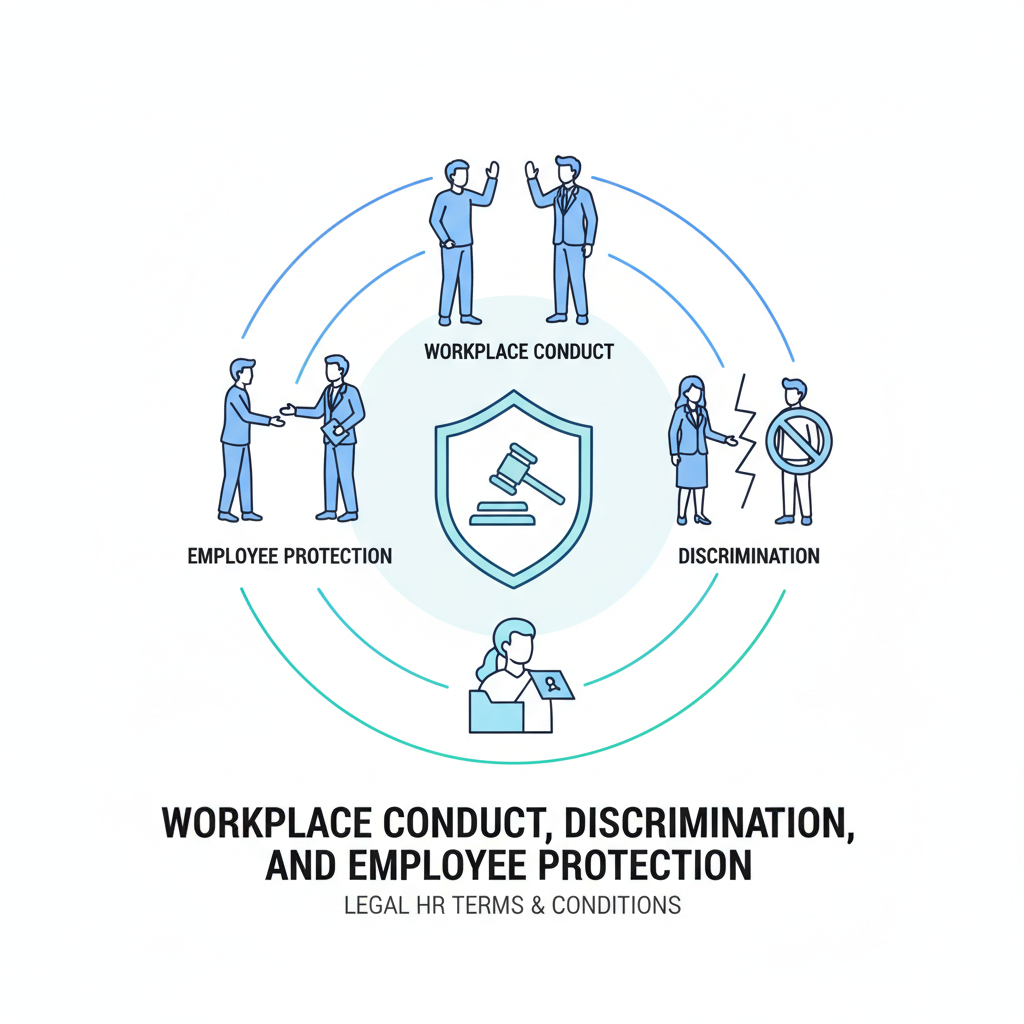
Workplace Conduct, Discrimination, and Employee Protection
In the dynamic and fast-paced environment of a marketing agency in Malaysia, ensuring a safe, equitable, and legally compliant workplace is not just a matter of good practice—it’s a legal imperative. Navigating the intricate landscape of Malaysian employment law requires a robust understanding of Legal HR terms & conditions for marketing agency in malaysia. This section delves into the critical legal frameworks designed to prevent discrimination, handle sexual harassment, and safeguard employee rights, fostering an environment where creativity thrives alongside fairness and respect.
1. Anti-Discrimination Laws and Fair Treatment
While Malaysia’s Employment Act 1955 (EA 1955) does not contain a dedicated, standalone anti-discrimination chapter akin to those found in some Western jurisdictions, its provisions, along with common law principles and best practices, strongly advocate for fair treatment in the workplace. Agencies must develop comprehensive policies that prohibit discrimination based on religion, race, gender, disability, marital status, or pregnancy. This extends across all aspects of employment, from recruitment and hiring to promotions, training opportunities, compensation, and termination. Employers are expected to implement clear job descriptions, objective performance appraisal systems, and transparent disciplinary procedures to ensure impartiality. Compliance with these unwritten but critical anti-discrimination principles is paramount for maintaining a harmonious work environment and avoiding potential legal challenges. Establishing a culture of equality and inclusion not only meets ethical standards but also enhances employee morale and productivity, which are vital for a competitive marketing agency.
2. Handling Sexual Harassment Complaints in the Workplace
The issue of sexual harassment is explicitly addressed under Malaysian law, primarily through the Employment Act 1955 (as amended). Section 81A to 81G of the EA 1955 places a clear legal obligation on employers to investigate and take action on complaints of sexual harassment. Employers in marketing agencies must establish a clear, accessible, and confidential mechanism for employees to report incidents without fear of retaliation. Upon receiving a complaint, the employer is legally bound to inquire into the complaint promptly and impartially. This involves interviewing the complainant, the alleged harasser, and any witnesses, as well as reviewing relevant evidence. Should the investigation conclude that sexual harassment occurred, appropriate disciplinary action must be taken against the perpetrator, which can range from a warning to dismissal, depending on the severity and frequency of the misconduct. Furthermore, employers have a duty to ensure the complainant is protected from further harassment or victimisation. Proactive measures, such as regular awareness training and a well-publicized zero-tolerance policy, are essential for fostering a safe environment and mitigating legal risks. For more detailed guidance, resources from the Ministry of Human Resources Malaysia offer valuable insights into employer obligations regarding sexual harassment.
3. Occupational Safety and Health Act (OSHA) Compliance for Agencies
The Occupational Safety and Health Act 1994 (OSHA 1994) is a cornerstone of employee protection in Malaysia, applicable to virtually all workplaces, including marketing agencies. While often associated with factories or high-risk industries, OSHA’s broad scope covers office environments, requiring employers to ensure, so far as is practicable, the safety, health, and welfare of all their employees. For a marketing agency, this includes maintaining a safe office layout, ensuring proper ergonomics for workstations, providing adequate lighting and ventilation, and implementing emergency preparedness plans (fire drills, first-aid provisions). Beyond physical safety, employers also bear a responsibility for the psychological well-being of their staff, addressing issues like workplace stress and workload management. Agencies should conduct regular risk assessments, identify potential hazards unique to an office setting, and implement control measures. Training employees on safety procedures, the proper use of office equipment, and emergency protocols is also crucial. Appointing a safety and health officer or committee, particularly for larger agencies, can further ensure continuous compliance and foster a proactive safety culture, thereby safeguarding employees and upholding the agency’s legal responsibilities.
Data Protection, Intellectual Property, and Confidentiality
In the dynamic realm of digital marketing, agencies in Malaysia operate at the intersection of creativity, data, and sensitive client information. Navigating the intricate web of legal HR terms & conditions for a marketing agency in Malaysia is paramount to ensure sustainable growth and maintain client trust. This section delves into the specific legal considerations crucial for marketing agencies, encompassing the rigorous demands of client data handling, the complexities of intellectual property ownership for creative output, and the indispensable measures for safeguarding proprietary business information. Adherence to these Malaysian legal frameworks and robust regulatory compliance is not merely an obligation but a strategic imperative for any agency aiming for long-term success.
1. PDPA (Personal Data Protection Act) Compliance for Client Data
At the core of client relationships lies the responsible handling of personal data. In Malaysia, the Personal Data Protection Act (PDPA) 2010 dictates strict guidelines for the collection, processing, storage, and disclosure of personal information. For marketing agencies, this translates into a stringent need for PDPA Malaysia compliance when managing client data. This includes details like customer demographics, contact information, browsing habits, and purchasing patterns – all critical for targeted campaigns. Agencies must ensure that they obtain explicit consent from data subjects, only collect data for specified and legitimate purposes, and implement robust security safeguards to prevent misuse or breaches. Establishing clear client data privacy policies and adhering to fundamental data protection principles are non-negotiable. Failure to comply with these data privacy laws can lead to substantial fines, severe reputational damage, and an irreparable loss of client trust. Therefore, continuous vigilance and training on marketing data privacy best practices are essential for safeguarding client interests and maintaining operational integrity.
2. Intellectual Property Rights and Ownership of Creative Work
The very essence of a marketing agency lies in its creative output – compelling campaigns, innovative designs, engaging copy, and strategic branding. Determining the creative content ownership and defining intellectual property rights Malaysia is therefore a critical legal consideration. Generally, in the absence of a specific agreement, the creator (the agency or its employees) holds the copyright. However, most client-agency relationships are governed by contracts that stipulate either the transfer of copyright to the client (often through work-for-hire agreements) or the granting of specific usage licenses. Agencies must clearly articulate these terms in their contracts to avoid disputes over marketing campaign ownership. Understanding copyright law Malaysia and the nuances of trademark protection is vital not only for protecting the agency’s own innovative work but also for ensuring that client assets are handled with due diligence. Explicit clauses on licensing digital content and the scope of usage rights are imperative, especially when third-party elements or stock assets are incorporated. Clear contractual frameworks prevent ambiguity and protect both parties’ investments in creative development.
3. Non-Disclosure and Confidentiality Agreements (NDAs)
Marketing agencies are privy to a wealth of sensitive business information, ranging from upcoming product launches and proprietary marketing strategies to client lists and financial data. Protecting this proprietary information safeguards is fundamental through robust Non-Disclosure Agreements (NDAs) and comprehensive confidentiality clauses. An NDA agreement Malaysia serves as a legal blueprint, outlining what constitutes confidential information and establishing a legal obligation for all parties involved – including employees, freelancers, contractors, and even prospective clients – not to disclose it to unauthorized third parties. These agreements are crucial for protecting trade secret protection, maintaining a competitive edge, and fostering trust. Agencies should integrate strong client confidentiality policy provisions into all client contracts and employment agreements. Clearly defined terms regarding the duration of confidentiality, permissible disclosures, and the consequences of breaches provide a critical legal recourse. By meticulously drafting and enforcing these contractual obligations, agencies can effectively shield sensitive marketing strategy protection information, ensuring that client secrets remain secure and the agency’s professional integrity is upheld.
Termination, Dispute Resolution, and Agency Best Practices
Navigating the complexities of employment law is paramount for any thriving business, especially a dynamic marketing agency operating in Malaysia. Understanding the Legal HR terms & conditions for marketing agency in Malaysia is not merely about compliance; it’s about fostering a stable, productive, and legally sound work environment. This section delves into the critical aspects of employment termination, effective grievance procedures, and the proactive HR strategies essential to mitigate legal risks and cultivate a positive workplace culture. Proactive adherence to Malaysian labour laws ensures that your agency operates with integrity and protects both employer and employee interests.
1. Lawful Termination Procedures and Notice Periods
The process of terminating an employee in Malaysia is governed primarily by the Employment Act 1955 and common law principles, emphasizing the need for just cause and excuse. A marketing agency must adhere strictly to these regulations to avoid costly unfair dismissal claims. Lawful termination procedures typically involve several key steps: proper documentation of performance issues or misconduct, issuing show-cause letters, conducting domestic inquiries, and providing adequate notice.
For instance, termination due to poor performance requires a documented performance improvement plan (PIP) and evidence of the employee’s failure to meet targets despite support. In cases of misconduct, a fair and impartial domestic inquiry is crucial, allowing the employee to present their case. Redundancy, while a legitimate reason, requires careful consideration of selection criteria and adherence to the principle of “last in, first out” where applicable, alongside proper notification to the Labour Department.
Regarding notice periods, the Employment Act 1955 stipulates minimum requirements based on the length of service:
- Less than 2 years of service: 4 weeks’ notice
- 2 years but less than 5 years of service: 6 weeks’ notice
- 5 years or more of service: 8 weeks’ notice
Employers may also opt for payment in lieu of notice. Failure to follow these employment contract termination guidelines can lead to severe legal repercussions, highlighting the necessity for robust HR compliance Malaysia and understanding specific employment law Malaysia provisions relevant to a marketing agency’s operations.
2. Industrial Relations Act: Handling Disputes and Grievances
Workplace disputes are an inevitable part of any business, but how a marketing agency in Malaysia handles them can significantly impact its reputation and legal standing. The Industrial Relations Act 1967 (IRA) provides the framework for resolving industrial disputes, emphasizing conciliation and mediation before resorting to the Industrial Court. Effective grievance procedures are the first line of defense.
A well-structured internal grievance mechanism encourages employees to raise concerns directly with management, fostering open communication and often resolving issues before they escalate. This process typically involves:
- Employee submitting a formal complaint.
- Management investigating the complaint.
- A formal meeting with the employee to discuss findings and potential resolutions.
- Issuing a decision or resolution.
Should internal resolution fail, the employee may refer the dispute to the Director General of Industrial Relations, who will then attempt conciliation. If conciliation efforts are unsuccessful, the matter may be referred to the Industrial Court for adjudication. This court’s primary objective is to seek “industrial peace with social justice,” often favouring reinstatement or compensation in cases of unfair dismissal. Understanding employee rights Malaysia and proactive management of workplace disputes are vital to avoid costly litigation and maintain a harmonious environment. For more detailed information on the Industrial Relations Act, employers can refer to authoritative sources such as the Ministry of Human Resources Malaysia for official guidelines and publications.

3. Developing a Robust HR Policy Handbook for Marketing Agencies
A comprehensive HR policy handbook serves as the backbone of an agency’s Legal HR terms & conditions for marketing agency in Malaysia, acting as a clear guide for both employers and employees. For a marketing agency, where creativity and collaboration are key, clear policies on staff welfare, company policy, disciplinary action, and HR best practices are indispensable.
Key elements that should be included in an employee handbook Malaysia are:
- Code of Conduct: Outlining expected professional behavior, ethical standards, and anti-harassment policies.
- Disciplinary Procedures: Clear steps for addressing misconduct, from verbal warnings to termination.
- Performance Management: Guidelines for appraisals, promotions, and addressing underperformance.
- Leave Policies: Detailing annual leave, sick leave, maternity/paternity leave, and other statutory entitlements.
- Data Protection and Confidentiality: Especially critical for agencies handling sensitive client information.
- Social Media Policy: Guiding employees on appropriate online conduct, particularly given the nature of marketing work.
- Remote Work Policy: If applicable, outlining expectations, equipment, and communication protocols.
Developing such a HR policy development guide not only ensures legal HR guidelines are met but also fosters transparency, reduces ambiguity, and minimizes the risk of workplace disputes. It’s a proactive strategy to safeguard the agency’s interests while ensuring fairness and clarity for its workforce. Regular review and updates are crucial to reflect changes in labour law Malaysia and evolving business needs. This proactive approach to HR management is vital for sustainable growth and a positive agency culture.
Partner with Shelby Global
You are looking for reliable HR Sevice Suppliers? Contact Shelby Global Now! To connect with verified talents and upgrade your orginization.
—————————————
References
– The Employment (Amendment) Act 2022: What Employers and Employees Need to Know: https://www.malaysianbar.org.my/article/the-employment-amendment-act-2022-what-employers-and-employees-need-to-know
– Employment Act 1955: https://www.mohr.gov.my/index.php/en/legislation/acts/acts-under-mohr/employment-act-1955
– Ministry of Human Resources Malaysia: https://www.mohr.gov.my/
– Malaysia Personal Data Protection Act 2010: A Quick Guide: https://www.skrine.com/insights/alerts/september-2023/malaysia-personal-data-protection-act-2010-a-qui
– Ministry of Human Resources Malaysia: https://www.mohr.gov.my/index.php/en/industrial-relations-department



































































































