
Understanding Singapore’s Employment Law Framework
Operating a marketing agency in Singapore requires more than just creative prowess and strategic acumen; it demands meticulous adherence to the nation’s robust employment law framework. Navigating these regulations is crucial for ensuring compliance, fostering a fair work environment, and safeguarding your agency against potential legal pitfalls. This essential overview highlights the key legislation governing employment in Singapore that marketing agencies must meticulously adhere to for compliance, ensuring your operations align with local standards and best practices for Legal HR terms & conditions for marketing agency in singapore.

1. Employment Act (EA) Compliance & Exemptions
The cornerstone of Singapore’s labour legislation is the Employment Act (EA), which sets out the basic terms and conditions of employment for most employees. For marketing agencies, understanding the EA’s scope and its specific provisions is paramount. The Act covers areas such as working hours, rest days, public holidays, annual leave, sick leave, and payment of salaries. It also stipulates the notice period required for termination of employment and guidelines for retrenchment benefits. While the EA generally applies to all employees, certain exemptions exist. For instance, managers and executives earning a basic monthly salary exceeding S$4,500 may have certain parts of the EA, such as those relating to working hours and overtime pay, not directly applicable to them. It is crucial for agencies to clearly define roles and responsibilities in employment contracts, ensuring that clauses align with EA requirements. Comprehensive employment contracts are not just legal necessities but also provide clarity for both employers and employees, preventing disputes related to Legal HR terms & conditions for marketing agency in singapore.
2. Central Provident Fund (CPF) & Taxation Obligations
Beyond the immediate terms of employment, marketing agencies must also manage their Central Provident Fund (CPF) and taxation obligations meticulously. The CPF is Singapore’s mandatory social security savings scheme, requiring both employers and employees who are Singapore Citizens or Permanent Residents to contribute a percentage of their wages to individual accounts. These contributions are allocated for retirement, healthcare, and housing. Employer contribution rates vary based on the employee’s age and salary, with penalties for late or incorrect payments. Agencies must ensure timely and accurate CPF contributions, which are typically processed monthly. In addition to CPF, agencies are responsible for proper income tax administration. This includes filing Form IR8A for all employees by specific deadlines, detailing annual earnings and benefits. For foreign employees, understanding specific tax regimes and potential tax clearances is also critical. Neglecting these financial obligations can lead to significant fines and legal repercussions, underscoring the importance of robust payroll and HR systems.
3. Workplace Safety and Health Act (WSHA) Relevance
While often associated with industrial settings, the Workplace Safety and Health Act (WSHA) is highly relevant to marketing agencies, even those operating in seemingly low-risk office environments. The WSHA’s primary objective is to prevent workplace injuries and diseases by imposing duties on all stakeholders, including employers, employees, and occupiers of workplaces. For a marketing agency, this translates into ensuring a safe and healthy working environment for all staff. This includes aspects such as maintaining proper office ergonomics to prevent musculoskeletal issues, ensuring fire safety protocols are in place and understood, managing indoor air quality, and addressing psychological well-being. Agencies must conduct risk assessments, identify potential hazards (e.g., prolonged screen time, inadequate lighting, stress), and implement control measures. Providing adequate training on workplace safety and health, establishing emergency procedures, and fostering a culture of safety are not just legal mandates but contribute significantly to employee morale and productivity. Proactive adherence to WSHA ensures a secure and supportive environment, vital for the dynamic and often demanding nature of agency work.
Essential HR Policies & Employee Handbook for Agencies
For any thriving marketing agency, a strong creative vision is paramount. Yet, equally critical, though often overlooked, are the foundational HR policies and a comprehensive employee handbook. These documents are not just bureaucratic necessities; they are the bedrock for a fair, productive, and legally compliant workplace, particularly when navigating the unique landscape of legal HR terms & conditions for marketing agency in Singapore. An effective handbook clearly articulates expectations, defines rights and responsibilities, and safeguards both the agency and its employees, mitigating potential disputes and ensuring smooth operations in a dynamic industry. Proactively establishing these guidelines is an investment in stability, talent retention, and the agency’s long-term reputation.
-
Code of Conduct, Ethics & Anti-Harassment Policies
A robust code of conduct sets the professional tone for your agency. It should outline expected workplace behaviour, promoting a culture of respect, integrity, and collaboration among all team members. Ethics policies go hand-in-hand, addressing critical areas such as conflicts of interest, client relationships, and honest dealings in all business practices. Crucially, every agency needs clear, zero-tolerance anti-harassment policies. In Singapore, guidelines from the Tripartite Alliance for Fair and Progressive Employment Practices (TAFEP) underscore the importance of fostering inclusive workplaces free from discrimination and harassment. Your policy should clearly define what constitutes harassment, provide accessible and confidential reporting mechanisms, ensure prompt and impartial investigation of all complaints, and detail the disciplinary actions that will be taken. Implementing and regularly communicating this policy not only protects employees, reinforces agency values, and cultivates a positive environment but also ensures compliance with local employment laws, preventing significant reputational damage and potential legal liabilities.
-
Data Protection Policy (PDPA) for Employee Information
In an increasingly data-driven world, safeguarding personal information is non-negotiable. For marketing agencies in Singapore, compliance with the Personal Data Protection Act (PDPA) 2012 is a legal imperative, especially concerning employee data. Your Data Protection Policy must meticulously detail how employee personal information – ranging from resumes and contact details to payroll information, medical records, and performance reviews – is collected, used, disclosed, and stored. Key components include obtaining explicit consent for data processing, ensuring data accuracy, implementing robust technical and organisational security measures against unauthorized access, use, modification, disclosure, or breaches, defining clear data retention periods, and establishing transparent procedures for employees to access or correct their own data. This policy not only meets statutory obligations but also builds essential trust with your team, assuring them that their privacy is respected, their data is handled responsibly, and their information is protected according to the highest standards.
-
Social Media, Confidentiality & Intellectual Property Clauses
Marketing agencies thrive on creativity and client trust, making policies around social media, confidentiality, and intellectual property (IP) particularly vital. A comprehensive Social Media Policy should delineate clear guidelines for employees’ use of social platforms, both personal and professional, especially when content relates to the agency, clients, or the wider industry. It must carefully balance individual expression with the imperative to safeguard the agency’s reputation, brand image, and proprietary information. Confidentiality clauses are paramount, explicitly stating the non-disclosure of client strategies, campaign specifics, financial data, internal processes, and other sensitive business information, both during and after employment. Furthermore, robust Intellectual Property clauses are essential to protect the core assets of your business. These should clearly establish that all creative work – including campaigns, designs, copy, software, and strategies developed within the scope of employment – is the sole property of the agency. This transfer of IP rights is a crucial aspect of comprehensive legal HR terms & conditions for marketing agency in Singapore. These carefully drafted clauses prevent disputes, protect your agency’s competitive edge, and are fundamental for sustainable growth and long-term success in a competitive market.
Crafting Robust Employment Contracts for Marketing Professionals
In the dynamic and competitive landscape of Singapore’s marketing industry, securing top talent is paramount. However, just as crucial as attracting the right professionals is establishing a clear, legally sound foundation for their employment. Robust employment contracts serve as the bedrock for any successful working relationship, particularly for marketing staff whose roles often involve sensitive company information, intellectual property, and direct client interaction. By meticulously outlining Legal HR terms & conditions for marketing agency in Singapore, businesses can ensure clarity, provide legal protection for both parties, and significantly mitigate the risk of future disputes. This section delves into the key components and essential clauses that should be meticulously incorporated into employment contracts for marketing professionals.

1. Clearly Defined Job Scope, KPIs & Reporting Structure
One of the most frequent sources of workplace disagreement stems from ambiguous job roles and expectations. For marketing professionals, whose responsibilities can range from digital strategy and content creation to analytics and brand management, a precise definition is indispensable. The contract must detail the specific job title, primary duties, and responsibilities, such as managing social media campaigns, executing SEO strategies, developing marketing collateral, or analyzing campaign performance. Equally vital is the inclusion of Key Performance Indicators (KPIs) that are directly relevant to the marketing role. These could include metrics like lead generation targets, website traffic growth, conversion rates, brand awareness scores, or return on marketing investment (ROMI). Clearly defined KPIs not only provide a measurable benchmark for performance but also align the employee’s efforts with the company’s strategic goals. Furthermore, the contract should explicitly state the reporting structure, identifying the direct supervisor and outlining the hierarchy within the marketing department. This clarity fosters efficient communication, streamlines decision-making, and prevents potential misunderstandings regarding authority and accountability.
2. Remuneration, Benefits, Bonuses & Commission Structures
The financial aspects of an employment contract are often the most scrutinized. Beyond the basic monthly salary, a comprehensive contract for marketing professionals should meticulously detail all elements of their compensation package. This includes the base salary, payment frequency, and any applicable allowances (e.g., transport, communication). Crucially, the contract must outline the benefits provided, such as health insurance, dental coverage, annual leave entitlements, sick leave, parental leave, and contributions to mandatory schemes like the Central Provident Fund (CPF) in Singapore. For many marketing roles, particularly those with a performance or sales component, incentives like bonuses and commission structures are significant motivators. The contract should clearly articulate the criteria for earning bonuses (e.g., individual performance, team targets, company profitability) and the specific methodology for calculating commissions. Transparency in these structures is vital to avoid future disputes. Companies should adhere to Singapore’s Ministry of Manpower guidelines on Key Employment Terms (KETs) to ensure compliance and fair practice regarding all remuneration and benefits.
3. Termination Clauses, Notice Periods & Severance
While often overlooked during the initial excitement of hiring, well-defined termination clauses are critical for protecting both the employer and the employee. The contract must explicitly state the conditions under which the employment can be terminated, covering both employer-initiated and employee-initiated separation. This includes specifying the required notice periods, which typically vary based on the employee’s length of service and statutory requirements in Singapore. It should also detail grounds for immediate termination without notice, such as gross misconduct, breach of confidentiality, or serious policy violations. Additionally, the contract should address any severance pay entitlements, clarifying whether they are statutory or contractual, and the calculation method. Post-employment obligations are also essential to include, such as non-compete clauses (ensuring they are reasonable and enforceable under Singaporean law), non-solicitation clauses (preventing the poaching of clients or employees), and robust confidentiality clauses that protect the company’s proprietary information, trade secrets, and client data. A clear understanding of these terms from the outset provides a vital framework for an orderly and legally compliant separation, should it become necessary. For a deeper understanding of these and other comprehensive legal HR terms & conditions for marketing agency in Singapore, consulting specialized resources is highly recommended.
Managing Performance, Grievances, & Disciplinary Action
For a dynamic marketing agency in Singapore, navigating the complexities of human resources is crucial not only for fostering a productive work environment but also for ensuring strict legal compliance. Effectively managing employee performance, addressing grievances, and implementing disciplinary actions requires a strategic, fair, and legally sound approach. Missteps in any of these areas can lead to costly legal disputes, reputational damage, and a decline in employee morale. This section outlines best practices to ensure your agency handles these critical HR functions fairly and compliantly, aligning with Singapore’s robust employment laws and best practices.
1. Fair Performance Management Frameworks & Reviews
Establishing legal HR terms & conditions for a marketing agency in Singapore begins with robust performance management. A well-designed framework ensures that expectations are clear, feedback is constructive, and growth opportunities are identified. Agencies should implement objective, transparent, and regularly scheduled performance reviews, moving beyond subjective assessments. Key elements include:
- Clear Goal Setting: Employees must understand their key performance indicators (KPIs) and how they contribute to the agency’s objectives.
- Regular Feedback & Coaching: Performance management should be an ongoing dialogue, not just an annual event. Regular one-on-one meetings provide opportunities for timely feedback and coaching.
- Objective Criteria: Use measurable and job-related criteria to evaluate performance, avoiding personal biases.
- Performance Improvement Plans (PIPs): For underperforming employees, a structured PIP with clear objectives, timelines, support, and consequences is essential. This demonstrates a commitment to employee development while establishing a documented basis for further action if improvements aren’t met.
- Consistent Application: Ensure that the framework is applied consistently across all employees, regardless of role, seniority, or background, to prevent claims of discrimination.
Thorough documentation of performance discussions, reviews, and improvement plans is paramount. These records are invaluable in justifying employment decisions and demonstrating fairness should a dispute arise, ensuring that your agency adheres to legal HR terms & conditions for a marketing agency in Singapore.
2. Grievance Handling Procedures & Whistleblowing Policies
A transparent and accessible grievance mechanism is vital for any workplace, particularly for a marketing agency where creativity and collaboration thrive on trust. Employees must feel safe to raise concerns without fear of retaliation. Effective Grievance Handling Procedures & Whistleblowing Policies include:
- Clear Communication: Ensure all employees are aware of the procedure for lodging a grievance, who to approach, and what to expect. This can be communicated through employee handbooks and onboarding.
- Confidentiality and Impartiality: Grievances should be handled confidentially to protect all parties involved. The process must be impartial, with investigations conducted by neutral parties.
- Prompt Investigation: All grievances, especially those concerning harassment, discrimination, or serious misconduct, must be investigated promptly and thoroughly. Gather all relevant facts and interview witnesses discreetly.
- Resolution and Feedback: Strive for a fair and timely resolution. Communicate the outcome to the aggrieved party (where appropriate and legally permissible), explaining the reasons for the decision.
- Whistleblowing Policy: Implement a robust whistleblowing policy that encourages employees to report serious malpractices (e.g., fraud, unethical conduct) through secure, confidential channels, ensuring protection against detrimental treatment.
Compliance with Singapore’s Tripartite Guidelines on Fair Employment Practices (TGFEP), which advocates for fair and transparent HR practices, underscores the importance of these procedures in maintaining a harmonious and legally compliant work environment for a marketing agency in Singapore.
3. Disciplinary Action, Due Process & Investigations
When an employee’s conduct or performance falls short of expectations and cannot be resolved through performance management, disciplinary action may be necessary. Adhering to strict due process is paramount to avoid claims of unfair dismissal or discrimination. Key steps in implementing Disciplinary Action, Due Process & Investigations include:
- Thorough Investigation: Before any disciplinary action, conduct a comprehensive, objective investigation into the alleged misconduct or poor performance. Collect evidence, interview witnesses, and document everything meticulously.
- Show Cause Letter: Issue a formal ‘show cause’ letter detailing the allegations and providing the employee with an opportunity to respond and explain their side of the story. This is a critical step in ensuring natural justice.
- Disciplinary Inquiry/Hearing: Conduct a formal inquiry where the employee can present their case, bring a representative (if company policy allows), and respond to the allegations. The panel conducting the inquiry should be impartial.
- Consideration of Explanation: Genuinely consider the employee’s explanation and any mitigating factors before making a decision.
- Proportionate Action: The disciplinary action taken must be proportionate to the offense. This could range from a verbal warning, written warning, suspension, to dismissal for serious breaches. Refer to your agency’s disciplinary matrix and employment contract terms.
- Documentation: Maintain detailed records of the entire disciplinary process, including investigation findings, show-cause letters, employee responses, inquiry minutes, and the final decision letter. These documents are crucial for demonstrating compliance with Singapore’s Employment Act and defending against potential legal challenges.
For any marketing agency in Singapore, understanding and applying these rigorous standards is not just about compliance; it’s about upholding ethical employer practices and protecting the business from significant legal and financial risks.
By implementing these robust frameworks for performance management, grievance handling, and disciplinary actions, a marketing agency in Singapore can cultivate a fair, transparent, and legally compliant workplace. This proactive approach safeguards the agency against legal challenges, enhances employee trust, and ultimately contributes to a more stable and productive work environment, allowing the agency to focus on its core business of innovation and growth.
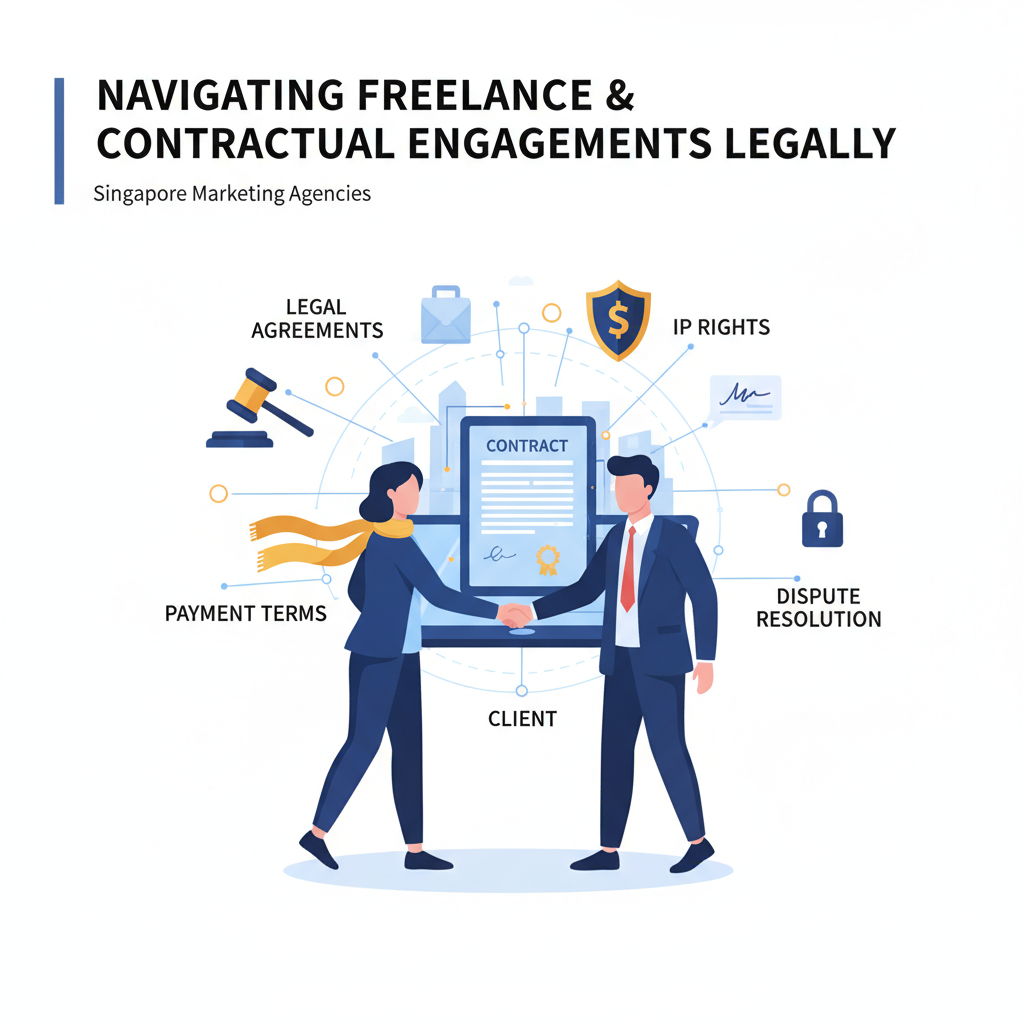
Navigating Freelance & Contractual Engagements Legally
For a dynamic marketing agency in Singapore, leveraging the talent of freelancers, independent contractors, and project-based staff is strategic. However, navigating these engagements without a clear understanding of the legal HR terms & conditions can expose your agency to significant risks. Proper classification and robust agreements are paramount to maintaining compliance, avoiding penalties, and safeguarding business interests. This section details crucial legal considerations, helping your marketing agency distinguish these roles correctly and establish legally sound frameworks for collaboration.
-
Distinguishing Contractor vs. Employee Status to Avoid Misclassification
The distinction between an independent contractor and an employee carries profound legal and financial implications for any marketing agency in Singapore. Misclassifying an employee as a contractor can lead to severe penalties, including demands for unpaid Central Provident Fund (CPF) contributions, leave entitlements, public holiday pay, and potential claims under the Employment Act for unfair dismissal. The Ministry of Manpower (MOM) in Singapore scrutinizes these relationships based on several key factors:
- Control: Does your agency dictate how the work is done, or merely what the end result should be?
- Integration: Is the individual integrated into your agency’s structure, using company email or attending staff meetings?
- Duration and Exclusivity: Is the engagement project-specific or ongoing and exclusive, resembling employment?
- Tools and Equipment: Who provides the necessary tools and workspace?
- Financial Risk: Does the individual bear business risk and opportunity for profit or loss beyond their fee?
It is crucial for marketing agencies in Singapore to critically assess these factors. Documenting the independent nature of the relationship through clear contractual terms is essential. For comprehensive guidance, refer to the Ministry of Manpower’s explanation on ‘contract of service’ versus ‘contract for service’, which provides invaluable insights into navigating these complex definitions to ensure your agency avoids costly misclassification.
-
Comprehensive Service Agreements for Freelancers & Project Staff
Once you’ve correctly identified an individual as a freelancer or independent contractor, implementing a comprehensive service agreement is critical. This document serves as the cornerstone of your legal protection, clearly outlining engagement terms and preventing future disputes. For a marketing agency, these agreements must be meticulously drafted to reflect the specific nature of project-based work, particularly concerning deliverables and client confidentiality. Key components of an effective service agreement include:
- Scope of Work and Deliverables: Explicitly define the project, tasks, and expected deliverables, including quality standards.
- Project Timelines: Set clear start and end dates, milestones, and deadlines.
- Payment Terms: Detail the fee structure, payment schedule, and invoicing procedures.
- Confidentiality: Crucial for marketing agencies handling sensitive client information.
- Termination Clauses: Outline conditions for termination, notice periods, and payment for work completed.
- Indemnification: Protect your agency from liabilities arising from the contractor’s work.
- Dispute Resolution: Specify the preferred method for resolving disagreements in Singapore.
A well-structured service agreement protects your agency and provides clarity for the contractor, fostering a more productive working relationship. It’s a proactive measure safeguarding your agency’s reputation and financial stability.
-
Intellectual Property Ownership in Contractor Work & Deliverables
In the creative realm of a marketing agency, intellectual property (IP) is your lifeblood. Campaigns, creatives, branding materials, strategies, and content generated by freelancers and contractors are invaluable assets. Without explicit contractual clauses, IP ownership can become ambiguous, leading to significant legal challenges. Under Singapore law, generally, the creator of a work is the first owner of its copyright. Therefore, simply paying a contractor does not automatically transfer IP ownership to your agency.
To secure full ownership of all IP created by contractors, your service agreements must include robust IP assignment clauses. These clauses should clearly state that:
- All intellectual property rights (including copyright, trademarks, design rights) in the deliverables created for the agency shall be assigned to and exclusively owned by the agency upon creation or payment.
- The contractor waives any moral rights over the work (to the extent permissible by law).
- The contractor agrees to execute any further documents required to perfect the agency’s ownership of such IP.
Failing to secure proper IP assignment can result in your agency being unable to freely use, modify, or license the very work you commissioned, potentially infringing on the contractor’s rights. This could lead to costly litigation, reputational damage, and an inability to deliver on client commitments. Always consult with legal professionals to ensure your IP clauses are watertight and compliant with Singaporean IP laws, effectively protecting your agency’s creative output and client assets.
By diligently addressing these three critical areas—proper classification, comprehensive agreements, and clear IP ownership—your marketing agency in Singapore can confidently engage with freelancers and contractors, harnessing their expertise while remaining fully compliant with legal HR terms & conditions.
Partner with Shelby Global
You are looking for reliable HR Sevice Suppliers? Contact Shelby Global Now! To connect with verified talents and upgrade your orginization.
—————————————
References
– :
– Personal Data Protection Act (PDPA) 2012: https://www.pdpc.gov.sg/Overview-of-PDPA
– Singapore’s Ministry of Manpower guidelines on Key Employment Terms (KETs): https://www.mom.gov.sg/employment-practices/key-employment-terms-kets
– Ministry of Manpower Singapore – Fair Employment Practices: https://www.mom.gov.sg/employment-practices/fair-employment-practices
– Ministry of Manpower’s explanation on ‘contract of service’ versus ‘contract for service’: https://www.mom.gov.sg/employment-practices/contract-of-service-vs-contract-for-service



































































































