Introduction to SME HR in Malaysia for Sales CEOs
For a fresh CEO transitioning from a sales background into the dynamic world of Malaysian Small and Medium-sized Enterprises (SMEs), the focus often remains instinctively on revenue generation, market expansion, and closing deals. While these are undeniably vital, a deeper understanding of Human Resources (HR) isn’t just an administrative necessity—it’s a strategic imperative with immediate and profound impacts on sales performance. Malaysia’s unique socio-economic landscape, coupled with its distinct labour laws and cultural nuances, makes effective HR management a critical differentiator for SMEs striving for growth. This section aims to provide a clear, step by step to understand SMEs HR structure for the fresh the CEO in sale field in Malaysia, highlighting why HR knowledge isn’t a peripheral concern but a core competency that directly empowers sales leadership and drives the bottom line. Ignoring the intricacies of HR can lead to high turnover, compliance issues, and a demotivated sales force—all detrimental to achieving sales targets. Conversely, a proactive approach to HR can build a resilient, high-performing sales team ready to conquer the Malaysian market.

1. Why HR Knowledge Empowers Sales Leadership in SMEs
For a sales-focused CEO, the link between HR and sales might not always seem obvious, yet it’s undeniably strong, especially within the lean operational structures of Malaysian SMEs. Effective HR practices directly translate into a more efficient, motivated, and compliant sales team. Firstly, understanding talent acquisition and recruitment processes ensures that the right sales professionals—those with local market insights, cultural fit, and proven track records—are hired. Without this foundational HR knowledge, CEOs risk building a weak sales team, leading to missed targets and wasted resources. Secondly, HR expertise is crucial for developing robust performance management systems. These systems provide clear objectives, regular feedback, and fair evaluation, directly impacting individual sales performance and overall team productivity. A sales CEO who grasps HR principles can design incentive schemes that truly motivate, identify skill gaps, and implement targeted training programs to elevate the team’s capabilities. Furthermore, proactive management of employee relations, conflict resolution, and compliance with Malaysian labour law safeguards the company from costly disputes and reputational damage, allowing the sales force to focus on selling rather than being distracted by internal issues. Ultimately, HR knowledge empowers sales leaders to cultivate a supportive and high-achieving environment, directly fueling sales growth and employee retention.
2. Typical HR Challenges Faced by Malaysian SMEs
Malaysian SMEs operate within a unique ecosystem, presenting distinct HR challenges that a sales CEO must navigate. One of the most prevalent issues is talent acquisition and retention, particularly for skilled sales professionals. SMEs often struggle to compete with larger corporations on salary and benefits, making it difficult to attract top talent. This challenge is compounded by a relatively tight labour market for specialized skills. Another significant hurdle is navigating the complex landscape of Malaysian labour law, including the Employment Act 1955 (now Employment Act 1955 (Amendment) 2022), EPF, SOCSO, EIS, and various other regulations. Non-compliance, even unintentional, can lead to severe penalties, fines, and reputational damage, all of which divert resources and attention away from core sales activities. Limited HR resources are also a common characteristic; many SMEs lack dedicated HR departments or sufficient expertise, forcing sales leaders to wear multiple hats and manage HR functions themselves. This often results in inconsistent policies, inadequate training, and reactive problem-solving. Developing effective compensation and benefits structures that are both competitive and sustainable for the SME budget is another constant struggle. Moreover, fostering a strong company culture and managing employee engagement without extensive HR infrastructure requires a deliberate effort from the CEO. Addressing these challenges effectively is essential for maintaining a stable and productive workforce that supports the company’s sales objectives. For more detailed information on Malaysian employment law, consider consulting resources from the Ministry of Human Resources Malaysia.
3. The Direct Link Between HR Effectiveness and Sales Performance
The correlation between robust HR practices and stellar sales performance is not merely theoretical; it’s a measurable reality for Malaysian SMEs. An effective HR function ensures that the sales team is not only well-recruited and adequately compensated but also continuously developed, motivated, and supported. When HR is effective, onboarding processes are smooth, enabling new sales hires to become productive quickly. Performance management systems are clear, providing transparent goals and constructive feedback, which directly enhances individual sales outcomes. Furthermore, proactive HR policies contribute significantly to employee retention. High turnover within a sales team is incredibly costly, leading to lost client relationships, diminished institutional knowledge, and substantial recruitment and training expenses. A stable and experienced sales team, fostered by strong HR, builds long-term customer relationships and consistently outperforms teams plagued by churn. HR also plays a pivotal role in fostering a positive workplace culture, which directly impacts morale and productivity. A happy, engaged sales force is more resilient, more collaborative, and more likely to exceed targets. By effectively managing talent, ensuring compliance, and promoting employee well-being, HR empowers the sales force to operate at its peak potential. For a deeper dive into establishing effective HR structures tailored for sales-focused leadership in Malaysian SMEs, explore resources that provide a Step by Step to understand SMEs HR Structure for the fresh the CEO in sale field in malaysia.
Deciphering the Common SME HR Structures
As a fresh Sales CEO stepping into the dynamic landscape of Malaysian SMEs, understanding the underlying HR structures isn’t just administrative; it’s a strategic imperative. Your sales team’s performance, morale, and ultimately your company’s growth are intricately linked to how the HR function is organized and executed. This guide offers a step-by-step approach to understand SMEs HR structure for the fresh the CEO in sale field in Malaysia, helping you observe, evaluate, and optimize for sales success.
1. Informal vs. Formal HR: What to Expect in Malaysian SMEs
In Malaysian SMEs, HR setups vary widely. Informal HR setups often involve owners or admin staff handling tasks like payroll, leave, and initial talent acquisition in sales. While efficient for very small teams, this approach can bottleneck as the sales force grows, leading to inconsistent employee engagement strategies and impacting retention.
Conversely, formal HR departments, even with one dedicated HR manager or HR executive, offer defined policies and a focused approach. For a Sales CEO, this distinction is crucial. An informal setup might mean you absorb more HR duties, diverting focus from sales strategy. A formal structure, however, indicates strategic investment in people, translating to better talent acquisition, clearer performance management, and enhanced compliance with Malaysian labour laws like the Employment Act 1955. Look for written policies, onboarding, and a clear point person for employee queries.
2. The Role of the HR Manager/Executive in a Small Team
When an SME HR structure formalizes, the first dedicated hire is typically an HR executive or junior HR manager. This generalist wears many hats, significantly supporting your sales team’s operational needs. They manage talent acquisition in sales, from drafting sales job descriptions to screening candidates and coordinating interviews. They also onboard new sales hires, ensuring smooth integration and policy understanding.
This HR professional handles employee relations, mediates conflicts, and fosters a positive work environment—all critical for a high-performing sales team. They manage performance appraisal cycles, aligning individual sales goals with company objectives. For a Sales CEO, understanding their HR manager’s scope is vital. An effective HR manager can be your greatest ally in building a robust sales force, handling administrative burdens that could otherwise detract from your focus on market penetration and revenue. Conversely, an overwhelmed HR person can hinder sales team growth and increase turnover.
3. Outsourced HR vs. In-house HR: Pros and Cons for Sales Teams
As Malaysian SMEs grow, managing the HR function often means choosing between outsourced HR solutions and an in-house HR team. Both have distinct advantages and disadvantages a Sales CEO must carefully weigh, especially concerning their sales force.
Outsourced HR uses a third-party for tasks like payroll, benefits, compliance, and recruitment. Pros include access to specialized expertise without full-time employee overhead, ensuring complex labour law compliance, and often being more cost-effective. For sales teams, this means compliant payroll and expert advice on commission structures. A con, however, is the potential lack of immediate cultural integration; an external provider might not fully grasp your sales team’s unique dynamics or company culture, crucial for bespoke employee engagement strategies.
An in-house HR team, even small, offers greater control and a deeper understanding of specific needs and culture. An in-house HR manager or HR executive is more responsive, builds stronger employee relationships, and tailors HR initiatives directly to sales objectives. The downside is higher cost (salary, benefits, training) and finding one individual with diverse HR expertise. For a sales organization needing rapid scaling and a strong, unique culture, an in-house HR presence that understands HR structures is invaluable, especially for fostering a competitive environment and effectively managing talent acquisition in sales.
As a fresh Sales CEO, your ability to understand and leverage these different HR structures will significantly influence your success. Observing how your Malaysian SMEs manages its HR function is the first step in ensuring your sales engine is well-oiled and ready for growth. A strategic approach to HR directly fuels your sales team’s potential.
Key HR Functions & Their Impact on Sales
In the dynamic world of Small and Medium-sized Enterprises (SMEs), every department plays a crucial role in overall success. For a fresh CEO in the sales field in Malaysia, understanding the intricate workings of the Human Resources (HR) department is not merely an administrative task but a strategic imperative. HR functions, often perceived as back-office operations, directly underpin and significantly influence the sales team’s performance, productivity, and ultimately, the company’s bottom line. This section details the core responsibilities of an HR department within an SME and explains how each function directly or indirectly affects the sales team’s environment and ability to achieve targets.
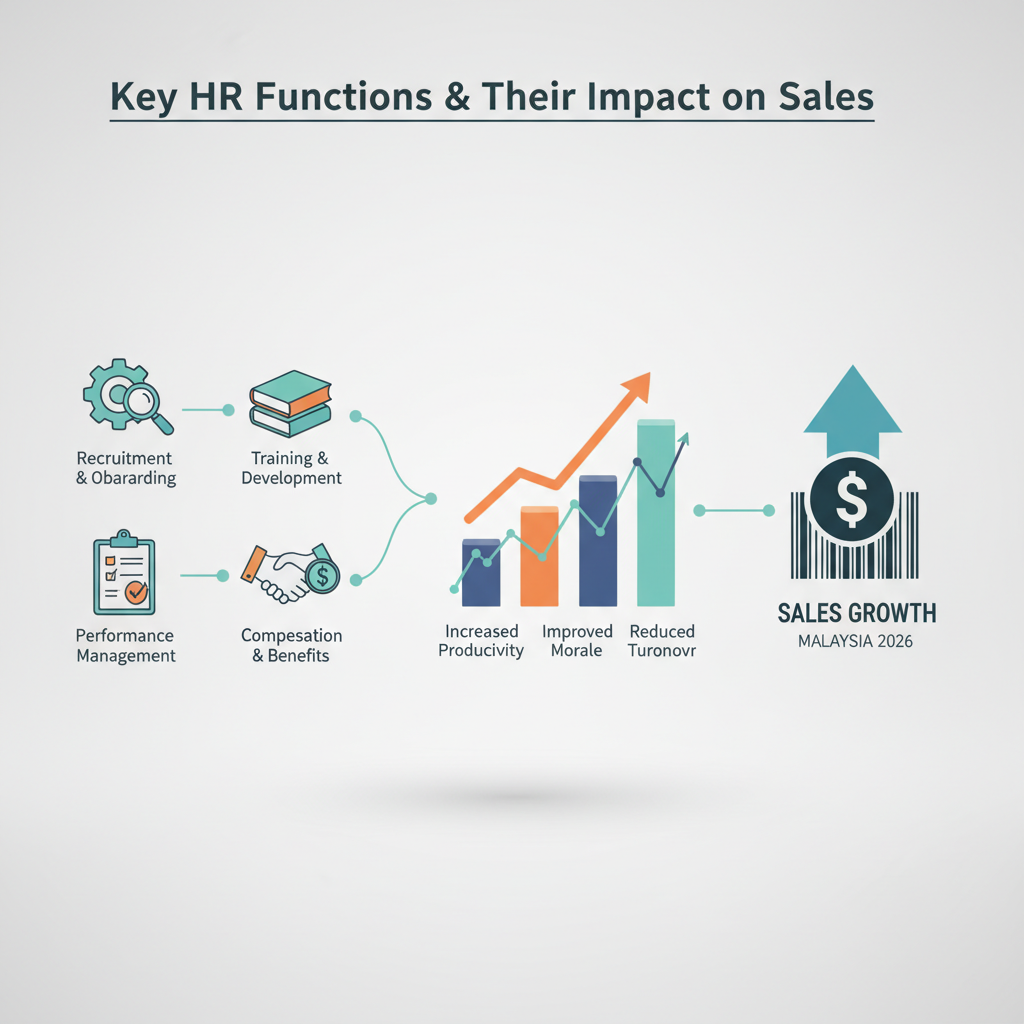
1. Recruitment & Onboarding: Getting the Right Sales Talent
The journey to a high-performing sales team begins long before a deal is closed – it starts with recruitment. For an SME, HR is responsible for identifying, attracting, and hiring individuals who not only possess the necessary sales skills but also align with the company culture and values. A poorly executed recruitment process can lead to high turnover, wasted training resources, and missed sales opportunities. Conversely, a strategic approach ensures the hiring of ambitious, resilient, and customer-focused professionals.
Beyond recruitment, effective onboarding is paramount. This involves more than just paperwork; it’s about quickly integrating new sales hires into the team, familiarizing them with product knowledge, sales processes, CRM systems, and the competitive landscape. A structured onboarding program significantly reduces the ramp-up time for new sales executives, enabling them to contribute to revenue generation faster. HR’s role here is to design and facilitate a comprehensive onboarding experience that equips new talent to hit the ground running. For a Step by Step to understand SMEs HR Structure for the fresh the CEO in sale field in malaysia, this foundational HR function is where the strength of your sales force truly begins.
2. Performance Management & Goal Setting for Sales Teams
Once sales professionals are onboard, HR’s role shifts towards optimizing their performance. This involves establishing clear, measurable, achievable, relevant, and time-bound (SMART) sales goals that are aligned with the company’s overall business objectives. HR collaborates with sales managers to develop robust performance appraisal systems, ensuring regular feedback, constructive coaching, and fair evaluation processes. Effective performance management identifies areas for improvement, celebrates successes, and fosters a culture of continuous development within the sales team.
Through consistent performance reviews, HR helps sales leaders identify training gaps and organize targeted development programs. This might include workshops on negotiation skills, product updates, or advanced sales techniques. By monitoring performance and providing the necessary tools for growth, HR directly contributes to a more skilled, motivated, and productive sales force, ultimately leading to higher sales volumes and customer satisfaction.
3. Compensation & Benefits: Motivating Sales Professionals Effectively
A highly motivated sales team is crucial for achieving aggressive targets. HR plays a pivotal role in designing and administering competitive compensation and benefits packages that attract and retain top sales talent. This goes beyond just a base salary; it includes strategically structured commission plans, performance bonuses, incentives, and recognition programs that directly link individual effort to reward. A well-designed compensation structure ensures that sales professionals are adequately compensated for their achievements, driving them to consistently exceed targets.
Furthermore, HR manages non-monetary benefits such as health insurance, professional development opportunities, flexible working arrangements, and a positive work environment. These elements contribute significantly to job satisfaction and employee loyalty, reducing attrition rates among valuable sales personnel. By ensuring that compensation and benefits packages are competitive and aligned with market trends, HR empowers the sales team to focus on their primary objective: selling. Research consistently shows that effective HR practices, including fair compensation, are directly linked to increased employee engagement and business performance. For an SME, this strategic HR function is indispensable in building a resilient and high-achieving sales force.
Navigating HR for Sales Success as a New CEO
For a new CEO stepping into the dynamic sales landscape, particularly within SMEs in Malaysia, understanding and effectively leveraging the Human Resources (HR) function is not merely an administrative task—it’s a strategic imperative. The HR department, often seen as a compliance or support arm, holds immense untapped potential to propel sales team productivity, enhance talent acquisition, and ultimately drive revenue growth. This section provides a practical, step-by-step guide for a fresh CEO in the sales field to understand, interact with, and influence the HR structure for maximum sales success.
1. Building a Strong Partnership with HR Leadership
The initial phase for any new sales CEO is to foster a collaborative and respectful relationship with HR leadership. This isn’t about dictating but understanding. Schedule early, dedicated meetings with the Head of HR or HR Director. Use this time to articulate your vision for the sales organization, your immediate priorities, and the long-term growth objectives. Crucially, listen intently to HR’s current challenges, priorities, and their perception of the sales team’s talent landscape. Understanding their perspective on employee engagement, retention strategies, and existing performance management frameworks is key. Discuss how HR can be a strategic partner in achieving sales targets, moving beyond transactional support to becoming a proactive force. A strong, trust-based relationship will enable better alignment on talent management, sales training initiatives, and compensation models, creating a foundation for shared success within the organizational structure.
2. Communicating Sales Needs & Talent Requirements to HR
Effective communication is the bedrock of a productive HR-sales partnership. As a sales CEO, you must clearly and consistently articulate the specific talent requirements for your sales team. This goes beyond just headcount; it involves defining the critical skills, experience levels, and behavioral competencies needed for sales roles, from entry-level to leadership positions. Provide HR with detailed job descriptions that reflect market realities and sales performance expectations. Discuss the sales recruitment pipeline: what are the forecasted needs, the ideal candidate profile, and the urgency? Collaborate on developing attractive employee value propositions specifically tailored to sales professionals. Furthermore, clearly communicate the needs for ongoing sales training and development programs. Are there skill gaps in product knowledge, negotiation, or CRM proficiency? HR can then work to source or develop these programs, ensuring your sales force remains competitive and highly effective. This proactive exchange ensures HR is equipped to provide the right people at the right time, minimizing costly hiring mistakes and accelerating time-to-productivity.
3. Leveraging HR Data for Sales Forecasting & Strategy
HR data, often underutilized by sales leadership, is a goldmine for strategic planning and sales forecasting. Work with HR to gain access to, and insights from, key HR metrics. Data points such as employee turnover rates within sales, average tenure of high-performing sales reps, time-to-fill for sales positions, compensation benchmarking, and employee satisfaction surveys can provide invaluable context. For instance, high turnover in a specific sales territory might indicate issues with management, compensation, or market saturation, directly impacting future sales forecasts. Analyzing performance review data can highlight strengths and weaknesses across the sales team, informing targeted coaching and development. HR can also provide insights into competitive intelligence regarding talent acquisition from rival firms. By integrating this HR intelligence with your sales analytics, you can refine your sales strategy, improve workforce planning, and make more informed decisions about territory allocation, resource deployment, and even adjust sales goals. This data-driven approach transforms HR from a cost center into a strategic partner, directly contributing to more accurate sales predictions and stronger overall business outcomes. Understanding the strategic role HR plays is crucial for any new CEO aiming for sustainable sales growth. For more insights on developing a robust HR strategy, refer to SHRM’s resources on the HR business partner model.
Future-Proofing Your Sales Team with Proactive HR Strategies in Malaysia
Description: Looks ahead, offering insights into how strategic HR planning, in line with Malaysian labor laws and market trends, can build a resilient and high-performing sales organization.
In Malaysia’s dynamic business landscape, a high-performing sales team is the core of any growing enterprise, particularly for SMEs. For a fresh CEO in sales, mastering the Step by Step to understand SMEs HR Structure for the fresh the CEO in sale field in malaysia is crucial. Beyond hitting targets, it’s about establishing a resilient sales force ready to navigate market shifts and talent expectations. Proactive HR strategies are no longer optional; they are essential for building a future-proof sales organization that thrives within Malaysian labor laws and market trends. This section explores key HR pillars—compliance, technology, and strategic talent development—to empower sales leaders.
1. Adapting to Malaysian Labor Laws & Regulations for Sales Staff
Compliance with Malaysian labor laws is fundamental for managing sales personnel, who often have unique arrangements. It’s about fostering a fair environment and avoiding penalties. Legislation like the Employment Act 1955 (and its 2022 amendments), EPF, SOCSO, and EIS govern minimum wage, working hours, leave, and termination. For sales teams, clear commission structures and legally compliant performance management are vital to prevent disputes. HR must ensure employment contracts for sales staff clearly outline roles, compensation, and KPIs in line with local regulations. Staying updated with rulings from the Malaysian Industrial Court is crucial. The official portal of the Ministry of Human Resources Malaysia (MOHR) offers authoritative guidance, ensuring your sales HR structure remains compliant and equitable, forming a stable operational foundation.
2. Embracing Technology for Sales HR Efficiency (e.g., HRIS)
Manual HR processes are a significant bottleneck for scaling sales teams. Embracing technology, especially a Human Resources Information System (HRIS), transforms HR efficiency for sales. An HRIS centralizes critical employee data, from recruitment and onboarding to payroll, leave, and performance tracking. For sales teams, this means streamlined administration of commissions, expense claims, and training records. Beyond operational gains, an HRIS provides invaluable data analytics, offering insights into talent acquisition, turnover, and training effectiveness. This data empowers CEOs and HR leaders to make informed decisions. Integrating an HRIS streamlines the Step by Step to understand SMEs HR Structure for the fresh the CEO in sale field in malaysia process, providing a clear, digital framework for managing your sales workforce. It allows HR to focus on strategic initiatives, enhancing sales organization agility.
3. Succession Planning for Key Sales Roles
A future-proof sales organization needs robust succession planning for its critical roles. The departure of a top sales manager or key account executive can severely disrupt sales and market relationships. Succession planning isn’t just about replacement; it’s about identifying and developing internal talent for leadership or specialized roles, ensuring continuity and fostering internal growth. For SMEs, losing key personnel can have a disproportionate impact, making this vital. The process involves identifying critical sales positions, assessing current employees’ skills and potential, and creating tailored development plans. This includes mentorship, advanced sales training, or cross-functional projects. Proactively preparing high-potential individuals reduces reliance on external hiring, which is often costly and risky. A well-executed plan cultivates growth, loyalty, clear career paths, and ensures a strong leadership pipeline, vital for long-term sales performance and resilience in the competitive Malaysian market.
Partner with Shelby Global
You are looking for reliable HR Sevice Suppliers? Contact Shelby Global Now! To connect with verified talents and upgrade your orginization.
—————————————
References
– :
– Employment Act 1955: https://www.lexology.com/library/detail.aspx?g=7f7e9a82-f027-449e-a89a-00e70c50a00e
– How HR Can Add Value to a Business: https://hbr.org/2015/05/how-hr-can-add-value-to-a-business
– SHRM’s resources on the HR business partner model: https://www.shrm.org/executive/resources/articles/pages/hr-business-partner.aspx
– Ministry of Human Resources Malaysia (MOHR): https://www.mohr.gov.my/