The Current Landscape of Talent Acquisition in Vietnam
Vietnam’s job market is undergoing a profound transformation, evolving into one of Southeast Asia’s most dynamic landscapes. Fueled by sustained economic growth and a burgeoning young population, the demand for skilled professionals across diverse sectors is escalating. This vibrant environment presents both immense opportunities and unique challenges for businesses engaged in Talent Acquisition Vietnam, requiring strategic and nuanced approaches to secure the best human capital. Understanding this complex ecosystem – from its economic drivers to its demographic shifts – is paramount for successful talent strategies in the region.

1. Vietnam’s Economic Growth and Job Creation
Vietnam has consistently demonstrated remarkable economic resilience and growth, positioning itself as a manufacturing hub and an attractive destination for foreign direct investment (FDI). Over the past decades, the nation has achieved impressive GDP growth rates, propelling it into a lower-middle-income status with aspirations for higher. This robust economic expansion is largely attributed to proactive government policies, integration into global trade agreements, and a strong export-oriented manufacturing base. The influx of FDI, particularly in high-tech manufacturing and renewable energy, has been a significant catalyst for job creation. Companies from around the globe are establishing or expanding their operations, leading to an increasing demand for both blue-collar and white-collar workers. This dynamic growth trajectory has not only expanded the existing job market but also fostered the development of new industries and specialized roles, intensifying the competition for qualified professionals. For a deeper insight into Vietnam’s economic performance and outlook, the World Bank provides comprehensive overviews of the country’s development journey.
2. Key Industries Driving Demand for Talent
The economic momentum in Vietnam is primarily driven by several key sectors that are actively seeking diverse talent. Manufacturing remains a cornerstone, with electronics, textiles, and automotive industries continuously expanding and modernizing. This sector demands skilled engineers, technicians, and supply chain specialists. The technology sector, particularly software development, e-commerce, fintech, and AI, is experiencing explosive growth, attracting significant investment and creating a high demand for IT professionals, data scientists, and digital marketers. Furthermore, the burgeoning service industry, encompassing finance, banking, logistics, and retail, along with a revitalized tourism and hospitality sector, is also contributing significantly to job creation. As these industries mature and innovate, the need for specialized skills, leadership capabilities, and cross-cultural communication proficiency becomes more pronounced. Companies looking to thrive in this competitive environment must employ sophisticated Talent Acquisition Vietnam strategies to identify, attract, and retain the best candidates who can drive their growth objectives.
3. Demographic Shifts and Workforce Composition
Vietnam boasts a young, adaptable, and increasingly educated workforce, making its demographic profile a significant asset. With a median age of around 32 years, the country benefits from a large pool of working-age individuals. Urbanization is a growing trend, drawing young people from rural areas to cities in search of better economic opportunities and career progression. This demographic shift also brings an evolving workforce composition: while traditional industries still rely on a large manual labor force, there’s a clear upward trend in the number of university graduates and individuals with vocational training. The government has prioritized education and skills development, leading to improvements in English proficiency and digital literacy among the younger generation. However, despite these advancements, skill gaps persist, particularly in highly specialized technical domains, advanced management, and research & development. Businesses engaged in Talent Acquisition Vietnam must therefore navigate a landscape where foundational skills are abundant, but niche expertise requires targeted sourcing and development initiatives. Understanding these shifts is crucial for developing effective recruitment and retention strategies that resonate with the aspirations of the Vietnamese talent pool.
Evolving Recruitment Strategies and Best Practices
The landscape of talent acquisition in Vietnam is undergoing a profound transformation. Moving beyond conventional job postings and passive candidate searches, modern Talent Acquisition Vietnam strategies are embracing innovation to attract, engage, and secure top-tier professionals in an increasingly competitive market. Employers must adapt swiftly, adopting dynamic, tech-driven, and candidate-centric approaches to stay ahead. This shift is not merely about finding candidates faster, but about building sustainable pipelines, enhancing employer brand, and creating a seamless, positive experience for potential hires.
1. Digitalization and Social Media in Recruitment
The digital revolution has fundamentally reshaped how companies approach Talent Acquisition Vietnam. Social media platforms, once primarily for personal connections, have become powerful recruitment tools. Platforms like LinkedIn are indispensable for professional networking, direct sourcing, and showcasing company culture. However, in Vietnam, other platforms like Facebook, Zalo, and even TikTok are gaining traction for different demographics and roles, enabling companies to cast a wider net and engage with candidates where they spend their time online.
Beyond passive job advertisements, active digital engagement involves creating compelling content, running targeted ad campaigns, and participating in industry-specific groups. Mobile-first strategies are paramount, given Vietnam’s high mobile penetration rate. Recruitment teams are leveraging data analytics from these platforms to understand candidate behavior, refine their targeting, and personalize outreach efforts. This digital-first approach ensures that companies can reach both active job seekers and passive candidates who might be open to new opportunities but aren’t actively looking.
2. The Growing Importance of Employer Branding
In a talent-scarce market, a strong employer brand is no longer a luxury but a necessity for effective Talent Acquisition Vietnam. It’s about cultivating and communicating a unique identity as an employer, showcasing what makes an organization a desirable place to work. This encompasses everything from company culture, values, employee development opportunities, and work-life balance to corporate social responsibility (CSR) initiatives.
Top talent, especially younger generations, increasingly prioritizes purpose, culture, and growth potential over salary alone. Companies in Vietnam are investing heavily in employer branding by creating authentic content – employee testimonials, behind-the-scenes videos, and success stories – shared across their career pages, social media channels, and professional networks. Partnering with industry influencers and participating in employer awards further amplifies their appeal. A compelling employer brand not only attracts more qualified candidates but also significantly improves retention rates, fostering loyalty and advocacy among existing employees. Studies consistently show that a strong employer brand can reduce cost-per-hire and time-to-hire, making it a critical component of modern recruitment strategy. According to LinkedIn’s Global Recruiting Trends, employer brand is a top priority for talent professionals worldwide.
3. Leveraging AI and Automation in Hiring Processes
Artificial Intelligence (AI) and automation are revolutionizing the efficiency and effectiveness of Talent Acquisition Vietnam. From initial candidate sourcing to interview scheduling and onboarding, these technologies are streamlining processes, reducing human error, and freeing up recruiters to focus on more strategic tasks.
AI-powered tools can screen thousands of resumes in minutes, identifying candidates whose skills and experience best match job requirements, often with greater accuracy and less bias than manual review. Chatbots provide instant responses to candidate queries, guiding them through application processes and even conducting initial pre-screening interviews, ensuring a consistent and positive candidate experience available 24/7. Predictive analytics helps identify top performers, forecast hiring needs, and assess flight risk, allowing companies to make data-driven decisions. While automation handles repetitive tasks, AI provides insights that elevate the quality of hiring decisions, ensuring that Talent Acquisition Vietnam efforts are not just efficient but also highly effective in securing the best possible talent.
In conclusion, the future of Talent Acquisition Vietnam demands a multifaceted approach. Organizations must seamlessly integrate digital tools, cultivate an authentic and appealing employer brand, and strategically deploy AI and automation to create a robust, responsive, and highly effective recruitment ecosystem. Embracing these evolving strategies is crucial for securing a competitive edge in Vietnam’s dynamic talent market.
Navigating Key Challenges in Talent Acquisition Vietnam
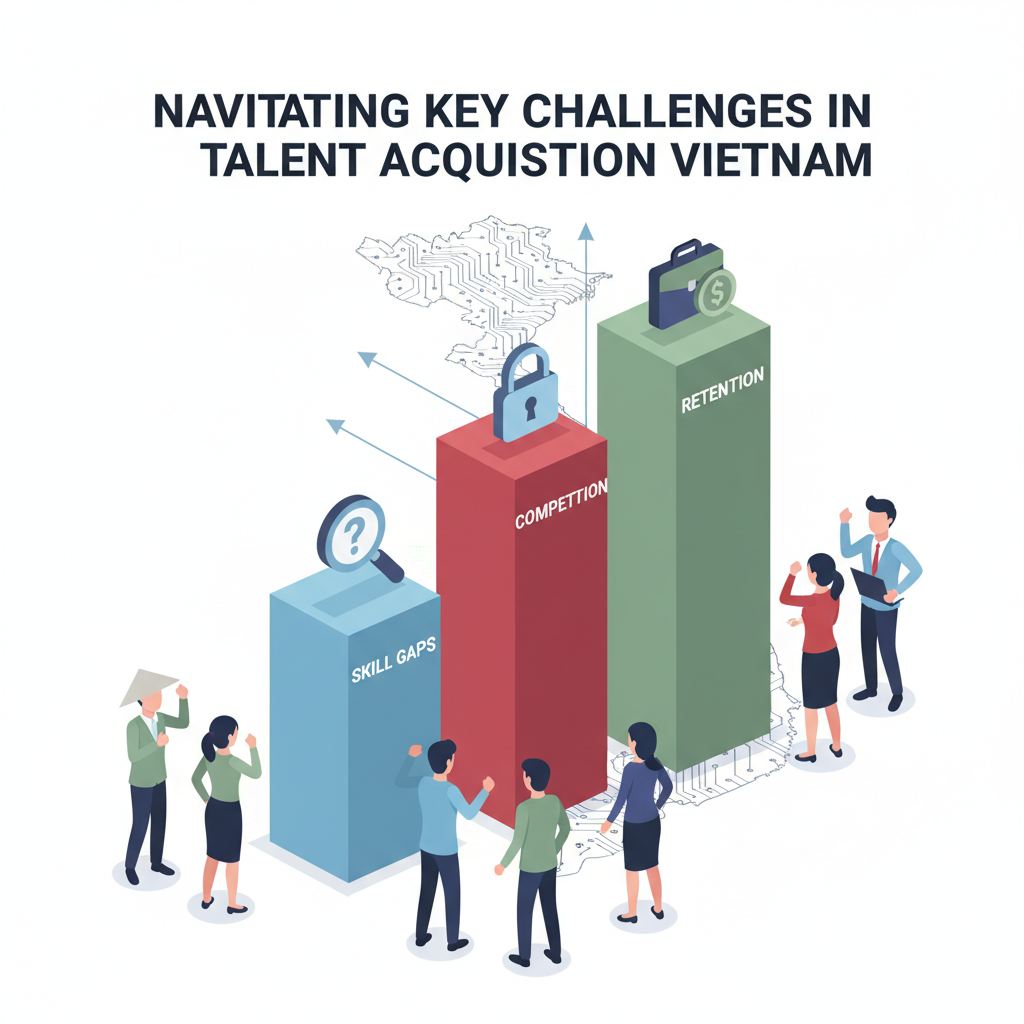
Identifying the primary hurdles and obstacles companies face when seeking and securing high-quality talent in the Vietnamese market requires a nuanced understanding of its rapidly evolving economic landscape. Vietnam, with its vibrant economy and young, dynamic workforce, presents immense opportunities for businesses. However, the unique characteristics of its labor market also introduce significant complexities for effective Talent Acquisition Vietnam. From a rapidly developing skill set to intense competition for top performers and shifting employee expectations, organizations must be strategic and agile to succeed in attracting and retaining the best talent.
1. Addressing the Skill Shortage and Talent Gap
One of the most persistent challenges in Talent Acquisition Vietnam is the pervasive skill shortage across various sectors. While the country boasts a large and increasingly educated workforce, the rapid pace of economic growth and technological advancement often outstrips the development of specialized skills. Industries such as IT, engineering, advanced manufacturing, and high-tech services frequently struggle to find candidates with the specific technical expertise, soft skills (like critical thinking, problem-solving, and communication), and international experience required. This gap is further exacerbated by an education system that is still catching up to industry demands, leading to a mismatch between academic qualifications and practical workplace readiness. Companies often find themselves needing to invest heavily in extensive onboarding and training programs to bridge this divide. To counteract this, forward-thinking organizations are exploring partnerships with vocational schools and universities, implementing robust internal upskilling and reskilling initiatives, and considering international recruitment strategies to fill critical roles temporarily or permanently.
2. Retention Strategies Amidst High Competition
Securing talent is only half the battle; retaining it in Vietnam’s highly competitive market is arguably more challenging. The demand for skilled professionals means that talented individuals often have multiple job offers, leading to high turnover rates, particularly among younger generations. Competitors are quick to poach top performers, often with aggressive salary bumps or promises of rapid career progression. This environment necessitates robust and proactive retention strategies. Beyond competitive salaries, companies must cultivate an engaging and supportive work culture, offer clear career development paths, provide opportunities for professional growth and learning, and ensure strong leadership. Employee engagement initiatives, regular feedback sessions, mentorship programs, and a commitment to work-life balance are crucial for building loyalty. Organizations that prioritize creating a positive and nurturing environment where employees feel valued and see a future will be better positioned to weather the intense competition and reduce costly attrition rates.
3. Competitive Compensation and Benefits Expectations
The rising cost of living and increasing exposure to global employment standards have significantly elevated compensation and benefits expectations among Vietnamese professionals. What was once considered a competitive offer a few years ago might now be quickly outmatched. Companies must conduct thorough market research and regularly benchmark their salary structures and benefits packages against industry standards to remain attractive. However, simply offering a higher salary is often not enough. Modern Vietnamese employees, especially those with in-demand skills, seek a holistic compensation package that includes not only a strong base salary but also comprehensive health insurance, performance-based bonuses, opportunities for stock options (in certain industries), and a robust suite of non-monetary benefits. These can include flexible working arrangements, professional development budgets, wellness programs, and a positive company culture that promotes employee well-being. According to the Hays Vietnam Salary Guide, understanding these evolving expectations is key to crafting attractive offers that stand out and secure the best talent in a market where financial incentives, coupled with career growth and work-life balance, are paramount.
Technology’s Role and Innovation in HR
The landscape of Talent Acquisition Vietnam is undergoing a profound transformation, driven by the rapid evolution and integration of technology. In a market with fierce competition for skilled professionals, HR departments are leveraging innovative solutions to streamline processes, enhance candidate experience, and make informed hiring decisions. This digital pivot rethinks how organizations attract, engage, and retain top talent in Vietnam’s burgeoning economy, making technology an indispensable ally.
1. Adoption of HR Tech Platforms and Tools
The first wave of this technological revolution in Talent Acquisition Vietnam is the widespread adoption of HR tech platforms and tools. Companies are moving from manual systems to integrated Applicant Tracking Systems (ATS) and Candidate Relationship Management (CRM) platforms, automating tasks like resume screening, communication, and scheduling. This frees recruiters for strategic initiatives. Beyond basic automation, Artificial Intelligence (AI) and Machine Learning (ML) are becoming pivotal. AI-powered tools analyze candidate data for best fit, predict cultural alignment, and conduct initial screenings via chatbots, ensuring objective and efficient shortlisting. Virtual reality (VR) and augmented reality (AR) offer immersive job tours and assessment scenarios for technical roles. This embrace of cutting-edge HR technology not only enhances operational efficiency but significantly elevates the candidate experience, crucial for attracting high-demand professionals in Vietnam. A report by Grand View Research on the HR Software Market projects significant global growth, a trend Vietnam actively participates in. This underscores strategic investment by Vietnamese businesses in a more agile and competitive recruitment ecosystem.
2. Data-Driven Recruitment and Analytics
The ability to collect, analyze, and interpret data has revolutionized Talent Acquisition Vietnam. Data-driven recruitment is now essential for optimizing hiring strategies. HR analytics platforms provide insights into every stage of the recruitment funnel: source efficiency, time-to-fill, candidate drop-off, and diversity. Leveraging these, HR teams identify bottlenecks, refine job descriptions, and target candidate pools more effectively, improving overall hire quality. Predictive analytics forecasts future talent needs, identifies potential flight risks, and predicts candidate success based on historical data. This strategic use of data empowers HR professionals to move beyond reactive hiring to a proactive, evidence-based approach, directly contributing to business objectives. It transforms recruitment into a strategic function, enabling smarter, faster, and more effective hiring decisions in the competitive Vietnamese market. For companies enhancing capabilities in this area, exploring resources for optimizing Talent Acquisition Vietnam strategies through analytics is paramount.
3. Integrating Remote Work and Hybrid Models
Perhaps one of technology’s most significant and lasting impacts on Talent Acquisition Vietnam is the acceleration and integration of remote and hybrid models. This global shift has made flexible work arrangements a standard, opening new talent pools beyond geographical constraints for Vietnamese companies. They can now attract top talent nationally or even globally without requiring relocation. This paradigm shift, however, demands specific technologies: robust video conferencing, collaboration platforms, cloud-based project management, and secure VPNs are essential for distributed workforces. Recruiters must now assess candidates’ aptitude for remote work, self-discipline, and virtual collaboration. Onboarding processes have been re-engineered to be fully digital, ensuring new hires feel connected and supported remotely. Successful integration requires not just technological infrastructure but also a cultural shift, emphasizing trust, clear communication, and performance-based management. This adaptability is critical for Vietnamese businesses aiming to remain competitive and appeal to a workforce that increasingly values flexibility.
In conclusion, technology’s role in shaping Talent Acquisition Vietnam is undeniable and rapidly evolving. From sophisticated HR tech platforms and data-driven recruitment to the strategic integration of remote and hybrid models, innovation is fundamentally transforming talent acquisition. For Vietnamese businesses, embracing these advancements is crucial for building a resilient, efficient, and future-proof recruitment strategy that thrives in a dynamic global landscape. The future will undoubtedly be defined by continuous innovation and the strategic application of technology to connect the right talent with the right opportunities.
Future Outlook and Strategic Planning for 2026
As Vietnam continues its rapid economic expansion and integration into the global marketplace, the landscape for Talent Acquisition Vietnam is poised for significant transformation. The coming years, particularly leading up to 2026, will present both unprecedented opportunities and complex challenges for businesses seeking to attract, develop, and retain top-tier talent. Companies that adopt a proactive, forward-thinking approach to their talent strategies will be best positioned to thrive amidst these shifts. This section delves into key trends and strategic imperatives, offering insights into how organizations can prepare for the future of talent in Vietnam, ensuring they remain competitive and resilient.

1. Focus on Upskilling and Reskilling Initiatives
The pace of technological advancement, particularly in areas like AI, automation, and data analytics, is rapidly redefining job roles and skill requirements across industries in Vietnam. For organizations, simply hiring new talent with the latest skills will not be sufficient. A critical strategic imperative for Talent Acquisition Vietnam in the coming years will be to invest heavily in upskilling and reskilling their existing workforce. This involves identifying future critical skills gaps and developing comprehensive learning pathways to equip employees with the competencies needed for evolving roles. Implementing robust internal training programs, fostering a culture of continuous learning, and leveraging digital learning platforms will be vital. By nurturing internal talent, companies not only address immediate skill shortages but also enhance employee loyalty, reduce recruitment costs, and build a more adaptable and resilient workforce capable of navigating the evolving skill landscape. This focus on internal growth is a cornerstone of sustainable talent management.
2. Embracing Diversity, Equity, and Inclusion (DEI)
Diversity, Equity, and Inclusion (DEI) are no longer just buzzwords but fundamental pillars of a successful talent acquisition strategy, especially in a dynamic market like Vietnam. Companies that champion DEI initiatives will gain a significant competitive edge by tapping into broader talent pools and fostering a more innovative and engaged workforce. This means moving beyond token gestures to implementing genuine policies that promote equitable hiring practices, create inclusive work environments, and ensure fair career progression for all employees, irrespective of gender, age, background, or ability. For Talent Acquisition Vietnam, actively seeking out diverse candidates, removing unconscious biases from the hiring process, and highlighting an organization’s commitment to DEI in employer branding will be crucial. Research consistently shows that diverse teams outperform homogeneous ones in terms of innovation, problem-solving, and employee retention. Embracing DEI is not just a moral imperative; it’s a strategic business advantage that directly impacts a company’s ability to attract and retain the best talent.
3. Building a Sustainable Long-Term Talent Pipeline
The immediate hiring needs often overshadow the long-term strategic requirement of building a sustainable talent pipeline. For businesses operating in Vietnam, where talent markets can be highly competitive and fluid, a proactive, multi-faceted approach to pipeline development is essential. This involves looking beyond immediate vacancies to cultivate relationships with potential candidates, educational institutions, and industry associations. Strategies include establishing robust internship and graduate programs to nurture entry-level talent, forging partnerships with universities and vocational schools to influence curriculum and identify promising students, and developing strong employer branding to become an employer of choice. Furthermore, implementing sophisticated talent intelligence and analytics tools can help forecast future talent needs, identify emerging skill trends, and pinpoint areas where pipeline development is most critical. By consistently investing in building a long-term pipeline, companies can mitigate future talent shortages, reduce time-to-hire, and ensure a steady supply of qualified candidates, thereby securing their future growth in the competitive Talent Acquisition Vietnam market.
Partner with Shelby Global
You are looking for reliable HR Sevice Suppliers? Contact Shelby Global Now! To connect with verified talents and upgrade your orginization.
—————————————
References
– World Bank provides comprehensive overviews: https://www.worldbank.org/en/country/vietnam/overview
– LinkedIn’s Global Recruiting Trends: https://business.linkedin.com/talent-solutions/blog/global-recruiting-trends/2020/global-recruiting-trends-2020
– Hays Vietnam Salary Guide: https://www.hays.com.vn/en/insights/asia-salary-guide/vietnam-salary-guide
– Grand View Research on the HR Software Market: https://www.grandviewresearch.com/industry-analysis/human-resource-hr-software-market
– :