
Understanding the Malaysian Production Landscape for Manager Roles
Malaysia’s dynamic industrial sector, a cornerstone of its economy, presents a unique and intricate landscape for production manager jobs Malaysia. As a regional manufacturing hub, the nation’s commitment to technological advancement and sustainable practices creates a demanding environment for leadership roles. Hiring companies face distinct challenges and expectations specific to the local industry, necessitating a robust approach to talent identification. A crucial element in this process is employing a comprehensive Test structure to assess Manager Level CVs in production field in malaysia, ensuring candidates possess not just technical prowess but also a deep understanding of local nuances and regulatory frameworks.

1. Local industry demands and regulatory environment
The Malaysian manufacturing sector is diverse, spanning electronics and electrical (E&E), chemical products, medical devices, automotive, and food and beverage industries. This breadth requires production managers to be adaptable and knowledgeable across various operational contexts. A significant aspect of managing production in Malaysia is navigating its complex regulatory environment. Compliance with local laws, such as the Employment Act 1955, Occupational Safety and Health Act 1994 (DOSH regulations), and Environmental Quality Act 1974 (DOE guidelines), is paramount. Production managers must possess a strong understanding of these frameworks to ensure safe, ethical, and legal operations. Furthermore, adherence to international quality standards (e.g., ISO certifications) and sustainable manufacturing practices is increasingly expected, driven by global supply chain demands and the nation’s commitment to green initiatives. This intricate web of regulations and industry-specific demands means that a successful candidate must demonstrate not only operational efficiency but also acute awareness and proactive management of compliance issues, which can be effectively evaluated through a specialized Test structure to assess Manager Level CVs in production field in malaysia.
2. Typical career paths and growth in Malaysian production
Career progression within the Malaysian production landscape typically follows a well-defined trajectory, offering significant opportunities for growth for dedicated professionals. An individual might start as a production supervisor, moving up to assistant production manager, then production manager, and eventually to senior roles such as plant manager, operations director, or even vice president of manufacturing. This career progression production Malaysia is often catalyzed by continuous professional development, including certifications in Lean Manufacturing, Six Sigma, and project management. The evolving nature of the industry, particularly with the push towards Industry 4.0 adoption Malaysia, means that managers skilled in automation, data analytics, and smart factory integration are highly sought after. Companies often invest in leadership training and upskilling programs to nurture their talent pipeline. Beyond local opportunities, experienced Malaysian production managers also find regional mobility within ASEAN countries, leveraging their expertise in cross-cultural operational management. Compensation packages are generally competitive, especially for roles in multinational corporations and high-tech sectors, reflecting the critical impact these managers have on operational success and overall business profitability.
3. Challenges in talent acquisition for managerial roles
Despite a robust talent pool, acquiring top-tier production managers in Malaysia presents unique talent acquisition Malaysia challenges. A prevalent issue is the skill gap, where the demand for managers with advanced technical skills, coupled with strong leadership and problem-solving capabilities, often outstrips supply. The rapid pace of technological change and Industry 4.0 adoption creates a continuous need for upskilling, and candidates who demonstrate a proactive approach to learning are highly valued. Competition for experienced managers is fierce, particularly among multinational corporations (MNCs) that offer attractive remuneration and global exposure. Additionally, cultural fit and the ability to manage a diverse workforce are critical factors. Employers look beyond just a candidate’s operational track record; they seek individuals who can foster a collaborative environment, drive continuous improvement, and adapt to the dynamic manufacturing challenges Malaysia. Effectively identifying these nuanced qualities requires more than just a cursory review of CVs. It necessitates a strategic and in-depth assessment process, reinforcing the vital role of a specialized Test structure to assess Manager Level CVs in production field in malaysia to accurately gauge a candidate’s readiness for the complexities of managing production operations in the country.
Core Competencies for Manager Level Production CVs
Identifying the truly essential skills and experience for a production manager in Malaysia goes far beyond generic job requirements. In a dynamic manufacturing landscape, a CV that merely lists duties will fall short. Instead, candidates must articulate how they embody a blend of technical acumen, strategic leadership, and adept interpersonal skills tailored to the unique challenges and opportunities within Malaysian industries. This section aims to provide a robust framework for assessing Manager Level CVs in the production field in Malaysia, highlighting the competencies that signal genuine readiness for senior roles.
-
Technical expertise vs. leadership qualities in production
While a deep understanding of production processes, quality control, lean manufacturing principles, and supply chain dynamics remains foundational, a production manager’s role transcends mere technical proficiency. In Malaysia’s rapidly evolving industrial sectors, from automotive to electronics and food processing, candidates must demonstrate a nuanced balance. Technical expertise ensures operational efficiency and problem identification, but leadership qualities drive team performance, foster innovation, and navigate complex organizational changes. A strong CV will illustrate not just what technical knowledge they possess, but how they have leveraged it to lead teams, implement improvements, and achieve targets. This includes experience with specific technologies relevant to Malaysian manufacturing, such as Industry 4.0 adoption or sustainable production practices.
The shift towards smarter factories demands leaders who can inspire teams to embrace new technologies and methodologies. Highlighting projects where technical expertise was combined with effective team management, mentorship, and cross-departmental collaboration is crucial. Simply stating “knowledge of Lean Six Sigma” is less impactful than detailing how one successfully led a team to implement a Lean initiative that reduced waste by X% in a Malaysian plant, showcasing both technical understanding and leadership in action. As highlighted by the World Economic Forum’s Future of Jobs Report, leadership and social influence are among the top growing skills for professionals globally, underscoring their critical importance even in technically demanding roles like production management.
-
Problem-solving, decision-making, and strategic thinking
In the fast-paced world of production, problems are inevitable, ranging from equipment breakdowns and material shortages to quality deviations and labor disputes. A manager-level candidate must present a CV that clearly articulates their ability to not only identify issues but also to analyze root causes, devise effective solutions, and make timely, informed decisions under pressure. This skill set is particularly vital in Malaysia, where supply chain complexities and diverse workforce dynamics can add layers to operational challenges.
Beyond immediate problem-solving, strategic thinking is paramount. A production manager in Malaysia must be able to align operational goals with the broader organizational vision and market demands. This involves foresight in capacity planning, embracing automation, optimizing resource allocation, and contributing to long-term growth strategies. Examples on a CV should detail how candidates have used data analytics to anticipate bottlenecks, implemented preventative measures, or spearheaded initiatives that led to sustainable improvements in productivity or cost efficiency. The ability to articulate a clear strategy for continuous improvement, even when facing unforeseen disruptions, is a hallmark of an effective leader, making these core competencies invaluable for assessing a candidate’s readiness for a senior production role.
-
Communication, negotiation, and stakeholder management
Effective production management extends far beyond the factory floor. It demands superior communication skills – both verbal and written – to articulate objectives, convey instructions, provide feedback, and report performance to various stakeholders. In Malaysia’s multicultural business environment, this often includes navigating communication across different linguistic and cultural backgrounds within the workforce, as well as with international clients and suppliers.
Negotiation is another critical competency. Production managers frequently engage in negotiations with suppliers for better terms, with internal departments for resources, and with employees or unions regarding workplace issues. The CV should highlight instances where candidates successfully mediated conflicts, secured favorable agreements, or managed challenging relationships to achieve production goals. Furthermore, excellent stakeholder management involves building and maintaining strong relationships with team members, senior management, vendors, customers, and regulatory bodies. Demonstrating a track record of collaboration, influence, and consensus-building is crucial. When evaluating a CV, look for specific examples of how candidates have successfully managed these diverse relationships to optimize production outcomes, contributing to a more effective Test structure to assess Manager Level CVs in production field in malaysia. These soft skills are often the differentiator for success in complex, multi-faceted production environments.
Developing an Effective CV Screening Framework
In the competitive landscape of the Malaysian manufacturing sector, identifying the right talent, particularly for critical Manager Level positions in the production field, demands a robust and structured approach to CV screening. An effective framework not only streamlines the initial assessment process but also ensures consistency, fairness, and efficiency in pinpointing promising candidates who possess the specific skills and experience required. This structured approach is crucial for high-volume recruitment, helping organizations filter through applications to identify individuals ready for the challenges of production operations management. Developing a targeted test structure to assess Manager Level CVs in production field in Malaysia is paramount, moving beyond superficial glances to a data-driven evaluation.
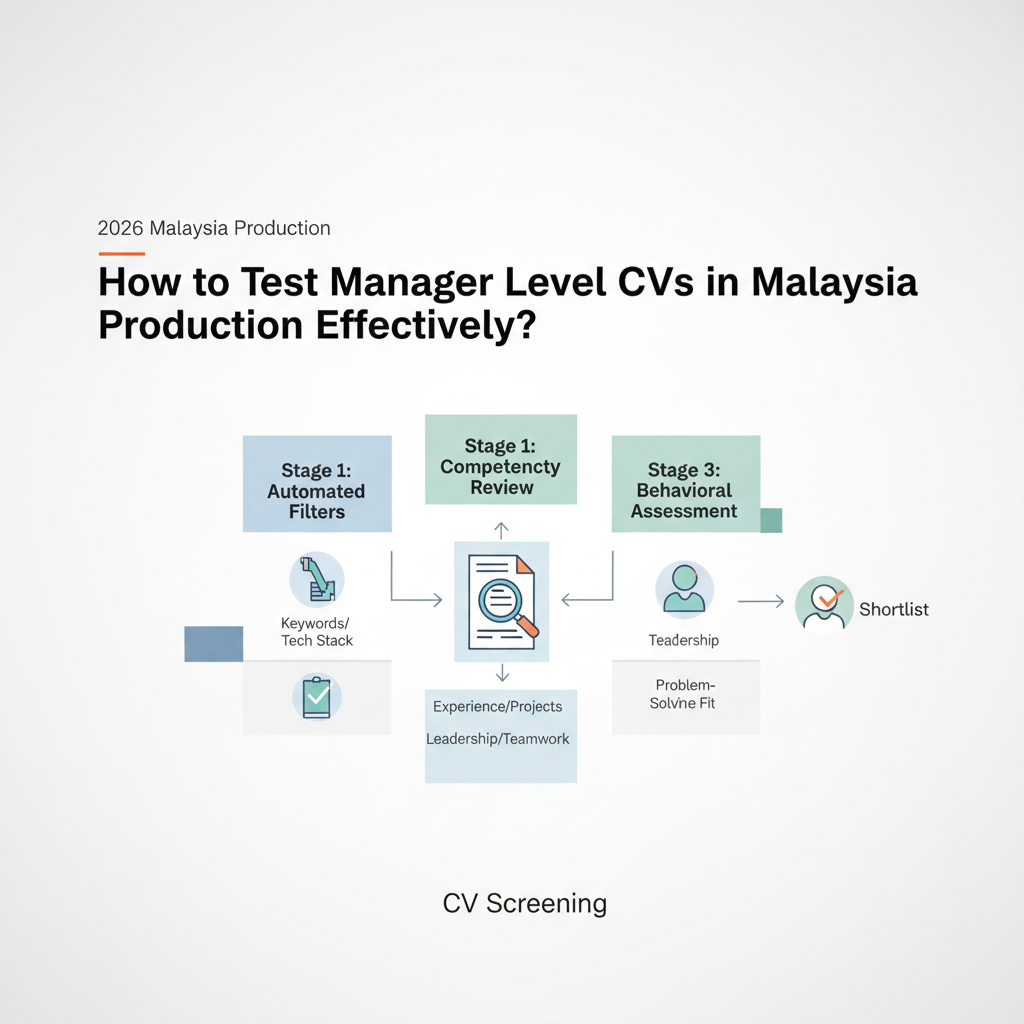
1. Keyword Analysis and Applicant Tracking System (ATS) Optimization
The first step in modern CV screening involves understanding how Applicant Tracking Systems (ATS) function and optimizing for them. Given that a significant percentage of applications are first filtered by ATS, especially in the Malaysian manufacturing sector, it’s essential that CVs contain relevant keywords that align with the job description. For a Production Manager role, these keywords might include “lean manufacturing,” “six sigma,” “quality control,” “supply chain optimization,” “inventory management,” “operational excellence,” “safety compliance,” and specific industry terminology pertinent to Malaysia’s industrial landscape. Recruiters should develop a master list of such keywords derived from job descriptions and industry standards. This proactive keyword analysis ensures that qualified candidates are not overlooked due to technical scanning limitations, forming a cornerstone of effective CV screening best practices. Furthermore, understanding ATS nuances can help in the subsequent manual review, enabling screeners to quickly locate critical information even within less-than-perfectly optimized CVs, enhancing overall candidate competency evaluation. Organizations globally, as highlighted by HR authorities like SHRM, increasingly rely on structured keyword strategies to manage application volume efficiently while ensuring fairness and identifying top talent.
2. Quantitative vs. Qualitative Evaluation Metrics for Experience
Beyond keyword matching, an in-depth assessment requires balancing both quantitative and qualitative metrics. For managerial roles in production, candidates must demonstrate a track record of tangible achievements. Quantitative metrics include specific figures like percentage reduction in waste, improvement in production efficiency, reduction in downtime, successful project completion rates, and budget management statistics. A CV for a Production Manager should ideally quantify these accomplishments, providing concrete evidence of their impact. However, qualitative metrics are equally vital for managerial leadership assessment. These encompass descriptions of leadership style, team management success, problem-solving approaches, ability to foster a positive work environment, and cross-functional collaboration. For instance, a candidate might describe how they motivated a team through a challenging period or successfully implemented a new process by collaborating with engineering and sales departments. Evaluating these aspects provides a holistic view of a candidate’s potential beyond just numbers, critical for roles demanding strong production operations management skills. The ideal candidate will showcase both quantifiable results and the underlying leadership and strategic thinking that drove those results.
3. Identifying Red Flags and Green Flags in Managerial CVs
A discerning eye is crucial when sifting through managerial CVs for roles within the dynamic Malaysian manufacturing sector. Certain “red flags” can indicate potential issues. These might include frequent job hopping without clear career progression, unexplained gaps in employment, generic or vague achievement statements lacking quantifiable results, and a lack of progression in responsibilities despite lengthy tenure. Inconsistent formatting or typographical errors, while seemingly minor, can also signal a lack of attention to detail – a critical trait for a production manager. Conversely, “green flags” immediately highlight promising candidates. These include a clear upward career trajectory with increasing responsibilities, demonstrable leadership experience through specific examples, involvement in continuous improvement initiatives (e.g., Kaizen, 5S), and specific experience tailored to the operational complexities of the production field. Furthermore, evidence of continuous learning, relevant certifications (e.g., PMP, Lean Six Sigma Black Belt), and a strong focus on safety and quality culture are significant positives. A well-structured CV that clearly articulates challenges, actions taken, and results achieved, combined with a clear alignment with the job description, often indicates a strong candidate ready for a structured interview preparation process. These indicators provide valuable insights into a candidate’s potential fit and future success.
Beyond the CV: Advanced Assessment Techniques
While a candidate’s CV offers a foundational snapshot of their experience and qualifications, truly understanding their potential, especially for critical leadership roles within the dynamic production field in Malaysia, requires a deeper dive. This section explores advanced assessment techniques designed to move beyond mere credentials, focusing instead on practical application, strategic thinking, and genuine leadership capabilities. Developing a robust Test structure to assess Manager Level CVs in production field in malaysia is paramount to identifying individuals who can drive operational excellence, foster innovation, and effectively lead diverse teams in a competitive manufacturing landscape.
1. Structured Interview Questions for Leadership Roles
Structured interviews are a cornerstone of effective talent acquisition, offering a consistent and objective method to evaluate candidates. For manager-level positions in Malaysian production, these interviews must go beyond generic questions. They should be meticulously designed to probe for specific behavioral indicators of leadership capabilities, problem-solving acumen, and strategic decision-making. Utilizing the STAR method (Situation, Task, Action, Result) is highly effective, prompting candidates to share real-world examples of how they’ve navigated complex production challenges, managed cross-functional teams, or implemented process improvements.
Key areas to explore include their experience with lean manufacturing principles, supply chain management, quality control initiatives, and how they handle workplace safety. Questions should also assess their approach to team leadership development, conflict resolution, and their ability to foster a positive and productive work environment. By standardizing questions and scoring rubrics, organizations can ensure fairness and accurately compare candidates’ responses, making the interview a powerful component of the overall Test structure to assess Manager Level CVs in production field in malaysia, helping to identify those with proven abilities to deliver operational excellence.
2. Case Studies and Practical Simulations for Production Scenarios
To truly gauge a candidate’s practical skills and ability to perform under pressure, case studies and practical simulations are invaluable. These assessments provide an immersive experience, presenting candidates with real-world production challenges relevant to the Malaysian manufacturing context. Examples could include optimizing a production line, resolving a critical equipment breakdown, managing a sudden supply chain disruption, or developing a strategy for integrating new automation technology. The objective is to evaluate their strategic thinking, analytical skills, and decision-making process, rather than just their theoretical knowledge.
Candidates might be asked to analyze data, propose solutions, present their recommendations, and even role-play interactions with subordinates or stakeholders. This method is particularly effective for assessing how candidates apply their problem-solving acumen in complex scenarios and manage resources under time constraints. It reveals their ability to prioritize, innovate, and communicate effectively—crucial attributes for a production manager. For insights into leveraging such methods, refer to resources like SHRM’s guidance on using simulations to assess leadership potential, which underscores their efficacy in leadership assessment.
3. Reference Checks and Background Verification Tailored for Managers
Beyond confirming employment dates, reference checks for manager-level candidates should be strategic and highly focused. They serve as a vital component of the comprehensive Test structure to assess Manager Level CVs in production field in malaysia, providing external validation of a candidate’s track record and leadership style. Instead of generic questions, ask referees to provide specific examples of the candidate’s performance in areas critical to a production manager role: how they handled challenging projects, managed team performance, resolved inter-departmental conflicts, or demonstrated their commitment to cultural adaptability within a diverse workforce.
It’s crucial to verify claims regarding project successes, budget management, and their direct impact on operational improvements. For roles in Malaysia, understanding a candidate’s cultural adaptability and experience with local labor practices and regulations is particularly important. Furthermore, professional background verification, including educational qualifications and any professional certifications relevant to the production sector, adds another layer of due diligence. This holistic approach ensures that the insights gathered corroborate the candidate’s self-representation and interview performance, painting a complete picture of their suitability for the demanding role. For more detailed insights into structuring your assessments, explore comprehensive guides on Test structure to assess Manager Level CVs in production field in malaysia.
Legal & Cultural Considerations in Malaysian Manager Hiring
Addresses the specific legal and cultural nuances that HR professionals must consider when hiring managers in Malaysia to ensure compliance and cultural fit.
Hiring managers in Malaysia demands a nuanced approach that transcends standard recruitment practices. For HR professionals, understanding the unique tapestry of legal requirements and cultural expectations is paramount, especially when devising a robust Test structure to assess Manager Level CVs in production field in malaysia. This strategic oversight ensures not only legal compliance but also fosters a harmonious and productive workplace. Navigating Malaysian labor law compliance and effectively integrating managerial competency assessment are critical steps for successful talent acquisition in this dynamic market.

1.
Compliance with Malaysian Employment Act and labor laws
A fundamental pillar of manager hiring in Malaysia is strict adherence to the country’s employment legislation. The primary legal framework is the Employment Act 1955, which governs matters such as contracts of service, wages, hours of work, annual leave, public holidays, and termination benefits. While traditionally covering employees earning below RM2,000 or manual laborers, recent amendments have expanded its scope significantly to cover nearly all employees, regardless of salary, particularly concerning core protections. HR professionals must ensure that employment contracts for managerial roles are meticulously drafted, clearly outlining terms and conditions, job scope, remuneration, and benefits, all in accordance with the Act. Beyond the Employment Act, other relevant legislation includes the Industrial Relations Act 1967, which deals with trade disputes and unfair dismissals, and various social security schemes like the Employees Provident Fund (EPF) and SOCSO (Social Security Organization). Discrimination in hiring based on race, religion, gender, or disability, though not explicitly outlawed by a single comprehensive anti-discrimination act, is generally discouraged and can be challenged under various legal precedents and codes of practice. For foreign managers, additional immigration laws and work permit requirements necessitate careful planning and execution. Proper documentation and transparent processes are essential to mitigate legal risks and ensure ethical recruitment practices.
2.
Cultural fit and workplace harmony in a diverse environment
Malaysia is renowned for its rich multiculturalism, comprising Malays, Chinese, Indians, and various indigenous groups, each with distinct customs, languages, and religious practices. This diversity is a significant asset but also presents unique considerations for cultural sensitivity HR practices. When hiring managers, assessing for cultural fit goes beyond mere personality matching; it involves identifying candidates who can appreciate, respect, and effectively lead a diverse workforce management team. Understanding the nuances of communication – often indirect and relationship-focused – and respecting religious observances (e.g., Friday prayers, fasting months, various festivals) are crucial for fostering workplace harmony. Managers must demonstrate strong interpersonal skills, empathy, and the ability to bridge cultural differences within their teams. Questions during interviews should explore a candidate’s experience with diverse teams, their approach to conflict resolution, and their commitment to inclusive leadership. A manager who can successfully navigate and leverage this diversity will not only ensure a harmonious environment but also unlock greater innovation and productivity, crucial for the production sector hiring Malaysia.
3.
Ethical considerations and best practices in the assessment process
The integrity of the assessment process is paramount, particularly for manager-level roles. Ethical considerations demand fairness, transparency, and a commitment to objectivity throughout the hiring journey. Best practices involve developing a standardized, unbiased Test structure to assess Manager Level CVs in production field in malaysia. This includes using validated assessment tools, structured interviews, and realistic job simulations to evaluate managerial competency assessment rather than relying solely on subjective judgments. Data protection and privacy laws (e.g., Personal Data Protection Act 2010) must be strictly observed when collecting and processing candidate information. Transparency extends to communicating the assessment process clearly to candidates and providing constructive feedback where appropriate. Avoiding unconscious bias, which can inadvertently favor certain demographics or backgrounds, requires regular training for hiring panels and the implementation of diverse interview teams. Upholding these ethical standards not only strengthens the employer brand but also ensures that the organization attracts and retains the most qualified individuals, fostering trust and a positive reputation within the industry.
Partner with Shelby Global
You are looking for reliable HR Sevice Suppliers? Contact Shelby Global Now! To connect with verified talents and upgrade your orginization.
—————————————
References
– Manufacturing Sector – MIDA: https://www.mida.gov.my/invest-in-malaysia/investment-opportunities/manufacturing-sector/
– World Economic Forum’s Future of Jobs Report: https://www.weforum.org/agenda/2023/05/future-of-jobs-report-2023-skills/
– CV screening best practices: https://www.shrm.org/resources-and-tools/hr-topics/talent-acquisition/pages/effective-cv-screening-strategies.aspx
– SHRM’s guidance on using simulations to assess leadership potential: https://www.shrm.org/resourcesandtools/hr-topics/talent-acquisition/pages/using-simulations-to-assess-leadership-potential.aspx
– The Malaysian Employment Act 1955: https://www.employmentact.com.my/



































































































