
Understanding the F&B Manager Role in Singapore
This section sets the foundation by outlining the unique demands, expectations, and essential competencies required for F&B managers thriving in Singapore’s dynamic market.
Singapore’s food and beverage landscape is a vibrant, fast-paced ecosystem, a melting pot of global cuisines and local delights that demands a distinctive set of skills from its F&B managers. Navigating this environment means more than just overseeing daily operations; it requires a strategic vision, a keen understanding of local nuances, and an unwavering commitment to excellence. For those looking to excel in F&B management in Singapore, understanding how a Test structure to assess Manager Level CVs in Food & Beverage field in singapore might evaluate their capabilities is paramount.
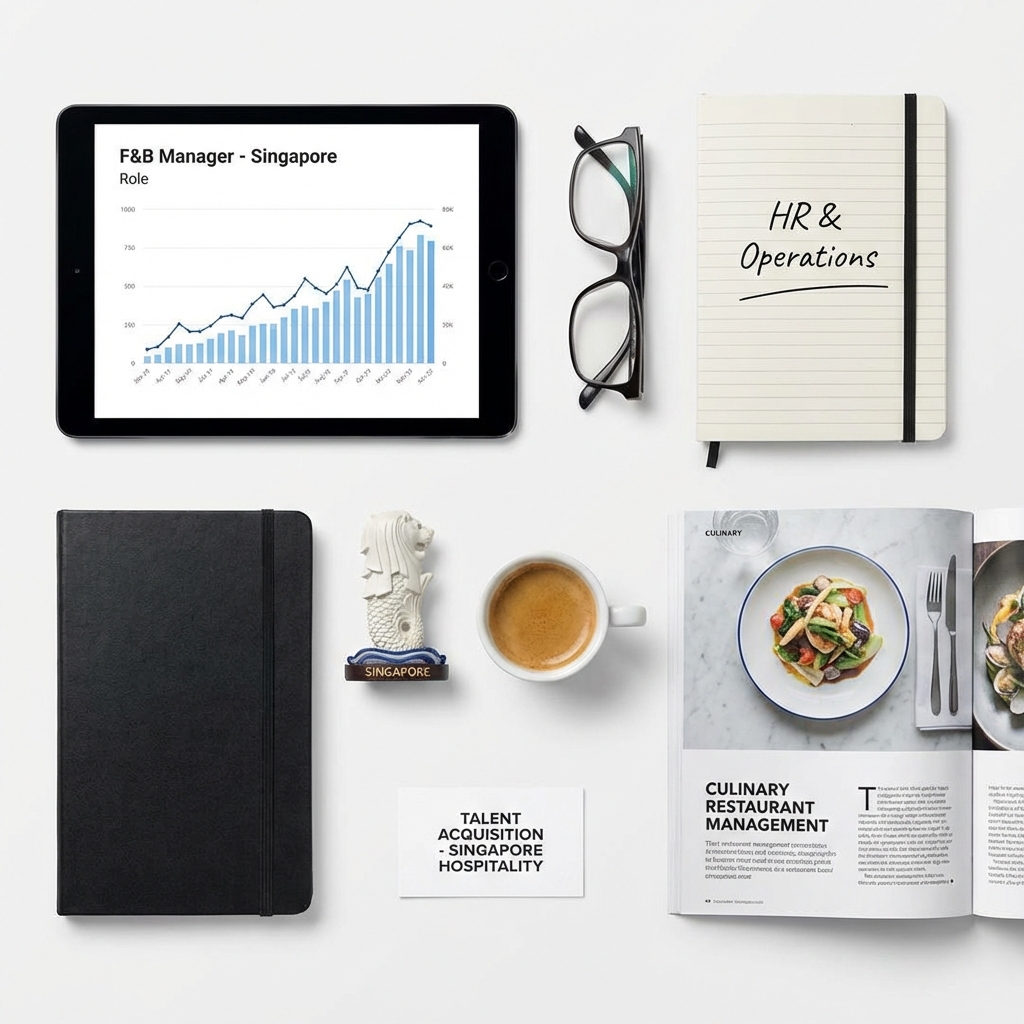
1. Key responsibilities unique to Singaporean F&B operations
The F&B manager in Singapore carries a multifaceted burden of responsibilities, often more complex than in other markets. Beyond the universal duties of operational efficiency and customer satisfaction, local regulations are exceptionally stringent. Compliance with the Singapore Food Agency (SFA) and National Environment Agency (NEA) standards, covering everything from food hygiene to licensing, is non-negotiable and requires meticulous attention. Given Singapore’s diverse culinary preferences, menu engineering and adaptation for various demographics, including halal, vegetarian, and international palates, is crucial. Managing a multinational workforce presents unique HR challenges, from understanding different cultural work ethics to navigating complex foreign worker quota systems. Furthermore, supply chain management in a land-scarce nation means optimising inventory control and sourcing ingredients efficiently, often from international markets, while managing costs and ensuring freshness. F&B managers are also expected to seamlessly integrate technology for reservations, delivery, and payments, reflecting Singapore’s status as a smart nation.
2. Defining core skills and behavioral competencies
Success as an F&B manager in Singapore hinges on a robust blend of hard and soft skills. Financially, a strong grasp of cost control, budgeting, and profit & loss analysis is fundamental for sustainability in a high-cost environment. Operationally, expertise in workflow optimization, kitchen management, and service delivery is essential. However, it’s the behavioral competencies that truly differentiate top performers. Exceptional leadership, communication, and interpersonal skills are vital for motivating diverse teams and handling demanding clientele. Adaptability and resilience are key attributes, enabling managers to pivot quickly in response to market shifts or unexpected challenges. Problem-solving prowess, coupled with a proactive attitude towards customer service excellence, builds loyalty. Moreover, cultural intelligence – the ability to understand and effectively interact with people from different cultures – is paramount in Singapore’s multicultural society and its international tourism hub status. These skills are often what a comprehensive assessment for F&B manager roles aims to uncover.
3. Current industry trends and their impact on management roles
Singapore’s F&B industry is perpetually evolving, shaped by global trends and local innovation. Digital transformation continues to redefine operations, with managers needing to master online presence, food delivery platforms, data analytics for guest preferences, and sophisticated point-of-sale (POS) systems. Sustainability and ethical sourcing are no longer niche concerns but mainstream expectations, pushing managers to explore plant-based menus, reduce food waste, and source locally where possible. The “experience economy” demands creativity, with consumers seeking unique dining concepts and immersive experiences rather than just a meal. Health and wellness trends influence menu development, requiring options for various dietary needs and preferences. Lastly, the persistent labor crunch necessitates innovative talent attraction and retention strategies, alongside exploring automation for repetitive tasks. F&B managers must therefore be agile innovators, tech-savvy leaders, and adept human resource strategists, constantly re-evaluating their operations to remain competitive and relevant in this dynamic market.
Crafting Your CV Assessment Framework for F&B
In Singapore’s dynamic Food & Beverage (F&B) sector, attracting top managerial talent requires more than intuition. The initial screening of manager-level CVs can be subjective and time-consuming, leading to inconsistent hiring. Developing a systematic and objective Test structure to assess Manager Level CVs in Food & Beverage field in singapore is a strategic imperative. This framework ensures consistency, fairness, and boosts screening efficiency, helping you identify candidates who align with your establishment’s operational demands and culture. By standardizing your F&B CV assessment, you move beyond gut feelings to data-driven insights, ensuring equitable review and securing promising profiles.
1. Establishing Essential Criteria and Weighted Scoring Systems
The foundation of any robust F&B hiring framework in Singapore is clearly defining what constitutes a successful F&B manager for your specific role. Brainstorm essential criteria: relevant work experience (type, duration, F&B segment), educational background, and critical soft/hard skills. For instance, a restaurant manager needs strong P&L management, team leadership, and customer service excellence; a bar manager requires deep beverage knowledge, inventory control, and staff training expertise. Once identified, assign weighted scores to reflect the relative importance of each factor. P&L responsibility might carry a 25% weight for a General Manager, while team supervision might be 30% for an Assistant Manager. Experience in similar Singapore F&B settings is also a key weighted factor. A well-designed rubric for F&B management resume analysis ensures reviewers apply consistent standards, reducing bias and promoting fair CV evaluation in the F&B industry. This structured approach facilitates efficient F&B recruitment in Singapore, assessing applicants against predefined metrics. Remember to account for local nuances, like Singapore’s food safety regulations or market trends.
2. Competency-Based Screening Techniques for F&B Resumes
Competency-based CV screening for F&B assesses a candidate’s demonstrated abilities and potential beyond mere duties. Instead of “Managed staff,” look for quantifiable achievements like “Led a team of 20, increasing staff retention by 15%.” This involves identifying core essential leadership competencies for F&B managers such as problem-solving, financial acumen, operational efficiency, and adaptability—crucial for Singapore’s fast-paced F&B landscape. When conducting your F&B management resume analysis, scrutinize bullet points for action verbs and specific outcomes. Does the CV highlight instances of crisis navigation, inventory optimization, new menu implementation, or improved customer satisfaction? For example, if innovation is key, look for new concept development or technology integration. If financial acumen is vital, search for budget management or revenue generation successes. This approach helps identify F&B leadership potential by understanding how candidates applied skills in real-world scenarios, offering deeper insight than a simple job description match. This systematic review is vital for developing F&B CV rubrics that effectively filter candidates in Singapore’s competitive market.
3. Identifying Critical Red Flags and Valuable Green Flags in CVs
A finely tuned CV assessment framework for F&B in Singapore helps you quickly spot both warning signs and desirable attributes. Understanding common CV red flags in F&B Singapore saves valuable time. These include frequent, unexplained job hopping, significant employment gaps without explanation, lack of quantifiable achievements, generic descriptions, inconsistencies in formatting, or grammatical errors. A manager-level CV should demonstrate attention to detail and professional communication. For instance, a candidate for an F&B manager role in Singapore lacking experience in a similar fast-paced urban environment or understanding of local culinary trends might be a red flag, depending on the role.
Conversely, identifying valuable CV green flags for F&B management helps fast-track top talent. Look for clear career progression, quantifiable successes (e.g., “Increased beverage sales by 20%,” “Achieved 95% positive customer feedback”), relevant certifications (e.g., advanced food hygiene), experience with diverse F&B concepts, and evidence of continuous professional development. Strong testimonials or awards, plus experience managing multicultural teams, are particularly valuable in Singapore. A resume articulating how a candidate improved operations, increased profitability, or enhanced team performance within the F&B sector demonstrates a proactive, results-oriented mindset crucial for success in Singapore’s vibrant hospitality scene. This structured resume review for F&B ensures you don’t overlook exceptional talent.
Deep Dive into Operational & Financial Acumen Assessment
This section focuses on methods to effectively assess critical operational experience and robust financial management skills, vital for an F&B manager’s success. In the dynamic and competitive Food & Beverage (F&B) landscape of Singapore, identifying candidates with a proven track record in both spheres is paramount. A comprehensive test structure to assess Manager Level CVs in Food & Beverage field in Singapore is not just about vetting qualifications; it’s about predicting future performance and ensuring the financial health and operational excellence of an establishment. The intricate balance of managing daily operations while maintaining a keen eye on the bottom line demands a rigorous approach to talent acquisition F&B Singapore, particularly for senior roles like an F&B manager.

1. Evaluating past operational leadership and efficiency improvements
Assessing a candidate’s operational leadership goes beyond merely reviewing their job titles. It involves a deep dive into specific instances where they demonstrated initiative, problem-solving capabilities, and a tangible impact on efficiency. When reviewing CVs for F&B manager assessment, look for concrete examples of how they optimized workflows, streamlined service delivery, or enhanced customer satisfaction. Candidates should be able to articulate their role in improving operational efficiency metrics, such as table turnover rates, staff productivity, or speed of service. Singapore F&B hiring managers should probe into their experience with staffing optimization F&B, team training, and conflict resolution, as these are critical indicators of effective leadership in hospitality. Requesting details on specific projects, the challenges faced, the strategies implemented, and the measurable outcomes provides invaluable insight into their capacity to drive significant improvements. This also reveals their strategic planning F&B capabilities and how they translate vision into actionable steps within a restaurant or bar setting, showcasing their restaurant manager skills.
2. Assessing budget management, P&L responsibility, and cost control
Financial acumen is arguably the backbone of a successful F&B operation. A prospective manager must demonstrate not only an understanding of financial statements but also a proactive approach to managing them. When evaluating Manager Level CVs, seek evidence of direct P&L responsibility, highlighting their ability to manage budgets, forecast revenue, and control expenditures effectively. Candidates should be prepared to discuss their strategies for cost control, particularly in areas like food and beverage inventory, labor costs, and operational overheads. Specific examples of successful vendor negotiations, waste reduction initiatives, or menu engineering projects that improved profit margins are strong indicators. Understanding the nuances of profit and loss management F&B is crucial, especially in Singapore’s competitive market where margins can be tight. Interview questions should delve into their experience with financial reporting F&B, their approach to variance analysis, and their ability to implement corrective actions. A manager who can articulate how they’ve contributed to a healthy bottom line, perhaps by implementing robust cost control strategies restaurant, is an invaluable asset for navigating current F&B industry trends.
3. Experience with F&B technology, POS systems, and inventory management
In today’s technology-driven F&B industry, familiarity with modern systems is non-negotiable. A successful F&B manager must be adept at leveraging technology to enhance efficiency, manage inventory, and improve customer experience. CVs should highlight experience with various Point-of-Sale (POS) systems F&B, particularly those prevalent in Singapore, demonstrating their ability to manage transactions, generate sales reports, and track customer preferences. Equally important is their proficiency in inventory management best practices. This includes experience with inventory tracking software, understanding supply chain management F&B, minimizing spoilage, and optimizing stock levels to prevent both shortages and overstocking. Discussing how they’ve utilized data analytics from these systems to make informed business decisions – from menu adjustments to staffing schedules – reveals a forward-thinking approach. Beyond just operating the systems, look for candidates who understand how to extract actionable insights from data, helping to identify and react to changes and improve overall operational performance indicators restaurant-wide. This technological fluency is a key differentiator, indicating a candidate’s readiness to lead a modern F&B establishment effectively.
Assessing Leadership, Team Management, & Soft Skills
Identifying top-tier managerial talent in the competitive Food & Beverage (F&B) sector, especially in a dynamic market like Singapore, requires a meticulous approach. This section will explore effective strategies to pinpoint strong leadership capabilities, effective team management, and crucial soft skills, starting from the initial CV analysis through to comprehensive evaluation stages. Our focus is on developing a robust test structure to assess Manager Level CVs in Food & Beverage field in Singapore, ensuring candidates possess the blend of operational acumen and interpersonal finesse essential for success.
The F&B landscape in Singapore demands more than just technical proficiency; it necessitates individuals who can inspire teams, elevate guest experiences, and navigate complex challenges with grace. Therefore, our assessment goes beyond merely checking off skills from a list, delving into a candidate’s holistic potential to drive growth and foster a positive work environment, leveraging advanced HR strategies and interview techniques.
1. Evidence of team development, training, and staff retention
A CV is often the first window into an F&B manager’s managerial philosophy, particularly concerning their approach to people. When evaluating a candidate’s CV, look for tangible evidence of investment in team development. This includes details about training initiatives led or implemented, mentorship programs, or specific projects aimed at upskilling staff. Candidates who highlight improved performance metrics following training programs or successful internal promotions within their teams demonstrate a commitment to nurturing talent. Effective HR strategies in the F&B domain prioritize employee engagement and growth, directly impacting staff retention. Look for phrases like “reduced staff turnover by X%” or “developed and promoted Y individuals,” as these are strong indicators of effective leadership and a healthy work culture. During interviews, delve deeper into their methods for conflict resolution, succession planning, and fostering an environment of continuous learning. A manager with a proven track record in talent acquisition and development ensures a stable, high-performing team, crucial for sustained operational efficiency in restaurant management and hotel operations across the Singapore job market.
2. Demonstrated customer service excellence and guest experience focus
In the F&B industry, the guest experience is paramount. A strong F&B manager must possess an innate understanding of service excellence and the ability to instill this ethos throughout their team. CVs should reflect achievements related to enhancing guest satisfaction, such as improvements in customer feedback scores, implementation of new service protocols, or recognition for outstanding guest experiences. Look for quantitative data where possible: “increased positive customer reviews by Z%” or “achieved N% in mystery shopper scores.” These performance metrics provide concrete proof of a candidate’s impact on customer service. During subsequent evaluation stages, explore their communication skills, emotional intelligence, and ability to anticipate and respond to guest needs. A leader who consistently drives a guest-centric culture will often share anecdotes demonstrating their proactive approach to problem-solving and dedication to creating memorable moments. As experts at Harvard Business Review emphasize, true customer loyalty stems from exceptional experiences, making this a non-negotiable trait for hospitality leadership.
3. Problem-solving abilities, adaptability, and crisis management
The fast-paced nature of the F&B industry, especially in a bustling market like Singapore, means that managers constantly face unforeseen challenges, from supply chain disruptions to sudden staffing shortages or even public health crises. Therefore, problem-solving abilities, adaptability, and crisis management are critical soft skills. A candidate’s CV should ideally present instances where they successfully navigated complex situations, demonstrating strategic thinking and decisive action. Look for keywords and phrases like “implemented contingency plans,” “streamlined operations during peak periods,” or “successfully mitigated [specific challenge].” In interviews, behavioral questions are particularly effective here: “Tell me about a time you faced an unexpected operational challenge and how you resolved it.” The best candidates will articulate not just the solution but also the process, their thought leadership, and the lessons learned. Their ability to remain calm under pressure, make quick decisions, and adapt strategies on the fly is indicative of strong leadership. These attributes contribute significantly to maintaining operational efficiency and ensuring business continuity, even amidst the most demanding circumstances in the Singapore job market.
In conclusion, evaluating F&B managerial candidates goes beyond scrutinizing job titles and duration. It involves a deep dive into their contributions to team development, their unwavering commitment to guest satisfaction, and their proven resilience in the face of adversity. By employing a comprehensive test structure and focusing on these key areas, organizations can confidently identify leaders who will not only excel operationally but also cultivate a thriving, guest-focused culture, driving sustainable success in Singapore’s competitive Food & Beverage industry.
Singapore-Specific Compliance & Market Knowledge
In the dynamic and highly regulated Food & Beverage (F&B) sector of Singapore, the importance of assessing a candidate’s understanding of local regulations, market nuances, and cultural fit cannot be overstated. For managerial roles, a robust Test structure to assess Manager Level CVs in Food & Beverage field in singapore is crucial, going beyond generic industry experience to probe deep into Singapore-specific expertise. This ensures that a new hire can navigate the unique challenges and capitalize on the opportunities within this vibrant market, minimizing risks and accelerating operational efficiency.

-
Knowledge of SFA regulations, licensing, and hygiene standards
Singapore’s F&B industry operates under stringent regulatory frameworks, primarily enforced by the Singapore Food Agency (SFA). Any manager in this sector must possess an intricate understanding of these regulations, from food handling and storage protocols to licensing requirements for various F&B establishments. Candidates should be evaluated on their familiarity with food safety management systems, HACCP principles, and the specific hygiene standards mandated by the SFA. This includes knowing the nuances of food import regulations, allergen labeling, and the grading system for F&B outlets. A comprehensive Test structure to assess Manager Level CVs in Food & Beverage field in singapore for managers will include scenario-based questions that challenge their ability to respond to SFA audits, manage product recalls, or ensure compliance during new outlet openings. Demonstrating proactive adherence to these standards not only prevents costly fines and reputational damage but also builds consumer trust, a critical asset in Singapore’s competitive market. The ability to articulate and implement these regulations at an operational level is a non-negotiable skill for any F&B manager.
-
Understanding local consumer preferences, food trends, and demographics
The Singaporean palate is a complex tapestry woven from diverse cultures and global influences. An effective F&B manager must possess a keen insight into local consumer preferences, understanding what drives dining choices, from hawker fare to fine dining. This involves recognizing the popularity of specific cuisines (e.g., Peranakan, Malay, Indian, Chinese), emerging health trends (plant-based, gluten-free), and the impact of delivery services on traditional dining models. Demographic shifts, such as an aging population or a growing expatriate community, also play a significant role in shaping market demand. Evaluating a candidate’s market knowledge requires more than just anecdotal evidence; it demands strategic thinking on how to adapt menus, marketing strategies, and operational models to resonate with local tastes and habits. Interview questions should delve into their experience with market research, menu engineering for local appeal, and their strategies for capitalizing on current food trends (e.g., sustainability, experiential dining). A robust Test structure to assess Manager Level CVs in Food & Beverage field in singapore should assess their ability to identify and respond to these nuanced market dynamics, demonstrating their capacity to innovate and maintain relevance in a fast-evolving landscape. This deep cultural and market understanding is pivotal for crafting successful product offerings and marketing campaigns.
-
Cultural sensitivity and diversity in the Singaporean workplace
Singapore’s strength lies in its multicultural fabric, which extends profoundly into its workplaces. For an F&B manager, cultural sensitivity is not merely a soft skill but a fundamental requirement for effective team leadership and customer service. The workforce often comprises individuals from various ethnicities, religions, and nationalities, each bringing unique perspectives and practices. Managers must demonstrate an ability to foster an harmonious and inclusive environment, understand diverse communication styles, and respect religious observances and cultural norms (e.g., dietary restrictions, public holidays). This includes managing a team with empathy, ensuring fair treatment, and effectively resolving cross-cultural misunderstandings. During the assessment process, look for evidence of experience in managing diverse teams, implementing inclusive HR practices, and demonstrating adaptability in communication. A well-designed Test structure to assess Manager Level CVs in Food & Beverage field in singapore will incorporate behavioural questions that explore how candidates have successfully navigated cultural differences in past roles, handled diverse customer expectations, and promoted a harmonious work environment. A manager who champions diversity not only enhances team cohesion and productivity but also ensures that the F&B establishment resonates positively with Singapore’s diverse customer base, solidifying its place in the community.
Partner with Shelby Global
You are looking for reliable HR Sevice Suppliers? Contact Shelby Global Now! To connect with verified talents and upgrade your orginization.
—————————————
References
– Enterprise Singapore Food Services Industry Overview: https://www.enterprisesg.gov.sg/industries/food/food-services
– essential leadership competencies for F&B managers: https://www.hospitalitynet.org/opinion/4089335.html
– How To Control Food Costs: https://www.restaurantbusinessonline.com/operations/how-control-food-costs
– Harvard Business Review: The Ultimate Question 2.0: https://hbr.org/2016/09/the-ultimate-question-2-0-how-net-promoter-companies-thrive-in-a-customer-driven-world
– Singapore Food Agency (SFA): https://www.sfa.gov.sg/



































































































